Daniel McGee
Daniel McGee
Personal Injury Trial Attorney
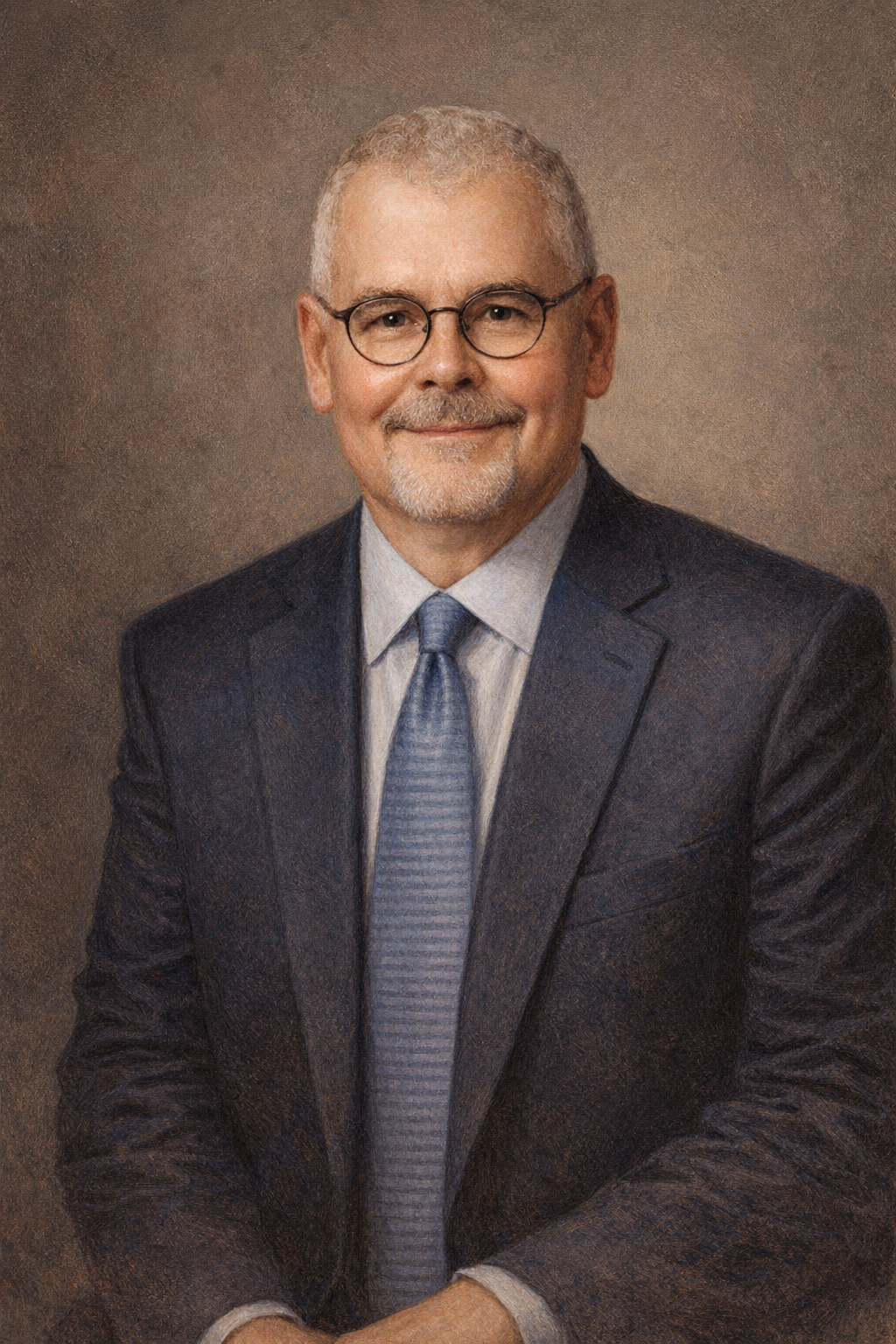
When a catastrophic injury occurs, the ensuing legal battle is rarely a simple search for the truth. It is an immediate, asymmetric war over leverage. On one side is an individual grappling with physical trauma, mounting medical debt, and sudden physical or cognitive limitations. On the other side is an institution—a commercial trucking company, a municipality, a multinational automaker, or a heavily capitalized tech startup—armed with a sophisticated defense team dedicated to minimizing liability and discounting human suffering. Leveling this extreme imbalance of power requires a plaintiff’s attorney capable of matching institutional attrition with aggressive, tactically precise litigation. For more than two decades at the helm of his own firm, Daniel McGee has systematically dismantled the legal shields of some of the most powerful entities operating in California.
A founding partner of the Los Angeles-based litigation boutique McGee Lerer Ogrin, McGee is recognized across the state’s plaintiff bar for a willingness to take complex, high-stakes injury cases to verdict when corporate insurers refuse to offer fair value. McGee brings more than three decades of experience to his practice, having built his career’s foundation on a B.S. from the University of Southern California (USC) and a J.D. from Whittier College School of Law. His career is anchored by landmark outcomes that have not only secured generational compensation for individual victims but have also forced structural changes in how municipalities and corporations manage public risk. Most notably, during his tenure at a previous firm, McGee helped secure a $25 million judgment against a police department—a staggering figure that stood at the time as the largest verdict against a law enforcement agency in United States history. While the precise name of the police department and the exact year of the case are unavailable in the provided data, records confirm it resulted in a judgment exceeding $25 million.
McGee’s practice covers the entire spectrum of catastrophic torts, encompassing traumatic brain injuries, spinal cord damage, multi-party toxic torts, and complex automotive product liability. This extensive experience is reflected in outstanding results, such as a $3.3 million verdict in a products liability case in Rancho Cucamonga. However, it is his approach to the underlying mechanics of institutional defense strategies that defines his profile. By combining a granular understanding of how insurance carriers evaluate risk with a relentless appellate practice, McGee ensures that the entities responsible for public harm are forced to absorb the full, unvarnished cost of their negligence.
The Architecture of an Aggressive Plaintiff’s Practice
The foundation of McGee’s litigation philosophy was built during a sixteen-year tenure at one of California’s premier personal injury law firms. Rising from associate to partner and eventually serving as the firm’s manager, McGee oversaw a high-volume, high-stakes docket that routinely squared off against major automobile manufacturers in product liability disputes. During his time managing that practice, the firm’s verdicts and settlements exceeded $100 million. Explicitly, the exact timeframe or specific years over which this $100 million threshold was achieved is unavailable beyond the 16-year duration of his tenure. This environment functioned as an incubator for complex trial strategy, teaching McGee how to coordinate multi-party discovery, retain world-class medical and accident-reconstruction experts, and preserve crucial evidence before defense operatives could obscure the record.
In 2001, McGee co-founded his current firm alongside his wife and law partner, Catherine Lerer. Despite the firm’s evolution and the addition of Head of Litigation Dean Ogrin as a named partner in 2024, the practice has intentionally remained a boutique. This structure is a deliberate strategic choice. Rather than operating a high-volume “settlement mill” that relies on turning over a massive inventory of soft-tissue cases (cases involving damage to muscles, ligaments, and tendons rather than bone fractures) for quick, low-dollar payouts, McGee maintains a concentrated docket. This allows the firm’s partners to personally direct the strategy on catastrophic files, bringing the full weight of their financial resources and trial experience to bear on defense counsel.
Crucially, McGee understands the opponent’s playbook from the inside. His firm actively employs former insurance adjusters, utilizing their institutional knowledge to reverse-engineer the opposition’s tactics. This internal expertise allows McGee’s team to anticipate how an insurance carrier will attempt to devalue a claim, isolate the specific data points an adjuster needs to justify a maximum policy payout, and aggressively counter the bureaucratic delays that insurance companies use to starve financially desperate plaintiffs into accepting lowball offers.
Dismantling the Comparative Fault Defense: The $14 Million Riverside Verdict
When a corporation cannot completely deny liability for a catastrophic accident, its defense attorneys will pivot to a strategy of comparative fault (a legal defense seeking to reduce a defendant’s financial liability by shifting a percentage of blame onto the victim). Defeating this tactic requires an attorney willing to engage in grueling, granular combat over the proximate cause (the primary, legally recognized action or event that directly produced the injury) of an injury. McGee’s execution of this strategy was vividly demonstrated in a November 2022 trial in Riverside County, where his firm secured a $14 million verdict against a commercial trucking company.
The mechanics of the incident were chaotic. McGee’s clients, a husband and wife, were driving on the 10 Freeway when an unidentified vehicle dropped a ladder into the lanes of traffic. The vehicle immediately ahead of the clients abruptly stopped. The wife, who was driving, rear-ended the stopped car. Moments later, a commercial big rig slammed into the rear of the clients’ vehicle. The cascading collisions left the wife with a severe fracture and dislocation of her elbow, while the husband, who was in the passenger seat, sustained a devastating traumatic brain injury.
The defense immediately weaponized the timeline of the crash. The trucking company’s insurance carrier accepted zero percent fault. They pointed to the California Highway Patrol report, which placed the primary fault on McGee’s client for driving too fast for conditions, listing the commercial truck driver merely as an associated factor. The driver of the front car testified that the initial rear-end impact from McGee’s client was “severe.”
From there, the defense launched a highly aggressive attack on the plaintiffs’ damages. They argued that the wife’s elbow injury was not caused by the massive impact of the big rig, but rather by her bracing against the steering wheel during her initial collision with the car ahead. More aggressively, the defense attempted to erase the trucking company’s liability for the husband’s cognitive trauma. They argued he was not wearing a seatbelt and, in a particularly invasive maneuver, attempted to attribute his ongoing brain injury symptoms to his personal history of learning disabilities, ADHD, and prior drug use.
In a four-week trial, McGee’s litigation team methodically destroyed the defense’s narrative. Through rigorous expert testimony and accident reconstruction, they untangled the sequence of impacts, forcing the jury to recognize that the catastrophic forces responsible for the life-altering injuries originated from the negligent operation of the commercial big rig, not the initial fender-bender. By securing a $14 million verdict, McGee not only obtained the resources necessary for his clients’ lifelong medical care but also publicly exposed and defeated the defense’s attempt to use a victim’s personal medical history as a shield for corporate negligence.
Rewriting the Duty of Care in Silicon Valley: Hacala v. Bird Rides Inc.
McGee’s influence extends beyond trial verdicts; his firm is actively shaping California appellate law to protect civil liberties against emerging corporate business models. This is most evident in the firm’s ongoing battle against micromobility companies—specifically, the venture-backed operators of dockless electric scooters and e-bikes.
When companies like Bird Rides Inc. flooded California sidewalks with commercial scooters, they adopted a “move fast and break things” ethos that fundamentally compromised pedestrian safety. Because the scooters are dockless, users routinely abandon them in the middle of public walkways, creating severe tripping hazards. When pedestrians—often elderly individuals or those with mobility impairments—tripped over these heavy, metallic devices and suffered severe fractures, the tech companies defaulted to a rigid institutional defense: they claimed they owed no legal duty to pedestrians who were injured by their negligently parked products, blaming the anonymous users instead.
McGee Lerer Ogrin refused to accept this abdication of corporate responsibility. The firm took the fight to the California Court of Appeals, resulting in the 2023 landmark published opinion in Hacala v. Bird Rides, Inc. The case centered on an elderly woman, Sara Hacala, who tripped over a partially obstructing Bird scooter on a sidewalk on Abbot Kinney Blvd. in Venice, California on November 23, 2019, requiring surgical hardware to repair multiple wrist fractures. Initially, the trial court sustained the defendants’ demurrer without leave to amend, concluding neither Bird nor the City owed plaintiffs a duty of care.
The appellate court ruled decisively against the tech giant, establishing a new, vital precedent in California tort law. The court held that because Bird deployed dockless scooters onto public streets and obtained municipal permits to do so, it assumed an affirmative legal obligation to manage its property. Crucially, the court ruled that micromobility companies can be held liable under theories of negligence and public nuisance for failing to remove or relocate scooters that pose an unreasonable risk of danger to pedestrians, and that the company must ensure its scooters are conspicuous enough to avoid becoming tripping hazards. The ruling effectively destroyed the industry’s primary legal shield, transforming the landscape of pedestrian rights in California and providing a critical avenue for public accountability against negligent tech operators.
The downstream future implications of the Hacala v. Bird Rides Inc. precedent mean that micromobility companies operating in California—and potentially nationwide—will likely face strict ongoing accountability for public nuisance and negligence in device placement. This ruling forces sweeping changes to their operational models, meaning tech operators can no longer rely on anonymous third-party users to shield themselves from liability, fundamentally ensuring that public safety supersedes unbridled corporate expansion.
Piercing Municipal Shields and Government Immunity
Litigating against government entities—whether a city, a county, or a police department—presents a unique set of procedural and substantive hurdles. Municipalities are protected by complex webs of sovereign immunity (a legal doctrine that protects government entities and their employees from being sued without their consent), strict notice requirements, and practically unlimited taxpayer-funded defense budgets. An attorney operating in this space must possess the technical precision to survive early motions for summary judgment (a procedural maneuver where a party asks the court to decide the case based on the facts without going to a full trial) and the financial endurance to litigate in both state and federal forums.
McGee’s historical involvement in the record-breaking $25 million police department verdict underscores his capacity to navigate these treacherous waters. Holding law enforcement agencies financially accountable for civil rights violations or catastrophic negligence is notoriously difficult, as courts traditionally defer to the state. Achieving an eight-figure judgment requires unearthing undeniable evidence of systemic failure and presenting it with such force that a jury cannot ignore the breach of public trust.
This commitment to forcing defendants to answer in court is echoed throughout the firm’s docket. McGee’s team was instrumental in securing a portion of a $122.5 million global settlement against the City of Santa Monica. Representing exactly 14 of 124 childhood victims of institutional sexual abuse, the litigation exposed decades of municipal failure and complicity, resulting in one of the largest abuse settlements in California history. While the exact quantitative ranking of this settlement is unavailable, it is well-established as a landmark recovery in the state.
Furthermore, McGee and his partners actively punish government entities that refuse to engage in fair, pre-trial resolution. In a case against the County of Los Angeles involving a plaintiff who suffered the traumatic amputation of his dominant hand, the plaintiff extended a formal statutory offer (a formal settlement offer made under specific state laws that can trigger financial penalties if the opposing party rejects it and later fails to achieve a better result at trial) to settle the case for $2.64 million. The county, relying on its institutional leverage, flatly denied the offer. At trial, McGee’s team and their co-counsel secured a special jury verdict (a verdict in which the jury answers specific, factual questions posed by the judge rather than just stating who wins) of $4 million—penalizing the county for its intransigence and securing a massive premium over the initial demand.
A Footprint Built on Trial Readiness
Daniel McGee’s status in the California legal community is reinforced by his integration into the elite circles of the plaintiff’s bar. Licensed to practice in both state and federal courts, he maintains active memberships in the Consumer Attorneys of California (CAOC), the Consumer Attorneys Association of Los Angeles (CAALA), and the American Association for Justice (AAJ). He is also a lifelong member of the Multi-Million Dollar Advocates Forum, an exclusive credential reserved for trial lawyers who have secured multi-million dollar verdicts and settlements. His peers frequently tap him to share his trial strategies, notably serving as a featured speaker at the CAOC’s annual Las Vegas convention.
Licensed in both state and federal courts, McGee operates with a singular directive: client stakes cannot be subordinated to corporate profit margins or bureaucratic convenience. Whether he is forcing a multinational trucking insurer to pay for the cognitive destruction of a husband, compelling a Silicon Valley tech firm to take responsibility for the hazards it inflicts on public sidewalks, or piercing the sovereign immunity of a negligent municipality, his methodology remains consistent. He prepares every file for the courtroom, creating an environment where the most powerful institutions in the state are forced to face a jury of the public they have harmed.