Justin L. Amos
Justin L. Amos
Municipal Defense and Appellate Attorney
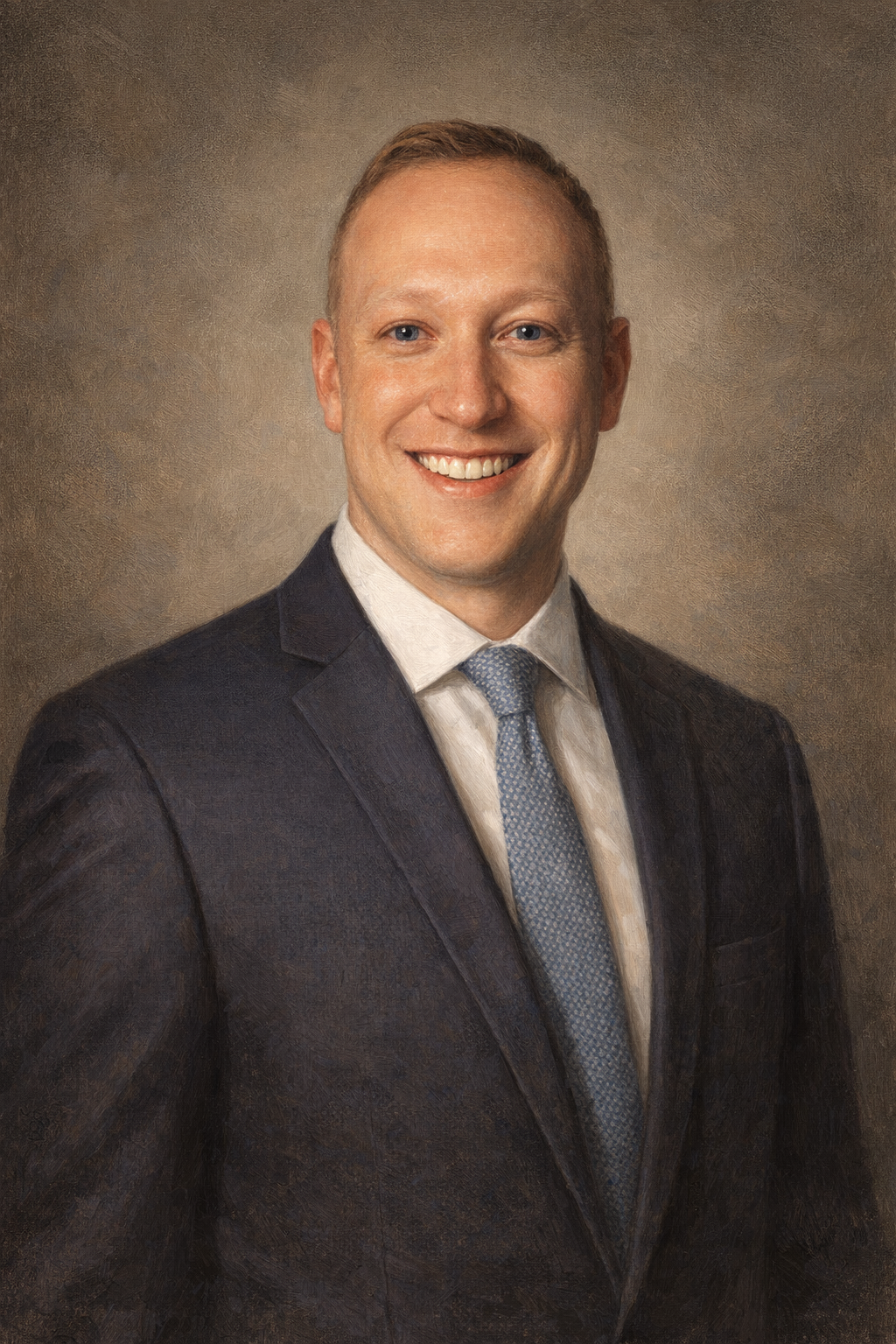
Amos works in the litigation arena where municipalities, public officials, law enforcement officers, and school districts face civil-rights, negligence, employment, and constitutional claims. At Pierce Davis & Perritano in Boston, his practice is organized around institutional defense, appellate procedure, statutory immunity, and the limits of public-entity liability.
His appellate work addresses when public officials and municipalities can be sued, and when doctrines such as qualified immunity, the Massachusetts Tort Claims Act, the Massachusetts Civil Rights Act, and sovereign immunity end a case before trial. The work sits in the contested space between civil-rights claims and the legal protections available to public entities and officials.
Municipal and Civil Rights Defense
Admitted to practice in Massachusetts, Vermont, the First Circuit Court of Appeals, and the United States Supreme Court, Amos operates in a practice lane defined by high stakes and deep complexity. At Pierce Davis & Perritano, he defends cities, towns, school districts, and individual public officials against an array of claims: negligence, premises liability, intentional torts, employment discrimination, and violations of the Massachusetts Civil Rights Act (MCRA).
Civil rights litigation is inherently asymmetrical. Plaintiffs are often individuals armed only with a narrative of state abuse, while defendants are municipalities backed by insurance, specialized defense counsel, and a set of statutory immunities. Amos specializes in deploying these immunities long before a jury is ever permitted to weigh the facts of a case. His appellate victories frequently hinge on motions for summary judgment (a judicial decision made without a full trial when there is no dispute over the material facts) and motions to dismiss, effectively terminating accountability litigation through procedural and substantive doctrines.
First Amendment Retaliation and Qualified Immunity
Among the most controversial doctrines in modern civil rights law is qualified immunity, a judicial standard that shields government officials from personal liability unless they violated a “clearly established” constitutional right. Amos has proven exceptionally adept at wielding this defense to neutralize First Amendment retaliation claims brought against public employers.
In Ciarametaro v. Gloucester (1st Cir. 2023), Amos defended several high-ranking city officials—specifically Mayor Sefatia Romeo Theken, Chief Administrative Officer James Destino, City Solicitor Charles “Chip” Payson, and Human Resources Director Holly Dougwillo—against a First Amendment lawsuit brought by the city’s Harbormaster. The Harbormaster had been asked to serve as an expert witness for a group of fishermen suing the U.S. Coast Guard over a botched rescue operation. After the Harbormaster claimed that city officials retaliated against him for his planned testimony, Amos successfully argued for summary judgment. The First Circuit affirmed the dismissal, utilizing the Pickering balancing test—which weighs a public employee’s free speech rights against the government’s interest in efficient operations. By establishing that the law was not “clearly established” enough to definitively protect the Harbormaster’s specific speech against the city’s interests, Amos secured qualified immunity for the officials.
He achieved a similar institutional victory in Jakuttis v. Dracut (1st Cir. 2024), defending a police officer against First Amendment retaliation claims brought by a fellow officer. The plaintiff, a whistleblower, alleged he was retaliated against after reporting purported corruption within the local police department to a federal task force. The case hinged on whether the defendant was acting under the color of state law or federal law at the time of the retaliation—a critical distinction that dictates whether a plaintiff can sue under 42 U.S.C. § 1983 (the primary federal statute allowing individuals to sue state and local government officials for civil rights violations). The First Circuit affirmed summary judgment in favor of Amos’s client.
In both matters, Amos masterfully utilized the structural advantages afforded to the state. By demonstrating that the alleged misconduct did not violate a perfectly analogous, pre-existing legal precedent, he ensured that the institutional defendants were spared the discomfort of a trial, prioritizing reputation management and bureaucratic stability over the public exposure of alleged internal retaliation.
The Architecture of State Immunity: Gill v. Armstrong and the MTCA
If qualified immunity protects the individual official, the Massachusetts Tort Claims Act (MTCA) protects the municipality. The MTCA was designed to allow citizens to sue the government for negligence, but it contains severe exceptions. The most powerful of these is Section 10(j), which immunizes public employers from claims based on a “failure to act” to prevent harm, provided the government did not originally cause the dangerous condition.
Amos’s defense in Gill v. Armstrong (Mass. App. Ct. 2023) perfectly encapsulates the harsh mechanics of sovereign immunity and the tension between human tragedy and institutional convenience. In April 2020, Anthony J. Gill was riding his all-terrain vehicle (ATV) on an easement located on property owned by the Town of Marshfield. He struck a wire cable that had been strung between two trees across the pathway, suffering catastrophic head and neck injuries that resulted in his death. Gill’s estate sued the town for wrongful death, arguing the municipality failed to maintain the property and permitted a deadly hazard to remain.
Representing the Town of Marshfield, Amos aggressively invoked Section 10(j). He argued that because a third party (the easement holder) had erected the cable, the town itself did not “originally cause” the hazardous condition. Even if the town knew about the cable and did nothing to remove it or warn the public, Amos argued, the MTCA shielded the municipality from liability for its inaction. The Appeals Court agreed, ruling that forcing the town to erect barriers or post warning signs would “effectively swallow the immunities provided by §10(j), rendering them entirely barren.” The underlying logic was that interpreting a town’s mere failure to prevent harm as an “original cause” of the condition would impose an impossible logistical and financial burden on municipalities to proactively safeguard all public lands—a catastrophic financial burden the legislature explicitly intended to prevent.
For the grieving family, the decision was a devastating denial of accountability, and it was the absolute end of the road. The Massachusetts Supreme Judicial Court did not grant further appellate review, cementing the Appeals Court’s harsh denial of liability as the final disposition. For the municipality, it was a vital affirmation of statutory protection, preventing a precedent that could have exposed towns across the state to massive liability. Amos’s advocacy in Gill underscores his role not as an arbiter of moral outcomes, but as a precise operator of the law’s most unyielding defensive mechanisms.
Forcing Arbitration: GGNSC Admin. Servs. v. Schrader
Amos’s influence extends beyond municipal defense into the broader realm of corporate institutional liability and consumer rights. He was instrumental as appellate counsel in GGNSC Admin. Servs., LLC v. Schrader (1st Cir. 2019/2020), a landmark case concerning nursing home arbitration agreements and wrongful death claims.
Following the death of a nursing home resident, the decedent’s estate attempted to pursue a wrongful death action in court. The nursing home conglomerate sought to force the claim into private arbitration based on an agreement signed by the decedent before her death. Recognizing the profound state-law implications, the First Circuit certified the question (a procedure where a federal court formally asks a state supreme court to clarify an unresolved issue of state law) to the Massachusetts Supreme Judicial Court (SJC).
Amos, briefing the issue for the defense, helped secure a ruling of first impression from the SJC: statutory beneficiaries under the Massachusetts wrongful death statute are bound by the decedent’s arbitration agreement because their claims are “derivative” of the decedent’s own cause of action (comparing it to inheriting a property that already has a restrictive covenant attached to it—the heirs inherit the claim, but they also inescapably inherit the legal limitations the deceased placed upon it, such as a binding arbitration clause).
This ruling was a massive victory for institutional defendants. Furthermore, it represented the absolute end of the road for the grieving family. Following the SJC’s ruling, the First Circuit finalized the decision, permanently stripping the family of their right to a public jury trial and forcing them into the opaque, historically corporate-friendly forum of private arbitration. It is a prime example of legal strategy prioritizing institutional risk management over public accountability and accountability.
Regulating the Public Square: Pandemic Mandates and Zoning Disputes
When public agencies enforce regulations, the friction between civil liberties and bureaucratic power inevitably leads to litigation. Amos routinely defends the administrative state from citizens pushing back against zoning orders, licensing revocations, and public health mandates.
During the COVID-19 pandemic, local governments wielded unprecedented authority over public movement and commerce. In Bush v. Fantasia (1st Cir. 2024), Amos defended a town’s mask mandate against fierce statutory and constitutional challenges, securing a summary affirmance (an appellate court’s decision to uphold a lower court’s ruling without needing full briefing or oral arguments) that validated the local board of health’s emergency powers.
In 3137, LLC v. Town of Harwich (1st Cir. 2025), Amos defended the Town of Harwich and its officials against a sweeping civil rights lawsuit brought by local restaurant owners. The plaintiffs alleged that the town selectively enforced noise ordinances and COVID-19 restrictions to suspend their entertainment and liquor licenses, claiming defamation and violations of the MCRA. Amos secured the dismissal of these claims, arguing that the plaintiffs failed to meet the strict legal standard for state-sponsored “threats, intimidation, or coercion.” The court agreed that the vague references to aggressive enforcement did not satisfy the MCRA’s high bar.
Similarly, in Burke v. Mayo (Mass. App. Ct. 2022), Amos represented a municipal building commissioner sued in his individual capacity for denying a citizen a building permit. Defeating the plaintiff’s MCRA claims, Amos successfully argued that an adverse administrative action only violates civil rights if it is part of a “scheme of harassment” driven by specific animus. Because the plaintiff could only prove the commissioner wanted to enforce his interpretation of the town’s zoning bylaws, the lawsuit was dismissed.
Through these cases, Amos consistently demonstrates an ability to sanitize institutional friction, reframing what citizens view as targeted harassment into legally protected, routine administrative enforcement. He prevents bureaucratic discomfort from being elevated to constitutional condemnation.
Academic Footprint and Professional Standing
Amos approaches his defense practice with a rigorous academic foundation. He earned a Bachelor of Fine Arts from Southern Methodist University in 2013 before obtaining his Juris Doctor, magna cum laude, from New England School of Law in 2016. During his legal training, he secured highly competitive internships with the Hon. Serge Georges, Jr. at the Boston Municipal Court and the Hon. Robert J. Cordy at the Massachusetts Supreme Judicial Court.
He began his formal career with a prestigious clerkship for the Hon. Ariane D. Vuono of the Massachusetts Appeals Court, an experience that forged his deep understanding of appellate mechanics and state jurisprudence. Prior to joining Pierce Davis & Perritano LLP, Mr. Amos was an associate at a Boston-based defense litigation firm handling complex medical malpractice and consumer-protection class actions. Grounding this expertise, Amos has contributed to far-reaching class action defense work, including serving as amicus counsel for the Manufactured Housing Institute in the rent-increase class action Blake v. Hometown America Communities, Inc., and for the Massachusetts Assisted Living Association in the security-deposit class action Ryan v. Heritage.
Today, Amos contributes to the next generation of lawyers as an Adjunct Professor at his alma mater, New England Law | Boston, where he teaches legal research and writing. He is also a published author on complex liability issues. His specific legal scholarship includes A Rock and a Hard Place: Marrying the Public Trial Right with the Waiver Doctrine published in the New England Law Review Forum Online Symposium (51 New Eng. L. Rev. Forum Online Symposium 100), and Who Watches the Watchers? published in the New England Law Review (50 New Eng. L. Rev. 319). His sustained excellence in appellate and municipal defense has earned him consistent recognition, including being named to the Massachusetts Super Lawyers “Rising Stars” list every year from 2019 to 2025.
Future Outlook: The Expanding Fortress of Municipal Defense
Looking forward, the jurisprudence shaped by practitioners like Amos points toward an increasingly impenetrable fortress for municipalities and institutional actors within the First Circuit. As the boundaries of Section 10(j) immunity and qualified immunity are aggressively expanded, the venue for accountability is systematically shrinking. The trend heavily indicates that civil rights and municipal liability disputes will increasingly be pushed out of public courtrooms and diverted into opaque arbitration forums, or summarily dismissed long before a jury can be seated. Future plaintiffs in public-entity litigation face a demanding field: specific precedent, statutory exceptions, immunity doctrines, and procedural thresholds that can end a case before trial. In this evolving landscape, institutional risk management continues to define the practical limits of public-entity litigation.
Justin L. Amos practices in the defensive architecture of municipal and public-entity litigation. While his work inherently limits the avenues through which harmed citizens can seek redress against the state, his success is not a product of institutional deference by the courts, but of his own meticulous, relentless command of the law. For municipalities and public officials in New England, he is a defense lawyer whose work is built around immunity, appellate procedure, and institutional risk control.