Mohamad
Ahmad
Catastrophic Injury and High-Stakes Trial Litigation
I bring a Street Fighter mentality into every trial.
From Coachella to the Courtroom
Mohamad Ahmad’s legal career began a long way from any courtroom — behind the counter of his father’s clothing store at a swap meet in Coachella, California. The environment taught him early lessons that never left: a relentless work ethic, the ability to connect with strangers quickly, and fluency in the languages of the people in front of him. He has often traced his professional drive back to those years, including the family bargain that let him play the arcade game next to his father’s store only after the work was done.
That upbringing carries real weight in his practice today. Ahmad is fluent in Spanish and Arabic — a meaningful advantage in catastrophic injury law, where construction, industrial, and agricultural cases often involve working-class and heavily Hispanic workforces. The ability to sit with an injured worker or a grieving family without an interpreter builds trust and surfaces the factual detail that monolingual counsel can miss.
The grassroots origin came paired with an elite academic record. Ahmad earned his bachelor’s degree at UCLA and his Juris Doctor from the UCLA School of Law in 2010, ranking in the top 7% of his class as a first-year student. That performance earned him a judicial externship with the Honorable Dale Fischer of the United States District Court for the Central District of California — an early education in how federal judges evaluate motions, expert challenges, and trial arguments, gained from behind the bench before he ever argued in front of one.
Trained on the Defense Side
Like many of the most effective plaintiff’s lawyers, Ahmad learned the mechanics of high-stakes litigation from the other side of the aisle. Early in his career, he served as lead defense counsel for clinical laboratories and medical providers in complex federal litigation, defending against national health insurers seeking nearly half a billion dollars in damages — matters involving sophisticated regulatory frameworks and industrial-scale discovery.
In 2011, shortly after his admission to the California bar, he took over a $500 million trade-secrets lawsuit brought by a major biotech company against a former employee. The case had sat on the docket for four years; Ahmad won a complete dismissal on summary judgment — a rare outcome in a practice area where contested facts usually force cases to a jury. The following year, he secured a highly favorable settlement against Lowe’s Hardware in a commercial contract dispute.
Those years produced a lasting asymmetry. Ahmad came to the plaintiff’s bar already understanding how insurers assess risk, how defense firms manage attrition, and how well-capitalized corporate defendants decide when to resolve a case.
Building Kermani LLP
In 2011 — the same year he was admitted to the State Bar of California — Ahmad partnered with Ray Kermani to found Kermani LLP. The firm was built as a deliberate alternative to the high-volume, advertising-driven model that dominates the personal injury market, in which cases are settled quickly and rarely see a courtroom. Kermani LLP’s founding commitment was courtroom excellence first and volume second: every case the firm accepts is prepared from day one as if a jury will decide it.
That trial-first posture serves clients in two ways. Insurance carriers track the litigation histories of plaintiff firms closely, and a firm with a demonstrated record of taking cases through verdict changes the settlement calculus long before trial. It also allows the firm to accept difficult, heavily contested cases that other lawyers decline. In one trucking matter, an elderly client who lost a leg beneath a semi-truck had been cited by responding police — with the local police chief as an eyewitness attributing fault to the client. Multiple firms had turned the case away. Kermani LLP litigated it for two and a half years and secured a $2,000,000 settlement.
Today the firm operates offices from Santa Monica and Los Angeles to San Francisco and Atlanta, supported by a multilingual staff of more than fifteen professionals, and handles every matter on contingency. Alongside founding partners Ahmad and Kermani, the roster includes partner Hani Ganji and trial attorney Michael Carter. The practice concentrates on catastrophic, life-altering harm: wrongful death, burn injuries, traumatic brain injury, spinal cord injuries and paralysis, delivery-room negligence, institutional abuse, severe electrical injuries, auto and trucking collisions, rideshare accidents, and complex construction worksite cases.
The results speak to the model: more than 2,500 cases resolved, more than 100 trials taken to verdict, and over $300 million recovered for clients — including more than $100 million in verdicts and settlements over the last five years. Ahmad is also regularly retained by outside counsel in the weeks before trial when a case demands experienced courtroom execution; in one 2016 matter he joined shortly before trial, the defense had offered less than 5% of what a jury ultimately awarded.
Maggio v. First Solar
The signature result of Ahmad’s career to date is the 2023 verdict in Maggio v. First Solar Corporation, in which he served as lead trial counsel alongside Ray Kermani, with trial consultant Jason Doucette. The jury returned a verdict of $51,300,000.
Kelley Maggio was a construction worker at a utility-scale solar energy facility under construction near Paso Robles, California. While performing his regular duties, he was exposed to a live, high-voltage electrical current. He survived, but with permanent, life-altering injuries, including traumatic brain injury and extensive burns.
The legal challenge was substantial. California’s workers’ compensation system generally bars an injured employee from suing his direct employer, limiting recovery to scheduled benefits that fall far short in catastrophic cases. A meaningful civil recovery required establishing liability against third parties. Ahmad’s team built the case on the doctrine of retained control, persuading the jury that neither Maggio nor his direct employer was at fault for the safety failure — and that the general contractor and First Solar exercised direct operational control over the critical aspects of the job site and its electrical systems, making them responsible for the conditions that caused the accident.
The presentation was engineered for clarity. The team used drone-based scene reconstruction to help jurors grasp the scale of the facility and the precise sequence of events, and walked the jury carefully through the medical science underlying Maggio’s neurological and physical injuries and their lifelong consequences.
The verdict ranked first in California for 2023 across multiple categories — including Work Accident, Workplace Negligence, Workplace Safety, Electrical Injury, Utility Negligence, and Work Premises Liability — and placed seventh among all personal injury verdicts in the state that year. Notably, it was achieved on straightforward tort and premises liability principles in a complex commercial construction setting, a context in which verdicts of this size are exceptionally rare.
Results Beyond California
Two matters resolved in the same month of 2019 demonstrate that the approach travels.
In Siddique v. Confidential, a child was killed at a major nationwide retailer in Georgia. Ahmad served as co-counsel for the family. Wrongful death claims involving children present a difficult structural problem: with no earnings history, economic damages are speculative, and the case must be carried almost entirely by non-economic damages — the value of the child’s life to the family and the loss left behind. In a state whose venues have historically been conservative on damage awards, the team secured a $7,500,000 pre-trial settlement, believed at the time to be the largest wrongful death settlement for a child in Georgia history.
In Salah v. Confidential, a commercial dispute, a company had attempted to deprive Ahmad’s clients of their contractual share of partnership profits. Ahmad litigated the matter to the eve of the plaintiff’s summary judgment hearing and secured a $4,490,000 settlement — completed shortly before the opposing company entered bankruptcy, ensuring his clients were actually paid rather than left among unsecured creditors.
Other significant recoveries round out the record. In 2024, the firm secured a $7,000,000 settlement in a Georgia negligent-security case arising from an assault in a retailer’s parking lot. Earlier results include a $3,100,000 premises liability recovery, a $3,000,000 result in a California pedestrian accident case against a national retailer, a $2,400,000 brain injury recovery, and a $2,350,000 auto liability settlement — part of a consistent body of seven-figure outcomes across burn injury, trucking, and premises cases.
Inside the Courtroom
Ahmad describes his trial approach as the ability to “stay calm during a firestorm and also create a storm when things are eerily calm.” In practice, that means two disciplines. When adversity strikes mid-trial — an adverse ruling, a witness who shifts on the stand — he projects steady command, because jurors read a lawyer’s composure as a signal about the strength of the case. And when proceedings drift into stretches of routine testimony that dull a jury’s attention, he raises the energy deliberately, keeping the focus on the client’s story.
Underneath the courtroom presence is deliberate physical preparation. Through his teaching, Ahmad has emphasized breath training as a core trial skill: managing a complex civil trial, he says, is like “flying a plane with 25 moving parts,” and lawyers under that cognitive load often breathe shallowly without realizing it. Jurors register that tension instinctively. A lawyer who controls his breathing projects the calm confidence that lets the evidence land.
He is equally deliberate about demonstrative evidence and the use of courtroom space — teaching that the lawyer’s own presence and movement are part of the presentation. In wrongful death trials, he and trial attorney Michael Carter have presented the reality of a family’s loss in tangible, somber, and credible ways that keep the jury connected, throughout the proceedings, to the human being at the center of the case.
Teaching the Next Generation
Ahmad’s influence extends well beyond his own docket through Trial Lawyers University (TLU), the national educational platform where leading trial lawyers teach their methods to the broader bar. He headlines workshops and co-hosts sessions alongside TLU founder Dan Ambrose and his partner Ray Kermani, focusing on the phases that shape a trial’s narrative from the outset: jury selection and opening statements.
At conferences including TLU NYC and TLU Huntington Beach, his sessions have included “Voir Dire & Opening: Telling a Simple, Compelling Story Through Action” and the application of deliberate practice to jury selection, teaching alongside nationally recognized colleagues such as Sean Claggett and Geordan Logan. He has also lectured on the specialized skill of obtaining withheld evidence from government agencies — a critical capability in civil rights and public-entity litigation, where incident reports and body-camera footage are often difficult to secure.
A National Practice
Ahmad maintains active bar admissions in California, Georgia, Illinois, Nevada, and New York, along with federal admissions to the United States Court of Appeals for the Ninth Circuit and the United States District Courts for the Northern and Central Districts of California. Over the past decade, he has litigated multi-million-dollar matters in state and federal courts across that footprint, and has appeared pro hac vice in Texas, Louisiana, Missouri, Oklahoma, Pennsylvania, and Mississippi.
The breadth is strategic. Admissions in New York and Illinois place the firm at the center of the nation’s financial and corporate hubs; Georgia and Nevada provide access to fast-growing Sunbelt markets where retail, logistics, hospitality, and trucking concentrate. The result is a firm that can pursue cases wherever they arise while maintaining direct control of the litigation.
Recognition
Ahmad was selected as a Super Lawyers Rising Star for four consecutive years, 2018 through 2021 — a peer-reviewed distinction limited to no more than the top 2.5% of Southern California lawyers under forty or within their first decade of practice. He has been recognized by The National Trial Lawyers, an invitation-only organization, among its Top 40 Under 40, and received the Avvo Clients’ Choice Award in 2019 while holding a 5.0 client rating.
He and the firm are active in the Consumer Attorneys Association of Los Angeles (CAALA) and the Consumer Attorneys of California (CAOC), organizations dedicated to protecting consumers’ access to the courts through legislative advocacy and appellate work.
From a swap-meet counter in the Coachella desert to lead trial counsel in one of California’s largest verdicts of 2023, Mohamad Ahmad’s career reflects a consistent formula: preparation without shortcuts, fluency with the working people who often become jurors, and the willingness to try the cases others settle. In a legal market increasingly divided between volume operations and true trial practices, Ahmad has built — and now teaches — the latter.
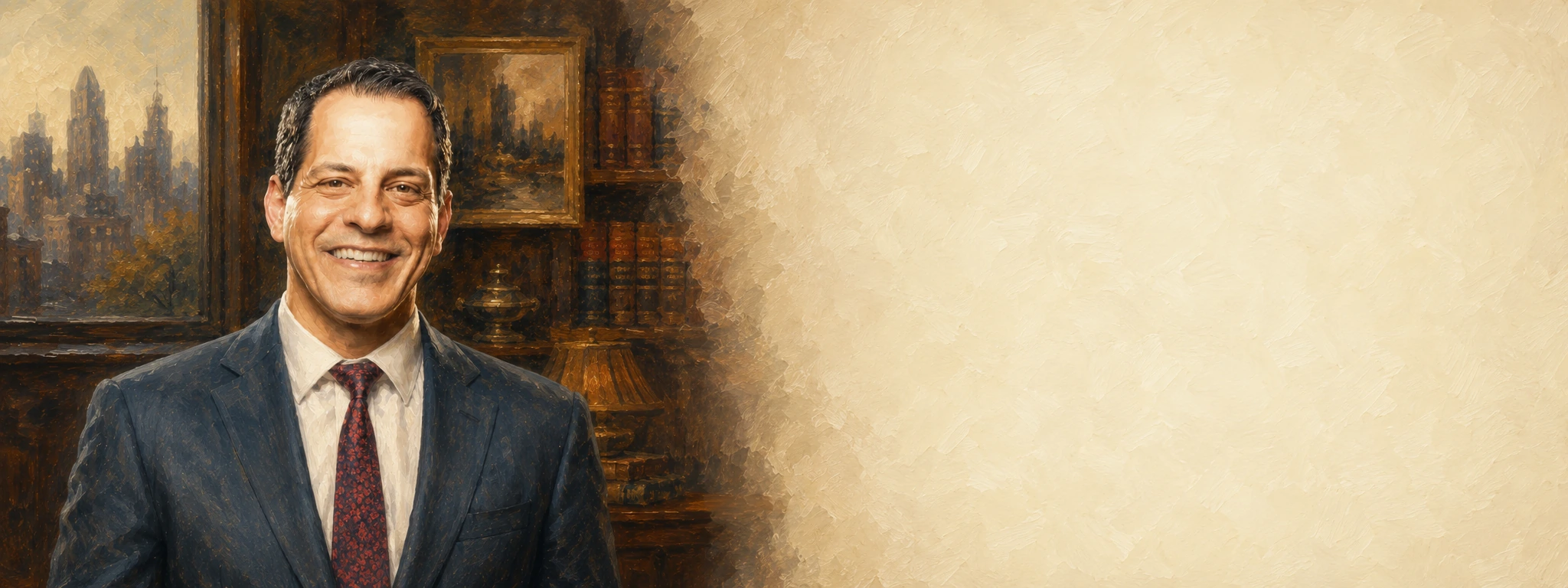
Portrait and contextual imagery are editorial illustrations.