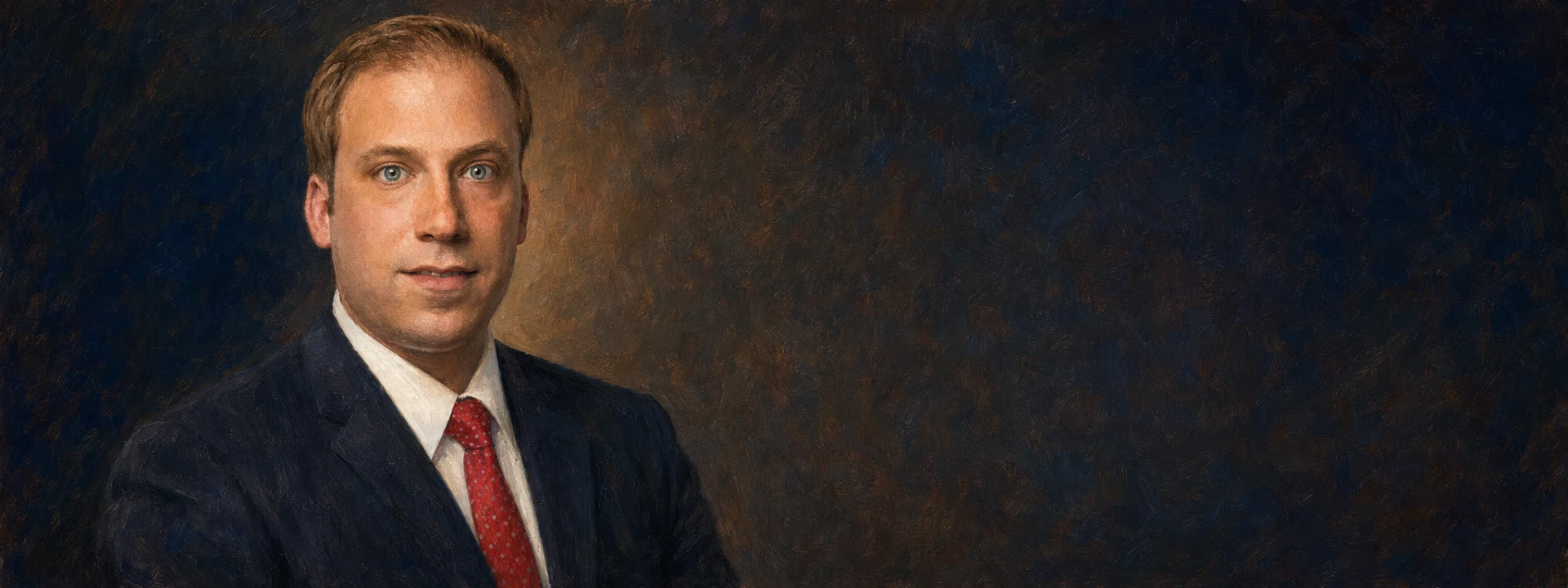
Alfred L. Fatale III
Securities Litigation · Public Offerings · Class Actions · Investor-Side Litigation
To highlight that in that professional setting—in front of a federal judge and the defense bar and our colleagues—was really my proudest moment.
893,997 Pages
The document production in the Uber IPO case ran to 107,668 company documents totaling 893,997 pages, plus more than 31,000 documents from third parties and more than 86,000 from the underwriters. The parties took or defended forty-six depositions. Expert discovery produced eleven reports.
Beneath that volume was a narrower question: what the offering documents told investors, and what they left out.
Alfred Fatale III led the team that built the record around it.
The $8 Billion Debut
Uber went public in May 2019 at $45 a share, raising more than $8 billion and carrying a valuation of $75.5 billion. The registration statement and prospectus described the business model, the growth trajectory, passenger safety, and the company's losses and expenses.
The Boston Retirement System — the pension fund for the retired employees of the City of Boston — was appointed lead plaintiff. Fatale led the Labaton team. The amended complaint brought claims under Sections 11, 12(a)(2), and 15 of the Securities Act against Uber, its officers and directors, and the underwriters.
These are not fraud claims, and the distinction shapes the practice. Section 10(b) requires proof of an intent to deceive. Sections 11 and 12 instead focus on whether an offering document contained a material misstatement or omission. Intent drops out — and other requirements, less familiar and less forgiving, move to the front.
Who Is Allowed to Sue
The most unforgiving of them is traceability.
To sue over an offering, an investor must show that the shares they bought are traceable to that offering rather than to some other tranche of identical stock already circulating in the market. Shares are fungible. Modern offerings can mix registered and unregistered stock under the same ticker. A traceability failure can end a claim before a court examines what the prospectus said.
Fatale has written on the problem and how investors can position themselves against it. In Uber, he litigated it. Judge Richard Seeborg denied the motions directed at both the first and second amended complaints, certified the class, appointed the Boston Retirement System and three other investors as class representatives, and appointed Labaton as class counsel. The Ninth Circuit declined the defendants' request for interlocutory review under Rule 23(f).
The class was through the door. Merits discovery then required a record for each underwriter's due-diligence defense.
One Day in Mediation
After a single full-day mediation, the mediator proposed $200 million. Both sides accepted in April 2024.
Fatale presented the record supporting final approval, and Judge Seeborg granted it. The fund then entered court-supervised allocation and distribution for eligible purchasers, including the retired city workers whose pension system led the case.
Two Front Doors
Securities Act cases can be brought in state court as well as federal court — a point the Supreme Court settled in 2018 in Cyan, confirming state-court jurisdiction over class actions asserting only Securities Act claims and preserving the statutory bar on removing them.
Fatale leads Labaton's state-court offering work alongside its federal Securities Act cases. The choice affects pleading rules and appellate routes. His parallel state and federal docket also requires attention to each court's certification rules and to the investors and purchases covered by each proposed class.
The Honest Company
Kathie Ng challenged the offering materials for the Honest Company's 2021 IPO, which described sales trends, a reformulated diaper, retailer inventory, and the company's ability to acquire and keep customers.
Judge Mark Scarsi denied the initial motion to dismiss and certified the class in 2023. The case later added control-person claims, and the court denied a further motion aimed at the revised allegations.
Resolution came in two pieces, because the defendants were not one group. In December 2024 the class accepted a mediator's proposal of $20 million from the Honest and underwriter defendants. In January 2025 it accepted a separate $7.5 million proposal from the Catterton defendants. The court held the settlement hearing in July 2025. Total: $27.5 million.
The Rest of the Docket
Since joining Labaton in 2016, Fatale has prosecuted offering and market cases involving ADT ($30 million), BrightView ($11.5 million), UGI ($10.25 million), Spectrum Brands ($9 million), SciPlay ($8.275 million), and Livent ($7.4 million), and has investigated other offering and market matters. Each has its own offering and its own cast — and the issuer, the directors, the controlling holders and the underwriters do not always want the same outcome, which is a fact a plaintiff can use.
Current Role
Fatale is a partner in Labaton Keller Sucharow's New York office, where he leads one of the firm's teams handling securities claims arising from initial public offerings, secondary offerings, and stock-for-stock mergers. Before joining the plaintiffs' bar, he represented financial institutions, investors, officers, and directors as an associate at Fried, Frank, Harris, Shriver & Jacobson.
He earned his law degree at Cornell in 2007, where he served on the law review and the Moot Court Board, and graduated summa cum laude from Montclair State University in 2004, where his fellow students elected him a voting member of the university's Board of Trustees. He is admitted in New York and before the Second and Ninth Circuits and several federal district courts.