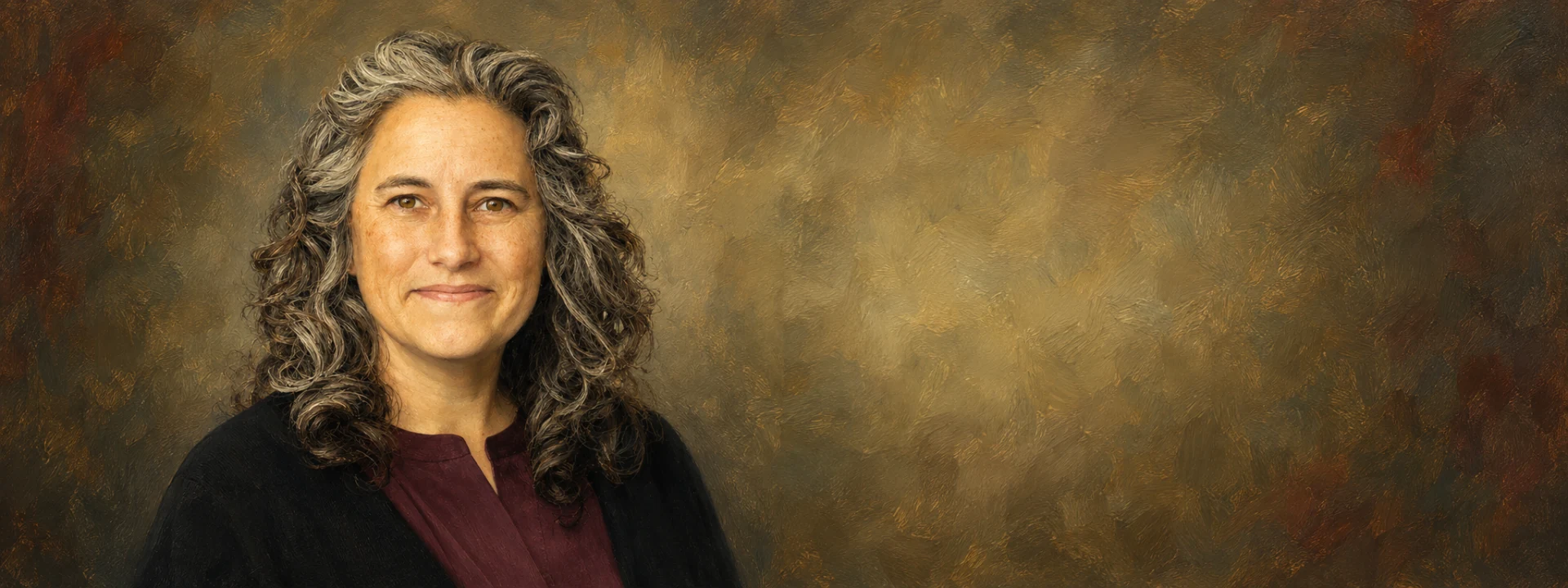
Anna Benvenutti Hoffmann
Wrongful Convictions, Police Fabrication, and Section 1983
Chris Tapp’s wrongful conviction never should have happened; DNA cleared him over 20 years ago.
Where the Hairs Came From
The only physical evidence said to connect John Restivo and Dennis Halstead to the murder of sixteen-year-old Theresa Fusco was a handful of hairs reportedly recovered from Restivo's van.
The hairs showed postmortem root banding, a change that occurs only after death. They resembled hairs taken from Fusco at autopsy. And they lacked the damage found on the unrelated hairs recovered from the same van.
The storage conditions supplied the rest. The questioned hairs and the autopsy hairs sat in unsealed envelopes in the same unlocked laboratory cabinet, without reliable counts or a handling log. Homicide detectives could enter without signing in and were routinely left unescorted.
At the 2014 civil trial, Anna Benvenutti Hoffmann examined the forensic experts and argued that the medical examiner had pulled the questioned hairs from Fusco's head at autopsy, and that someone later moved them into the material attributed to Restivo's van.
A second thread began with a car stolen near the murder scene and recovered beside railroad tracks. Its plates had been changed, a rope was missing, and striped jeans lay under the passenger seat. Fusco's mother had told detectives that her daughter wore jeans when she disappeared. Police discarded them without testing. Nassau County homicide detectives documented the car, the plates, the missing rope and the pants — and the reports never reached prosecutors or the defense.
Restivo and Halstead were convicted in 1986. DNA later excluded them and the third man convicted with them; the convictions were vacated and the charges dismissed in December 2005. Restivo had spent 6,566 days in prison.
The jury deliberated for two hours. On April 17, 2014, it found malicious prosecution and denial of a fair trial and awarded $18 million to each man.
A Hundred and Twelve Pages
Nassau County appealed the new-trial ruling, the evidentiary rulings, the damages, and the fee award.
Hoffmann argued the appeal. On January 19, 2017, the Second Circuit affirmed in a 112-page opinion and left intact a judgment that exceeded $43 million with fees, costs, and interest. In upholding nearly $5 million in fees, the court cited her firm's experience litigating wrongful-conviction cases nationwide and the excellent result achieved in a particularly complicated case.
Total compensation for the two men eventually exceeded $48.5 million.
Sixty Hours
Chris Tapp was convicted in Idaho in 1998 after roughly sixty hours of questioning, despite crime-scene DNA that excluded him.
During those interrogations, investigators introduced details about the crime that had never been made public. Those details later appeared in Tapp's own statements — which made the statements sound like the knowledge of a person who had been there.
Genetic genealogy eventually identified another man. His DNA matched the crime scene, and he confessed to acting alone. On July 17, 2019, the court vacated Tapp's conviction and completed his exoneration.
Hoffmann helped pursue the federal civil action. The work was archaeological: taking each nonpublic fact in Tapp's confession and tracing it backward through the recordings to the investigator's question that had put it in the room. Idaho Falls settled in 2022 for $11.7 million. The mayor apologized, and the city agreed to discuss changes to its interview and interrogation practices.
One Finger, One Photograph
Jamal Trulove's prosecution rested on a single eyewitness.
The civil trial established how that witness reached her identification. An inspector pointed toward Trulove's photograph while pressing her to name the shooter. Another inspector went to her apartment and showed her a single photo. The six-person array that followed included people she had already seen or already rejected.
A California appellate court reversed Trulove's conviction in 2014, and a jury acquitted him at retrial in 2015, after six years in prison. In April 2018 a federal jury found two inspectors liable for deliberately fabricating evidence and withholding exculpatory information. The district court declined to set the verdict aside, order a new trial, or reduce it. In March 2019 San Francisco's Board of Supervisors approved a $13.1 million recovery and ended the city's appeal.
Trulove had been an aspiring actor when he was arrested. In 2019, the year the city paid, he appeared in The Last Black Man in San Francisco.
Off Tape
Stefon Morant was convicted in New Haven while the evidence placed him in North Carolina.
Witnesses later described how their statements had been produced. The recordings stopped and started around questioning that was never captured — which is to say the tape documented the answers and not the process that generated them. Morant was released in 2015 and later received a full and unconditional pardon.
After a month-long federal trial, a jury awarded him $38 million on May 29, 2026. It found former detective Vincent Raucci liable for withholding favorable evidence and malicious prosecution; found Raucci and Vaughn Maher liable for coercion, fabrication, and civil-rights conspiracy; and found the City of New Haven liable for a widespread practice of suppressing evidence favorable to criminal defendants. Post-trial motions remained pending as of August 2026.
The Record
Hoffmann's work includes wrongful-conviction matters across several jurisdictions.
In Deskovic v. Putnam County, a jury returned $41.65 million against a New York officer who fabricated a confession from an innocent teenager and cost him sixteen years. Mellen v. Winn produced $12 million for a California woman who spent sixteen years in prison. With co-counsel in Bivens v. Forrest County, she obtained $20.5 million for the families of three Black men wrongly convicted of murder.
Coley v. Simi Valley recovered more than $25 million for a California man who spent thirty-eight years in prison for a double murder he did not commit. Saunders v. City of Chicago brought more than $16 million for a teenager who lost sixteen years to a fabricated confession, and Counts v. City of New York nearly $14 million for a man who lost twenty-five years.
Practice
Hoffmann joined Neufeld Scheck & Brustin in 2006 and is now a name partner at Neufeld Scheck Brustin Hoffmann & Freudenberger in New York. Her work runs from complaint through trial to appeal, and the appellate half of it has reversed defense judgments in jurisdictions across the country. She is admitted in nine federal circuits and the Supreme Court of the United States — a spread that reflects a practice built around being called in by other people's cases. Civil-rights lawyers around the country consult her on difficult questions of Section 1983 law, and she wrote the procedural guide to Section 1983 litigation in federal court that the American Bar Association publishes. She serves on the executive committee of the National Police Accountability Project.
She studied government at Harvard, graduated cum laude, and went to law school at NYU, where she finished magna cum laude with the third-highest grade point average in her class and was elected to the Order of the Coif. She clerked for Judge Reginald C. Lindsay in the District of Massachusetts.
The cases demand the same discipline across evidence that has nothing in common: explaining root banding and chain of custody to a jury, tracing a single fact backward through sixty hours of interrogation, showing how a finger pointing at a photograph becomes an identification. In each, the question is not whether the accused did it. It is how the record came to say he did.