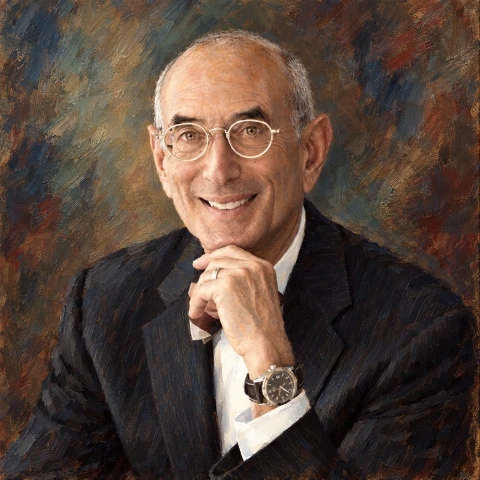
Brian A. Ratner
Cartel Damages · Antitrust Class Actions · International Competition Claims
The key challenge has been protecting these companies’ important supply relationships as they pursue damages claims.
Brian A. Ratner: The Vitamin C Price-Fixing Case in the Supreme Court and the Parker ITR Marine Hose Settlement
Ratner represented American buyers of Chinese vitamin C in the case in which a unanimous Supreme Court held that federal courts should give a foreign government’s account of its own law respectful consideration but are not bound to treat it as conclusive. In 2009 he led the negotiations that produced a worldwide cartel settlement with the marine hose maker Parker ITR, reached without a lawsuit.
China’s vitamin C manufacturers reached an agreement on export prices in November 2001, and the China Chamber of Commerce of Medicines & Health Products Importers & Exporters announced on its website that they “were able to reach a self-regulated agreement” to control the quantity and pace of their exports “without any government intervention.” After American purchasers sued the manufacturers for fixing prices, China’s Ministry of Commerce told the federal court in New York that the same conduct was “a regulatory pricing regime mandated by the government of China.” The purchasers’ claim rested on the first statement, and the manufacturers’ defense on the second.
Brian A. Ratner was one of the purchasers’ co-lead counsel. The two statements raised a question that reached the Supreme Court: whether a federal court must accept a foreign government’s account of its own law as conclusive. The Second Circuit had held that a court was bound to defer to such an account whenever it was reasonable. In June 2018 the Supreme Court unanimously rejected that rule. A court owes that account respectful consideration, the Court held, and may weigh it against other relevant material.
Ratner, now the global chair of Hausfeld LLP, represents companies and classes that paid cartel overcharges. In the vitamin C case, the defendants that did not settle contested the claims with their government’s support. In 2009 Ratner took a different route. For a group of oil and gas companies, he led the negotiations with the marine hose maker Parker ITR that produced a worldwide settlement reached without a lawsuit and without court approval. His clients now include carmakers pursuing damages from auto parts cartels whose members sell them parts.
Minimum Prices, Announced in Public
The vitamin C case grew out of an earlier one. “The most interesting, challenging and rewarding cases I have worked on have been the series of Vitamins price-fixing cases, where I have served as one of the lead counsel and which have included several highlights,” Ratner has said. In the Vitamins Antitrust Litigation, the plaintiffs were direct purchasers of vitamins overcharged by a ten-year global price-fixing and market-allocation conspiracy, and the case produced more than $1 billion in settlements. Chinese vitamin C makers had announced publicly that they had agreed on minimum prices among themselves, and the lawyers who had just tried the vitamins case began investigating.
No government prosecution came first. The U.S. Department of Justice filed no charges against the Chinese manufacturers, so the purchasers had no American guilty plea to build on, and their lawyers took the case on a full-risk basis for their clients and a class of companies that had bought vitamin C directly from the defendants. In 2005 vitamin C purchasers in the United States, among them Animal Science Products, Inc. and The Ranis Company, filed numerous suits, which the Judicial Panel on Multidistrict Litigation sent to the Eastern District of New York for pretrial proceedings.
Among the buyers that sued in 2005 were a Texas animal-feed company and a New Jersey vitamin distributor. China then produced about 60 percent of the world’s vitamin C, and the Chinese manufacturers answered the suits by denying that their prices were inflated: their average export price to the United States, they said, was $4.57 a kilogram, below a world average of $4.63.
By 2001 Chinese vitamin C production had consolidated from more than twenty companies into four major manufacturers: Hebei Welcome Pharmaceutical Co., Jiangsu Jiangshan Pharmaceutical Co., Northeast Pharmaceutical Group Co., and Weisheng Pharmaceutical Co. They and their corporate affiliates, among them North China Pharmaceutical Group Corp., were the defendants. The manufacturers belonged to the Vitamin C Subcommittee of the China Chamber of Commerce of Medicines & Health Products Importers & Exporters, which the Chamber created in 1997 to address “intense competition and challenges from the international [vitamin C] market.” Before 2002, only members of the Subcommittee could export vitamin C. Beginning in 2002, under a procedure called price verification and chop, a manufacturer submitted documentation to the Chamber showing the amount and price of the vitamin C it intended to export, and the Chamber would verify the contract price and affix a chop, a special seal, signaling that it had reviewed and approved the contract.
The purchasers traced the November 2001 agreement to a price war. Between May 2000 and December 2001, by their account, Chinese exporters undercut one another until the export price of vitamin C fell from $5.0 a kilogram to $2.8. An internal report prepared at one of the conspiring companies described the 2001 market as one of “brutally sharp competition, slacked performance, and sustained price decline.” At the Subcommittee’s meeting that November the members agreed to raise the export price to $3 a kilogram from January 1, 2002, and accounts written at the time said they acted because “prices had reached rock bottom, and no one could sustain a further slide.” By 2002, the purchasers said, the four manufacturers accounted for more than 80 percent of the vitamin C exported to the United States.
The Ministry’s First Brief in an American Court
The manufacturers moved to dismiss. They argued that they had acted under Chinese regulations on vitamin C export pricing and were, as the Second Circuit later put it, “in essence, required by the Chinese Government” to coordinate prices and create a supply shortage. The Ministry of Commerce filed an amicus brief supporting the motion. Judge Trager, who decided the motion, noted that it was the first time any entity of the Chinese government had appeared as amicus curiae before any American court. The Ministry described itself as “the highest administrative authority in China authorized to regulate foreign trade” and the Chamber as “an entity under the Ministry’s direct and active supervision,” and it told the court that the conduct the purchasers called a conspiracy was a pricing regime China’s government had mandated.
The defense drew on real features of Chinese export regulation: a chamber that answered to the Ministry, a subcommittee whose members alone could export vitamin C before 2002, and a seal the Chamber placed on approved export contracts after that. If Chinese law required the price agreements, the manufacturers could not comply with both Chinese law and the Sherman Act, and the ministry that regulated China’s foreign trade had told the court that Chinese law did.
The District Court acknowledged that the Ministry’s brief was “entitled to substantial deference” but declined to treat its statements as conclusive. The purchasers pointed out that the Ministry had not identified any written law or regulation that expressly ordered the price agreement, and they set the Chamber’s announcement of a self-regulated agreement reached without government intervention against the Ministry’s brief. When the Ministry later submitted a further statement, the purchasers answered with China’s statement to the World Trade Organization that it had given up export administration of vitamin C. The District Court also considered documents from after 2002 showing Subcommittee members reaching several voluntary agreements on price and occasionally defecting from them without any penalty.
Three of the manufacturers, Weisheng, Northeast Pharmaceutical, and Jiangsu Jiangshan, settled with the purchasers for a combined $32.5 million. Hebei Welcome and North China Pharmaceutical did not settle, and the weight owed to the Ministry’s account went to the Second Circuit and then to the Supreme Court.
On September 20, 2016, a Second Circuit panel of Judges Cabranes, Wesley, and Hall, in an opinion by Judge Hall, held that when a foreign government participates directly in an American case with a sworn statement about the construction and effect of its own laws, and the statement is reasonable under the circumstances, “a U.S. court is bound to defer to those statements.” Ratner was among the Hausfeld lawyers on the purchasers’ brief in that court, with Michael D. Hausfeld, Melinda Coolidge, and Brent W. Landau.
After inviting the Solicitor General to state the government’s views on the purchasers’ petition, the Supreme Court agreed in January 2018 to decide whether a federal court determining foreign law must treat a foreign government’s official statement about its own law as conclusive. The United States filed a brief supporting the purchasers. The Ministry filed a brief supporting the manufacturers, and the Court allowed it to share their argument time on April 24, 2018. Ratner was again among the lawyers on the purchasers’ merits brief.
The Chamber’s Own Papers
The purchasers’ merits brief reached the Court on February 26, 2018. Michael J. Gottlieb of Boies Schiller Flexner was counsel of record. Ratner’s name stood on the cover with those of Michael Hausfeld and Melinda Coolidge of Hausfeld’s Washington office and Brent W. Landau of its Philadelphia office, beside David Boies and other Boies Schiller lawyers and James T. Southwick and Shawn L. Raymond of Susman Godfrey. The brief put a single question: “Whether a court determining foreign law under Federal Rule of Civil Procedure 44.1 is required to accept as legally binding a submission from a foreign government characterizing its own law.”
The brief then set out the record the Second Circuit had passed over. In 2002 the Subcommittee had replaced its charter with one that called it an “organization jointly established on a voluntary basis” and gave every member an express “[r]ight” to “freely resign from the Subcommittee.” The Ministry’s own 2002 notice provided that “the customs and chambers may suspend export price review for certain products.” The Chamber’s notice of agreed export prices for the spring of 2003 told member companies, “Please abide by the list in implementation,” and printed minimum prices for paracetamol, saccharin sodium, heparin sodium, penicillin industrial salt and tetracycline hydrochloride. Vitamin C was on the list, and the space for its agreed price was blank. In a memorandum dated July 17, 2003, the Chamber complained that rules drawn up by the companies it organized “lack legal basis” and “simply become formality and only ‘honest fellows will follow.’”
A Northeast Pharmaceutical plan for its 2006 sales in the Americas set a target of 10,000 tons of vitamin C exports to the American market and recorded that, under pressure from China’s vitamin C makers, BASF’s Japanese plant and DSM’s Scottish plant had been “forced to withdraw from the market and die a natural death.” The same plan instructed: “Strengthen self-regulation in the VC industry, but don’t rely completely on the ‘gentlemen’s agreements’ of the Chamber of Commerce.” The purchasers told the Court that virtually all of the manufacturers’ exports to the United States during the years they sued over had shipped without a chop. They also quoted a November 2005 email, written ten months after the first complaint was filed, in which an employee of one of the conspiring companies wrote that “[e]ven if we lost the case, government would take the foremost part of the responsibility. After all, we need to do many things in a more hidden and smart way.”
“What Words to Put In”
The Court heard argument at 11:39 a.m. on April 24, 2018, and Gottlieb went first. “The question in this case is whether a district court is bound to accept a foreign sovereign’s statement of foreign law in the unusual case in which the court has concerns about the statement’s clarity, its completeness, or its consistency,” he said. “The answer to that question is no.” Justice Stephen Breyer pressed him from the Ministry’s side. As Breyer read China’s regulations, an exporter could not ship vitamin C unless it followed the price the industry association fixed. “Now I asked my clerk to go through the record and see if there’s anything in the lower court that actually suggests that isn’t Chinese law,” Breyer said. “Well, I don’t know, not much.”
Gottlieb answered that documents in the case showed Chinese exporters selling in the United States below the $3.35 price point. That, Breyer said, “might also equally prove that they don’t all follow the law.” Gottlieb went on to Chamber papers in the joint appendix showing periods when no export price for vitamin C was listed, and to a provision in the 2002 notice that let the Chamber and its members suspend price review. Brian H. Fletcher, an assistant to the Solicitor General, argued next for the United States. Breyer asked him what standard federal judges could apply to submissions from 192 governments when “by and large, the characteristic of a federal judge is he knows very little, if anything, about the law of 192 countries.” Fletcher offered a phrase. “I would say always respectful consideration,” he said, adding that the weight owed to a foreign government’s statement would “depend on the circumstances.”
Carter G. Phillips argued for the Ministry and opened by reading from the Chamber pages Gottlieb had cited. “No consensus was reached about price at the meeting. The minimum price for export remains unchanged,” he read. “That doesn’t sound like a gap.” Then he read the first instruction of the 2003 price notice: “The agreed prices are the minimum prices. We put the limit on the floor prices but not on the ceiling prices.” He acknowledged that not every exporter had complied. “I’m not saying we can completely enforce the laws,” he said, and he likened the price floor to a speed limit that drivers break.
Justice Ruth Bader Ginsburg asked him about China’s statement to the World Trade Organization that it had given up export administration of vitamin C. “It seems directly contrary to its position here,” she said. Phillips answered that if the government had a problem with that statement, it should “take it up with the World Trade Organization.” Breyer told him, “You’re worried about winning. I’m worried about what words to put in,” and the courtroom laughed. Justice Elena Kagan asked whether China’s own courts followed the rule the Ministry wanted from American courts. “I looked for Chinese law on this particular question,” Phillips said. “I couldn’t find a single instance.” Asked whether any country used the rule, he answered, “Well, the United States up until this case.” When he could name no other, Kagan observed that “you’re a great lawyer, you would be able to tell us that some country used that rule.”
Jonathan Jacobson argued for Hebei Welcome and North China Pharmaceutical and built the defense from the text of the regulations. The 2002 and 2003 regulations, he said, used the words “shall” and “must” repeatedly, and the 2001 price war had been “very destructive to the Chinese economy”; a government trying to raise prices would not have rewritten its rules to make price fixing optional. Chief Justice John Roberts said he did not understand “this constant emphasis on respectful,” observing that “‘with all due respect’ usually means the person’s about to say you don’t know what you’re talking about.” Jacobson began his reply, “Respectfully, Your Honor,” to more laughter, and told the Court that “respectful deference is not a sufficient standard.” In two minutes of rebuttal Gottlieb returned to Kagan’s question. “China doesn’t apply this kind of binding deference,” he said. “The United States doesn’t ask for it.” China was the only nation before the Court urging reversal: “all you have is China advocating for this rule.” The case was submitted at 12:40 p.m.
From “Bound to Defer” to “Respectful Consideration”
On June 14, 2018, the Court ruled unanimously. “A federal court should accord respectful consideration to a foreign government’s submission,” Justice Ruth Bader Ginsburg wrote, “but is not bound to accord conclusive effect to the foreign government’s statements.” The opinion rested on Federal Rule of Civil Procedure 44.1, adopted in 1966, under which a court’s determination of foreign law “must be treated as a ruling on a question of law” and may draw on any relevant material or source. The weight a foreign government’s statement deserves, the Court held, depends on the circumstances, including “the statement’s clarity, thoroughness, and support; its context and purpose; the transparency of the foreign legal system; the role and authority of the entity or official offering the statement; and the statement’s consistency with the foreign government’s past positions.”
Justice Ginsburg wrote that when a foreign government makes conflicting statements or, “as here, offers an account in the context of litigation, there may be cause for caution in evaluating the foreign government’s submission.” The European Convention on Information on Foreign Law and the Inter-American Convention on Proof of and Information on Foreign Law let one government obtain from another an official statement of its law, and those treaties, the Court noted, specify that the reply “shall not bind the judicial authority from which the request emanated.” The Court observed that the United States, “historically, has not argued that foreign courts are bound to accept its characterizations or precluded from considering other relevant sources.” The Second Circuit, the Court held, “erred in deeming the Ministry’s submission binding, so long as facially reasonable,” and in fixing its attention on that submission it had not addressed other evidence, including China’s statement to the WTO.
The Court took no position on what Chinese law actually required. It held that the materials the District Court had identified, the purchasers’ evidence suggesting that the price fixing was voluntary, “were at least relevant to the weight the Ministry’s submissions should receive,” and it returned the case to the Second Circuit for renewed consideration under the standard it had announced. Ratner has said the decision “set the standard of deference to be afforded a foreign government’s submissions in U.S. courts.” That standard now applies whenever a federal court in a civil case is asked to accept a foreign government’s account of its own law.
“Litigation and Negotiation”
Of his choice of the University of Pittsburgh School of Law, Ratner has said: “It was an opportunity to come home to Pittsburgh and be surrounded by and supported by my family and personal network, which is a great situation for law school.” “While I didn’t take antitrust in law school,” he said in the same 2019 interview, “I knew I wanted a practice that focused on litigation and negotiation, and was drawn to both the plaintiff-side and global business disputes.”
In 2019 he said Michael Hausfeld had been his mentor for nineteen years. “I have litigated and tried so many cases with him and negotiated some of the biggest and most complex disputes with him,” he said. When Hausfeld founded Hausfeld LLP in 2008, Ratner was one of its founding partners, and on January 1, 2022, Ratner and Anthony Maton succeeded Hausfeld as the firm’s global co-chairs. Ratner is now its global chair, working from the Washington, D.C., office, and his cases run through American and European courts.
Outside the firm, Ratner and his wife, Jamie, co-founded CertifiKID in 2010, a deal website for children’s activities and family entertainment. In 2019 she was its chief executive, running its day-to-day operations, and he was its president; the couple had appeared on ABC’s Shark Tank and made a deal with the investor Kevin O’Leary.
“The Club” in Houston
Marine hoses carry crude oil and other petroleum products between offshore facilities and ships. The European Commission found that from at least April 1, 1986, until May 2, 2007, manufacturers of those hoses fixed prices, shared markets, set quotas, and exchanged sensitive commercial information. Its decision of January 28, 2009, named Bridgestone, Yokohama, Dunlop, Trelleborg, Parker ITR, and Manuli Rubber Industries among the participants and imposed fines totaling €131 million. Parker ITR was the former ITR Rubber, which Parker-Hannifin had acquired in January 2002.
The last day of that period was the day of the arrests. On May 1, 2007, executives of the marine hose makers met their paid coordinator, Peter Whittle, at a Houston hotel during an oil industry trade conference. The Justice Department’s Antitrust Division and the FBI had the meeting under video surveillance and wiretap, on information from a Japanese businessman who had come forward the year before and applied for leniency. The next day agents arrested eight executives from the United Kingdom, France, Italy and Japan in Houston and San Francisco, among them a business unit manager from Parker ITR. At the same time Britain’s Office of Fair Trading and the European Commission executed search warrants in Europe, and for the first time the Commission searched a private home.
Prosecutors charged that the members called their cartel “the club,” that Whittle collected about $300,000 a year from them, roughly $50,000 apiece, and that he designated which company would win each job, calling the chosen bidder the “champion.” Earlier meetings had been held in Key Largo, Bangkok and London. The buyers prosecutors named included Shell, Exxon, Chevron and the U.S. Department of Defense. In December 2007 Whittle and two Dunlop Oil & Marine executives, Bryan Allison and David Brammar, pleaded guilty in Houston and agreed to prison terms of thirty, twenty-four and twenty months, which the Justice Department called the longest sentences foreign defendants had agreed to serve in the Antitrust Division’s history. Giovanni Scodeggio, the manager of Parker ITR’s oil and gas business unit, pleaded guilty in Houston in August 2008 and was fined $20,000 and sentenced to six months of house arrest.
When the Commission issued its decision on January 28, 2009, it fined Bridgestone €58.5 million and Parker ITR €25.61 million, raising each company’s fine by 30 percent for its leadership of the cartel; Yokohama, which had revealed the cartel to the Commission, was not fined. The members had called some markets their “private markets” and had agreed on “a dozen or so pages of detailed ‘cartel rules.’” “For 20 years, this cartel added to the prices consumers paid for their oil deliveries,” Competition Commissioner Neelie Kroes said. The Commission also told buyers what its decision meant for them: in the courts of the member states, a Commission decision is “binding proof that the behaviour took place and was illegal,” and damages are not reduced on account of the fine. Parker ITR and its parent, Parker-Hannifin, appealed.
Parker ITR’s Worldwide Offer
Hausfeld represented more than fifty corporate buyers of marine hose, among them some of the world’s largest oil companies. For a group of oil and gas companies, Ratner led the negotiations with Parker ITR. The settlement, reached in 2009, let any purchaser of marine hose from Parker ITR anywhere in the world, other than direct purchasers of marine hose in United States commerce, claim compensation for losses arising from the cartel, wherever the buyer was based and wherever it had bought the hose.
Parker ITR agreed to the settlement on February 17, 2009, twenty days after the Commission’s decision, and Hausfeld announced it in early March. The terms ran through standard private contracts that Parker ITR offered to eligible buyers. Parker ITR set aside money in a fund managed by independent officials. A buyer that signed on released its claims against Parker ITR and claimed from the fund. A buyer that had purchased directly from Parker ITR during the settlement period was presumed entitled to 16 percent of those purchases unless it had passed the loss on, an independent expert set each buyer’s share, and claimants could remain anonymous. Parker ITR also undertook, Anthony Maton of Hausfeld said later that year, to cooperate in claims against the other cartel members.
Parker ITR resolved those claims through a settlement offer, without litigation, and no court had to approve the terms. Michael Hausfeld said at the time that because the settlement required no court approval and fees and costs came on top of the settlement amount, cartel victims could “recover their entire losses caused by the cartel’s overcharges without reduction and more expeditiously.”
Maton, the Hausfeld partner in London who steered clients toward the deal, called it “a commercial business resolution for a commercial business dispute.” “Companies are not used to settling cases in the UK and EU,” he said at the time. “They will settle in the US because that’s where they expect claims to be brought.” Asked in 2019 which matter stood out in his career, Ratner chose this one. “This was certainly a favorite given the novelty and creativity of this resolution,” he said. “The private enforcement of global competition laws has been like a new frontier.”
Buyers in the United States had a separate route. Four class actions were filed in federal court in southern Florida and one in New York, and Parker ITR and Parker-Hannifin settled them separately, subject to court approval. In February 2010 Parker ITR agreed to plead guilty in the United States to taking part in the conspiracy from as early as 1999 until May 2, 2007, and to pay a $2.29 million criminal fine.
Against three of the other manufacturers, Hausfeld’s clients went to court in the United Kingdom, suing Dunlop Oil & Marine in 2009 and Bridgestone and Trelleborg in 2010. The claim against Dunlop was filed in the High Court in London in July 2009 for Waha Oil Co, the second-biggest oil producer in Libya, and Hausfeld said other buyers had instructed it to act against Dunlop as well. Maton said the action would give Waha and other buyers “a further means of recouping their losses.” The parties agreed to stay those cases, and they were resolved on confidential terms in 2013.
Claims Against the Companies That Supply Them
In October 2011 Bridgestone, one of the marine hose manufacturers, pleaded guilty in the United States and paid a $28 million fine for price fixing and Foreign Corrupt Practices Act violations in the marine hose industry. It did not disclose then that it had also taken part in a conspiracy to fix the prices of automotive anti-vibration rubber parts sold to Toyota, Nissan, and other automakers. In February 2014 Bridgestone agreed to plead guilty to that conspiracy and pay a $425 million criminal fine, and the Justice Department said its failure to disclose the conspiracy was a factor in setting the fine. By then twenty-six companies had pleaded guilty or agreed to plead guilty in the department’s investigation of price fixing and bid rigging in the auto parts industry, with criminal fines totaling more than $2 billion.
Ratner represents carmakers and other manufacturers, including BMW, Stellantis, PSA, FCA, Renault, and GKN, in their damage claims arising from the global auto parts cartels. Those claims run against companies that make the parts the carmakers buy. “The key challenge has been protecting these companies’ important supply relationships as they pursue damages claims,” he said in 2019. “It has been a very delicate balance to strike, but I think our clients would tell you that we’ve done it successfully.”
Bridgestone’s anti-vibration rubber was one line of parts among many. Between 2014 and 2020 the European Commission issued cartel decisions covering bearings, alternators and starters, thermal systems, lighting, braking systems, spark plugs, occupant safety systems, and the latches, door modules and window regulators that close a car, and many of the same suppliers pleaded guilty in the United States. “This investigation was so broad,” Ratner said in 2019 of the carmakers’ claims, and “a successful resolution for these clients has the potential to restore confidence in the parties’ commercial relationships by ensuring fairness in future pricing practices.” Over the past decade Hausfeld lawyers in the United States and Europe have helped seven carmakers recover hundreds of millions of dollars and euros from more than twenty-five suppliers, in the High Court in London, the Competition Appeal Tribunal, the commercial court in Lyon and the district court in Munich.
In January 2026 Ratner and Kartik S. Madiraju began their article in Competition Policy International, “99 Antitrust Problems – Is Recidivism One?,” by writing: “In a consolidated global economy, every industry faces a growing risk of anticompetitive conduct and the troubling prospect of antitrust recidivism. But is there, in fact, an antitrust recidivism problem?”
In the article the two lawyers set cartel fines against cartel gains. The vitamin cartel of the 1990s, whose direct purchasers Ratner had represented, paid nearly $5 billion in fines and civil settlements in the United States, they wrote, while its sales during the conspiracy exceeded $30 billion and its profits approached $10 billion. “Fines that were once considered unprecedented may now simply be the cost of doing business for conglomerates that see tens, if not hundreds, of billions in annual revenue,” they wrote. They proposed higher fines for repeat offenders, caps on leniency discounts for recidivists, and, for private claimants, a body to coordinate claims against serial colluders across borders, modeled on the Judicial Panel on Multidistrict Litigation, the panel that had sent the vitamin C suits to the Eastern District of New York.
Asked in 2019 what lesson he took from the carmakers’ claims, Ratner said: “In big corporate disputes like these, the issues are not personal and don’t have to permeate the entire commercial relationship, though there is a risk that this can happen if there isn’t acceptance of responsibility by the party that engaged in the illegal conduct and a willingness to fairly compensate for the loss caused.”