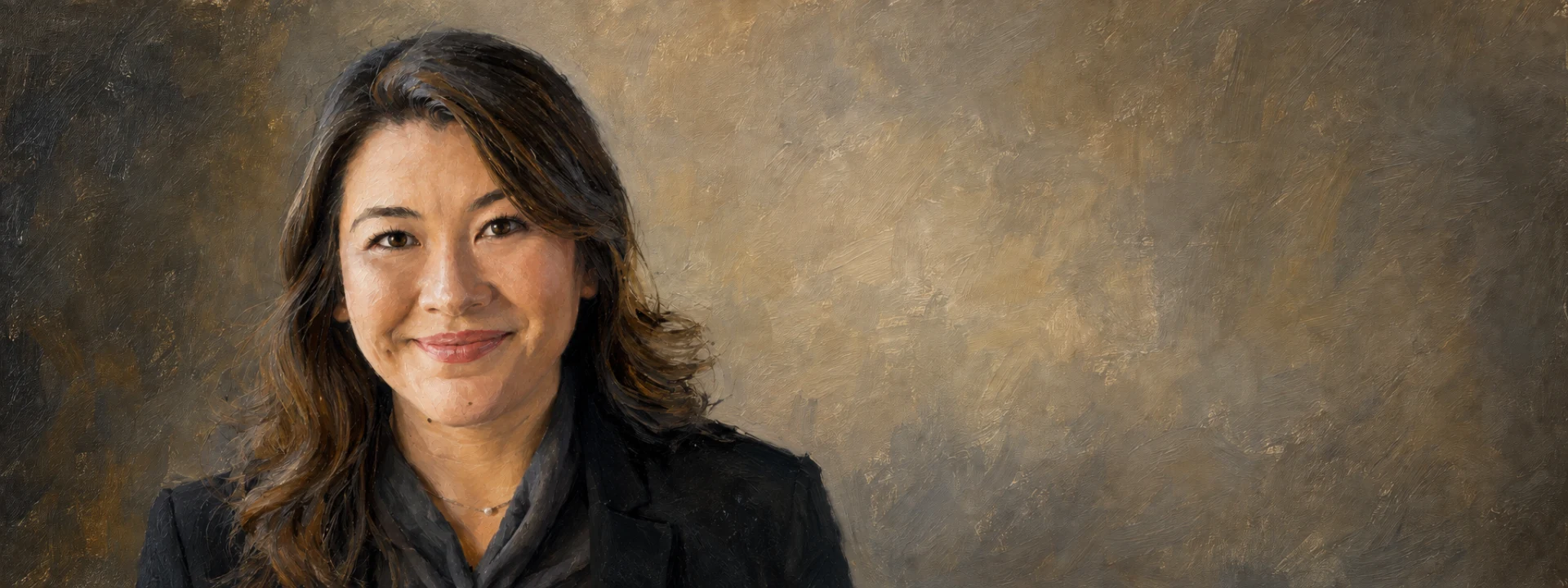
Colleen Durkin Peterson
PCB Exposure, Product Liability, Medical Negligence, and Catastrophic Injury
These were children whose lives were forever altered by a company that chose to look the other way out of greed.
Two Verdicts in Five Months: $237 Million
Colleen Durkin Peterson tried two Sky Valley PCB exposure cases to verdict in 2023 — $72 million for two former students in July, and $165 million for seven former employees in November — and was part of the team that reinstated a separate $185 million verdict in the Washington Supreme Court.
What Was in the Light Fixtures
Polychlorinated biphenyls were commercially useful because they lasted.
They resisted heat, did not readily burn, and broke down slowly. Those properties made them ideal for the small capacitors and ballasts inside fluorescent-light fixtures, where an insulating fluid has to survive decades of heat cycling without igniting. Monsanto manufactured them for that market and others under the trade name Aroclor.
The same durability that made them valuable is why they were still in the building. Congress restricted PCB manufacture in the 1970s, and domestic production ended, but nothing about the ban reached the fixtures already installed in the ceilings of American schools. Those kept operating — aging, warming, and cooling — long after the company stopped selling the chemical, the buildings changed hands, and the people who ordered the fixtures retired.
At Sky Valley Education Center in Monroe, Washington, aging fixtures leaked and emitted PCBs into occupied rooms. Dust gave the chemical transport. Air gave it reach. Carpet and porous surfaces gave it somewhere to accumulate.
The building was not the site of a past release. It was an active source of exposure, above the desks, for as long as the fixtures remained. The hazard did not have a date. It had a duration.
Assembling a Life-Sized Case
Peterson joined the trial team in the litigation over the PCBs released at Sky Valley. The team used environmental sampling to identify which PCB mixtures were present, industrial-hygiene evidence to reconstruct how they circulated, medical evidence to address each plaintiff's injuries, and corporate documents concerning Monsanto's knowledge of the product.
The proof crossed disciplines, and each discipline answered a different question.
Toxicology and epidemiology supplied biological context: what the compounds do in a human body, and at what levels. Neurologists, endocrinologists, and cancer specialists addressed individual injury — the thyroid disease, the neurological symptoms, the malignancies claimed by particular plaintiffs. Industrial hygiene established dose. Internal corporate documents established what the manufacturer learned, and when.
None of those alone proves a case. A plaintiff needs the chain intact: this compound, in this room, at this concentration, for this many years, producing this diagnosis in this person, from a product the manufacturer knew enough about to warn of and did not. Break any link and the whole claim falls.
Peterson's role was to coordinate that evidence plaintiff by plaintiff, so that each chain held on its own.
The $72 Million Student Verdict
In July 2023, Peterson and Richard Friedman led a trial for two former Sky Valley students.
The King County jury found Monsanto liable for supplying an unsafe product without adequate warnings, and awarded $72 million: $12 million in compensatory damages and $60 million in punitive damages.
The finding rested on a straightforward proposition that the case made concrete. The children had no choice about the room. They were assigned to it, required to be in it, and had no capacity to detect what was coming out of the ceiling. The classroom itself had become the route of exposure — and attendance was the law.
Nine Weeks, Seven Lives, One Ceiling
Four months later, Peterson and her co-counsel returned to trial for six former teachers and a custodian.
The nine-week proceeding combined common evidence — the fixtures, the chemistry, the manufacturer's scientific knowledge — with the individual exposure and medical record of each plaintiff. The jury deliberated for two weeks.
That structure is the central difficulty of a multi-plaintiff toxic-tort trial. Common evidence establishes the product and its behavior efficiently, and it must, because reproving the chemistry seven times would exhaust any jury. But the common evidence cannot decide any individual case. Seven plaintiffs meant seven different rooms, seven different tenures, seven different sets of duties within the building, and seven different medical histories, including whatever else had happened in each of those lives.
A custodian moving through the whole campus for years has a different exposure profile from a teacher in one classroom. Both may be substantial; neither is interchangeable. The trial therefore had to present the common product evidence while keeping each of the seven individual exposure and medical records distinct.
Peterson kept each plaintiff's evidence distinct while returning the jury, again and again, to the same fixtures overhead.
In November 2023, the jury awarded the seven plaintiffs $165 million, including $49.8 million in compensatory damages and $115.3 million in punitive damages.
Dust as a Witness
The exposures at issue had occurred years before anyone took a measurement. There was no air-monitoring data from the relevant classrooms in the relevant years, because no one had been monitoring.
Industrial hygiene addresses that gap by working backward. PCBs deposit out of air onto surfaces and settle into porous materials, where they persist. Carpet, in particular, functions as a reservoir with a long memory. Measuring what remains in the carpet, applying known deposition behavior, and comparing the result with measurements from other buildings can support an estimate of historical air concentrations.
In Erickson v. Pharmacia, Peterson's team obtained a reversal in the Washington Supreme Court of a Court of Appeals ruling that had set aside a separate $185 million Sky Valley verdict and ordered a new trial.
On October 30, 2025, the Supreme Court upheld an industrial hygienist's historical-exposure estimates — including back-calculations from carpet samples and comparisons with other schools — under Frye and Evidence Rule 702. It reinstated the jury's verdict and held that a new trial was not warranted.
The evidentiary holding permitted historical exposure to be proved through reconstruction when contemporaneous measurements did not exist, subject to the applicable scientific-evidence rules.
Two States' Law in One Courtroom
The same decision resolved a choice-of-law question with direct consequences for whether the claims could be brought at all.
The court held that the Washington Product Liability Act governed substantive liability, while Missouri law governed repose and punitive damages, because the challenged corporate decisions had centered in Missouri.
Both parts of that ruling affected whether the claims could proceed and what relief was available.
Washington law creates a rebuttable presumption that a product's useful safe life has expired when harm occurs more than twelve years after delivery. Fixtures installed in a school decades earlier sit far outside that period. Missouri has no comparable product-liability statute of repose.
Missouri law also permits punitive damages where its heightened misconduct standard is met, which is what made the conduct evidence — what the manufacturer knew, and when — worth the years of document work behind it.
The rationale focused on where the challenged conduct occurred. The exposure happened in a Washington classroom; the corporate decisions about testing, warning, and continued sale happened in Missouri.
Monsanto and the Erickson plaintiffs settled that case on confidential terms in December 2025.
Two Hundred Claimants
More than two hundred students, employees, and family members brought claims connected to Sky Valley.
In August 2025, Monsanto announced agreements in principle to resolve those claims, except for prior verdicts then on appeal. The terms were confidential and subject to final settlement agreements. As of May 18, 2026, the broader resolutions remained agreements in principle.
The agreements followed two completed trials, two entered verdicts, and appellate litigation over the evidentiary record. The remaining claims then moved toward a collective resolution while the prior verdicts proceeded separately.
Her Father's Three Rules
Peterson grew up in Washington in a trial-lawyer family. Her father, John Durkin, represented injured people and taught her three things: know the client, tell the truth, and move the case forward.
She earned a B.A. in Business Administration and Sport Management from Loyola University Chicago in 2007 and a J.D. from Gonzaga University School of Law in 2012. She spent eight years working with Jim Holman on medical-negligence cases — work that trains a lawyer in exactly the discipline Sky Valley would demand: reading a medical record closely enough to know what is missing from it.
After co-counseling with Friedman Rubin on the Sky Valley litigation for several years while at Pfau Cochran Vertetis Amala, she joined Friedman Rubin as a partner in March 2025.
Her practice includes toxic-tort exposure, medical negligence, nursing-home neglect, product liability, and catastrophic injury.