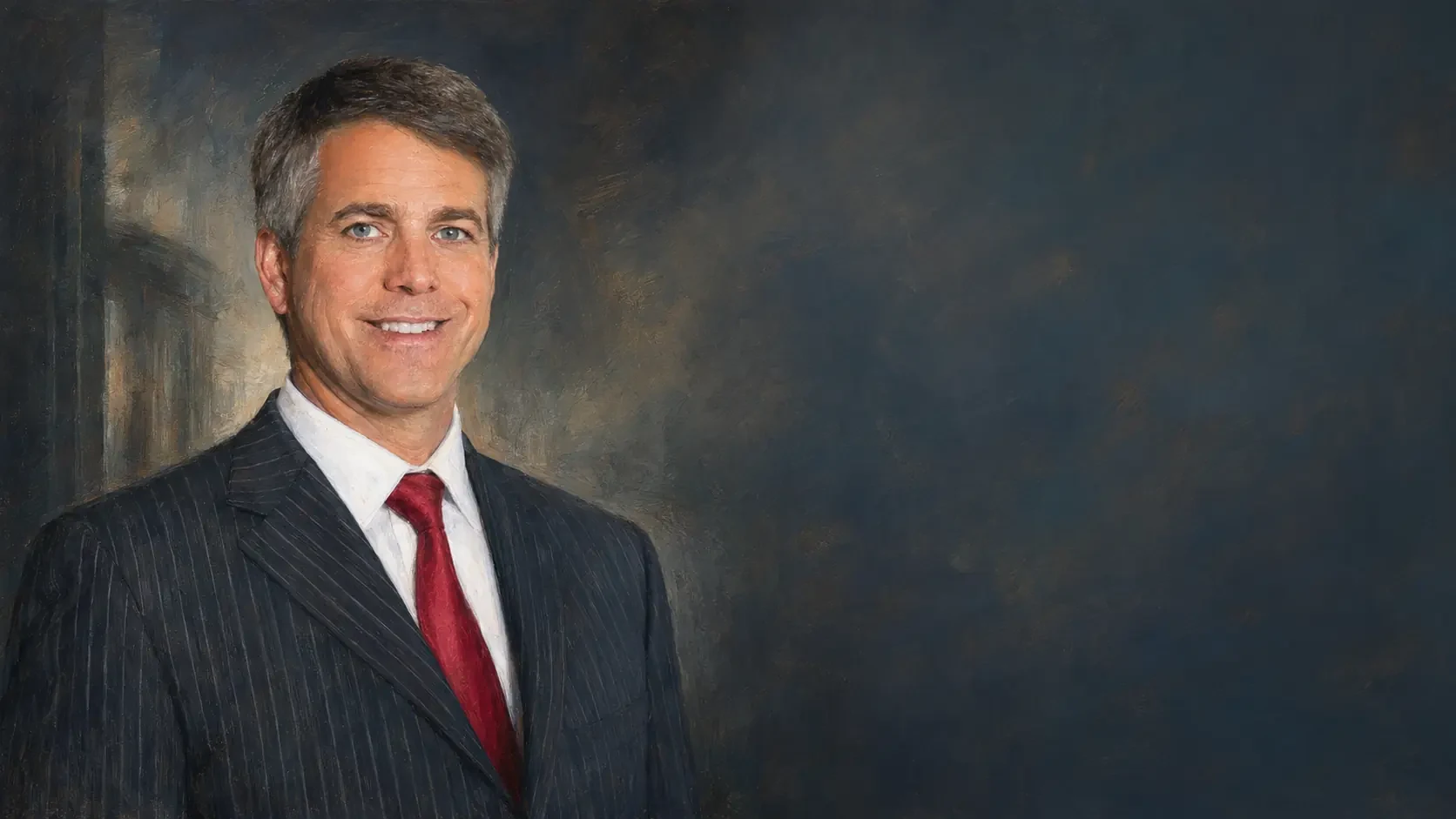
Daniel S. Drosman
Securities Fraud · Trial Counsel · Investor-Side Litigation · Financial Products
Our long track record of vigorously prosecuting securities fraud cases through trial together with our readiness to present this case to a jury when it settled are what enabled us to obtain this outsized recovery.
One Day Before Trial
Twitter's securities class action reached a binding $809.5 million agreement on September 20, 2021 — the day before a jury was scheduled to be selected.
Investors alleged that the company had concealed stagnant user growth and declining engagement during a 2015 class period. Drosman served as lead trial counsel for the Robbins Geller team.
The agreement came after years of pleadings, discovery, expert work, and evidentiary preparation had produced a completed trial calendar: documents and testimony organized, experts prepared, evidentiary disputes narrowed, examinations assigned, and a presentation ready to be delivered on the scheduled date.
By that stage, both sides were negotiating against the same exhibits and witness list. The plaintiffs' leverage included a completed trial presentation ready to begin.
Drosman led the Robbins Geller trial team with co-counsel Lance Oliver, forensic accountant Terry Koelbl, additional experts, and support staff. The court granted final approval in November 2022, creating an enforceable class recovery and an administration process for eligible investors.
Fourteen Years
Jaffe v. Household International lasted fourteen years. Drosman served as lead trial counsel.
Investors presented their case to a federal jury in a six-week trial in 2009 and obtained a verdict — one of the rare securities class actions in modern practice to reach a jury at all, in a field where nearly everything resolves before opening statements.
Trying one requires assembling a case that a jury of non-specialists can follow across a long factual span. Plaintiffs had to connect lending operations, delinquency information, portfolio quality, company statements, corrective disclosures, and market loss. That meant selecting witnesses who could explain a consumer-lending business in plain terms, identifying documents that fixed events in time, integrating economic proof about how the market responded, and organizing the alleged disclosure sequence so the jury could see what was said, what was known, and when the truth emerged.
Drosman remained responsible as the team refined its loss-causation and statement-attribution proof and prepared for further proceedings on remaining issues. By then the record had been tested the hard way: witnesses examined under oath, exhibits contested, damages evidence developed through years of adversarial litigation.
A $1.575 billion settlement resolved the action in 2016. Drosman's work extended from the first jury presentation through renewed expert analysis, witness and exhibit preparation, mediation, approval, and distribution.
Two Days Before Trial
In Smilovits v. First Solar, Drosman served as lead counsel in litigation concerning alleged concealment of manufacturing and design defects and misleading financial reporting. He carried the case from 2012 through appellate proceedings, extensive discovery, expert work, and pretrial motion practice.
The record joined technical evidence about solar-panel manufacturing and design with corporate statements, knowledge, materiality, market disclosures, and investor loss — a case that required the trial team to become fluent in a manufacturing process before it could explain what had been withheld about it.
The litigation also produced a significant appellate holding on loss causation, addressing what a plaintiff must show about the disclosure that precedes a stock decline. The question was whether investors must identify a revelation of fraud specifically, or may prove that the concealed condition proximately caused the loss when it eventually surfaced through its consequences. The answer affected whether loss causation could be shown through operating consequences rather than an express admission.
Drosman's role covered witness preparation, exhibit selection, expert coordination, evidentiary issues, and the completed trial presentation. The case reached a $350 million agreement two days before trial. The court granted final approval in June 2020.
Loan Files and Sampling
Drosman helped obtain a $388 million recovery in Fort Worth Employees' Retirement Fund v. J.P. Morgan Chase & Co., a residential mortgage-backed securities action.
The instruments at issue bundled home loans into securities sold through offering materials that described the underwriting standards the loans supposedly met. The investor case compared those representations with evidence about what was actually in the pools.
Proving that comparison is a documentary undertaking with a statistical spine. No one reviews every loan in a multi-thousand-loan pool; the work proceeds through sampling designed to support inferences about the whole, and then through reconstruction of who was responsible for what. The record addressed sampling, underwriting standards, certificate-specific offering histories, deal documents, and the distinct roles of originators, sponsors, depositors, underwriters, trustees, and rating processes — a chain in which each participant's function had to be established separately, because each had a different relationship to the representations investors relied on.
The Ratings Were Not a Newspaper
The Cheyne and Rhinebridge matters concerned ratings assigned to structured investment vehicles — highly leveraged funds that issued short-term paper to buy longer-term assets, and whose top-tier ratings were essential to their ability to raise money.
Drosman led fraud claims against the rating agencies, which argued that their ratings were protected speech under the First Amendment and non-actionable statements of opinion. That defense had absorbed rating-agency litigation for years, and it drew its force from an analogy to a newspaper publishing an editorial to the world.
In Cheyne, the court rejected broad First Amendment protection on a specific ground: these ratings had been distributed to a select group of investors rather than to the public at large. Privately circulated, transaction-specific advice made to and paid for by the arranger of the deal is not commentary in a newspaper. The analogy failed on its facts. The same approach was later applied in Rhinebridge.
With that threshold defense limited, the litigation proceeded through merits discovery and summary-judgment rulings before settlements that included a disclosed $77 million component from Standard & Poor's.
From the Manhattan DA to the Border
Drosman's trial habits were formed on the other side of the courtroom.
Before private practice, he served in the Manhattan District Attorney's Office. He worked in its appellate section, briefing and arguing more than twenty-five matters in New York appellate courts, and later prosecuted street-crime cases in the trial section.
After a period in private defense practice, he became an Assistant United States Attorney in the Southern District of California, where he tried federal cases and argued appeals in the Ninth Circuit. Working in a border-crimes unit, he handled narcotics, immigration, and public-corruption matters, and he received a Department of Justice Special Achievement Award for sustained work.
That prosecutorial experience gave Drosman repeated responsibility for live witness examinations, proving intent from documents and conduct, and carrying the burden of proof — responsibilities relevant to securities-fraud trials.
Drosman later taught trial advocacy, appellate advocacy, legal writing, and securities regulation, joining live presentation, preservation of the record for review, and application of disclosure rules to disputed statements and transactions.
Practice
Drosman is a partner and a member of the management committee at Robbins Geller Rudman & Dowd in San Diego. His practice focuses on plaintiff-side securities fraud and complex litigation.
He earned his law degree from Harvard Law School.