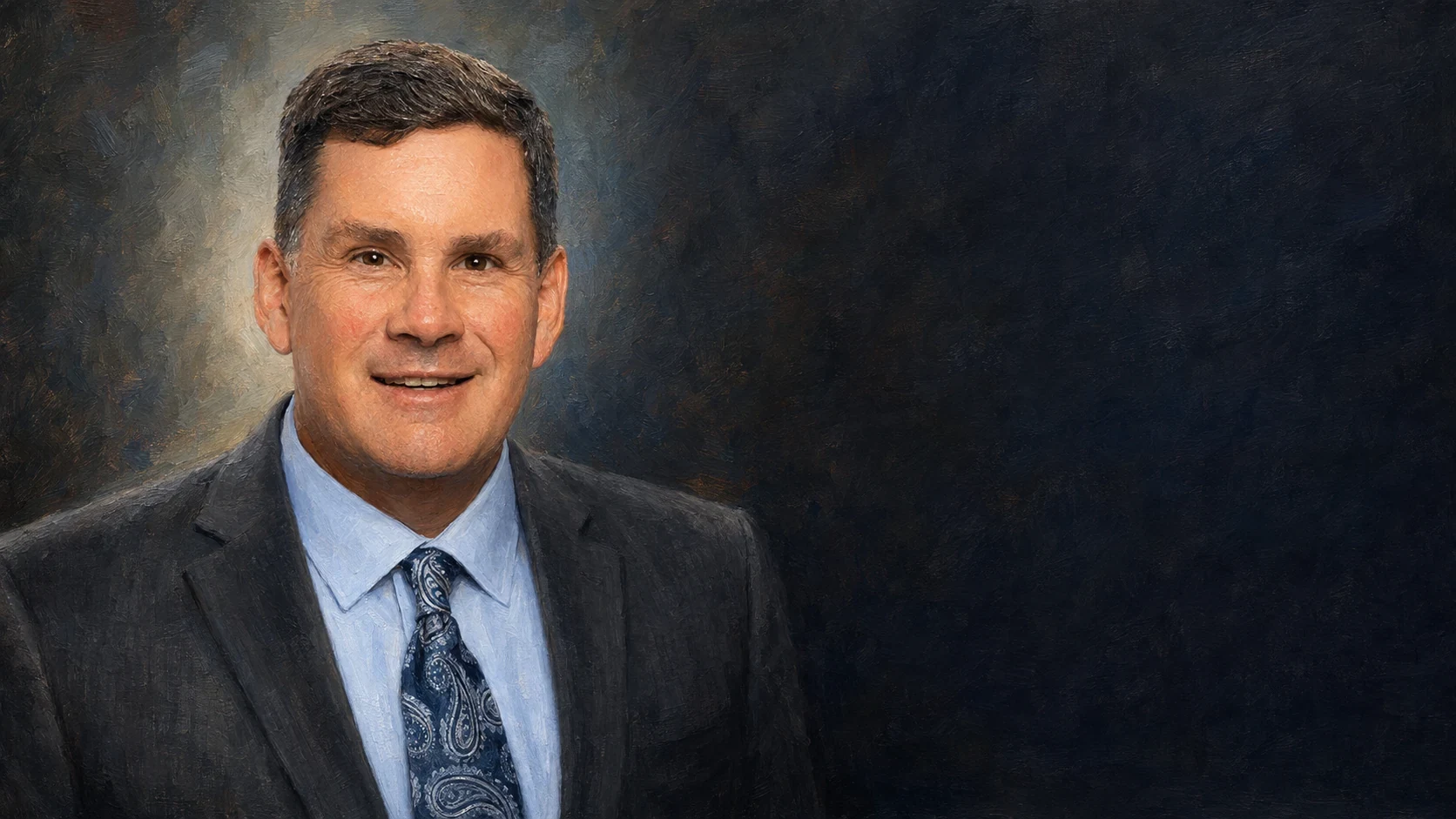
Eric J. Belfi
Securities Litigation · Corporate Governance · Case Evaluation · Investors
With the emphasis on funds being good corporate stewards, we are seeing an increased involvement by European funds in US corporate governance cases.
Asked to Stay
In January 2019 the board of Guess asked its co-founder, Paul Marciano, to remain chief creative officer, seven months after he had resigned as executive chairman over models' accusations of sexual misconduct, which he denied. In September 2022 the pension system for Rhode Island's state employees and teachers sued him and six other directors on the company's behalf. Eric J. Belfi, now the chairman of Labaton Keller Sucharow, took part in the negotiations that ended the case with $30 million for Guess and a set of rules written around Marciano's conduct.
The model Kate Upton had accused Marciano in 2018 of groping and forcibly kissing her, and other models came forward after her. That June a special committee of the board reported that many of the allegations "could not be corroborated," and that "on certain occasions Mr. Marciano exercised poor judgment in his communications with models and photographers." The company and Marciano paid $500,000 to settle the claims of five people. He gave up the executive chairmanship on June 11, 2018, kept his seat on the board, and was to remain chief creative officer until his employment agreement expired on January 30, 2019. Days before it expired, the board asked him to stay.
The Employees' Retirement System of Rhode Island filed its derivative complaint in the Delaware Court of Chancery on September 19, 2022, as Employees' Retirement System of Rhode Island v. Marciano. It alleged that the directors had let Marciano treat models "as his personal harem," that the 2018 investigation had produced a "shockingly brief" report, and that keeping him on as chief creative officer had given him continued access to models. Labaton Sucharow represented the fund, with Bernstein Litowitz Berger & Grossmann and Friedman Oster & Tejtel.
Rules for Paul Marciano
The parties mediated before Layn R. Phillips, a former federal judge, on February 28, 2023, and signed a settlement on September 29. That same day Maurice Marciano, Paul's brother and a fellow co-founder, said he was leaving the board; court filings acknowledged that the lawsuit had influenced his decision. Because a derivative suit is brought on the corporation's behalf, the money went to Guess: $22 million payable within ten days of the court's approval, and $8 million more that the company would pursue from its insurers.
The governance terms were drawn around the man at the center of the complaint. Marciano would not meet with models in non-public settings alone; his communications with models would be preserved and available for review; models would be given access to the company's sexual-harassment policy. The human resources department would no longer report to him. Guess would add two independent directors, one chosen by the fund, and form a Diversity, Equity and Inclusion Council empowered to review and recommend improvements to company policy and to oversee investigations into future misconduct; the fund would choose one of the council's two outside consultants. The company's policies would prohibit tactics such as non-disclosure agreements used to silence accusers.
The Court of Chancery approved the settlement on January 4, 2024. "No employee should endure an unsafe environment or live in fear of reprisal for voicing concerns," Rhode Island's general treasurer, James A. Diossa, said when it was announced. Belfi said the agreement "recognizes the importance of board leadership in firmly rejecting a culture of sexual harassment," and that its reforms "will protect employees and investors in the future."
Three Restatements
The other route to a recovery runs through a class action for investors' market losses. From March 2011 to July 2012, investors alleged, Weatherford International, the oilfield-services company, filed false financial statements "touting illusory benefits of Weatherford's tax structure and hiding the company's inadequate tax accounting procedures." By the end of that period Weatherford had issued three restatements, and its failure to follow generally accepted accounting principles had overstated its earnings by more than $900 million.
Belfi was one of three Labaton Sucharow partners in Freedman v. Weatherford International, with Joel H. Bernstein and Ira A. Schochet, working alongside Javier Bleichmar and Joseph Fonti of Bleichmar Fonti Tountas & Auld for the lead plaintiffs, the Sacramento City Employees' Retirement System and the Anchorage Police & Fire Retirement System. The federal court in Manhattan denied Weatherford's motion to dismiss in September 2013, and the $120 million settlement announced in July 2015 received final approval that November. "This excellent result is great news for the Municipality of Anchorage and the thousands of damaged Weatherford shareholders," said Ed Jarvis, the Anchorage fund's executive director.
Thirty or Forty a Year
Belfi became a partner in 2006 and joined the firm's Executive Committee in 2013. He chairs its Client Development Group and has a central role in its Case Evaluation Group, which decides which new securities cases are worth bringing. "There are about 200 cases filed every year, but we may only be interested in about 30 or 40 of those cases, so 15 to 20 percent," he said in 2025. From the firm's New York office he represents public pension funds and other large investors in securities and governance matters in the United States and abroad.
In June 2025 his partners elected him chairman, succeeding Christopher J. Keller, who had served in that role until his death earlier that year. His leadership contributed to the firm's recoveries in cases involving Dell, where litigation over a challenged $14 billion share exchange produced a $1 billion class recovery shortly before trial; Walmart, where litigation over the board's oversight of the prescription-opioid business produced $123 million plus governance measures; WWE, where a securities case over statements about media-rights arrangements in the Middle East and North Africa reached a court-approved class resolution; and General Motors.
Side of Good
Belfi grew up on the East End of Long Island and worked through high school. "I was a commercial fisherman. I also built tennis courts, did construction, and worked on fishing boats, so I definitely got my hands dirty," he said in the same 2025 interview. He graduated from Georgetown University and St. John's University School of Law, prosecuted economic and environmental crimes as an assistant district attorney in Westchester County, and led complex white-collar investigations into securities-law violations as an assistant attorney general for the State of New York.
The prosecutor's vocabulary stayed with him. "Back then, we used to say we were on the side of God," he said. "Now, I like to think we're still on the side of good."