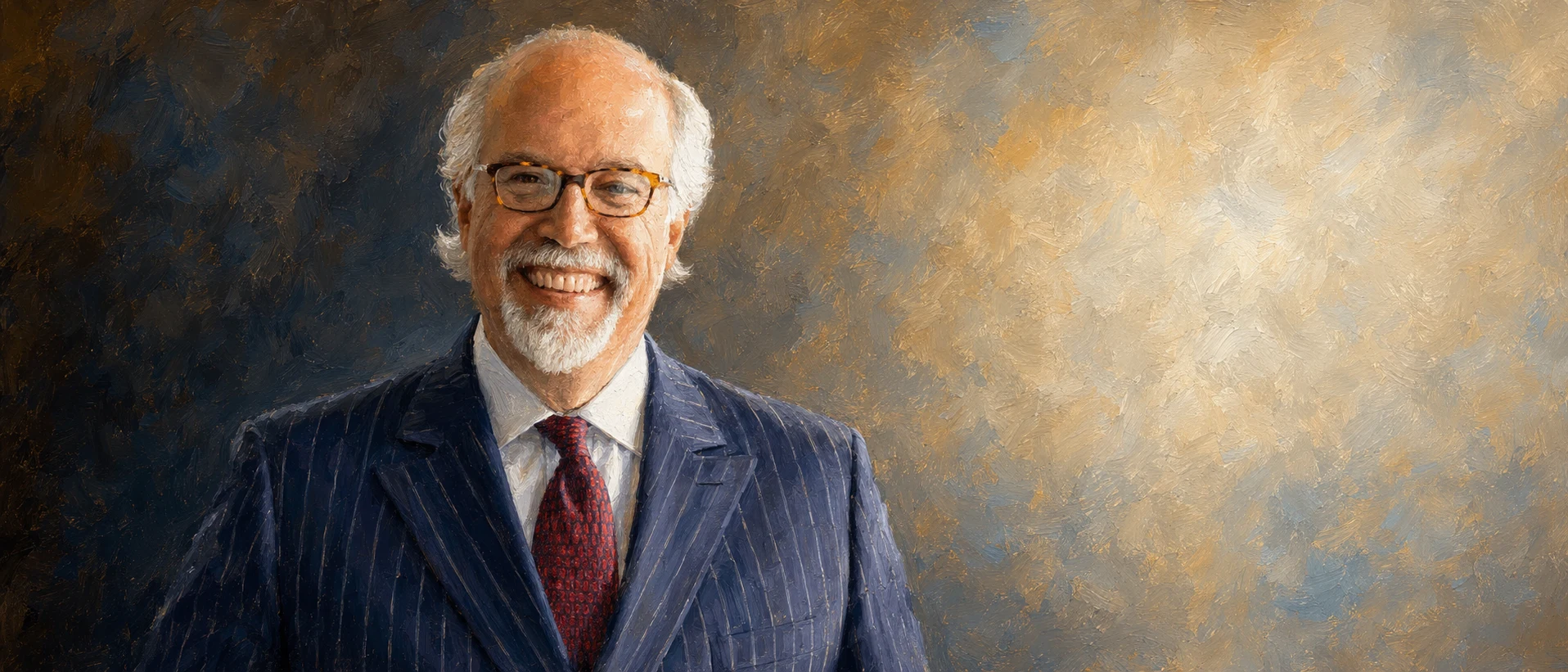
Gregory V. Varallo
Shareholder Litigation · Fiduciary Duty · Trials · Delaware Corporate Law
Thirty-Six Years on the Other Side
For thirty-six years, Gregory V. Varallo practiced at Richards, Layton & Finger — a Wilmington firm working at the center of Delaware corporate law — representing U.S. and global corporations, serving a three-year term as the firm’s president, sitting as a director of for-profit and not-for-profit companies, and co-authoring Fundamentals of Corporate Governance, a guide for directors and corporate counsel. He helped draft Delaware legislation, including the 2015 Rapid Arbitration Act and the 2018 Certification of Adoption of Transparency and Sustainability Standards Act. It was the only law firm he had ever worked for.
Then, in 2019, he crossed the aisle. Varallo became a partner at Bernstein Litowitz Berger & Grossmann and the head of its new Wilmington office, prosecuting the same kinds of cases he had spent a career defending — shareholder derivative and class actions, fiduciary-duty disputes, and corporate-governance litigation in Delaware and beyond.
That career gave Varallo an inside view of how a board builds its record: the minutes, the presentations, the information flows, the recorded votes, the deliberations behind the deliberations. Varallo brings that fluency to the other side of the “v.” — and three trials show what it looks like in practice.
Williams: The Pill With a Hair Trigger
In the first weeks of the COVID-19 pandemic, with an oil-price shock compounding the chaos, The Williams Companies adopted a stockholder-rights plan unlike anything Delaware had seen: a five-percent trigger, a sweeping acting-in-concert definition, and a passive-investor exemption so narrow it barely existed. The Court of Chancery would call the combination unprecedented.
Varallo led BLB&G’s challenge under the enhanced-scrutiny standard that governs defensive measures — the board had to identify a legitimate threat and adopt a response reasonably related to it. Through expedited discovery, depositions, briefing, and trial, his team put the plan’s features against the threats the directors had actually discussed, item by item: the trigger, the definitions, the duration, the stated objectives. The record also included board materials and the information available to directors when those threats were identified.
After trial, the court enjoined the rights plan, holding its features disproportionate to the stated threats. The court’s ruling likewise analyzed the plan feature by feature, and the injunction lifted the plan’s restrictions from shareholder activity.
Mindbody: The Founder’s Side Channel
Mindbody concerned Vista Equity Partners’ acquisition of the company. The stockholder class alleged that founder and chief executive Richard Stollmeyer wanted a fast deal, communicated with Vista outside the authorized process, and never gave his own board the full account. Varallo and Joel Friedlander carried the case through trial on the sale process and the disclosures.
The record they assembled — contemporaneous communications, board-process evidence, witness testimony, the acquisition chronology — persuaded the Court of Chancery that Stollmeyer breached his Revlon duties and his duty of disclosure, with damages assessed at one dollar per share. The Delaware Supreme Court affirmed the fiduciary findings and the damages against Stollmeyer.
Tornetta: The Fifty-Five-Billion-Dollar Question
Then came Tornetta. Tornetta challenged Tesla’s 2018 compensation plan for Elon Musk — twelve option tranches tied to market-capitalization and operating milestones, a multibillion-dollar executive pay package. The stockholder plaintiff alleged that Musk controlled Tesla for purposes of the transaction and that the directors who approved the grant never ran an independent, adversarial process.
Varallo co-led the plaintiff team through a five-day trial in the Court of Chancery. The trial record reached into control, director relationships, compensation benchmarks, the negotiations, the stockholder disclosures, and the sheer size of the grant. The team developed board materials, relationship evidence, compensation analyses, witness testimony, and the negotiation and disclosure history for post-trial review. The court applied entire-fairness review, found the defendants had not proved the grant was fair, and identified material problems in the disclosures used for the stockholder vote — a post-trial decision nullifying the package. The Delaware Supreme Court later affirmed the liability findings while reversing the remedial aspects of the trial court’s opinion.
In March 2025, he delivered Temple Law School’s Walker Chair in Business Law Lecture — a homecoming for the 1983 Temple graduate, speaking about Tornetta and a career spent at the heart of major corporate litigation.
The Craft Beneath the Verdicts
Delaware shareholder litigation often begins before any complaint exists. A stockholder may seek books and records, evaluate whether a claim is direct or derivative, determine whether demand is required, and identify the governing standard of review. Varallo’s practice also runs through standing and demand questions, expedited injunction proceedings, discovery, trials, post-trial proceedings, and appellate work. Those early choices shape the record a court will eventually see and the procedural path the case follows.
Having spent decades advising boards on how decisions should be made and documented, Varallo reads a boardroom record the way its authors intended it — and the way they didn’t. That work connects corporate-law standards to the documents and testimony showing how directors received information and made decisions. In building a case he examines independence, purpose, disclosure, and the sequence of board action, then prepares the record for the governing standard and the relief requested. His lead and co-lead roles also require coordinating lawyers, clients, experts, and supporting teams around the evidentiary theory and requested relief. Williams, Mindbody, and Tesla span defensive measures, sale-process claims, and executive compensation. Williams needed speed and an injunction; Mindbody needed a sale-process trial, damages, and appellate endurance; Tesla needed an entire-fairness trial on the Tesla compensation package. The requested relief and governing standard differed accordingly.