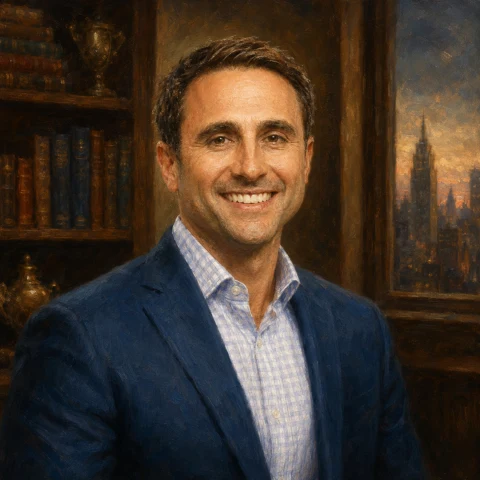
James E. Butler Jr.
Auto Product Liability · Rollover and Roof Crush · Wrongful Death
Ford obviously made a calculation that cutting costs would increase profits by more than paying off the victims would cost.
Brogdon v. Ford: The Super Duty Roof Record Behind a $2.5 Billion Punitive Verdict in Columbus
Jim Butler put Ford’s own record on the Super Duty roof before a federal jury in Columbus, Georgia: a stronger design Ford set aside in 2006, a 2015 rollover test of a stronger roof that Ford did not disclose until 2024, no physical roof-strength testing, and dozens of similar rollovers. The jury returned $2.5 billion in punitive damages for the deaths of Herman and Debra Mills.
Ford’s lawyers worked to persuade a federal jury in Columbus, Georgia, that the deaths of Herman and Debra Mills had nothing to do with the roof of their truck. The couple died after their 2015 Ford F-250 Super Duty rolled over in Decatur County in August 2022 and the roof collapsed into the cab. Ford maintained, on the strength of its own testing and research, that most head and neck injuries in rollover crashes happen before the roof is deformed, so a stronger roof would not have prevented them.
U.S. District Judge Clay D. Land set out the dispute in two sentences when he denied Ford’s motion for summary judgment on punitive damages in November 2024. “A jury could believe that evidence and conclude that Ford did not knowingly disregard the rights of individuals riding in its vehicles,” he wrote. “But if Plaintiffs’ evidence is believed, then the jury could find that there were significant risks to occupant safety in the event of a roof intrusion during a rollover crash and that Ford intentionally disregarded those risks even though it knew that a stronger roof could reduce occupant injuries.”
James E. “Jim” Butler Jr., lead counsel for the couple’s three sons, had spent eleven years collecting the evidence behind that second sentence: tens of thousands of documents from and about Ford and its vehicles, including the results of rollover crash tests on roofs of different strengths. On February 14, 2025, after Butler suggested that $10 billion was appropriate, the jury returned $2.5 billion in punitive damages against Ford.
The Millses’ Truck Left the Road at 55 Miles an Hour
Herman and Debra Mills lived in Bainbridge, Georgia. They had founded Mills Welding & Fabrication Services and retired in 2019. On August 22, 2022, Debra, 64, was driving their red 2015 F-250 Super Crew 4x4 King Ranch at 55 miles an hour, with Herman, 74, in the front passenger seat, when the truck left the road onto a grassy shoulder. She released the accelerator without braking and turned the wheel sharply to the left, toward a telephone pole, then back to the right. The truck missed the pole but hit the upslope of a dirt driveway over a concrete culvert, went airborne, and landed upside down, and its roof came down onto the couple. Debra Mills was pronounced dead at the scene. Herman Mills died nine days later in a hospital in Tallahassee, Florida.
Their sons, James Edward “Dusty” Brogdon Jr., Ronald B. “Rusty” Brogdon, and Jason Mills, sued Ford on May 23, 2023, in the Columbus Division of the U.S. District Court for the Middle District of Georgia; they filed there because Dusty Brogdon lives in Harris County. Butler’s team included his partner Ramsey Prather, Daniel Philyaw, Larae Moore, and Allison Bailey, joined by Frank Lowrey and Mike Terry of Bondurant Mixson & Elmore. Ford’s lawyers included Harold Melton, a former chief justice of the Supreme Court of Georgia, and Elizabeth Wright. Jury selection began on February 3, 2025, about twenty months after the complaint was filed.
A Stronger Super Duty Roof, Designed in 2006 and Set Aside
The case concerned the roof Ford put on Super Duty pickups from model year 1999 through 2016, and much of the evidence against it came out of Ford’s own files. In denying summary judgment, Judge Land listed what a jury could find from the plaintiffs’ evidence: that Ford had known for decades that it is important to maintain occupant survival space in a rollover; that roof strength predicts how severely a roof intrudes in a rollover, and that intrusion injures the head, neck, chest, and abdomen; that positional asphyxiation can occur when a collapsing roof compresses an occupant’s chest; that Federal Motor Vehicle Safety Standard 216 suggests a minimum for roof-crush resistance that the 1999–2016 Super Duty roofs did not meet; and that those roofs also fell short of Ford’s internal roof-strength goal.
The plaintiffs’ evidence on testing was that static crush tests, drop tests, and dolly rollover tests are necessary to measure how a roof performs, and that Ford did no physical roof-strength testing on the 1999–2016 Super Duty trucks, including the 2015 F-250 Crew Cab model the Millses drove. The plaintiffs also showed that in 2006 Ford’s engineers completed an enhanced roof strength project for the Super Duty and designed a significantly stronger roof, and that Ford decided not to use it. The sons’ lawyers put the strength-to-weight ratio of the 1999–2016 roofs at 1.1; the Insurance Institute for Highway Safety requires 4.0 for a “good” roof-strength rating.
The result of a 2009 rollover crash test of a Super Duty fitted with the same roof used on the 1999–2016 models went before Georgia jurors. For the Mills trial, Butler’s team also had the result of a 2015 Ford rollover test of a Super Duty with a stronger roof, a test Ford did not disclose until 2024, and the Mills jurors saw it. Butler’s team said Ford had paid for that test of a truck planned for the 2017 model year, with a roof nearly four times as strong as the 1999–2016 roof, and that the truck rolled three and three-quarter times and its roof came through barely damaged.
Butler said the evidence showed that Ford sold around 5.2 million 1999–2016 Super Duty trucks without spending $100 apiece—$520 million in all—to strengthen the roof, knowing it was subpar. Ford’s before-tax profit on the trucks was $25 billion. Butler dated the stronger design earlier still. “By 2005, Ford engineers in the Enhanced Roof Strength Program (ERSP) for the Super Duty trucks came up with a roof that was four and a half times stronger and cheaper to build,” he said in 2022. “And Ford didn’t use that until 2017.” His team has also quoted a Ford internal study from 2000: “The crush resistance of roof structures is critical to minimizing injuries and enhancing occupant survival during rollover crashes.”
From Linda Hatfield’s Grand Marquis to the Hill Exhibits
Before the Super Duty litigation, Butler and his colleagues had taken a crushed Ford roof to trial in Linda Hatfield’s case, in the Bibb County courthouse in September 2013. A tractor-trailer had merged into the family’s 2002 Mercury Grand Marquis on Interstate 16, the car rolled, and the roof struck her head, breaking her neck and paralyzing her from the neck down. Butler conducted her direct examination; Michael Boorman, one of Ford’s lawyers, cross-examined her. With the jury’s verdict still unannounced, Ford offered a settlement, and the Hatfields took it. Boorman would appear for Ford again on the Mills docket.
Butler had argued the Super Duty roof to Georgia jurors before the Mills trial, for the children of Melvin Hill, 74, and Voncile Hill, 62, farmers who died after their 2002 F-250 rolled over in April 2014 as they drove from their Macon County home to Americus to pick up a tractor part. Opening the Hill family’s case in Gwinnett County in March 2018, he told the jurors that “Ford never let the engineers do what they could have done to make this roof stronger and safer,” and that “Ford’s executives are responsible for this.” “The evidence will show, and Ford cannot deny, that unless somebody does something, more people are going to die,” he said. Four years and five months later, Debra and Herman Mills were riding in a Super Duty with the same roof.
Some of Ford’s documents had already been shown in public. Excerpts of Ford exhibits had appeared on courtroom screens and on Courtroom View Network’s broadcast of the Hill trials. When the Mills plaintiffs challenged Ford’s confidentiality designations on nine of those exhibits, among them Ford’s research into proposed changes to a safety standard on roof strength and detailed design specifications, Ford argued that the exhibits remained confidential in their entirety. In January 2024, Judge Land disagreed as to eight of the nine. “The Court declines to grant wholesale confidentiality protection for exhibits that were at least partially disclosed in open court,” he wrote.
110 Rollovers and a Sample of 50
Before trial, Ford moved to exclude evidence of other rollovers in which Super Duty roofs had crushed. It argued that the incidents were not similar enough to the Millses’ crash, that the evidence was hearsay, and that it was unfairly prejudicial and needlessly cumulative under Federal Rule of Evidence 403.
The sons’ engineering expert, Brian Herbst, had identified 110 such incidents using five criteria: the trucks shared the same or a similar roof design; the roofs crushed down in a rollover; the trucks were not carrying an extraordinary amount of payload; the roof components failed in substantially similar ways; and Ford knew, or should have known, about the crash. Herbst explained that he and other automotive engineers regularly rely on other similar incidents in reaching opinions about the safety of vehicle designs, including roof designs.
On January 23, 2025, Judge Land denied Ford’s motion. Ford’s arguments that the incidents were dissimilar, he held, went “to the weight of Herbst’s testimony regarding the OSI evidence, not its admissibility.” The sons offered the incidents to show what Ford knew rather than to prove the truth of each report, and experts may rely on that kind of material under Rule 703. He directed the plaintiffs’ counsel to “choose a sample of 50 cases representative of the OSI evidence to introduce.” Ford had faced nearly 300 lawsuits stemming from more than 100 allegedly similar incidents, and Butler was allowed to tell the jurors about many of them.
Judge Land next decided what the jury could hear about money if it reached punitive damages. Ford sought to keep out its net worth and argued that the only admissible profit evidence was the profit from the sale of the Millses’ own truck. “With all due respect to Ford’s experienced legal team, that argument is absurd,” Judge Land wrote on February 8, 2025. Georgia law lets a jury setting punitive damages consider the profitability of the wrongdoing and the defendant’s financial circumstances, and out-of-state conduct with a nexus to the plaintiffs’ harm may be admitted to show how deliberate and culpable the defendant’s conduct was. He admitted Ford’s net worth and its total profits from F-250 Super Duty sales, with a limiting instruction about harm to people who were not parties.
Judge Land had also ordered that witnesses testify in person unless the rules of procedure or evidence allowed otherwise. None of Ford’s employees attended the trial to defend the 1999–2016 roof, a fact Butler kept putting before the jurors. Ford’s defense witnesses included two former Ford engineers.
Cardiac Event or Positional Asphyxia
Ford’s pathologist, Dr. Jamie Downs, concluded that Debra Mills died of a sudden cardiac event. Dr. Jonathan Eisenstat, a forensic pathologist and former chief medical examiner for the Georgia Bureau of Investigation, concluded for the sons that she died of positional asphyxia, with her blunt-impact injuries contributing because of the roof crush. Before trial, Ford had moved for summary judgment on the asphyxiation claim, and Judge Land denied the motion. In her closing argument, Elizabeth Wright told the jurors that Debra Mills lost control of the truck during “a cardiac event” and that Herman Mills died because of his “poor health.”
Butler had a name for a defense that offers jurors several explanations at once. Ford’s lawyers, he said in 2022, used the tackle box defense: “They throw these lures in front of the jury in the hopes that one juror will bite on one lure and another juror will bite on another.” Georgia requires a unanimous verdict, he said, and a juror or two left with some doubt can produce a compromised verdict. “Ford is unique and singular in the extent to which they exhibit disdain for the law, for courts, and for jurors,” he said that year.
On February 13, 2025, the jury returned a verdict for the sons on their claim that the truck’s design was defective and awarded $30.5 million in compensatory damages. In the punitive phase, one of Ford’s lawyers told the jurors that Ford’s having stopped using the roof after 2016 counted in the company’s favor. Butler urged them to consider Ford’s wealth. “There are lots of reasons the amount should be huge,” he told them. “This is your opportunity to do justice on behalf of everybody.” The jury returned $2.5 billion the next day.
“Ford has known for 26 years that people were getting killed and hurt by these weak roofs,” Butler said after the verdict. “Ford has constantly refused to admit the danger or warn of the risk.” Ramsey Prather added: “Perhaps this verdict will serve to do what Ford refuses to do—warn American citizens of the danger.” Ford called the verdict impermissibly extreme and moved for a new trial or a reduction of the punitive award. The company has maintained that it stands by the safety of its Super Duty trucks.
With the case still being litigated, Ford settled with the Millses’ sons on August 15, 2025. In September both their case and the Hill family’s case formally ended, closing more than a decade of litigation. The terms are confidential, and Ford admitted no wrongdoing.
Seventy-Five Percent to the State of Georgia
On April 12, 2013, Micah Andrews, 39, was driving his 2005 Mazda 3 home to his wife and daughter on I-575 from his job at the aquarium in Atlanta when he swerved to avoid something in the road, ran off a steep shoulder, and hit a group of small trees head-on. The airbag did not deploy because the electronic front sensor failed to send the signal that would have fired it. The driver’s seatbelt, made by Autoliv, spooled out 20 inches, and his face hit the steering-wheel hub hard enough to fracture his skull. He was killed.
Butler tried the case against Autoliv with Tedra Cannella and Rory Weeks before U.S. District Judge Steve C. Jones of the Northern District of Georgia, without a jury, in October 2021. He called Autoliv’s designated corporate representative, David Prentkowski, for cross-examination. Prentkowski admitted that so much spool-out was foreseeable to Autoliv and had actually been foreseen in crash tests, that it was avoidable, that its consequences could foreseeably be catastrophic, and that failing to prevent what was foreseeable and avoidable and could cause catastrophic results was no different than intentional misconduct. Autoliv’s lawyers put Prentkowski back on the stand three days later, and under Butler’s cross-examination he made the same admissions a second time.
Judge Jones’s 96-page final order and judgment found the seatbelt defective and awarded $100 million in punitive damages against Autoliv. The order recorded that the corporate representative had “twice admitted that refusing to avoid the foreseeable when opportunities exist to do so is, as a practical matter, the equivalent of intentional misconduct,” and found that Autoliv’s conduct showed a conscious indifference to consequences. Until the verdict, Butler’s team said, Autoliv had never offered more than $200,000 to settle.
Autoliv appealed to the Eleventh Circuit, then abandoned the appeal and in July 2023 paid $56 million to settle the judgment. Jamie Andrews, Micah’s widow, received $42 million. The State of Georgia had taken no part in the case until, after trial, it moved to intervene in Autoliv’s appeal and claimed part of the punitive award. It received $14 million, invoking the escheat provision of O.C.G.A. § 51-12-5.1(e)(2). That provision, adopted as part of Georgia’s 1987 tort-reform bill, leaves punitive damages in product-liability cases unlimited but sends 75 percent of any punitive judgment actually collected to the state.
“The escheat provision giving the State 75% of any collected punitive damages judgment is a real impediment to deterring wrongful conduct,” Butler said when the money was paid. “Ask the State how many times in the past 36 years the State has collected anything based on that statute.” He said the provision was meant from the start to discourage plaintiffs from taking such cases to verdict. Ten months earlier he had given his own count. “In the 35 years since then, the state of Georgia has collected on just one punitive damages verdict,” he said in September 2022. Asked why, he answered: “The cases settle.” The Mills punitive award was a product-liability verdict under the same statute.
From a 1968 Corvair Crash to a Columbus Trial Practice
Butler traces his interest in the law to the film To Kill a Mockingbird, which he saw as a child, and to a teacher at church. “My Sunday School teacher when I was 13 was a lawyer in Cumming, Georgia,” he said. The teacher, Richard Neville, later became a Superior Court judge. “He sort of steered me in that direction also.” Butler began writing for newspapers at fifteen. In 1968, when he was seventeen, he fell asleep at the wheel of his father’s Chevrolet Corvair, the car Ralph Nader had singled out in Unsafe at Any Speed, and crashed into a double power pole. The crash badly damaged his hip and disfigured his face. Months later his father received a General Motors recall notice warning that carbon monoxide was possibly leaking into the car.
His father, Lt. Cmdr. James E. Butler Sr., was a Navy fighter pilot. In 2017 Butler made the lead gift that let the University of Georgia School of Law open its Veterans Legal Clinic, in his father’s memory; a gift the next year guaranteed financial aid to every veteran starting law school there.
Butler graduated from the University of Georgia in 1972 with a degree in journalism. He had job offers, one of them from the Atlanta Journal-Constitution, and went into home building instead. Between college and law school he built houses in Forsyth County, forty-two of them, until a real-estate downturn left him $250,000 in debt. Harvard Law School and the University of Georgia School of Law both offered him full scholarships. He chose Georgia so he could stay near his construction business and wind it down. After two and a half years of building houses, he found law school intellectually stimulating. “It was nice to be in air conditioning all the time,” he said. He won the first-year and second-year moot court competitions, was elected to the Law Review, won best oralist at the Southern Moot Court Competition, and graduated cum laude in 1977.
During law school he worked at a major Atlanta firm, where a brief he wrote helped get a lawsuit against a local bank dismissed. He believed the case had merit. His grandfather had a large hand in raising him. “My grandfather was a Roosevelt Democrat, and he would have rolled in his grave if he knew what I had done,” Butler said in 2022. He had realized that citizens did not have great lawyers, and he made personal-injury work the center of his practice. He joined a small practice in Columbus in 1977, opened his own firm in that city two years later, and added an Atlanta office in 1982.
Butler counts two pro bono cases as his favorites. In 1988 citizens of Taylor County sued their county commissioners after the commission approved giving county land to the State of Georgia for a hazardous waste facility. “They decided to put it in the north part of Taylor County, right on top of family farms,” Butler said. The Superior Court of Taylor County voided the commissioners’ approval and the State’s acceptance of it and barred everything done under the offer, which stopped the facility.
Elmyr Tompkins was a widow in Muscogee County with large landholdings and no heirs, and she planned to leave her estate to two charities. Distant cousins learned of it and, in Butler’s words, “held her hostage in her own home” while forcing her to change her will. Butler was one of several lawyers who took her case, and “we broke up that gambit, got her will changed back,” he said. “The last time I checked in those two charities had collected $26 million.”
Ted Turner on the Stand in Gwinnett County, December 1998
Butler and George W. Fryhofer III of his firm, then Butler, Wooten, Overby, Pearson, Fryhofer & Daughtery in Columbus, working with lawyers from two other firms, represented the plaintiffs in a business case that reached a verdict in the Superior Court of Gwinnett County in December 1998. The plaintiffs, investors in Six Flags Over Georgia, charged that Time Warner, as general partner managing the park from 1991 to 1997, had deliberately depressed the park’s value by failing to install major rides and make appropriate capital investment, and had used partnership assets for its own financial gain. Butler said Time Warner had diverted a Batman roller coaster to a St. Louis park it owned outright, and the plaintiffs argued that a used coaster called the Viper had been bought for the Georgia park from a New Jersey park at twice its earlier price. “They were going to get the Georgia park and get it cheap,” Butler said.
On a Friday the jury awarded $197 million in compensatory damages. The following Monday, before the jurors decided punitive damages, Time Warner put its vice chairman, Ted Turner, on the stand. He told them he had learned of the award the day after it was made and had flown back to Atlanta from New Mexico to testify, and he mentioned that the day was his wife Jane Fonda’s sixty-first birthday and their wedding anniversary. He closed his direct examination with a qualified apology: “If we have done anything wrong, I want to apologize for it.”
Butler cross-examined him. Asked whether he had come to court to sway the jury away from a large punitive verdict, Turner answered, “Mainly yes.” He said that his Time Warner stock was worth $5.5 billion and that he had not known the trial was scheduled nearly a year earlier. “The truth is, sir,” Butler said, “There has been plenty of time if Time Warner was any respector of fiduciary duty to come up with a plan of action and do something, isn’t that true?” Turner answered that the matter would not necessarily have reached him, because the parks had been sold.
Butler urged the jurors to look past Turner’s social status. “They hope his mere appearance will sway you from doing your duty,” he told them. That Monday the jury awarded $257 million in punitive damages. The Georgia Court of Appeals twice affirmed the judgment in its entirety, the U.S. Supreme Court denied certiorari on April 21, 2003, and the defendants paid the judgment with interest, more than $640 million in all.
3.6 Million Trucks Still Registered
“Most lawyers in Jim’s position would be sitting on a beach somewhere,” Ramsey Prather said in 2025. “I always find Jim sitting at his desk, working on a client’s case.”
Butler has described Ford’s position on the roof as a trap of the company’s own making. Admitting that the roof is inadequate would likely cost Ford tens of billions of dollars, he said in 2025, because more than 3 million of the trucks remain on the road and would have to be recalled or bought back. “They have to keep saying these trucks are absolutely safe. And they have to keep saying that roof strength doesn’t matter,” Butler said. “And nobody believes that.”
Ford’s own data, filed in court, counted 3.6 million of the 1999–2016 Super Duty pickups still registered in the United States as of March 2025.