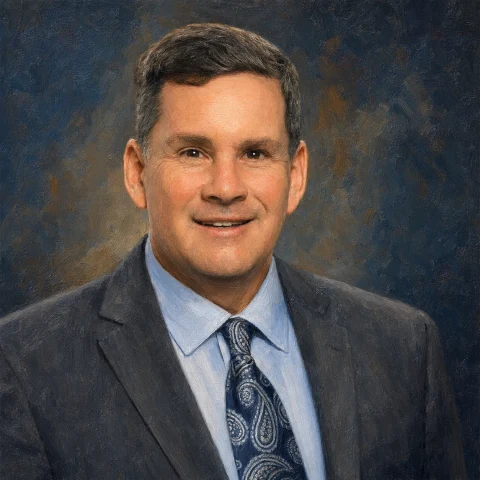
Jeremy P. Robinson
Securities Fraud · Appeals · Jury Proof · Corporate Governance
Very proud to have been a part of this significant victory for investors. It is an honor to represent such dedicated clients.
Fannie Mae, Freddie Mac, Treasury’s Own Email and a Second Jury
In July 2023 a second jury in Washington read Treasury’s own emails about the Net Worth Sweep and awarded Fannie Mae and Freddie Mac shareholders $612.4 million, a judgment of $812.05 million that the D.C. Circuit affirmed on July 24, 2026. Jeremy P. Robinson, one of the Bernstein Litowitz partners who spearheaded that case, has led shareholder actions against BNY Mellon, Citigroup, Facebook, Allergan, Viacom’s controller and the former directors of Credit Suisse.
On July 30, 2012, Bowler, a Treasury official whom Edward DeMarco, the acting director of the Federal Housing Finance Agency, and Mario Ugoletti, the aide who handled the amendment for him, would later describe at trial as their point person at the department, circulated a document headed “PSPA Covenant and Timing Proposal: July 30, 2012.” Fannie Mae and Freddie Mac, it said, “will report very strong earnings on August 7, that will be in-excess of the 10% dividend to be paid to Treasury.” When the agency reported that the companies had done better than expected, Bowler answered: “Really makes sense to push the net worth sweep this quarter[.]” On August 17, 2012, Treasury and the agency, as conservator of both companies, signed the Third Amendment to the stock purchase agreements that had kept them alive since 2008. It replaced the fixed 10 percent dividend on Treasury’s senior preferred stock with a dividend equal to each company’s entire net worth, paid to the federal government every quarter, in perpetuity, so that the companies could no longer accrue capital in a good quarter. The common and junior preferred shares of Fannie Mae and Freddie Mac lost about $1.6 billion in value that day.
Eleven years later a jury in the United States District Court for the District of Columbia read both emails. Judge Royce C. Lamberth had excluded the “push the net worth sweep” message from the first trial, which ran from October 18 to November 7, 2022, because Bowler was a mid-level official; that trial ended with eight jurors unable to agree and a mistrial. Before the retrial he admitted it, after DeMarco and Ugoletti testified that Bowler had been their point person at Treasury and the court concluded that he was one of the Treasury officials most heavily involved in the negotiations. The second trial began on July 26, 2023. The shareholders called twelve witnesses, among them the class representatives, former executives of both companies and three experts; one of the experts testified that the companies had paid $150.2 billion to Treasury under the Sweep, $111 billion more than the 10 percent dividend would have cost, and on cross-examination on August 8 DeMarco agreed that the companies “would have been way better with this $111 billion on their books.” Two experts called the Sweep “unprecedented.” On August 14, after about ten hours of deliberation over two days, the jury unanimously found that the agency had breached the implied covenant of good faith and fair dealing and awarded $612.4 million: $299.4 million to the holders of Fannie Mae junior preferred stock, $281.8 million to the holders of Freddie Mac junior preferred stock and $31.2 million to the holders of Freddie Mac common stock.
Jeremy P. Robinson was one of the four Bernstein Litowitz Berger & Grossmann partners, with Salvatore J. Graziano, Adam H. Wierzbowski and Robert Kravetz, who “spearheaded” the firm’s representation of the shareholders, and an integral member of the team that tried the shareholder contract claims challenging the Net Worth Sweep; Veronica Montenegro, senior counsel, and Caitlin Bozman, an associate, worked on it with them. The firm was one of four co-lead class counsel with Boies Schiller Flexner, whose Hamish Hume examined the main fact witness and gave the closing argument and whose Kenya Davis gave the opening, Kessler Topaz Meltzer & Check and Grant & Eisenhofer. “We are thankful for the jury’s tremendous public service and grateful for their verdict,” Kravetz said. Wierzbowski said: “This case demonstrated the skill and tenacity of our team to take this complex case through two trials.” Of the many lawsuits challenging the Net Worth Sweep, this action produced the only successful cause of action.
A Conservatorship Described as Temporary
On September 6, 2008, in the middle of the housing crisis, the Federal Housing Finance Agency, created by Congress that year under the Housing and Economic Recovery Act, placed Fannie Mae and Freddie Mac into conservatorship. The next day Treasury agreed to buy senior preferred stock in each company and to supply capital as they needed it, $100 billion at first and $189 billion in all by the end, in return for a 10 percent dividend on its liquidation preference and warrants for 79.9 percent of each company’s common stock, and the companies could not pay dividends to anyone else without Treasury’s consent. The agency said the conservatorship was “designed to stabilize a troubled institution with the objective of returning the entities to normal business operations,” that it would run the companies “until they are stabilized,” and that its director would issue an order “terminating the conservatorship” once a restoration plan was complete. Its director told investors that “the common and all preferred stocks will continue to remain outstanding,” and Treasury Secretary Paulson said that “conservatorship does not eliminate the outstanding preferred stock.” Private investors had put more than $33 billion into the two companies, about $20 billion of it in 2007 and 2008. The shareholders never challenged the 2008 terms.
By 2012 the companies were earning again. They made a combined $8.3 billion in the second quarter of that year and more than $10 billion in the first half, and they expected to reverse a valuation allowance on deferred tax assets worth about $100 billion. A Grant Thornton report to Treasury in November 2011 had said that Freddie Mac “is not projected to draw on the liquidity commitment,” a Treasury memo that December said both companies “are expected to be net income positive (before dividends),” a Treasury document in June 2012 said “the GSEs will be generating large revenues over the coming years,” and a Federal Housing Finance Agency paper in July 2012 called the years ahead the “golden years of GSE earnings.” Treasury had written in a December 20, 2010 action memorandum that the administration’s commitment was “to ensure existing common equity holders will not have access to any positive earnings from the GSEs in the future.” An agency email of August 14, 2012 said the Third Amendment was “designed to demonstrate wind down,” and Treasury’s talking points said the Sweep “means the taxpayer will benefit from all future earnings of the GSEs.” The shareholders pleaded those documents in the complaint they filed in 2013 and in the second amended complaint that followed the remand.
The road to a jury took a decade. Judge Lamberth dismissed the case on September 30, 2014, holding that the Recovery Act’s bar on court orders restraining the conservator reached the equitable and derivative claims and that the contract claims were unripe or failed. On February 21, 2017, in Perry Capital LLC v. Mnuchin, the D.C. Circuit affirmed most of that ruling but sent the contract claims back, holding that the statute does not bar “judicial review through cognizable actions for damages like breach of contract.” On September 28, 2018, Judge Lamberth upheld the claims for breach of the implied covenant of good faith and fair dealing, and after substantial discovery, on December 7, 2021, he certified three classes under Rule 23(b)(3), the holders of Fannie Mae junior preferred stock, of Freddie Mac junior preferred stock and of Freddie Mac common stock, with Joseph Cacciapalle, Barry P. Borodkin, Michelle M. Miller and Timothy J. Cassell as their representatives, and appointed the four firms as class counsel. The terms of every junior preferred series were materially identical, and the shareholders’ expert had shown that damages could be measured by one method for the whole class.
The government’s strongest argument arrived in 2021, when the Supreme Court held in Collins v. Yellen that the Recovery Act did not let courts set aside the Sweep as an abuse of the conservator’s statutory authority. The agency argued that Collins ended the contract claim as well, and that the shareholder agreements left no gap for an implied covenant to fill because the statute let the conservator act in its own interest or the public’s. Judge Lamberth answered on September 23, 2022. Collins, he wrote, involved “a different type of reasonableness analysis,” whether the agency had acted in the best interests of the companies or of itself, where the question here was whether it had “violated the reasonable expectations of the parties.” The statute “only authorizes the discretion through which FHFA agreed to the Third Amendment,” and its repudiation provision showed that the shareholder contracts survived conservatorship. He sent the case to trial on one measure of harm, the value the shares lost when the Sweep was announced, and fixed December 24, 2009 as the time of contracting against which the jury would measure the parties’ reasonable expectations.
The first jury, in the fall of 2022, could not agree. Hume said in a statement after the mistrial that “The fight for justice will continue, and we are confident that we will prevail in the next trial,” and the agency said it would review its options. On July 25, 2023, a day before the retrial opened, Judge Lamberth ruled on the exhibits. He admitted the Bowler emails as statements of Treasury’s state of mind under Rule 803(3); he let the jury hear what the companies had paid Treasury since 2012, with an instruction that the sum was evidence of what the decision-makers should have anticipated and neither proof of harm nor a measure of damages; and he told the jury that the covenant asked whether the agency had responded to its objectives and circumstances “in a manner that the other party reasonably could have expected at the time of contracting,” while striking any free-floating appeal to fairness.
Ample Evidence
On October 24, 2023, Judge Lamberth held that the Fannie Mae preferred class was entitled to prejudgment interest under Delaware law, which Fannie Mae’s bylaws selected, as simple interest at 5 percent over the Federal Reserve discount rate on August 17, 2012. On March 20, 2024, he entered final judgment: $299,400,000 for the Fannie Mae preferred class plus $199,650,000 in prejudgment interest, $281,800,000 for the Freddie Mac preferred class and $31,200,000 for the Freddie Mac common class, $812,050,000 in all. The agency moved for judgment as a matter of law, and on March 14, 2025 the court denied the motion. “Plaintiffs provided ample evidence for the jury to conclude that the Net Worth Sweep is causing harm,” Judge Lamberth wrote; the defendants were “wrong to assert that the only evidence of harm from the Net Worth Sweep was the one-day drop,” and the later rise in the share price had been “properly turned over to the jury to determine.” As for Collins, “A Rule 50(b) motion is not a vehicle to re-litigate legal issues decided pretrial,” and “If Defendants wish to re-open this purely legal challenge, they must do so with the D.C. Circuit.”
They did. Fairholme Funds, Inc. v. Federal Housing Finance Agency, No. 25-5113, was argued on April 21, 2026, John P. Elwood for the agency and Hume for the classes, before Senior Judge Douglas Ginsburg and Judges Justin Walker and J. Michelle Childs. The agency argued again that Collins foreclosed the claim, that the agreements had no gap, that the claim was an unripe anticipatory breach, that the shareholders had not proved harm because the shares later recovered, and that investors who bought after August 2012 had no standing. On July 24, 2026, Judge Ginsburg wrote for a unanimous panel: “We agree with the Plaintiffs that Collins did not foreclose the implied covenant claim in this case.” Collins had decided a statutory claim for declaratory and injunctive relief; the Supreme Court’s remark that the agency’s “business decisions are protected from judicial review” had to be read “in the context of its narrow holding on the statutory claim,” and Perry remained good law. The Recovery Act “may inform the parties’ reasonable expectations,” but “the Plaintiffs introduced undisputed evidence that the Net Worth Sweep was ‘unprecedented’ and therefore could not reasonably have been expected,” and terms that enhance a party’s discretion “do not eliminate the implied duty.” On harm, the shareholders had answered the rebound argument with “an event study prepared by the FHFA’s own expert,” which showed that part of the recovery came from unrelated events, so the jury could find that the Sweep caused a lasting loss. On standing, the claim traveled with the shares under Delaware law, because the Sweep “removed one of the most valuable sticks” from the bundle of rights they carried, and Virginia would follow Delaware for Freddie Mac. “For the foregoing reasons, the judgment of the district court is Affirmed.”
The D.C. Circuit affirmed the judgment in full, rejecting the government’s argument that Collins v. Yellen foreclosed the shareholders’ implied-covenant claim and holding that the Net Worth Sweep had violated the reasonable expectations of shareholders. Robinson’s involvement extended across the dismissal, the remand, class certification, two trials, the post-trial motions and the appellate defense of the final judgment, from the 2013 complaint to the affirmance thirteen years later.
Swiss Law in the Commercial Division
Robinson led the other case that closed that July. On April 26, 2022, the Employees Retirement System for the City of Providence, the Rhode Island city’s pension fund, whose city solicitor, Jeff Dana, authorized the suit, filed a verified derivative complaint in the Commercial Division of the New York Supreme Court, New York County, on behalf of Credit Suisse Group AG against nineteen of the bank’s former directors and executives: Urs Rohner, the former chairman, Iris Bohnet, Christian Gellerstad, Andreas Gottschling, Michael Klein, Shan Li, Seraina Macia, Richard Meddings, Kai S. Nargolwala, Ana Paula Pessoa, Joaquin J. Ribeiro, Severin Schwan and John Tiner from the board, and Eric Varvel, Thomas P. Gottstein, Lara J. Warner, the former chief risk officer, Brian Chin, David Miller and Radhika Venkatraman from management. The claims arose under Swiss law. The complaint alleged that the defendants had failed to establish and oversee reasonable risk-management controls, including at the bank’s New York prime services business, and had disregarded red flags of risk-control deficiencies, and that the bank lost billions when three counterparties defaulted in 2020 and 2021: Malachite Capital Management, Greensill Capital and Archegos Capital Management, Bill Hwang’s family office, whose collapse in March 2021 cost Credit Suisse more than $5.5 billion in admitted losses. A report that Paul, Weiss prepared for a special committee of the board, dated July 29, 2021, described a “fundamental failure” of risk management; in July 2023 the Federal Reserve entered a cease-and-desist order against Credit Suisse and UBS with a fine of more than $268 million; and the bank had shut the prime services business in early 2022 at a cost of thousands of jobs.
The defendants moved to dismiss on September 23, 2022, arguing that New York was the wrong forum for a dispute over a Swiss bank and that the complaint did not meet New York’s heightened pleading standard for fraud. Justice Andrea Masley denied the motion in its entirety at a hearing on December 8, 2022, entered the order on January 31, 2023, and the defendants appealed. On February 8, 2024, the Appellate Division, First Department, unanimously affirmed. “There is no credible argument that a substantial nexus between this action and New York is lacking,” the panel wrote; “Virtually every aspect of the subject matter underlying this action occurred in New York.” New York, as a preeminent commercial center, had a significant interest in the dispute, Switzerland’s interest was one factor to be weighed, no parallel case was pending there, and the Commercial Division applied foreign substantive law routinely. The heightened standard of CPLR 3016(b) did not apply to negligence-based fiduciary claims under Swiss law. Leave to appeal to the Court of Appeals was denied.
Discovery then ran for three years across three continents. The defendants and third parties produced more than 298,000 documents, over 1,580,000 pages, the Swiss board’s own materials among them, and Robinson’s team reviewed seven privilege logs with more than 47,000 entries. The fund took 32 depositions, sixteen of them of named defendants, Warner and members of the board’s risk committee among them, in New York, London, Los Angeles, Washington and West Palm Beach and by video to Hong Kong, Singapore and the United Kingdom. To examine witnesses in Switzerland the fund obtained letters of request from the New York court and retained Patrizia Holenstein in Zurich and Stephane Jordan in Valais to enforce them; UBS moved in the Cantonal Court of Zurich to dismiss the Zurich letter, and in Valais the fund won an appeal before two Swiss courts declined to enforce the letters on the terms the New York court had set. The fund fought the Federal Reserve in the Southern District of New York over documents withheld under the bank-examination privilege, and it retained Mathieu Blanc, a Swiss lawyer who gave five affirmations on Swiss law, David Gibbons on risk management, Bernard S. Black on corporate governance and David Tabak of NERA on damages; each side served five expert reports.
In 2023 Swiss authorities engineered UBS’s takeover of Credit Suisse, and the fund’s Credit Suisse shares were converted into UBS stock. The defendants moved on November 21, 2023 to dismiss for lack of standing, arguing that the merger had ended the fund’s status as a Credit Suisse stockholder and that UBS was a necessary party that could not be joined; that motion was argued on August 15, 2024, a personal-jurisdiction motion on May 2, 2025, and both were pending when the case settled. The parties mediated before Layn R. Phillips, a former federal district judge, on May 31, 2023, May 3, 2024 and July 14, 2025. After the third session Judge Phillips proposed $115 million to each side, and all of them accepted. A term sheet was signed on July 21, 2025 and the stipulation on August 21; Justice Masley granted preliminary approval the next day, and UBS said in a statement, “We are pleased that this long-running litigation has been resolved by settlement.” In an affirmation filed on September 12, 2025, Robinson told the court that he had “actively supervised and participated in the prosecution and settlement of the Action.” He set out the defendants’ position, that they had relied on lower-level managers to fix the problems, that Archegos was a fraud that broke the chain of causation and that damages were therefore zero, and the insurance coverage of about $220 million that defense costs were eroding, and he wrote that the settlement “represents the largest recovery in a derivative oversight action ever achieved in any New York State court.” Dana told the court it was “an excellent result achieved in this litigation.”
One objection was filed, by the plaintiff in a related derivative action who argued that the release reached his claims; the fund answered that the release ran only from the plaintiff, Credit Suisse and UBS and covered only claims tied to the complaint, and the parties added confirming language to the proposed judgment. On July 10, 2026, Justice Masley approved the settlement over the objection under section 626(d) of the Business Corporation Law. “Plaintiff’s counsel litigated the action intensively for three years through massive discovery and consultation with experts,” she wrote, which showed “that the settlement resulted from vigorous arm’s length negotiations,” and she found it “fair, reasonable and adequate.” The $115 million, funded entirely by the directors’ and officers’ liability insurers, went into escrow for transfer to UBS as Credit Suisse’s successor, and judgment was entered on July 17, 2026. The claim was the company’s, so the recovery went to the company’s successor rather than to a class of traders.
The High or Low of the Day
Robinson served as case leader in the securities class action against the Bank of New York Mellon over its foreign-exchange pricing, brought for the State of Oregon, through the State Treasurer on behalf of the Common School Fund and the Oregon Public Employee Retirement Board on behalf of the Oregon Public Employees Retirement Fund, which Judge Lewis A. Kaplan of the Southern District of New York appointed lead plaintiff on March 29, 2012, with the firm as lead counsel. Custodial clients of the bank, hundreds of public employee, teacher, police and fire pension funds among them, had to convert dollars into foreign currency to buy foreign securities and convert dividends back. Many left the conversions to the bank’s “standing instruction” program, in which a client’s trade request went into the bank’s cash management system and on to its trading system, known as “Charlie,” and the bank’s desk did the trade. On its website, the bank described the service as “[o]perationally simple, free of charge and integrated with the client’s activity on the various securities markets,” with trades “execut[ed] according to best execution standards.” Oregon alleged otherwise in the consolidated complaint it filed on May 11, 2012: after a trade was executed, the bank “would note the low and high exchange rate of the day for the two currencies involved,” ignore the price it had paid, and charge the client “as if the trade occurred at either the high or low of the day (depending on the nature of the transaction, buy or sell), in order to charge [its client] the least favorable rate that occurred that trading day.” The plaintiffs alleged that the custody bank described its foreign-exchange service as free and favorably priced while assigning customer transactions at unfavorable daily rates, and that it concealed the legal and business risk of the practice, and the revenue that depended on it, from its own shareholders.
The bank’s own emails said the same. An internal message of August 1, 2006 read: “We charge a premium for our services (i.e. we have the audacity to think we are entitled to a spread on every trade. How 1990’s is that?).” On February 1, 2008, Jorge Rodriguez, a defendant, wrote to his superior, Richard Mahoney, that “Standing Instruction [service] is the most profitable form of business. It offers the traders a free intra-day option to time its currency execution in the marketplace knowing it does not have to get back to the customer immediately with the deal price,” that “All these pricing advantages disappear when a client trades via an e-commerce platform and full transparency is achieved,” and that when a client moved to a multi-bank platform, competition and the client’s ability to watch each trade “reduces margins dramatically.” Later that day Mahoney briefed the chief executive, Robert P. Kelly, and the chief financial officer, Bruce W. Van Saun, under the heading “FX Channel Mix,” and offered to “walk over” to Kelly’s office to answer questions. In April 2010 an executive wrote that “[p]ricing is an art, not a science,” and in July 2010 David Green, another executive, wrote that standing-instruction execution was at “the high and low of the day, depending on which one is against [the client].” A former currency trader at the bank described the practice as “raping the client accounts.” When the California attorney general’s suit against State Street over the same kind of pricing was unsealed in October 2009, the bank’s director of foreign-exchange trading emailed the news story to the sales force under the subject line “Oh No.”
The scheme came out in pieces. In January 2011 whistleblower suits in Virginia and Florida were unsealed and both states’ attorneys general intervened; a whistleblower wrote to the Florida attorney general on March 29, 2011 that “top management was aware of the fraud the entire time”; The Wall Street Journal published the “full transparency” emails on August 12, 2011; and after the class period the New York attorney general and the Justice Department sued. The bank’s shares fell from $31.95 on January 21, 2011 to $19.99 on August 12, 2011, more than 37 percent and more than $14 billion of market value. The complaint pleaded claims under Section 10(b) and Rule 10b-5 and Section 20(a) for purchasers of the common stock from February 28, 2008 through October 4, 2011, and Securities Act claims for the May 2009 and June 2010 offerings; the defendants were the bank, Kelly, Van Saun, Thomas P. Gibbons, Rodriguez, Michael K. Hughey and John A. Park. Judge Kaplan denied the motions to dismiss on June 10, 2013, without prejudice to renewing the arguments at summary judgment, the defendants answered on September 15, and fact discovery ran from mid-2013 to March 27, 2015: more than 20 million pages produced, dozens of fact depositions taken or defended, and a contested motion for class certification filed the day discovery closed. The record crossed customer transactions, internal communications, whistleblower actions, state and federal enforcement, company statements and market disclosures, and Robinson organized that evidence around what BNY Mellon told investors and how the market received corrective information, carrying the securities theory through discovery.
Lead counsel, the defendants, the United States Attorney’s Office and the other plaintiffs in the multidistrict litigation mediated for two days before Judge Phillips on January 19 and 20, 2015, and again on March 4, without agreement. After a settlement conference before Judge Kaplan on May 12, 2015, the parties accepted Judge Phillips’s mediator’s proposal and signed a term sheet on May 21 for $180 million in cash, which the bank disclosed in a Form 8-K that day as a $50 million pre-tax charge for the quarter. Judge Phillips told the court that “the proposed Settlement is the result of vigorous arm’s-length negotiations by the Parties” and that he “strongly support[s] the approval of the Settlement in all respects.” The plan of allocation tied each claimant’s recognized loss to six corrective disclosures, on February 2, February 3, February 14, April 19, August 11 and October 4, 2011, and the estimated average recovery was about 22 cents a share before fees and costs. The district court approved the $180 million cash settlement, the plan and the judgment on October 20, 2015. Four rounds of distribution between 2017 and 2020, in April 2017, July 2018, June 2019 and September 2020, fully disbursed the fund to eligible investors.
Forty-Eight Offerings on One Shelf
BNY Mellon and Citigroup involved different financial systems, one centered on a custody bank’s recurring foreign-exchange service, the other on capital raised through public debt and preferred offerings, and Robinson held leading responsibility in both, locating the investor disclosure within a complex business process and carrying the theory from discovery to court-supervised resolution. In the Citigroup bond litigation he and John Rizio-Hamilton led the case for the Bond Plaintiffs, the Minneapolis Firefighters’ Relief Association, the Louisiana Municipal Police Employees’ Retirement System and the Louisiana Sheriffs’ Pension and Relief Fund, appointed on December 1, 2008 with the firm as court-appointed Bond Counsel for the class; the Arkansas Teacher Retirement System and the Louisiana Sheriffs’ fund were among the represented retirement funds who served as class representatives. The class was everyone who bought bonds or preferred stock in forty-eight public offerings between May 2006 and August 2008, the very years the financial system strained toward crisis, in which Citigroup raised more than $71 billion. The defendants were Citigroup, twenty-eight current and former directors and officers and nearly eighty underwriting banks. The consolidated complaint, filed on January 15, 2009 under Sections 11, 12 and 15 of the Securities Act, alleged that the offering documents concealed about $66 billion of collateralized debt obligations backed by subprime mortgages, described about $100 billion of mortgage-related assets in off-balance-sheet structured investment vehicles as high credit quality, understated the loss reserves on the bank’s residential mortgage portfolio, and repeated through 2008 that the company was “well capitalized” and that its capital was “sufficient to absorb unexpected market, credit, or operational losses.” Investors learned the full extent of the exposure on November 23, 2008, when the government announced that it would guarantee $306 billion of Citigroup’s impaired assets, the CDOs, residential loans and SIV assets among them, and inject $20 billion in cash.
The defendants moved to dismiss in the spring of 2009, and the question that decided the shape of the case was standing: the Bond Plaintiffs had not bought in all forty-eight offerings. On July 12, 2010, Judge Sidney H. Stein held that they could sue over every one, because the offerings shared a common shelf registration statement with common information and the alleged misstatements were common to all purchasers, and he sustained the claims in all material respects: the CDO exposure, the SIV exposure once those vehicles were consolidated onto the balance sheet, the loan-loss reserves, the statements about capital adequacy and the representation that the financial statements complied with GAAP. Robinson held a lead role as the investor team defeated the dismissal efforts and developed evidence concerning mortgage assets, reserves, structured investment vehicles, offering documents, issuance dates and contractual terms. Discovery included more than seventy depositions. Class certification was briefed in March and June 2011, and the parties mediated before Judge Phillips.
On March 18, 2013, after more than four years of litigation, the parties agreed to a $730 million cash settlement for purchasers across the forty-eight debt and preferred offerings, Citigroup to pay the full amount into escrow, among the largest recoveries ever achieved for purchasers of debt securities: the second-largest in a securities class action for purchasers of debt securities, the second-largest to arise from the subprime crisis, $140 million more than the $590 million settlement of the parallel action by Citigroup’s stockholders, and among the twenty-five largest securities class action recoveries. Judge Stein granted preliminary approval on March 25, held the fairness hearing on July 23, approved the settlement and the plan of allocation on August 20, 2013, and entered judgment on September 17. The offering materials, mortgage exposures, issuance dates and contractual terms were central to the class structure and the recovery, because forty-eight distinct offerings demanded a framework that honored each one. After an order of August 1, 2014 approving the distribution plan, the first payments went to authorized claimants on September 12, 2014, and the net fund has been fully disbursed.
Sellers, Stockholders and the Company Itself
Between February 25 and April 21, 2014, PS Fund 1, a vehicle formed by Bill Ackman’s Pershing Square Capital Management, bought 9.7 percent of Allergan, Inc. Valeant Pharmaceuticals International and its chief executive, J. Michael Pearson, had put $75.9 million into the fund under a relationship agreement finalized in late February, and a draft of that agreement named Pershing Square and Valeant as “co-bidders” if Valeant launched a tender offer. Pershing disclosed the stake in a Schedule 13D on April 21, Valeant announced its unsolicited bid the next day, Allergan’s stock rose about 15 percent, and on June 17, 2014 Valeant announced a tender offer. When Actavis plc later agreed to acquire Allergan at about $219 a share, Pershing’s profit exceeded $2 billion, about $400 million of which went to Valeant under a February 2014 agreement to share the gains if a competing offer succeeded. The investors who had sold Allergan stock during those eight weeks, represented by the State Teachers Retirement System of Ohio, the Iowa Public Employees’ Retirement System and Patrick T. Johnson, sued in the Central District of California under Section 14(e) and Rule 14e-3, which bars anyone other than the offering person from trading on material nonpublic information about a tender offer. Robinson and Michael D. Blatchley led the case for the firm, with Kessler Topaz as co-class counsel.
The defendants argued that Valeant had taken no “substantial steps” toward a tender offer when the fund bought, and that Pershing was a co-bidder, an offering person outside the rule. Judge David O. Carter denied the motion to dismiss “in full” on November 9, 2015. The allegations supported the inference that Valeant had taken substantial steps, and an offering person had to be more than a financier and have some control over the offer’s terms; Pershing had no control over the price, the form of consideration or whether the offer would be called off, so it was adequately alleged to be an “other person” bound by the rule. He certified the class on March 15, 2017. Discovery from January 2016 to June 2017 ran to more than fifty depositions and more than 1.5 million pages, and summary judgment was fully briefed when, after roughly three years of litigation and weeks before trial, the parties signed a stipulation of settlement on January 26, 2018 for $250 million in cash. In the Allergan litigation arising from the alleged insider-trading scheme surrounding the hostile tender offer, Robinson helped secure that $250 million settlement on the eve of trial. Judge Carter found it “fair, reasonable and adequate” and entered judgment on August 14, 2018; he approved the distribution plan on November 20, 2019, and the net fund has been fully disbursed.
In Delaware, Robinson was the case leader in the derivative suit over Freeport-McMoRan Copper & Gold’s 2013 purchase of McMoRan Exploration Co. and Plains Exploration & Production Co. for about $20 billion. Half of Freeport’s board made up a majority of McMoRan Exploration’s board, Plains held a veto over any acquisition of McMoRan, and the consolidated complaint, amended on July 26, 2013, alleged that the directors had approved both deals to bail out their personal investments in the financially imperiled smaller company and that Freeport had overpaid for both. The plaintiffs reviewed thousands of documents and deposed eleven people, several of the defendants among them and representatives of the advisers RPS Group and Credit Suisse Securities. Mediation before Judge Phillips began in the spring of 2014, a term sheet was signed on November 5, 2014 and the stipulation on January 12, 2015: the directors’ insurers would pay $115 million and the company $22.5 million, $137.5 million that Freeport’s board agreed to declare, less fees and expenses, as a special dividend to its stockholders, and the board agreed to keep for at least three years a lead independent director, an independent executive committee, wholly independent audit, compensation, nominating and corporate-responsibility committees, and new procedures for choosing special-committee members and approving related-party transactions. Credit Suisse settled separately on March 16, 2015 for $10 million in cash, also paid out through the dividend, and a $6.25 million credit for its services over two years, $16.25 million in all, which brought the Freeport-McMoRan derivative litigation to a $153.75 million resolution. Vice Chancellor Noble approved it on April 7, 2015, calling it “an exceptional recovery… one of the largest cash settlements of a derivative action,” “and perhaps more importantly, the proceeds will largely go to the shareholders.” The claim belonged to the corporation, and the corporation’s stockholders were to receive the money.
Shari Redstone and National Amusements Inc. held about 80 percent of the votes in both Viacom and CBS and about 10 percent of their economic value. After a merger attempt failed in 2016, National Amusements amended Viacom’s bylaws so that stockholders could fill board vacancies directly and removed five of Viacom’s eleven directors, installing Seligman, May, McHale and Nelson in their place, and Redstone told the CBS board that “the merger would get done even if I have to use a different process.” A 2018 attempt reached an exchange ratio of 0.6135, implying $12.8 billion for Viacom, before it fell apart over governance. In 2019, after Viacom’s results had improved and with Redstone and National Amusements insisting that Viacom’s chief executive, Bob Bakish, run the combined company, a special committee co-chaired by Seligman and May agreed to a ratio of 0.59625, about $11.9 billion, roughly $1 billion less than Viacom’s stockholders would have received at the 2018 ratio. The merger closed on December 4, 2019. On February 6, 2020, Vice Chancellor Slights appointed the California Public Employees’ Retirement System lead plaintiff and the firm lead counsel for the class of former Viacom stockholders, and Robinson, Gregory V. Varallo and Mark Lebovitch led the case.
The defendants argued that the special committee was independent and that Viacom’s exculpation clause barred any claim against its members. On December 29, 2020, Vice Chancellor Slights denied the motions to dismiss of Redstone, National Amusements and the committee. Entire fairness applied, because the controller stood on both sides of the merger and took a benefit the other stockholders did not share, the consolidation of her control over the combined company’s management and board. Seligman’s relationship with Redstone was enough on its own: they sat together on a nonprofit board and went to trade and social events together, a Wall Street Journal reporter had called them “BFFs,” a New York Post reporter had described Seligman as Redstone’s “closest advisor,” Redstone had written to her “Miss you tons,” and Seligman had led the merger negotiations while giving Redstone frequent updates. With National Amusements’ history of removing directors who resisted it, the court could infer that the committee acted under the threat of removal. “The Viacom Committee proved unable (or unwilling) to overcome the will of Viacom’s controller,” he wrote, and the complaint “well pleads that the Merger was not entirely fair.” After extensive discovery the parties filed a stipulation of settlement on March 28, 2023, and on July 25, 2023 the court approved it: the Viacom stockholder action challenging the Viacom-CBS merger produced a $122.5 million recovery, the second-highest direct recovery in Delaware history.
Those proceedings addressed different asserted injuries, trading affected by alleged insider conduct, alleged corporate overpayment and merger consideration, and each required its own transaction record, fiduciary theory, class or derivative procedure, trial preparation, approval terms and remedy. The Allergan and Viacom recoveries went to stockholder classes, the Freeport-McMoRan derivative resolution addressed the corporation’s claim and was paid out to its stockholders as a dividend, and the Credit Suisse recovery went to the company’s successor. The legal label determines who owns the claim and where the value goes.
A Risk Described in the Conditional
In 2014 a personality quiz built by Aleksandr Kogan appeared on Facebook. About a quarter of a million people took it, and through them Kogan harvested data on more than thirty million users who had not consented, which Cambridge Analytica, a British political consultancy, used to build a database of American voters. The Guardian reported it on December 11, 2015. Facebook told Cambridge Analytica that it had violated the company’s data policies and demanded certification that the data had been destroyed; Cambridge Analytica agreed in January 2016 to delete the personality scores, Kogan certified in June 2016 that he had deleted what he held, and Alexander Nix, Cambridge Analytica’s chief executive, refused to certify at all. Facebook’s annual report for 2016 then described the risk in the conditional: if third parties “fail to adopt or adhere to adequate data security practices,” then “our data or our users’ data may be improperly accessed, used, or disclosed.” Sheryl Sandberg told users “you are controlling who you share with,” and Mark Zuckerberg said they “have complete control over who sees it and how you share it.” On March 17, 2018, The New York Times reported the misuse as “one of the largest data leaks in the social network’s history.” The stock fell almost 7 percent on March 19 and nearly 18 percent within a week, more than $100 billion of market value, and after Facebook reported slower growth, falling daily users and rising expenses on July 25, 2018, it fell nearly 19 percent more the next day.
The Public Employees’ Retirement System of Mississippi was appointed co-lead plaintiff with Amalgamated Bank on August 3, 2018, with the firm as co-lead counsel. Robinson is one of the BLB&G partners leading the investor team, with Salvatore J. Graziano and Hannah Ross, on behalf of the Mississippi fund in In re Facebook Securities Litigation, and he and Preethi Krishnamurthy lead the case day to day with Damian Puniello, Timothy G. Fleming, Matthew Goldstein and Thomas Sperber. The case concerns alleged misrepresentations about misuse of user data and users’ control over personal information. Judge Edward J. Davila of the Northern District of California dismissed the complaint on September 25, 2019 and again on August 7, 2020, each time with leave to amend, and on December 20, 2021 dismissed the third amended complaint with prejudice. The shareholders appealed. Thomas C. Goldstein argued for them in the Ninth Circuit on February 8, 2023, with John C. Browne and Robinson on the brief for the firm. On October 18, 2023, Judge Margaret McKeown wrote for the panel that the district court’s treatment of the risk statements “overlooks the reality of what Facebook knew.” The statements in the 2016 annual report contradicted what the company knew, because “Facebook represented the risk of improper access to or disclosure of Facebook user data as purely hypothetical when that exact risk had already transpired,” and “it is the fact of the breach itself, rather than the anticipation of reputational or financial harm,” that made them misleading. The panel also revived the user-control statements, holding that the March 2018 revelation “was the first time Facebook investors were alerted” that users lacked full control over their data, and that the shareholders had plausibly tied the July 2018 drop to the scandal through lower engagement and advertising revenue. Judge Patrick Bumatay dissented in part.
Facebook petitioned for certiorari in March 2024, and the Supreme Court granted the petition in June on the question whether a risk disclosure is misleading when it does not say that the risk has already materialized. The case was argued on November 6, 2024: Kannon K. Shanmugam for Facebook, Kevin K. Russell for the shareholders, and Kevin J. Barber, an assistant to the Solicitor General, for the United States in support of the shareholders. The Justices tested Facebook’s rule with hypotheticals, a factory fire from Justice Kagan, a realtor describing burglaries as a possibility after a string of them from Justice Jackson, debris from space from Justice Alito. “The fact that something has happened in the past very often sheds light on the risk of a recurrence,” Justice Alito said, and Justice Kagan asked, of a past breach, “an investor needs to know that, doesn’t she?” Justice Gorsuch said an if-then statement “can be misleading and materially possibly so if it understates the risk going forward,” and Justice Barrett told Facebook’s counsel, “It’s hard for me to see why we would adopt the virtual certainty test when it’s nobody’s first choice.” On November 22, 2024, the Court issued one sentence: “The writ of certiorari is dismissed as improvidently granted. It is so ordered.” Shareholders allege that risk statements described misuse as a hypothetical possibility even though the Cambridge Analytica incident had already occurred; the Ninth Circuit restored the investor claims, and in 2024 the Supreme Court dismissed the writ of certiorari as improvidently granted. That disposition left the Ninth Circuit ruling standing and returned the case to the district court with the investors’ claims intact.
Back before Judge Davila, the shareholders filed a fourth amended complaint on July 1, 2025, Graziano and Robinson on its first page, alleging that the data of about 87 million users had gone to Cambridge Analytica, that Facebook had learned on June 11, 2016 that the January 2016 certification was a fraud, and that the company kept describing the risk as hypothetical in its later filings. On February 27, 2026, the court held that the Section 10(b) claim “may proceed insofar as it is based on the initial misuse portion of the Cambridge Analytica theory of fraud,” for both the user-control and the risk-factor statements; that the user-control claim also proceeds on the whitelisting theory, which the defendants did not contest; and that the claims under Sections 20(a) and 20A go forward with them. The shareholders’ inference of scienter, that the executives made the user-control statements to build trust, encourage posting and support advertising revenue, was “cogent and compelling,” and the court rejected the argument that long, lawyer-drafted filings show no intent to deceive: “a corporation that makes false statements in those forms would misinform the market.” The class period runs from February 3, 2017 through July 25, 2018, and the case is proceeding in the district court.
On May 1, 2025, Robinson spoke at the NASCAT annual meeting in New York on a panel titled “A Review of Major Securities Litigation Appeals and Their Aftermath,” on the securities appeals then pending in the courts of appeals and the Supreme Court and on the Court’s dismissals of the Facebook and NVIDIA appeals. Law360 selected him for its Securities Editorial Advisory Board in 2024 and again in 2026.
Queen’s, Columbia and a Year in London
Robinson is a partner in BLB&G’s New York office and has litigated securities and governance matters for more than two decades in federal, state, Delaware and appellate courts. His docket has included federal securities appeals, contract claims arising from government conservatorship, public debt offerings, custody-bank transactions, mergers, derivative actions, stockholder remedies and settlement administration. He was also on the teams in the Refco litigation, which recovered more than $425 million, and in WellCare Health Plans, whose $200 million settlement was the second-largest securities recovery in the Eleventh Circuit. When the firm reorganized its corporate governance group in January 2026 under Gregory Varallo and Mark Lebovitch, it placed him among the group’s partners.
He took his law degree, an LL.B. equivalent to a J.D., at Queen’s University Faculty of Law, where he won the Best Brief award in the Niagara International Moot Court Competition and the David Sabbath Prizes in contract law and in wills and trusts law, and he received the Harold G. Fox Scholarship. An early year working with barristers and judges in London gave him a working fluency in another court system. He then earned an LL.M. at Columbia Law School as a Harlan Fiske Stone Scholar. He is admitted in New York and Ontario and in the United States District Courts for the Southern District of New York and the Eastern District of Michigan.
Pleading to Distribution
Robinson has worked on a shareholder judgment won before a jury and affirmed on appeal, large debt-offering and custody-bank settlements, merger and derivative recoveries, and the appellate preservation of investor claims at the highest level. He has helped preserve investor claims through Supreme Court review, supported a unanimous jury result through an affirmed final judgment, organized proof across forty-eight debt offerings and years of foreign-exchange transactions, and secured relief for stockholder classes and corporations. His matters have continued through verdict, judgment, appeal, settlement administration and distribution, from pleading and discovery through judgment, approval, appeal and distribution: the Citigroup and BNY Mellon funds are fully disbursed, the Freeport settlement was structured as a dividend to the company’s stockholders, the Credit Suisse settlement was approved for transfer to UBS, and the Fannie Mae and Freddie Mac judgment survived its appeal. The Facebook shareholders’ claims, dismissed three times and revived on appeal, are the matter still open: the case that reached the Supreme Court is back before the judge who dismissed it, with the risk statements and the user-control statements both in play.