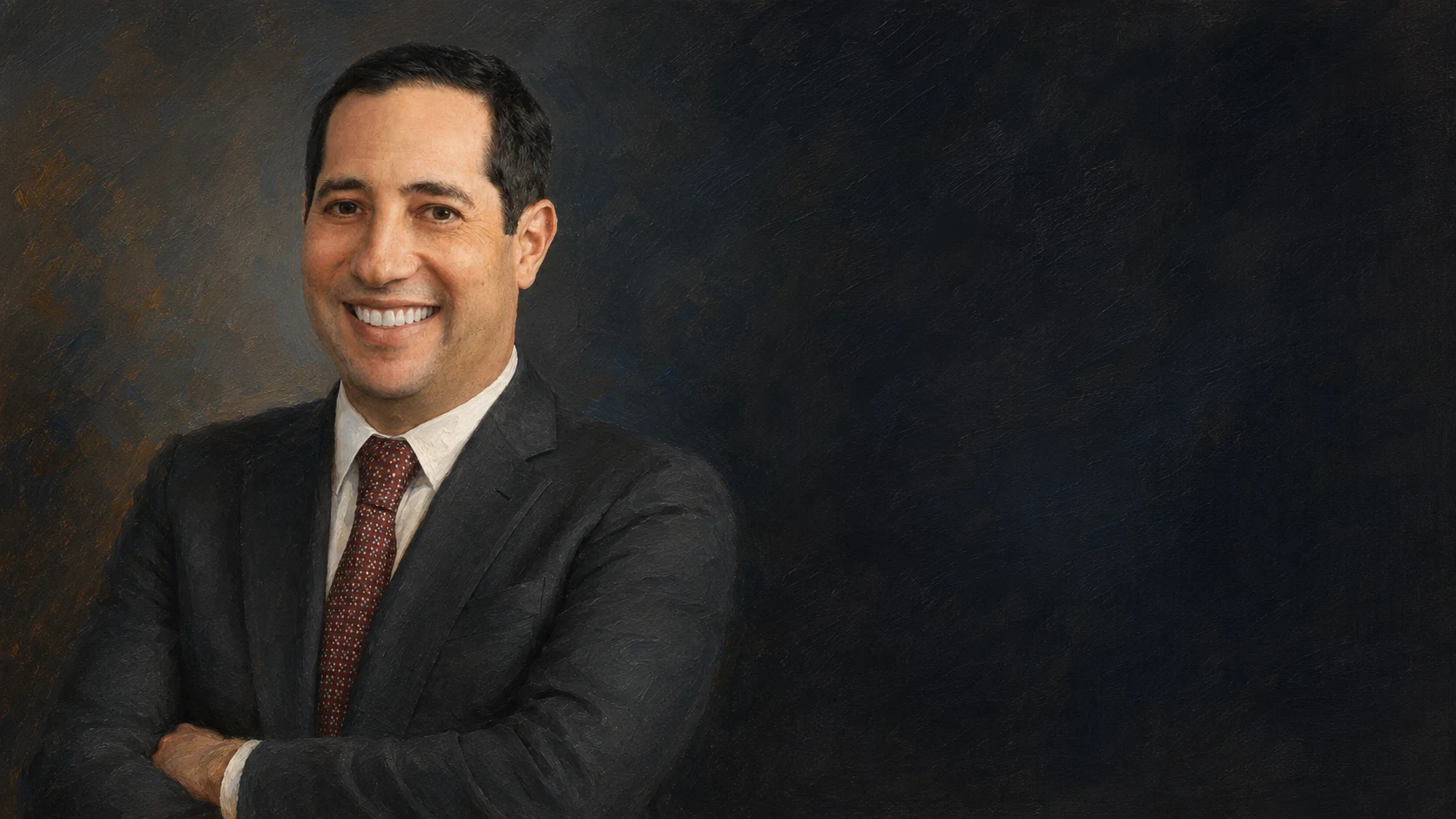
Jonathan D. Uslaner
Securities Fraud · Class Actions · Direct Claims · Investor-Side Litigation
Corporate actors seem to develop new ways to commit fraud.
The Bank's Own Words
In 2016, the country learned that Wells Fargo employees had opened millions of accounts customers never asked for. Regulators moved in. Consent orders followed in 2018, requiring the bank to fix the risk-management failures that had let the misconduct flourish.
Then the bank started talking. From February 2018 to March 2020, Wells Fargo told the market its compliance with those orders was on track, its remediation advancing, its relationship with regulators progressing. A series of disclosures revealed a different picture — and when they did, the price of Wells Fargo securities fell.
Jonathan D. Uslaner co-led the Bernstein Litowitz Berger & Grossmann team that turned that gap into In re Wells Fargo & Company Securities Litigation, representing court-appointed lead plaintiff Handelsbanken Fonder AB alongside public pension systems from Mississippi, Rhode Island, and Louisiana. The investor theory drew a precise line: the earlier account scandal was context, not the claim. The claim was what the bank later said about its reform effort and its dealings with its regulators.
That line gave the case its shape, and the case gave investors $1 billion. When the Southern District of New York granted final approval in September 2023, it was the largest recovery ever in a securities class action that did not involve a financial restatement, an SEC action, or Justice Department criminal charges — a case built and won on the securities laws alone. Uslaner carried the claims through pleading, discovery, class certification, mediation, and the approval, allocation, and administration process that moved the fund from courtroom to claimants.
Ready for Trial in the Merrill Merger
The Bank of America–Merrill Lynch litigation asked what shareholders were told before they voted. In the fall of 2008, with the financial system buckling, Bank of America asked its shareholders to approve the acquisition of Merrill Lynch. The proxy materials, investors alleged, omitted what mattered most: the scale of Merrill's mounting losses and the plan to pay billions in employee bonuses before the deal closed.
Uslaner helped prosecute the consolidated securities action through discovery, depositions, expert work, and repeated motion practice — reconstructing the merger chronology, what directors and executives knew as they negotiated and sought shareholder approval, and how to separate merger-specific losses from the surrounding financial crisis. The team prepared the case for either settlement or trial, and because the proof was trial-ready, the agreement that came as trial approached rested on facts both sides had tested: $2.425 billion in cash, one of the largest shareholder recoveries in history, along with court-approved governance measures.
Different Businesses, Same Discipline
Cobalt International Energy took Uslaner's practice offshore — to deepwater prospects in Angola and the Gulf of Mexico, alleged misstatements about regulatory risk and project value, and a record that joined securities analysis to geology, foreign regulation, and underwriting. His team compared public representations with company information and traced offering timing, project data, valuation evidence, regulatory materials, and underwriting documents. The litigation produced settlements providing as much as $335.3 million across its components.
Genworth Financial took him inside long-term-care insurance, where the accounting turns on assumptions that play out over decades rather than on any single transaction date. The record examined long-term-care claim experience, reserve adequacy, later disclosures, and their effect on the company's share price. The action resolved for $219 million. JPMorgan's London Whale matter — trading controls and risk piling up inside the bank's Chief Investment Office — produced $150 million. The Wells Fargo mortgage-backed-certificates litigation, which he led, examined the loan pools behind the paper and recovered $125 million.
Banks, insurers, energy companies, mortgage instruments, merger disclosures: the industries change, and the discipline does not. Uslaner tests each claim against the company's explanation, the contrary documents, the market context, the available defenses, and the investor's actual transactions.
Class, Direct, or Somewhere Else Entirely
Some of Uslaner's most consequential work happens before any complaint is filed, when a pension fund must decide whether to ride with a class or pursue its own action. He advises institutional investors on that choice — weighing transaction histories, timeliness, forum, potential recovery, discovery burdens, releases, and duration — and he is actively involved in the firm's direct-action opt-out practice for funds whose losses justify their own path.
The question increasingly crosses borders. Uslaner counsels pension committees and investment offices on opt-in, collective, and individual procedures in other jurisdictions: the territorial limits of United States securities law, foreign deadlines and judgment-recognition rules, and what each route means for the fund's holdings and its fiduciary responsibilities. Underneath all of it is a single issue — control. The chosen route determines who directs discovery, who evaluates a settlement, and how the investor's objectives are carried into trial preparation and recovery.
The Los Angeles Office
Uslaner is a partner at Bernstein Litowitz Berger & Grossmann and heads its Los Angeles office, overseeing lawyers who serve institutional investors across time zones and under different board rules, and keeping trustees and investment officers informed about the record, the possible outcomes, and every decision that requires client approval.
Before BLB&G, Uslaner practiced complex commercial litigation at Skadden and tried cases as a volunteer prosecutor for the City of Inglewood, California — courtroom reps most securities lawyers never get. He was elected to the Board of Governors of the Association of Business Trial Lawyers. He writes on class actions and federal securities law for Pensions & Investments and SACRS Magazine and contributes a recurring column for Reuters.
He earned his B.A., magna cum laude, from Duke University and his J.D. from The University of Texas School of Law.