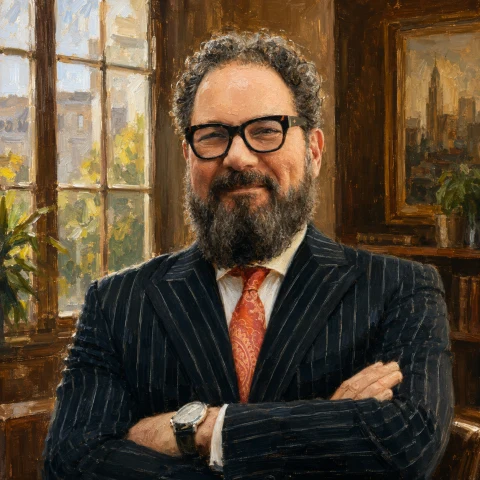
Joseph R. Saveri
Antitrust Class Actions · No-Poach/Wage-Fixing · Price-Fixing Litigation
First, at the time of filing, there was little jurisprudence directly on point where a class of plaintiff employees had successfully sued their employers for Sherman Act § 1 collusion in fixing wages.
Joseph R. Saveri’s Engineers’ Class Against Apple and Google and the Capacitor Price-Fixing Trials in San Francisco
Judge Lucy Koh named Joseph R. Saveri to lead the engineers’ antitrust case against Apple, Google, Intel, Adobe, Intuit, Pixar and Lucasfilm, which ended in $435 million in settlements. His firm also took a capacitor price-fixing class to trial twice in San Francisco; the last defendants settled during the second trial.
“Late in the afternoon on February 4th, 2003 Norio Kasuga exited the Shinagawa train station in Tokyo, Japan.” Joseph R. Saveri began his opening statement with that sentence on the afternoon of Monday, November 29, 2021, in Judge James Donato’s courtroom in San Francisco. Kasuga sold capacitors for Rubycon. As Saveri told it, Kasuga and his boss, Mr. Yamada, had come in by train from Rubycon’s offices outside the city and walked a few blocks to the Toko Hotel, “the kind of hotel without a lobby or a restaurant,” where Kasuga was shown to a conference room and met representatives of Chemi-Con, Nichicon, ELNA, Sanyo and Fujitsu. A few days earlier, Saveri said, Mr. Miyashita, one of the Rubycon executives chiefly responsible for overseas sales, had met with other manufacturers and agreed to fix prices, including prices to American customers like HP and Intel, and Kasuga had been sent to carry out the plan. The meeting lasted two hours, and by its end the companies had agreed on the specific steps.
Some version of that meeting, he told the jurors, had taken place “dozens, if not hundreds or thousands, of times” between 2001 and 2013. “This case is about a conspiracy that lasted 12 years involving 22 companies and hundreds of people,” he said. He represented eIQ, Chip-Tech and a class of American companies that had bought capacitors directly from the manufacturers—parts “placed in electric circuits contained in nearly every electronic device you use,” as Saveri once described them—and he asked the jurors to return what the class had been overcharged: “We’re here to ask you to make the defendants give the class members their money back.” They were the second jury to hear the case. The first had been sent home in March 2020, two weeks into the trial, when the coronavirus shut it down.
A decade earlier, Saveri had begun a class action for people on the other side of a market. The capacitor purchasers were buyers who said their sellers had agreed on prices. The engineers and other salaried technical employees of Apple, Google, Intel, Adobe, Intuit, Pixar and Lucasfilm sold their own labor, and they claimed that agreements among those companies not to recruit one another’s workers had held down their pay.
The defendants in both cases argued that injury could not be proven for the class as a whole, so no single trial could show who had been hurt. Over that objection, Judge Lucy H. Koh certified a class of about 60,000 technical employees in October 2013, and Judge Donato certified a class of direct purchasers of capacitors in November 2018. The technology companies settled for a total of $435 million after the case had been set for trial. The capacitor makers settled in five rounds for more than $600 million; the last of them settled in December 2021, during the second of two jury trials.
Judge Koh’s first pretrial order, in September 2011, designated Saveri by name as interim lead counsel for the employees, and he later took the depositions of Intel’s chief executive, Paul Otellini; of Bruce Chizen, who had been Adobe’s chief executive when it made its agreement with Apple; and of George Lucas. In the capacitor case, Judge Donato appointed Saveri and his firm class counsel, and Saveri took that case to a jury twice.
The Only Cases Filed After the Consent Decrees
The Justice Department reached the technology companies first. Its Antitrust Division investigated their employment and recruitment practices in 2009 and 2010, and on September 24, 2010, it filed a complaint against Adobe, Apple, Google, Intel, Intuit and Pixar; on December 14 it filed against Lucasfilm and Pixar. The department said the agreements had restrained competition for the affected employees without any procompetitive justification. The companies settled without admitting wrongdoing and agreed, for five years, not to enter into, maintain or enforce any agreement that kept anyone from soliciting, cold-calling, recruiting or otherwise competing for employees. The consent decree, Saveri later told the court, “did not require Defendants to pay any damages to their employees for the financial injury they caused.”
Few private lawyers followed. “The only cases filed were filed at my direction while at LCHB,” Saveri said in a sworn declaration in 2015, referring to Lieff, Cabraser, Heimann & Bernstein, the San Francisco firm where he had established and managed the antitrust and intellectual-property practice. “That so few lawyers and so few plaintiffs’ firms took an interest demonstrates the risk we took on behalf of the Class in pursuing this case.” When the cases were filed, he explained, there was little precedent for a class of employees successfully suing their employers under Section 1 of the Sherman Act for colluding to fix wages.
In a labor market the employers are the buyers, so the claim was that buyers had agreed to hold down the price they paid. “The nature of a labor market requires the pleading of monopsony rather than monopoly price fixing, a somewhat controversial theory of harm with limited support in extant case law at the time we filed suit,” Saveri said. When he directed the investigation, he added, whether such claims against buyers in a labor market were viable “was far from clear.” He went ahead, he said, “with the goal of obtaining redress for our clients and to advance the law in this area.”
Saveri had done the initial investigation, supervised the filing and organized the lawyers. The first complaint was filed on May 4, 2011, in Alameda County Superior Court for Siddharth Hariharan, a software engineer who had worked at Lucasfilm from January 2007 to August 2008. Four more followed that summer in Santa Clara County Superior Court, for Brandon Marshall and Michael Devine, software engineers at Adobe; Mark Fichtner, a software engineer at Intel; and Daniel Stover, a software engineer at Intuit. The defendants removed all five cases to federal court. On September 12, 2011, Judge Koh consolidated them and, under Rule 23(g)(3), designated “Joseph R. Saveri of Lieff, Cabraser, Heimann & Bernstein, LLP, as interim Lead Counsel on behalf of all Plaintiffs and the Proposed Class.” She named Eric L. Cramer of Berger & Montague and Linda P. Nussbaum of Grant & Eisenhofer to serve with him on an executive committee.
Six Agreements and Fifteen Open Pairings
The consolidated complaint described six bilateral agreements—Pixar and Lucasfilm, Apple and Adobe, Apple and Google, Apple and Pixar, Google and Intel, Google and Intuit—and pleaded them as one conspiracy to suppress pay at all seven companies. The defendants went after the single conspiracy first. Only six agreements had been alleged, they argued; of the twenty-one possible pairings among seven companies, the other fifteen were open to competition, and an overarching conspiracy was implausible on its face. They also argued that the complaint alleged no market power in any relevant market.
At the hearing on January 26, 2012, Judge Koh said, “This case is going to survive the motion to dismiss.” She also said, “It’s hard to make the inference that there was no conspiracy,” lifted the stay on discovery and ordered Google to produce its draft emails along with the ones it had sent, marked to show which were which. Saveri told a reporter afterward that the plaintiffs were comfortable moving forward on their single, joint conspiracy complaint. He put the harm at pay “suppressed between 5 and 10%” and said “tens of thousands of employees were affected.”
In her written order of April 18, Judge Koh found that it “strains credulity” that Apple and Adobe reached an agreement in May 2005 identical to the one Pixar had made with Lucasfilm in January 2005 without some communication or coordination between them, and that the apparent link was Steve Jobs, who controlled Apple and oversaw Pixar. The plaintiffs had alleged that at least one of three men—Jobs; Arthur Levinson, a director of both Apple and Google; and Eric Schmidt, Google’s chief executive and an Apple director—had significant influence over a party to each agreement. The judge also found it plausible that even one bilateral agreement would depress the mobility and pay of employees at companies outside it, and she wrote that the plaintiffs’ allegations of six parallel bilateral agreements “render the inference of an anticompetitive ripple effect that much more plausible.” She refused to dismiss the Sherman Act and Cartwright Act claims and denied a separate motion by Lucasfilm.
A New Firm in the Middle of the Case
A month after that ruling, Saveri left Lieff Cabraser, where he had practiced for twenty years, and started his own firm. He had considered it for years and kept putting it off. “And then I really figured out that there’s never a right time,” he said in 2014. “When I figured that out… it was the right time.” He left with an agreement that his new firm would stay on as co-counsel in three cases he had helped lead at Lieff Cabraser, the engineers’ case among them.
Antitrust law was the family trade. His father, Richard Saveri, and his uncle, Guido Saveri, sons of Italian immigrants who grew up in North Beach, founded Saveri & Saveri in 1959. Richard Saveri, who died in 1999, talked about his cases at the dinner table and wrote briefs late into the night, and his son, coming downstairs, would find him at it. Saveri said he never felt pushed into the profession; it seemed the natural course. “Look, if I had been able to hit a curveball, I would have been a baseball player or something like that,” he said. Opening his own firm, he said, was in large measure “about me and my identity as a lawyer.”
He had studied history and economics at the University of California, Berkeley, graduating with honors, and law at the University of Virginia, and he began practicing in 1987 as a general litigator at McCutchen, Doyle, Brown & Enersen in San Francisco. He is an author of California Antitrust and Unfair Competition Law, the treatise published by the State Bar of California’s Antitrust and Unfair Competition Section, and from 2010 through 2013 he served as a lawyer representative to the Northern District of California and the Ninth Circuit.
“I formed Joseph Saveri Law Firm in May 2012,” he told the court. “At that time, the litigation was still in its initial stages.” On June 4, 2012, Judge Koh amended her first pretrial order and appointed Lieff Cabraser and Saveri’s new firm jointly as interim co-lead counsel. Under the two firms’ agreement, each bore equal financial risk and made equal out-of-pocket contributions to the litigation fund that financed the case, and Saveri paid his new firm’s share himself, “out of my personal savings and other personal financial resources.” His firm also served as co-lead counsel for a class of direct purchasers of titanium dioxide in a price-fixing case in federal court in Maryland against DuPont, Huntsman, Kronos and Millennium Inorganic Chemicals; that case settled for $163.5 million on the day before trial.
Otellini, Chizen and Lucas Under Oath
The depositions ran from June 2012 through December 2013. By Judge Koh’s count, class counsel reviewed over 3.2 million pages of documents, took or defended nearly 100 depositions and analyzed over 15 gigabytes of compensation and recruiting data. Saveri took many of the depositions himself: Otellini on January 29, 2013; Chizen on March 15; Lucas on March 28; and John Warnock of Adobe the next day. Lawyers from Lieff Cabraser examined Apple’s chief executive, Tim Cook, and Eric Schmidt.
The first of the agreements went back to Lucas’s sale of Lucasfilm’s computer division to Steve Jobs, who renamed it Pixar. The two companies agreed not to cold-call each other’s employees, to notify each other when making an offer to an employee of the other, and to treat any such offer as final, with no improvement in response to a counteroffer. In May 2005, Jobs wrote to Chizen, “OK, I’ll tell our recruiters that they are free to approach any Adobe employee who is not a Sr. Director or VP.” Chizen answered, “I’d rather agree NOT to actively solicit any employee from either company . . . .” Theresa Townsley, Adobe’s vice president for human resources, then told her recruiting team, “Bruce and Steve Jobs have an agreement that we are not to solicit ANY Apple employees, and vice versa.”
Otellini had described his own arrangement with Schmidt in an email to a senior Intel executive: “We have nothing signed. We have a handshake ‘no recruit’ between eric and myself. I would not like this broadly known.” When Shona Brown asked Schmidt whether he had any concerns about sharing information regarding the “Do Not Call” list with Google’s competitors, he answered that he preferred it be shared “verbally[,] since I don’t want to create a paper trail over which we can be sued later?”
Lucas supplied the reasoning. At the deposition Saveri took, he testified that the rule he had “put down for everybody” was that “we cannot get into a bidding war with other companies because we don’t have the margins for that sort of thing.” He believed, in Judge Koh’s summary of his testimony, that companies should not compete against each other for employees, because “[i]t’s not a normal industrial competitive situation.” Judge Koh quoted both answers when she certified the class.
The chief executives policed the agreements themselves. When a recruiter on Google’s engineering team contacted an Apple employee in 2007, Jobs forwarded the message to Schmidt: “I would be very pleased if your recruiting department would stop doing this.” Google made a “public example” of the recruiter, who was fired “within the hour.” On September 26, 2007, Otellini received an internal complaint about Google’s success in hiring away Intel’s technical people and sent it on to Schmidt: “Eric, can you pls help here???” Schmidt replied the next day, “If we find that a recruiter called into Intel, we will terminate the recruiter.”
One chief executive refused. On August 22, 2007, Jobs called Edward Colligan, the chief executive of Palm, to propose that neither company hire the other’s employees, and suggested that Palm might otherwise face lawsuits over Apple’s patents. Colligan answered in writing that the proposal “that we agree that neither company will hire the other’s employees, regardless of the individual’s desires, is not only wrong, it is likely illegal.” “I can’t deny people who elect to pursue their livelihood at Palm the right to do so simply because they now work for Apple,” he wrote.
Facebook’s Cold Calls and Google’s Big Bang
The emails showed the agreements. They did not show what the agreements had cost a class that took in the salaried technical workforce of all seven companies, including people no rival’s recruiter would ever have called. The defendants argued that neither antitrust impact nor damages could be proven for the class as a whole. Saveri later told the court that an employee’s compensation turns on factors far more complex than the price of the fungible commodities at the center of most price-fixing cases, and that this made it harder to establish under Rule 23 the commonality and predominance of class-wide injury.
The plaintiffs’ answer, developed with their expert Edward Leamer, began with how the companies paid people. Each organized its employees into job groups, levels and families that were paid in relation to one another, and each valued internal equity, the principle that similarly situated employees should be paid similarly. On the plaintiffs’ account, cold calls carried information about salaries and benefits from one company’s recruiters to another company’s employees, and from them to their colleagues; a raise given to keep one engineer from leaving pushed up the pay of others on the same scale; and each company watched the others’ pay because all of them hired from the same pool. On that account, the agreements took the pressure away from everyone. Leamer found that common factors—age, tenure, gender, location, title and employer—explained approximately 90 percent of the variation in an individual employee’s pay, and he estimated that the agreements had left the class undercompensated by $3.06 billion.
Bill Campbell—chairman of Intuit’s board, an Apple director and an adviser to Google—testified that what the agreements prevented was a rival going “A through Z” and calling “everybody that was a mid-level engineer and above”. In March 2008, Google’s recruiting director, Arnnon Geshuri, learned that Facebook, which was outside the agreements, was cold-calling into Google’s Site Reliability Engineering team. He proposed asking Facebook’s chief operating officer, Sheryl Sandberg, for a mutual “Do Not Call” agreement, looking at “additional individual retention incentives or team incentives,” or going after Facebook’s people “no holds barred.” That August, after Google lost another employee to Facebook, a Google vice president wrote that she had gone as far as she could “without making promises about pay or title that would cause significant problems across [her] team.” Campbell answered, “Who should contact Sheryl [Sandberg] (or [Facebook Founder] Mark [Zuckerberg]) to get a cease fire? We have to get a truce.” Facebook refused.
Facebook kept recruiting from Google. In November 2010, two months after the Justice Department made its investigation public, Google announced what it called its “Big Bang”: a 10 percent raise in base salary for every salaried employee and a $1,000 cash bonus for everyone. Laszlo Bock, Google’s senior vice president for people operations, listed being “responsive to rising attrition” among the reasons. At Apple, the recruiting manager David Alvarez noted that Google had given its employees a 10 percent increase and warned that paying more to new hires would “most likely create an internal comp issue with current employees.” Judge Koh read the episode against the defendants’ argument that any harm stopped with the individuals who would have been called: “These contemporaneous reactions of the Defendants to genuine competition for labor suggest instead that their response to widespread solicitation of their employees would have been structural rather than individual.”
On October 24, 2013, Judge Koh certified a class of salaried technical, creative and research-and-development employees of the seven companies, for periods between 2005 and 2009—about 60,000 people. She found that “the documentary evidence and expert reports paint a picture of Defendants’ business practices and the market in which Defendants operate that suggests that common proof could be used to demonstrate the impact of Defendants’ actions on Technical Class members.” Lawyers at Saveri’s firm had a central role in drafting the motion she granted, including the sections arguing that common questions predominated, and Lieff Cabraser and the Joseph Saveri Law Firm served as co-lead class counsel. When the defendants asked the Ninth Circuit for permission to appeal the certification, Saveri’s firm did most of the research and drafting of the opposition, and the court of appeals rejected the petition without comment.
Leamer’s Regression and the May 2014 Trial Date
The defendants then went after Leamer’s regression. With the standard errors clustered, they argued, the variable measuring the agreements’ effect was not statistically significant at the 1, 5 or 10 percent levels, and the model would pick up anything else that bore on pay during the class period. On April 4, 2014, Judge Koh held that the model’s failure to meet those conventional levels did not make it so methodologically flawed as to warrant exclusion; the tools for testing imperfect expert evidence were cross-examination, contrary evidence and careful instruction on the burden of proof. She refused to exclude Leamer’s testimony and denied the defendants’ joint motion for summary judgment.
The companies had also filed their own motions for summary judgment, and Saveri said their aim was to present the conspiracy as “part and parcel of research collaboration standard in the high-tech industry.” “At my direction, my staff scoured thousands of pages of evidence and deposition testimony to identify key admissions,” he said. Judge Koh denied every one of the defendants’ motions for summary judgment. Trial was set for May 27, 2014.
Lieff Cabraser and Saveri’s firm hired jury consultants and prepared a full mock trial. In early 2014, Saveri told a reporter that the court documents portrayed the engineers as “victims of a conspiracy.” “These are the engineers building the hardware and software that are the lifeblood of the technology industry,” he said. “But they were prevented from being able to freely negotiate what their skills are worth.”
The named plaintiffs took risks of their own. Hariharan sat for a full-day deposition on October 12, 2012, answered 16 interrogatories, helped his lawyers with Lucasfilm’s practices and potential witnesses, and spent well over 200 hours on the case. Fichtner, who still worked in the industry, was deposed three days later; the defendants subpoenaed two other companies that had employed him, seeking nearly everything about his work there, including his personnel files. “I took the risk that other companies will not hire me or that clients might not want to work with me because I served as a Class Representative in this action,” he told the court in 2015. “That risk will continue throughout my career.”
Brandon Marshall, one of the two Adobe engineers who had sued in 2011, died on December 10, 2013, seven weeks after Judge Koh certified the class he represented. When she approved the $415 million settlement, she directed that his share go to his estate.
$435 Million and a Per Se Motion Left Pending
Pixar and Lucasfilm settled for $9 million and Intuit for $11 million. After notice of those settlements went out to the class, Saveri’s office received “a steady flow of calls and emails from Class members and other concerned citizens regarding the case,” and he directed his staff to answer every inquiry promptly. Judge Koh approved the settlements on May 16, 2014. The trial set for May 27 never began. Adobe, Apple, Google and Intel later agreed to pay $415 million, and on September 2, 2015, Judge Koh granted final approval. The settlements totaled $435 million, which exceeded 14 percent of the plaintiffs’ single-damages estimate. Of 64,466 class members, 11 objected and 56 opted out. Had 2,579 opted out—4 percent of the class—the companies could have paid less; at 56, they owed the full $415 million.
One legal question went undecided. When the case settled, the plaintiffs’ motion asking Judge Koh to apply the per se rule, under which a naked agreement among competitors is unlawful without any inquiry into its effects, was still pending; a team at Saveri’s firm had taken primary responsibility for researching and drafting it. In May 2015, Saveri told the court that the public attention the case had drawn “increased the deterrent value of the case in dissuading employers who might otherwise have considered similar collusion in the future.” In October 2016, the Justice Department and the Federal Trade Commission issued antitrust guidance to human-resources professionals. “Naked wage-fixing or no-poaching agreements among employers, whether entered into directly or through a third-party intermediary, are per se illegal under the antitrust laws,” the agencies wrote. “Going forward, the DOJ intends to proceed criminally against naked wage-fixing or no-poaching agreements.” The guidance cited the department’s civil cases against Adobe, Apple, Google, Intel, Intuit, Pixar and Lucasfilm and told employees injured by such an agreement that they could sue for three times their damages.
Raids in Japan and the First Complaint
The capacitor case began with Saveri’s own investigation. When he started, there was no American indictment to build on. He began looking into the industry after news reports that the Justice Department had raided capacitor makers in Japan, and he worked out a theory of the case in conversations with people in the business, financial analysts and the reporters who covered it. He found a client and filed the first complaint in July 2014. “We filed the first case challenging this conduct,” he said later. Other firms filed that summer, and several joined his team. After a hearing in October, Judge Donato took two days to appoint him sole lead counsel for the direct purchasers, basing the choice on the time and effort Saveri had put into investigating the claims. His firm then had five lawyers, working from a small office at the end of a sixth-floor hallway on Montgomery Street, three blocks from Lieff Cabraser.
Guilty Pleas and Seven Million Transactions
The purchasers alleged that manufacturers of aluminum, tantalum and film capacitors had conspired to fix prices beginning as early as 2002. Unlike the technology companies, several of these defendants had admitted the conspiracy in criminal court, and they had done it before Judge Donato, who was presiding over the prosecutions. “Eight corporations have pled guilty to conspiring, and accepted substantial criminal fines for their collusion,” Judge Donato wrote in 2018. “Two individuals have also pled guilty and been sentenced to time in a federal prison for their related conduct.” Panasonic had applied for leniency from the United States and received it on a conditional basis.
Two of the companies that pleaded guilty were the ones Saveri would face at trial. In February 2017, Matsuo Electric agreed to plead guilty along with Satoshi Okubo, the executive who, the Justice Department said, had supervised Matsuo’s involvement in the cartel; Okubo and Tokuo Tatai, the other individual who pleaded guilty, were each sentenced to a year and a day in prison. Nippon Chemi-Con pleaded guilty in May 2018 to conspiring from at least November 2001 to January 2014. It was fined $60 million, the largest fine in the investigation, and placed on five years’ probation; the Justice Department said the conspirators had agreed on prices at meetings and hidden the scheme with code names and misleading explanations for their prices and bids. Competition authorities in China, Japan, South Korea, Taiwan, Singapore, Brazil and the European Union opened their own inquiries.
The plaintiffs’ proof of the agreement came from the defendants’ own files. Saveri’s team built its class-certification motion on a core set of 141 documents, and Judge Donato wrote that they showed the defendants discussing their goals of “restrain[ing] useless competition” and “striv[ing] to sustain prices by cooperating,” exchanging prices and other competitively sensitive information, and meeting frequently, formally and informally. Meeting minutes recorded successful “price restoration,” and one set stated, “we have confirmed at today’s meeting that all companies will proceed strongly.”
The defendants fought certification on the ground that the parts and the buyers were too varied for one trial. They pointed to customization, differences in raw materials, end uses and demand, and differences in bargaining power among purchasers. The plaintiffs’ statistician, Jim McClave, had built a database of over seven million transactions from the transaction data the defendants produced and run a multiple regression that, he concluded, accounted for “more than 98%” of the variability in capacitor transaction prices; he estimated that aluminum capacitor prices had been elevated by 9.8 percent, tantalum prices by 7.5 percent and film prices by 7.2 percent. The defendants called his data “fatally deficient and unrepresentative” and said that what he called a customer-by-customer analysis only compared each customer’s actual prices with but-for prices derived from aggregate overcharge percentages.
Judge Donato framed the question as whether McClave had practiced a generally accepted method or produced “junk science” akin to “predicting criminality by feeling the bumps on a person’s head.” He found that “his work is sound and reliable, and consistent with established econometric methods,” and that the defendants’ complaints about what McClave had or had not taken into account were material for cross-examination at trial.
On November 14, 2018, Judge Donato certified the class and appointed the Joseph Saveri Law Firm as its counsel. The class was led by four American companies—Chip-Tech, Dependable Component Supply, eIQ Energy and Walker Component Group—and had, by the plaintiffs’ count, “almost two thousand members.” “Defendants demand too much,” he wrote. “In effect, they argue that DPPs must prove that each and every putative class member was harmed before certification can be granted. But Rule 23 does not require proof of impact on each purchaser before a class can be certified.” Earlier that year, when he preliminarily approved settlements with Hitachi Chemical and Soshin, Judge Donato had appointed “Joseph R. Saveri of the Joseph R. Saveri Law Firm, Inc.” class counsel for the settlement class.
A Jury Sent Home in March 2020
The direct purchasers’ case went to trial in March 2020. “After two weeks, and after most of our evidence was put in, the case was halted by the coronavirus,” Saveri said later that year. About a week of trial remained, including closing arguments. On Monday, March 16, the court sent the jury home and limited courtroom attendance to lawyers and clerks, and then it shut the trial down. In the weeks leading up to the trial, on its eve and during it, other defendants had settled for about $232 million.
Saveri had a name for the defendants who settled early. In a case with many defendants, he said, “there are what we call the pilgrims, they are the early settlers, and there are those who are going to be in there for a long haul.” He recalled using four different mediators in the capacitor case.
On June 4, the court released the jury, declared a mistrial and indicated that a new trial would be held later in the year. Saveri’s team had argued to resume. “We advocated for resuming the trial, if safely possible, in the interests of judicial efficiency and out of respect to the jury, which had served diligently and deserved a chance to render a verdict,” he said. Two defendants remained: Nippon Chemi-Con and Matsuo Electric.
Four months after the mistrial, Saveri said, “I’m optimistic, and I think the Class should be as well.” Trying the case again meant facing defendants who had already seen it. “I think the most challenging part was getting the case tried a second time when, after the first trial, we had basically put all our cards on the table and put our case on, which gave the other side a pretty good view about what our case was,” he said later. The first trial had also shown his team how fast it could move: “we learned from the first trial that we could do it quickly and we could probably do it even more quickly.”
Treble Damages and a Second Jury
At the second trial, Saveri, with Steven Noel Williams, Christopher K.L. Young and Anupama K. Reddy of his firm, represented eIQ, Chip-Tech and the class against Nippon Chemi-Con, its American affiliate United Chemi-Con, and Matsuo. Roberto Finzi of Paul, Weiss appeared for Nippon Chemi-Con and David D. Cross of Morrison & Foerster for Matsuo.
By then the earlier rounds of settlements had come to $439.55 million, more than the $427 million in overcharges McClave had calculated. Saveri tried the case anyway. Antitrust damages are trebled, and the jurors would hear nothing about the settlements; “the jury didn’t have any evidence of the settlements, so we were going to prove that number,” he said later. A verdict for the full overcharge would have tripled to more than a billion dollars before the settlements were credited, and he called the trouble of collecting such a judgment from Japanese companies “a happy problem to solve if you have an over-billion-dollar judgment.” The team, he said, “didn’t want to settle for single damages”: “there was serious wrongdoing, our clients had sustained substantial losses and it was really important for us to get them compensated.”
The defendants had reasons of their own to try it. Finzi conceded Nippon Chemi-Con’s guilt in the first minute of his opening and argued that the class was asking for damages it had not suffered; the plaintiffs, he said later, had “overreached, and overreached substantially so.” Bonnie Lau, one of Matsuo’s lawyers, said later that Matsuo had no assets in the United States and that Japan’s Supreme Court had twice held punitive damages awards unenforceable in Japanese courts.
Saveri rebuilt the order of proof around the first week. Lawyers tend to treat these cases as contests of expert economics, he said, but “ultimately this was about a story,” and the team opened with an introductory expert, put in the liability evidence and closed the week with McClave, so that the story would be “tied up with a bow when the jury went home for the first weekend.” The team ran its focus groups over Zoom. Judge Donato had the prospective jurors fill out written questionnaires that screened for vaccination status, COVID and hardship, and the jury was chosen in about two hours.
He told the jurors they would meet two of the purchasers: Gene Krzywinski, whose business is based in San Jose, and Barry Lubman, who runs a family electronics business in Brooklyn. “I know Mr. Lubman was very worried about coming across the country to this trial,” Saveri said, “but he thought coming to testify in this case was important and a privilege.”
He started from what he called a basic fact, visible in “the records of the criminal case”: “ten companies we sued have admitted they were involved in the conspiracy,” and two executives, one of them an employee of the defendants in the courtroom, had pleaded guilty and gone to prison. Virtually none of the executives involved, he told the jurors, would come to explain themselves: “They will not come.” Nippon Chemi-Con, he said, made all three types of capacitors and was one of the chief organizers: “You will also learn that they were ring leaders of the conspiracy.”
He took the jurors through the meetings. “At the monthly meetings, the conspirators tried to reach a consensus about raising prices when they could, maintaining prices as much as possible, or to team up against their customers to prevent prices from going down,” he said. He put up notes Kasuga had written in Japanese of another meeting, and then the English: the letters C, E, N, S, F, R and M stood for Chemi-Con, ELNA, Nichicon, Sanyo, Fujitsu, Rubycon and Matsushita, as Panasonic was then called, and the customers in view included Foxconn, which built products for Apple, and Intel. The companies had agreed, Saveri said, not to negotiate any price more than 2 percent below the current one, for all customers big and small. “This is an agreement to fix, maintain and stabilize prices. It violates the U.S. antitrust laws. And it says ‘All companies agreed.’ If that’s not price fixing, I don’t know what is.” At the same meeting Rubycon proposed prices for a new product, and Kasuga wrote: “All companies agreed to Rubycon’s plan.”
The monthly meetings ran on forms the companies filled out in advance with recent sales and plans for future sales. Saveri showed one from a December 2012 meeting attended by Chemi-Con, ELNA, Matsuo, NEC, Rubycon and Holy Stone, on which the companies reported quantities and revenue for the coming January and February. Of the information the companies exchanged, he said, “Competitors do not give up that sort of information unless they know they were going to get some in return.” He added, “There’s no give without get.” Other contacts, he said, took place at izakayas, the pubs where Japanese businessmen go after work, and in coffee shops, on the telephone and on the golf course.
The damages figure came from McClave’s regression on 7 million transactions “which showed who sold what capacitors to whom and at what price.” He answered the defense’s attack on the model before it came: “He didn’t put anything in a blender. That’s ridiculous.” The overcharge, Saveri said, was $427,530,613, and at the end of the case the plaintiffs would ask for a verdict in that amount.
Matsuo on the Third Day, Chemi-Con Before Closing
On the third day of trial, during a break and just before Cross was to cross-examine McClave, the plaintiffs told the court that Matsuo had settled. Finzi, who had planned the defense with Matsuo’s lawyers, said later that the announcement came that morning without notice: “all of a sudden you find out that, hey, you know, half the team is gone.” Nippon Chemi-Con and United Chemi-Con settled on December 15, 2021, before closing arguments. “We are proud of the settlement reached with the two remaining defendants today during trial,” Saveri said that day. Reddy had been preparing to cross-examine the defense economist, Laila Haider, and remembered Saveri calling the team with the news; she was, she said, “99 percent happy but like one percent sad.”
The jury never reached a verdict. Across five rounds, the direct purchasers’ settlements came to more than $600 million, and Judge Donato granted final approval to the last of them on January 10, 2023. “It did take seven years, I guess,” Saveri said, “but that was actually pretty fast, given two of those were during the pandemic.”
Later, at a panel of the California Lawyers Association’s antitrust section, Saveri gave the closing argument he had never delivered. He thanked the jurors on behalf of Krzywinski, Lubman, their companies and 1,763 other purchasers of capacitors in the United States, and he went back to how the conspirators had met: “Some had clandestine meetings in coffee shops or bars. Some stayed out all night drinking. Some played golf. Some talked on the telephone. Some by email. And some had private conversations we will never know about because they deny they occurred or they destroyed the evidence.” Asked for advice on trying a case before Judge Donato, he said a lawyer had to “be prepared to be flexible, because what you predict is going to happen is predictably not going to be what is going to happen.”
Paid by Purchases and by Salary
The two classes were paid on different measures. Capacitor purchasers had to file claims. For the first round of settlements, the distribution plan submitted to Judge Donato in June 2018 covered class members who had filed valid claim forms by May 26, and the settlement administrator told them to expect payment the week of July 9, 2018. Money from the second round was distributed in March 2021, from the third in May 2021 and from the fourth on September 8, 2021.
The engineers had to do nothing. Each class member’s share of the High-Tech fund was a fraction whose numerator was that person’s base salary in a class position during the class period and whose denominator was the base salary paid to all class members. Judge Koh approved base salary as the measure because the companies’ salary structures, linked by internal equity, had moved together. Notice of the $415 million settlement went to every class member by first-class mail, and the notice administrator took 780 calls on its toll-free line. Judge Koh put the average recovery from the $415 million settlement at about $5,770, against about $173.73 from the earlier $20 million. Money left over would be redistributed to the class if that cost less than the amount remaining, and otherwise would go to a nonprofit devoted to the education, development and advancement of workers. None of it could go back to the companies. In November 2023, eight years after Judge Koh approved the last settlement, the administrator sent the engineers a second round of checks.