11TH & 3D CIRCUITS | NOS. 16-16816, 24-1518 & 24-10029
Foreign Sovereign Immunity · Judgment Enforcement
A Venezuelan Jet Carried the Bolívar Collection to Caracas. Three Appellate Rulings Later, Nothing Has Come Back.
On October 17, 1830, Simón Bolívar wrote to Joaquín de Mier before spending his last days at de Mier’s estate. Exactly 177 years later, de Mier’s descendant boarded a Venezuelan delegation’s private jet in Orlando with the family’s Bolívar collection. What followed ran through sovereign immunity, an exhumation, a sanctions license that expired before it could be used, CITGO-linked shares, a $17.1 million judgment the Eleventh Circuit erased—and, in January 2026, the elevation of one of the officials who inspected the collection to the acting presidency of the republic still defending the case.
The Case at a Glance
Devengoechea v. Bolivarian Republic of Venezuela, 889 F.3d 1213 (11th Cir. 2018) — the conduct Devengoechea described fell within the Foreign Sovereign Immunities Act’s commercial-activity exception, so Venezuela could be sued.
No. 24-1518 (3d Cir. July 9, 2024) — the PDV Holding shares remained immune from attachment. Jurisdiction to sue is not authority to seize.
No. 24-10029 (11th Cir. Oct. 1, 2025) — Rule 55, not a civil trial in absentia, governed after Venezuela stopped defending. The $17,128,630.10 judgment was vacated and the case remanded.
On October 17, 1830, Simón Bolívar wrote from Soledad to Joaquín de Mier, thanking him for the offer of a country house near Santa Marta. Bolívar had resigned the presidency of Gran Colombia months earlier. The union he had helped create was breaking apart, illness had stopped his planned departure for Europe, and he needed a place to recover.
He reached de Mier’s Hacienda San Pedro Alejandrino on December 6. He died there eleven days later.
One hundred seventy-seven years to the day after that letter, Ricardo Devengoechea—de Mier’s great-great-grandson and a United States citizen living in Orlando—walked up the stairs of a Venezuelan delegation’s private jet carrying what his family had preserved since Bolívar’s death.
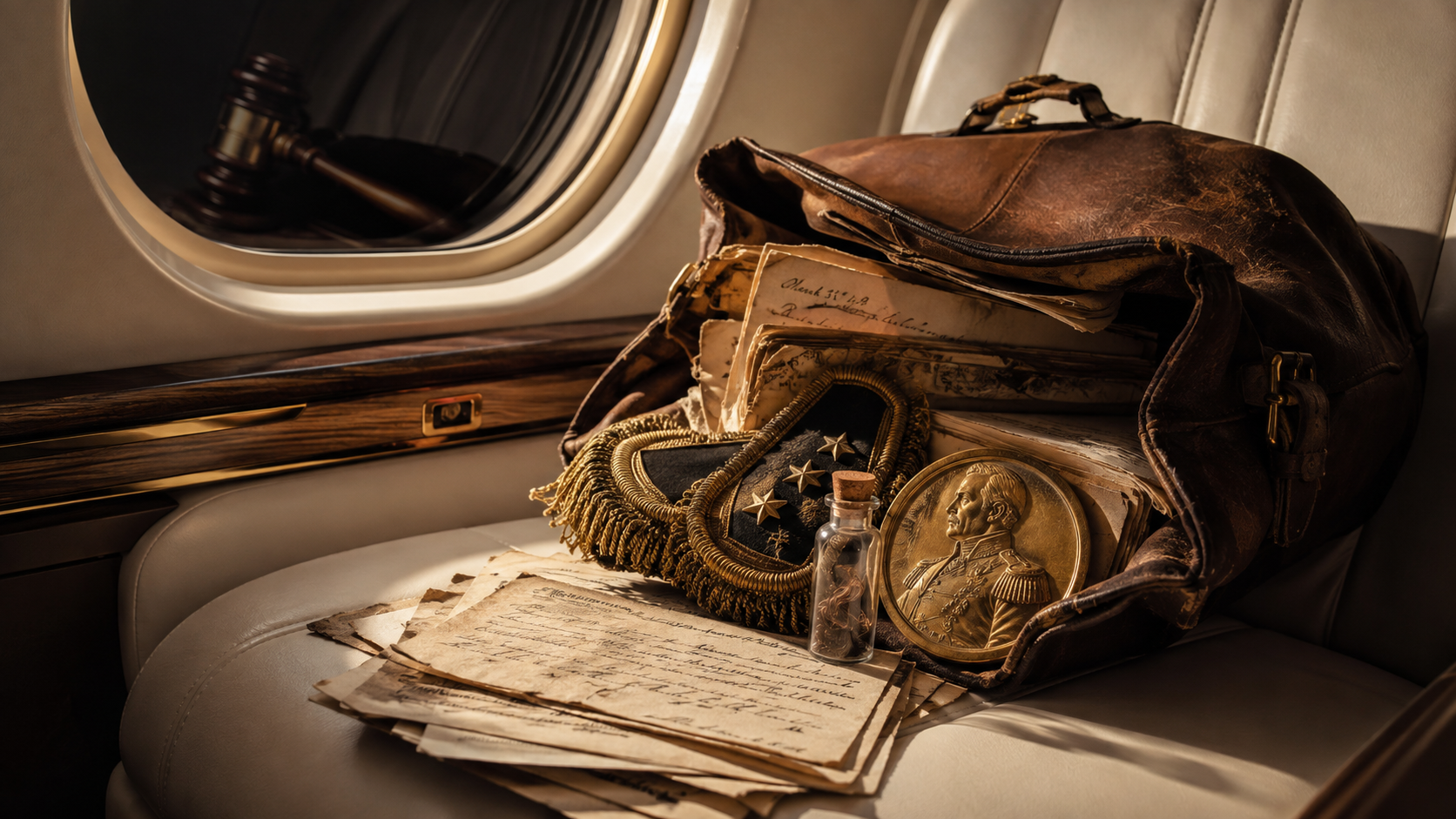
The collection held thousands of Bolívar’s governmental papers, letters, and other writings. It held Napoleon Bonaparte’s ornamental epaulets. It held Bolívar’s Liberation Medal of Peru, which the appellate record described as one of a kind. And it held a lock of Bolívar’s hair.
The day before the flight, Devengoechea had driven more than two hundred miles to Miami for an emergency passport. Venezuelan officials had arranged a government letter to support the application. He received the passport that afternoon, drove back to Orlando, packed nearly two centuries of inheritance, and met the delegation at the airport.
The arrangement, as he later described it in court, was simple: Venezuela would inspect the collection in Caracas and then either buy it or send it home.
What followed instead was nearly nineteen years, two federal appellate courts, an economic sanctions regime, a bench trial with an empty defense table, a failed attempt to reach shares sitting above CITGO Petroleum, and a $17,128,630.10 judgment that no longer exists. Each ruling opened a door or closed one. None produced an order returning the collection.
The Merchant of Santa Marta
Joaquín de Mier was a Spanish-born merchant at Santa Marta who supplied arms and matériel to New Granada’s independence forces—a man who committed his ships and resources to independence from the country of his birth. When Bolívar could travel no farther in 1830, de Mier opened his country estate and placed his brigantine Manuel at the general’s disposal for the passage from Sabanilla.
The Eleventh Circuit traced the collection to the friendship between the two men. De Mier came into possession of Bolívar’s effects, and his descendants carried them forward, generation to generation, until they reached Devengoechea.
The objects could not be replaced by reproductions. Bolívar’s campaigns had helped bring Venezuela, Colombia, Ecuador, Peru, Bolivia, and Panama into existence as sovereign states; his papers recorded both the public business of founding them and the private correspondence of a man doing it. The medal design followed Ayacucho—Peru’s Constituent Congress ordered Bolívar’s bust on one face and, on the reverse, a declaration that Peru had been restored on that field in 1824. The epaulets are attributed to Napoleon; the record does not explain how they entered Bolívar’s possession. Devengoechea later suspected that the lock of hair could provide biological material and therefore held special value for Venezuelan officials.
By 2007 the collection was in Florida. The first contact came through family: Jorge Mier Hoffman, a relative, telephoned on behalf of Venezuelan officials asking for copies of selected items. Copies were not what they wanted for long. Within weeks, officials reached Devengoechea directly and arranged to see the collection in person.
Three Days in Orlando
The delegation arrived in the United States by private jet. The first meeting, on October 14, 2007, ran about three hours. Among those at the table was Delcy Rodríguez, then Coordinator General of Venezuela’s Office of the Vice President. They discussed a purchase.
The next day Devengoechea brought the collection to the delegation’s hotel. Inspection and negotiation consumed another five hours. Then the officials made their proposal: come with us, so experts in Caracas can finish the examination.
His passport had expired. This was the sort of obstacle that could have ended the trip, or delayed it for weeks, and it did neither. The delegation arranged for Zuleiva Vivas, president of Venezuela’s Foundation of National Museums, to produce a letter on government letterhead supporting an emergency replacement. Devengoechea carried it to a 9 a.m. appointment in Miami on October 16, received the passport, and drove back up the state.
The parties negotiated for roughly another hour at the airport before the jet lifted off for Caracas on October 17.
During the flight and after their arrival, Devengoechea mentioned that other Bolívar material remained in Florida. Venezuelan officials bought him a round-trip ticket so he could retrieve it and bring it back.
He stayed until about November 6. The officials told him the collection was larger than expected and the examination was unfinished; they needed more time. He left it with them on the understanding he would later describe in federal court—pay for it, or return it to Orlando—and flew home without it.
Before Dawn at the National Pantheon
For two or three years he called and asked. The answer was always that the inspection was continuing. He waited.
At around three in the morning on July 16, 2010, Venezuelan authorities opened Bolívar’s sarcophagus at the National Pantheon in Caracas. The procedure was filmed and later broadcast on state television. Officials said investigators had taken DNA samples and images of the remains to confirm the identity of the body and examine how Bolívar died.
That second question was the live one. Hugo Chávez had publicly challenged the accepted account that the Liberator died from tuberculosis and suggested that political enemies might have poisoned him. The exhumation placed that historical dispute inside a government forensic investigation.
Devengoechea’s suspicion was that Venezuela wanted a reference sample—that the point of the hair in his collection was to test it against what was in the tomb.
That suspicion belongs to him, not to any court. The Eleventh Circuit recounted it as his theory, not as a finding. No court has found that the hair was used in the exhumation, that it served as a comparison sample, or that the exhumation explains Venezuela’s conduct. What the courts have is the sequence: the exhumation happened, and afterward, Devengoechea says, his calls stopped being returned.
Venezuela did not pay. Venezuela did not send the collection back. In 2012 he sued in the Southern District of Florida for breach of agreement and unjust enrichment.
Venezuela’s Conduct in Orlando
The case opened with silence from Caracas, a clerk’s default, and a default judgment. Then Venezuela appeared. At Devengoechea’s request, the district court vacated the default and allowed the country to defend.
Venezuela moved to dismiss under the Foreign Sovereign Immunities Act, which shields foreign states from suit in American courts except in defined circumstances. Devengoechea invoked the exception for commercial activity.
Writing for the panel, Judge Robin Rosenbaum located the analysis where the statute puts it—on the nature of what a sovereign did, not the purpose behind it. A government may want historical objects for reasons no private party shares: national identity, cultural inheritance, or the political significance of a founding figure. The question was whether the acts themselves were acts a private party could perform.
These were. Venezuela sent representatives to meet a possible seller. It inspected private property. It negotiated a potential purchase. It arranged transport for further examination. According to Devengoechea, Venezuela promised to buy the property or return it. Collectors, auction houses, companies, and museums can perform the same acts.
Venezuela had not seized the collection through police power, expropriated it by decree, or invoked authority belonging only to a sovereign. Instead, the conduct he described was commercial, and the failure to pay or return the collection had a direct effect in the United States because the money or property was due to Devengoechea in Orlando.
The court also considered Venezuela’s suggestion that the officials might have been acting without authority. Rosenbaum observed that the delegation’s private jet, the government passport letter, and government-funded travel made the official character of the trip difficult to dismiss at the jurisdictional stage.
In May 2018, the Eleventh Circuit affirmed jurisdiction. Devengoechea had crossed the first sovereign-immunity barrier: Venezuela could be sued over that conduct.
That ruling did not establish liability. It did not value the collection. It did not identify a single Venezuelan asset that could later satisfy a judgment. The FSIA separates immunity from suit and immunity from execution. Winning the right to sue a foreign state does not itself authorize a creditor to seize the state’s property.
A License That Outlived the Deal
By Devengoechea’s account, quoted later in a Delaware order, the parties settled in December 2018.
Then the second door began to close. United States sanctions against the Venezuelan government meant Devengoechea could not receive the settlement payment without a specific license from the Treasury Department’s Office of Foreign Assets Control. The Florida case was stayed while he applied.
OFAC took three years.
When the license finally issued, Devengoechea sent it to Venezuela’s lawyers. Venezuela refused to pay. Judge Paul Huck later found that Venezuela’s refusal to complete the settlement delayed the case by years and forced Devengoechea toward trial.
In 2023 the license expired. The settlement was no longer operative. The court reopened the case, sixteen years after the jet left Orlando.
The Empty Chair
A renewed motion to dismiss and for summary judgment was pending when Venezuela’s counsel withdrew, amid what the Eleventh Circuit would later describe as a regime change. The district court denied the motion and set pretrial deadlines. Venezuela ignored them.
Judge Huck noted that the missed deadlines would support a default and a ruling for Devengoechea on liability.
Devengoechea said he would rather prove his case.
Venezuela received notice of the December 4, 2023 bench trial and did not appear. Judge Huck heard the evidence, ruled for Devengoechea, and entered judgment the same day: $9.5 million in principal and $7,628,630.10 in prejudgment interest under Florida law.
The choice to proceed by trial rather than through Rule 55 would later erase the judgment.
The judgment converted the collection dispute into a number. Collecting that amount required locating property that belonged to Venezuela and was legally available for execution—which brought Devengoechea to Delaware, and to the second sovereign-immunity barrier.
The Shares Above CITGO
Within weeks, Devengoechea registered the Florida judgment in Delaware and sought a writ of attachment against shares in PDV Holding, Inc., owned by Petróleos de Venezuela, S.A. PDV Holding sits directly above CITGO Petroleum in the corporate chain.
He was far from the first creditor to notice. Delaware had become the arena for a long, crowded contest among companies holding enormous arbitration awards arising from Venezuelan expropriations. Those creditors had spent years establishing attachment rights and litigating whether PDVSA could be treated as Venezuela’s alter ego. Devengoechea sought to enter that contest with a Florida judgment arising from a box of letters, a medal, epaulets, and a lock of hair.
He never reached the queue. The FSIA’s separation of the two barriers decided it. The 2018 ruling had removed Venezuela’s immunity from suit in this commercial dispute; it had done nothing to the immunity of Venezuelan property from attachment, which the statute governs independently and narrowly.
Devengoechea argued waiver—that Venezuela had implicitly consented to execution through the Florida agreement, through its litigation conduct, and through its refusal to honor the settlement. The Delaware court rejected it. Implicit waiver of execution immunity requires evidence that the sovereign intended to expose the specific property to seizure. Nothing Venezuela did in a Florida contract case established an intent to subject PDVSA’s shares in a Delaware holding company to execution.
The Third Circuit affirmed in July 2024. Judge Theodore McKee opened by calling the facts appalling and described Venezuela as having deceived Devengoechea into surrendering the collection. Then the panel held that courts cannot manufacture an execution exception Congress declined to write.
The opinion stated the consequence directly: the FSIA can leave a plaintiff with a right and no remedy. Devengoechea had a federal judgment against a sovereign, and the CITGO-linked shares remained beyond his reach.
The Rule That Applied
Venezuela’s lawyers, absent for the trial, reappeared shortly afterward and went to the Eleventh Circuit. At oral argument, counsel also disputed whether Rodríguez and the other officials had authority to bind the republic, describing the trip as connected to private participants making a documentary about Bolívar. Members of the panel pressed that account against the delegation’s private jet, the government passport letter, and government-funded travel. The published opinion did not decide that dispute.
The appeal ultimately turned on something narrower: what procedure applies when a foreign state stops defending a civil case?
The FSIA permits default judgments against foreign states, but only when the claimant establishes the claim by evidence satisfactory to the court. It does not say how to obtain one. Federal Rule of Civil Procedure 55 does. The clerk enters default first. A claimant whose damages are not a sum certain then applies to the court for default judgment. And because Venezuela had previously appeared through counsel, it was entitled to written notice of that application at least seven days before any hearing. Notice of a trial date is not notice of a default application.
Devengoechea knew the route. He had used Rule 55 to obtain the first default judgment in this case—the one he later asked the court to vacate so Venezuela could defend. In 2023, presented with the default route again, he chose a trial on the merits.
The Eleventh Circuit held that the civil rules contain no procedure for trying an absent civil defendant. Rule 55 was the available path, and it had not been followed.
On October 1, 2025, the court vacated the $17,128,630.10 judgment and remanded. It did not decide whether Venezuela breached the agreement, whether unjust enrichment was proven, or what Devengoechea might recover through a proper proceeding. It decided that the judgment had been built through a procedure the civil rules do not recognize.
The route he had twice declined was the route the rules required.
Then January Happened
The remand landed in a country that no longer existed in the form the litigation had assumed.
On January 3, 2026, a United States military operation captured Nicolás Maduro and removed him from Venezuela. Two days later, Delcy Rodríguez was sworn in as acting president under a ruling of Venezuela’s Constitutional Chamber.
She is the same official identified in the 2007 appellate record as a member of the delegation that sat with Devengoechea in an Orlando hotel and inspected Bolívar’s papers. The legal opinions do not establish where the collection is now or whether Rodríguez has had any involvement with it since 2007. They do establish an extraordinary continuity: an official named at the beginning of the transaction now exercises the executive authority of the state defending the case.
The change did not amount to ordinary normalization. Rodríguez assumed office through existing Venezuelan institutions after a United States military operation removed Maduro. Washington and Caracas then resumed direct energy and diplomatic talks while selected sanctions channels reopened. Coercion, continuity, and negotiation now occupy the same relationship.
Beginning on January 29, OFAC issued a series of general licenses authorizing defined transactions involving Venezuelan oil, diluents, energy operations, minerals, financial services, investment negotiations, official missions, and debt-restructuring services. The regulatory terrain that had consumed three years of Devengoechea’s settlement began to change.
It did not disappear. OFAC’s own guidance states that a specific license remains required to enter a settlement agreement, or to enforce a lien, judgment, or other order through a process that would transfer or otherwise affect blocked property. The new general licenses therefore do not revive the 2018 settlement, restore the vacated judgment, or create an exception to execution immunity.
None of this changes the law that defeated him. Sanctions relief is not an execution exception. The Third Circuit’s holding on the PDV Holding shares remains where Congress and the court left it.
But the practical landscape has shifted. The governing official named in the original transaction has changed roles. Direct relations with Washington have resumed. Selected commercial channels have opened. The question is no longer whether the old settlement survived—it did not—but whether the parties can reach a new resolution that both sovereign-immunity law and the current licensing regime permit.
What Remains
Three appellate rulings answered three different questions. None answered the one Devengoechea brought to court.
The Eleventh Circuit in 2018 held that Venezuela could be sued because the conduct Devengoechea described was commercial. The Third Circuit in 2024 held that the CITGO-linked shares remained beyond the judgment’s reach and stated plainly that the statute can produce rights without remedies. The Eleventh Circuit in 2025 vacated the judgment because the district court used a procedure the civil rules do not contain.
None of those rulings resolved the merits in a judgment that remains in force. No surviving judgment determines whether Venezuela promised to buy or return the collection, whether it broke that promise, or what the collection is worth.
The opinions do not identify the collection’s present location. No American court has entered a surviving valuation or an order requiring its return.
The de Mier family preserved the collection for 177 years before the Venezuelan jet left Orlando. Nearly nineteen years later, the case remains in the Southern District of Florida without the $17.1 million award.
The demand remains the same one Devengoechea says governed the flight to Caracas: buy it, or bring it home.