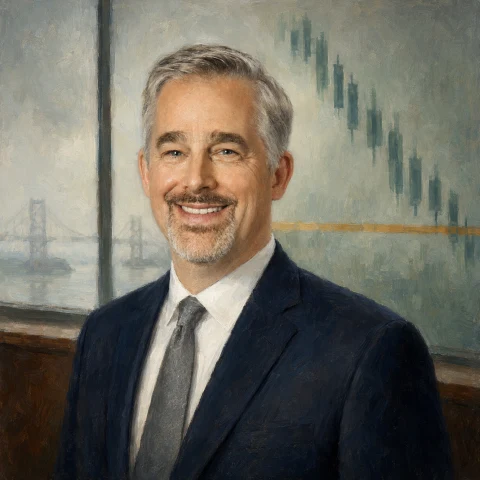
Kristi C. Kelly
Predatory Lending · Consumer Class Actions · Credit Reporting
If there are problems with a consumer’s credit report, it could prevent them from obtaining housing, obtaining employment, obtaining credit to buy basic necessities.
Hengle v. Asner: Virginia Usury Law, Upper Lake’s Online Loans, and a Settlement to Cancel $450 Million in Debt
After a federal regulator’s case over the online lending business of the Habematolel Pomo of Upper Lake was dismissed, Kristi C. Kelly’s firm brought its own class action in Richmond, defeated the lenders’ tribal-law arbitration clause in the district court and the Fourth Circuit, and reached a 2022 settlement calling for about $450 million in cancelled balances and a $39 million cash fund for 547,074 borrowers. Other cases against the same kind of contract produced a $43.4 million racketeering judgment against Matt Martorello and a settlement providing for the cancellation of about $1.4 billion in Lac du Flambeau loans.
Golden Valley Lending offered loans of “up to $1,000” online and told applicants they could be “approved in seconds.” It and three sister companies, Silver Cloud Financial, Mountain Summit Financial, and Majestic Lake Financial, were formed under the laws of the Habematolel Pomo of Upper Lake, a federally recognized tribe in California, and lent money over the internet to borrowers across the country. Their websites said each company was “wholly owned and operated” by the tribe and operated “within the Tribe’s reservation.” Borrowers repaid in twenty installments, one every two weeks, and each installment carried a service fee, often $30 for every $100 of principal still owed, on top of 5 percent of the original principal. The Consumer Financial Protection Bureau alleged that a typical $800 loan required about $3,320 in payments.
Kristi C. Kelly’s firm knew about the Upper Lake lenders for years before it sued them. In April 2017 the Bureau sued the four companies in federal court in the Northern District of Illinois, alleging that they were collecting on loans void in whole or in part under the laws of sixteen states. Virginia was not among them. Kelly Guzzo, the Fairfax, Virginia, firm Kelly helped found, followed the Bureau’s case from the day it was filed. When that case was dismissed, Kelly later told a federal judge in a sworn declaration, the dismissal came “due to a change in the administration’s priorities,” and Kelly Guzzo “began actively working on bringing this litigation.”
The suit her firm filed in Richmond in April 2019, Hengle v. Asner, went through a 108-page district court opinion, a Fourth Circuit decision, and a denied application to the Supreme Court. In April 2022 the parties agreed to a settlement under which the tribe’s officials would cancel about $450 million in outstanding loan balances, stop collecting, and ask the credit bureaus to delete the loans’ negative entries, while four individual defendants would pay $39 million into a common fund for the class. The class numbered 547,074 people. Kelly Guzzo served as class counsel with Leonard A. Bennett’s firm, Consumer Litigation Associates, and Gupta Wessler, joined by James W. Speer of the Virginia Poverty Law Center. Kelly’s name stood first on the motions that presented the settlement to the court.
Describing her practice in a July 2022 interview, Kelly said that “we identify what we perceive to be problems in the marketplace that affects consumers,” and that “our objective is to fix those problems on a larger scale than for our individual clients.”
Six Hundred Dollars at 636 Percent
George Hengle, a Virginia consumer, borrowed $600 from one of the Upper Lake lenders at an annual interest rate of 636 percent. Over the roughly ten-month life of the loan he owed $2,400. Kelly’s team alleged that Hengle’s Majestic Lake loans carried rates of 636, 722, and 763 percent, and that he had paid at least $1,127.65 on them. The other named borrowers’ loans carried similar rates: Willie Rose borrowed from Silver Cloud at 727 percent, Elwood Bumbray from Majestic Lake at 543 percent, Tiffani Myers from Mountain Summit at 565 percent, Steven Pike from Golden Valley at 744 percent, and Lawrence Mwethuku from Golden Valley at 919 percent. The Fourth Circuit later described loans of $300 to $1,575 at annual rates from 544 to 920 percent.
Seven other Virginians joined Hengle as named plaintiffs, and Kelly’s team set out what each had already paid. Sherry Blackburn had paid Majestic Lake at least $4,161.75. Steven Pike had paid at least $1,725, Elwood Bumbray $1,561, Willie Rose $1,439, Sue Collins $1,032.50 to Mountain Summit, Tiffani Myers $635.50, and Lawrence Mwethuku $499.50 on his loan at 919 percent. Each had used a Virginia address, and the payments came out of Virginia bank accounts.
Virginia caps general interest at 12 percent a year. The Fourth Circuit explained that loans like these were void under Virginia law and that the lender could collect no principal, interest, fees, or other charges on them. A separate Virginia statute declares any agreement in which a borrower waives the benefits of the usury laws to be against public policy and void.
The lenders were formed under tribal law; the borrowers alleged that the work was done in Kansas. In the amended complaint filed in July 2019, Kelly’s team alleged that the lending had been run by National Performance Agency and other companies that appeared to be indirectly owned in part by Joshua Landy and Scott Asner, from 7201 West 110th Street in Overland Park, and that between August and December 2013 Golden Valley and Silver Cloud paid those companies about $35.8 million while distributing about $536,000 to accounts held by the tribe. The Fourth Circuit described the lenders as allegedly “operated by non-tribal companies owned by non-tribal Defendants Scott Asner and Joshua Landy on non-tribal land in Overland Park, Kansas.” A later owner of the lenders, Upper Lake Processing Service, allegedly kept operating from Overland Park with non-tribal employees and sent most of its revenue to non-tribal businesses and individuals.
The Bureau had alleged much the same in 2017. Most of the companies’ day-to-day operations, it said, ran from Kansas, including a call center in Overland Park that the tribe bought in 2013, and as of 2012 Golden Valley and Silver Cloud had no more than fifteen jobs on the tribe’s rancheria.
The Arbitration Clause in the Upper Lake Loan Contracts
Each loan agreement sent disputes to arbitration and told the arbitrator what law to use. The arbitration provision would “be governed by the laws of the Habematolel Pomo of Upper Lake.” It directed that “the arbitrator shall apply applicable substantive Tribal law” and barred the application of any other law. An award could be enforced before the tribe’s governing body. A delegation clause gave the arbitrator, and not a court, the power to decide “all disputes, including the scope and validity of this Arbitration Provision.”
Kelly had litigated against that kind of clause before. In Hayes v. Delbert Services Corp., Kelly and Andrew J. Guzzo, then practicing as Kelly & Crandall, were among the lawyers for borrowers who had taken loans from Western Sky Financial; one of them, James Hayes, received $2,525 on a $2,600 loan at 139.12 percent interest. The Western Sky contract made the loan “subject solely to the exclusive laws and jurisdiction of the Cheyenne River Sioux Tribe.” In February 2016 the Fourth Circuit held the arbitration agreement unenforceable. A party, Judge Wilkinson wrote, “may not underhandedly convert a choice of law clause into a choice of no law clause.”
Because the Upper Lake companies could claim the tribe’s immunity as arms of the tribe, Kelly’s team sought prospective injunctive relief from the officials who governed the tribe—Chairperson Sherry Treppa and other members of the tribal council—sued in their official capacities. Asner and Landy were sued individually. Both groups moved to compel arbitration and to dismiss. The tribe filed an amicus brief supporting them, and a group of tribal amici filed another.
The defendants’ strongest point was the delegation clause. They argued that the parties had agreed to let an arbitrator decide whether the arbitration provision was valid, so a court could not decide that question itself. The tribal officials added that the tribe’s sovereign immunity protected them, that the lending was tribal activity governed by tribal law, and that the loan contracts’ choice of tribal law had to be enforced.
On January 9, 2020, U.S. District Judge David J. Novak denied the motions to compel arbitration in a 108-page opinion and allowed the borrowers’ usury and consumer-protection claims to go forward.
Prospective Waiver and Bay Mills in the Fourth Circuit
The Fourth Circuit heard the defendants’ appeal on January 26, 2021. Matthew W. H. Wessler of Gupta Wessler argued for the borrowers; Bennett, Kelly, Guzzo, and Casey S. Nash were on their brief. Judge Rushing wrote for a panel that included Judges Niemeyer and King, and the opinion, issued November 16, 2021, opened with the borrowers: “The named plaintiffs in this case, all Virginia consumers, received short-term loans from online lenders affiliated with a federally recognized Native American tribe.”
On the delegation clause the court followed Hayes and the circuit’s later tribal-lending cases. The clause asked the arbitrator to decide whether the arbitration provision waived federal rights, but the choice-of-law provisions required the arbitrator to answer that question “without recourse to federal substantive law.” Because the provision “unambiguously attempts to apply tribal law to the exclusion of substantive federal law,” the court held that its choice-of-law terms operated as a prospective waiver of federal statutory rights, reaching the delegation clause too, and it affirmed Judge Novak’s ruling that the arbitration provision was unenforceable.
On immunity the court relied on Bay Mills, in which the Supreme Court said that tribal immunity “does not bar such a suit for injunctive relief against individuals, including tribal officers, responsible for unlawful conduct.” The officials argued that Bay Mills involved a suit by a state, while this one was brought by private borrowers. The court found nothing in precedent supporting a rule “making the validity of an Ex parte Young action turn on the identity of the plaintiff.” It treated the lending as off-reservation conduct: the defendants had allegedly marketed their lending businesses “throughout the country, including in Virginia,” and “collected loan payments from Plaintiffs while they resided in Virginia.”
The governing-law clause failed for a separate reason. It selected tribal law, which contains no usury limit, and Virginia courts, the Fourth Circuit explained, “will not lend their aid to enforce the obligation under foreign law” when that law is contrary to a compelling public policy of the Commonwealth. The court held that unregulated lending of small, short-term loans at triple-digit rates to Virginia borrowers offended such a policy, one the General Assembly had signaled by enacting the anti-waiver statute, and it affirmed the refusal to enforce the governing-law clause.
Treppa v. Hengle in the Supreme Court
The tribal officials went to the Supreme Court. On December 14, 2021, they applied to the Chief Justice for a stay while they sought certiorari. The Chief Justice called for a response, and the borrowers filed one on December 30. Their opposition, filed by Wessler, began: “The applicants in this case are the architects of a scheme to make payday loans over the internet.” Nothing about the question presented or this “garden-variety civil case,” it argued, warranted a stay. On January 10, 2022, the full Court denied the application. The officials filed their petition, Treppa v. Hengle, No. 21-1138, on February 14. It asked whether a court can invalidate a delegation clause “based on the court’s interpretation of a separate choice-of-law provision” and whether sovereign immunity bars private plaintiffs from suing tribal officials in their official capacities for violations of state law. Asner filed a petition of his own on the delegation question.
The borrowers’ deadline to respond was extended twice, to May 18, 2022. The settlement came out of informal exchanges and telephone calls, settlement conferences before U.S. Magistrate Judge Mark R. Colombell, and sessions with the private mediator Nancy F. Lesser. Kelly signed the motion for preliminary approval of the settlement on April 25, 2022. On May 16 the parties filed a joint stipulation to dismiss the officials’ petition, and on May 18 the Supreme Court dismissed it under Rule 46.
Debt Relief From the Tribe’s Officials, Cash From the Individual Defendants
The settlement divided the relief by defendant. The tribe’s officials agreed to eliminate the balance on every outstanding loan, which the parties estimated at about $450 million, on the basis that the debts were disputed; to stop collecting and not to sell or transfer the loans for collection; to return any payment collected after March 3, 2022; and to request deletion of negative tradelines for the loans from the credit bureaus. They also agreed to pay up to $1 million for notice and administration. The cash was to come from the individual defendants: $23 million from Landy, $7.5 million each from Asner and Michael Gortenburg, and $1 million from David Vittor.
Borrowers would not have to file claims. What remained of the $39 million after the attorneys’ fees and costs the court allowed was to be divided pro rata under a formula that followed state law. In 22 states, Virginia among them, a borrower who had repaid principal would be credited with every payment made; in most of the remaining states, a borrower who had repaid principal would be credited with the payments above the state’s legal interest limit; borrowers in Nevada and Utah would receive no cash. Money left unclaimed would go to the National Consumer Law Center. Kelly’s team estimated George Hengle’s share at $30.92 in cash and $690 in cancelled debt, and told the court that every consumer would receive “either a cash payment, debt cancellation, or both.”
American Legal Claims Services, the administrator, mailed notice to 65,830 class members on June 20, 2022, and began emailing 481,244 more the next day; 543,053 notices, 99.27 percent, were presumed delivered. By September 21, 2022, when the memorandum seeking final approval was filed over Kelly’s signature, none of the 547,074 class members had objected and eighteen had opted out. Class members had not been subject to collection while the settlement was administered.
Martorello’s Sworn Declaration and the Bellicose Bank Account
Kelly and her co-counsel pressed Virginia usury and racketeering claims against a second tribal-lending business in the same courthouse. In Williams v. Martorello, before Senior U.S. District Judge Robert E. Payne, the named borrowers were Lula Williams, Gloria Turnage, George Hengle, Dowin Coffy, and Marcella P. Singh. Their claims centered on Matt Martorello and what the Fourth Circuit called a “Rent-A-Tribe” scheme, in which “a payday lender partners with a Native American tribe to cloak the lender in the sovereign immunity of the tribe, thereby precluding enforcement of otherwise applicable usury laws that cap interest rates.”
Lula Williams, the first-named borrower, had borrowed $800 from Big Picture Loans. Her loan agreement set the annual percentage rate at 649.8095 percent; paying on schedule, she would have owed $6,200 in principal and interest combined.
The lending began in January 2012 through Red Rock Tribal Lending, a company formed under the law of the Lac Vieux Desert Band, which marketed small high-interest loans nationally online and through direct mail to borrowers who lived off the reservation. At Martorello’s direction, the tribe later restructured the business into Big Picture Loans and Ascension Technologies. The Fourth Circuit described Martorello as having “continued to keep almost all the profits” while retaining substantial control of the lending through his companies.
Martorello had given his own account of his role under oath. In a declaration supporting the tribal companies’ motion to dismiss, he said he “never [took] any action to collect, in whole or in part, any consumer loan originated by Red Rock.” The borrowers’ lawyers told Judge Payne in 2020 that Martorello had misrepresented the facts, and on November 18, 2020, the judge agreed. Money paid by consumers, he found, “went into the Bellicose bank account,” an account “over which only Martorello and his employees had control and access,” and the evidence “compels the conclusion that Martorello was not telling the truth.” Big Picture itself, the judge found, had been created by Martorello for use with a different tribe and later used, at his direction, to rebrand Red Rock. When he certified the class in 2021, Judge Payne repeated his finding that Martorello had been “the de facto head of the . . . lending operations at all relevant times.”
The class, about 491,018 borrowers, settled with Big Picture and Ascension. The tribal companies agreed to modifications and caps on their loan collections and established a settlement fund, and the agreement resolved the claims against them “fully, finally, and forever.” The claims against Martorello went on. In 2023 the Fourth Circuit upheld class certification and the district court’s finding that Martorello had made material misrepresentations about how the lending operation worked and about the benefits the tribe received from it. Wessler had argued for the borrowers on October 28, 2022, with Kelly on the brief, and Judge Agee wrote the January 24, 2023 decision for Chief Judge Gregory and Judge Diaz. Martorello had argued that the borrowers’ loan agreements waived any class action. The court held that the waiver’s reference to “affiliated entities” did not reach an individual, and it carried the prospective-waiver rule it had applied to arbitration clauses in Hayes and Hengle into this contract, governed solely by tribal law: “we conclude that the prospective waiver doctrine renders the class-action waiver here unenforceable.”
Judge Payne granted the borrowers partial summary judgment on their racketeering claims in June 2023 and, in explaining the ruling, set out what was undisputed. Red Rock had contracted with Bellicose VI, a company Martorello owned, for services in exchange for a share of the income; Bellicose VI later assigned the contract to an affiliate, SourcePoint VI. Martorello had created Bellicose VI and its parent, Bellicose Capital, “for the purpose of funding, making, and collecting the alleged unlawful loans.” “For most of the time at issue,” the judge wrote, “the Tribe received approximately 2% of the net revenue from loan payments.” Martorello’s companies sent the money to him and his family through offshore trusts he had established to receive it. In 2014 and 2015 he knew of enforcement actions by state agencies against similar rent-a-tribe operations, and in January 2016 he arranged the restructuring, in which the tribe bought Bellicose Capital on seller financing; most of the money still went to Martorello and his family.
A $43.4 Million Judgment Against Matt Martorello
Martorello then stipulated, contingently, to the remaining elements of the racketeering claim, and Judge Payne granted summary judgment to the class and awarded $43,401,817.47 in damages. Martorello appealed. He argued that the tribe and its companies were indispensable parties whose immunity required dismissal of the whole case; that applying Virginia’s usury law to tribal lending violated the Indian Commerce Clause unless the court first balanced tribal, federal, and state interests; and that civil RICO liability required proof that he knew the debts were unlawful, when he had believed in good faith that tribal law governed the loans.
Wessler argued the appeal in Richmond on May 7, 2025. Kelly’s name led the borrowers’ brief, followed by lawyers from Gupta Wessler, Consumer Litigation Associates, Terrell Marshall Law Group, the Virginia Poverty Law Center, Berger & Montague, and Caddell & Chapman. Judge Agee asked Martorello’s side why the principle the court had applied in Hengle would not apply to him. “Mr. Martorello is not a member of the tribe,” the judge said. “And he’s the one who’s here.” Chief Judge Diaz also questioned Martorello’s lack of tribal affiliation, and Wessler reminded the panel that the tribe could have intervened if it believed Virginia law discriminated against it, and had settled instead.
On July 16, 2025, Judge Agee, joined by Chief Judge Diaz and Judge Gregory, affirmed on every point. Joint tortfeasors need not all be sued in one action, the court held, and the tribal settlement had already resolved the interests Martorello asserted on behalf of the tribe and its companies; dismissal, Judge Agee wrote, “would leave the borrowers with no relief against Martorello, the principal participant and conspirator.” Loans marketed online to borrowers who lived and paid off the reservation were off-reservation conduct subject to nondiscriminatory state law, as the court had held in Hengle. And “a civil RICO claim does not hinge on evidence of the defendant’s mens rea apart from whatever requirements the predicate acts impose.” “Congress knows how to demand proof of actual knowledge of unlawfulness when crafting civil statutes,” the court wrote. Virginia’s usury law required no proof that a lender knew its loans were unlawful, so evidence of what Martorello believed about whether Virginia law applied was irrelevant.
Martorello petitioned the Supreme Court. The borrowers waived their right to respond, and on February 23, 2026, the Court denied the petition.
Lac du Flambeau Lending and Council Members Sued Personally
Hengle reached the Upper Lake officials in their official capacities, for prospective relief. In Fitzgerald v. Wildcat, a class action filed in 2020 in the Western District of Virginia over loans from companies that claim to be owned by the Lac du Flambeau Band of Lake Superior Chippewa Indians, a Wisconsin tribe, Kelly’s firm sued members and officers of the tribal council, among them Joseph Wildcat Sr., in their individual capacities for racketeering damages as well as in their official capacities. It also sued officials of the tribe’s lending business and William Cheney Pruett, a Texas businessman, and his company, Skytrail Servicing Group.
Lori Fitzgerald of Virginia had borrowed $400 at 756 percent. Kevin Williams of Georgia took thirteen loans in 2018 and 2019, borrowing about $12,695 and repaying about $17,825.39, and still owed balances. Angela Maville of Florida borrowed $700 in 2020 at 771 percent and repaid $1,794.21, most of which, the borrowers alleged, went to Pruett and Skytrail. The tribe, they alleged, allowed Pruett and Skytrail “to use its name as a front and, in return, receives a nominal flat fee”; they put the tribe’s take at $3.50 for each loan originated, a figure Skytrail denied.
The council members and lending officials moved to compel arbitration and to dismiss on immunity grounds, and Pruett and Skytrail argued that the case could not go forward without the tribe. On August 18, 2023, U.S. District Judge Norman K. Moon denied the motions to compel arbitration and to dismiss. The loan agreements, he held, “prospectively waive the vindication of any state substantive remedies and rights in arbitration,” including usury claims, so “the delegation clause is unenforceable for contravening public policy,” and the rest of the arbitration provision fell with it. The borrowers sought damages from the officials themselves, with nothing payable from the tribal treasury, so the tribe was not the real party in interest, and tribal immunity did not bar the individual-capacity claims.
The tribe’s officials denied in an August 6, 2024 statement that the lending companies had done anything wrong and said borrowers “voluntarily agreed to the terms of the loans.” John Johnson Sr., the tribe’s president, has argued that applying state lending laws to the tribe would be “akin to expecting Canada to submit to or speak on the laws of France.” The settlement the parties reached that summer covered about 980,000 people who signed loan agreements with the tribe’s lending companies, among them Lendgreen, Sky Trail Cash, Loan at Last, and Nine Torches, from July 24, 2016, through October 1, 2023. It provided for the cancellation of about $1.4 billion in outstanding loans, deletion of the related credit reporting, and $37.35 million in cash, including $2 million from the tribe’s business arm, $6.5 million from Pruett and Skytrail, and $20 million from non-tribal individuals and companies tied to Loan at Last. Borrowers in Nevada and Utah, which have no interest-rate limits, would receive no cash.
Judge Moon held the fairness hearing on December 13, 2024, and entered final approval on December 17. No class member objected, and forty asked to be excluded. The order confirmed Kelly Guzzo as class counsel and provided that class members “will not be required to submit any forms or claims for payment or other benefits.” The first payments went to eligible class members in March 2025, and a second distribution was scheduled for June 2026.
From Eviction Defense to the General Assembly
Kelly graduated from Dickinson College in 2003 and the University of Richmond School of Law in 2006, and was admitted in Virginia that year, in the District of Columbia in 2007, and in Maryland in 2014. For about three years she worked for Legal Services of Northern Virginia, “focusing exclusively on housing and consumer law.” She has said she “started at legal aid representing, you know, tenants who were being evicted by landlords,” trying to help them keep their housing, and that as she learned about consumers’ other problems the work led into credit reporting.
Asked in a July 2022 podcast interview what frustrated her most about representing plaintiffs, Kelly pointed to that background: “I understand that if we don’t step up and do something nobody will.” In the same conversation she named a problem where her two early fields meet: “a lot of tenant screening companies just report whether there was ever an eviction action filed,” often without the outcome, a practice she said she did not think complied with the Fair Credit Reporting Act.
From legal aid she went to Surovell Isaacs Petersen & Levy, a nineteen-attorney firm, where she became an equity partner. She was there until January 2014; in the 2016 Hayes appeal she and Guzzo practiced as Kelly & Crandall, and by the time Hengle was filed she was a founder and partner of Kelly Guzzo. Her lending work has extended to the legislature. “As far back as 2009,” she told the court in Hengle, she had worked with Virginia’s General Assembly “to fight predatory loans, including by helping to pass the Payday Loan Act,” and more recently with various stakeholders “to close various perceived loopholes for online loans, including lines of credit.”
In 2017 Kelly and Bennett donated the $193,930 in attorneys’ fees they had earned in a class action against a credit reporting agency to the Legal Aid Justice Center. Both plaintiffs in that case, counsel explained, “were immigrants, facing unique challenges in this country,” and counsel wanted “to honor their struggle and help those immigrants now facing immediate new struggles.” The judge in the case called the donation “a very unusual result and a very good one.”
Zombie Second Mortgages and Post Lake Lending
Kelly has filed individual and class actions against collectors of so-called zombie second mortgages, old second loans that resurface years later with demands for back interest. “We’re trying to stand up for these consumers since nobody else is,” she told PBS NewsHour in February 2026. She described the pattern: “For most of the loans that I see, they are being assessed retroactive interest for every single month for 10, 15 years for times where they did not receive statements or were explicitly told or provided communications stating that interest wouldn’t be charged for that time frame.”
She had been fighting these collectors for years. “It is not right. You should not lose your home,” she told NPR in May 2024. The records on the old loans were poor, she said: “There’s no database of, like, all the loans that are canceled or forgiven so you can go and verify it.” Her way of fighting back starts with a federal rule that a homeowner must receive monthly statements before interest can be charged; in many of her cases, she said, none had arrived for ten or twelve years. In her view, “the greed of the second mortgage holders has given people leverage in their cases,” because holders who go after every dollar open themselves to serious legal consequences. She had used the approach for hundreds of homeowners over the previous two years, including two of the homeowners NPR interviewed for its investigation, who kept their homes.
In one class settlement, the collector Dyck-O’Neal cancelled the retroactive interest it had charged one of Kelly’s clients. Describing a client’s loan, Kelly said: “We learned through discovery that his loan was purchased for approximately 87 cents. And prior to coming to me, he was told he had to pay $170,000 or they were going to foreclose on his loan.”
Virginia is among the few states that have passed laws aimed at the practice. “We were able to pass legislation that required these zombie second mortgage holders to certify in an affidavit, before you take someone’s home, for all time periods where you’re assessing interest, that statements were sent,” Kelly said. The law, House Bill 184, took effect July 1, 2024. Before a foreclosure sale under a junior lien, the lienholder must give the trustee a sworn statement that the owner received monthly statements listing the interest, fees, and charges assessed.
In June 2026 Kelly Guzzo announced an investigation of Post Lake Lending, an online lender that says it is owned by the Sokaogon Chippewa Community, also known as the Mole Lake Band of Lake Superior Chippewa. Washington’s Department of Financial Institutions had warned consumers in December 2024, after receiving complaints, that the tribe might be lending online under the Post Lake name and that the tribe and its economic development arms were not licensed by the department. Kelly Guzzo said the lender had charged consumers interest rates that in some cases exceeded 750 percent APR.