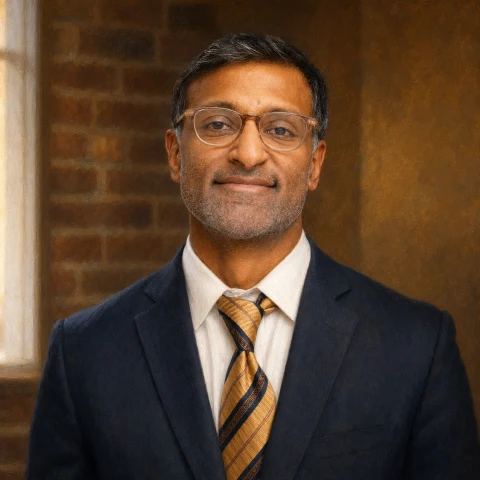
Mark D. Rosenbaum
Education Equity · Immigrants’ Rights · Public-Interest Litigation
The Classroom Record
California’s Empty Shelves
In some California classrooms the textbooks never arrived, the bathrooms did not work, and the teachers changed with the seasons. The state’s constitution promised every child an education; the buildings told a different story. Mark D. Rosenbaum begins where a formal right exists but the conditions to exercise it do not — and in Williams v. California, he served as principal counsel for students attending schools without adequate textbooks, qualified teachers, or safe facilities, transforming broken plumbing and empty shelves into evidence of unequal educational conditions rather than unfortunate details beyond the reach of law. The settlement produced commitments exceeding $1 billion for instructional materials, qualified teachers, and facility repairs in the state’s lowest-performing schools, along with new accountability machinery to keep the promises visible. It is a signature Rosenbaum result: the constitutional abstraction made material, the material deprivation made actionable, and the remedy aimed at the system that produced the harm.
That method grew out of more than five decades of civil-rights practice. Phi Beta Kappa at the University of Michigan and a 1974 Harvard Law graduate, Rosenbaum went almost directly to the ACLU of Southern California and remained there for more than forty years, ultimately serving as chief counsel. He joined the legal effort that overturned the murder conviction of former Black Panther leader Geronimo Pratt after Pratt had spent more than two decades in prison. In Garza v. Los Angeles County Board of Supervisors, Rosenbaum helped litigate the voting-rights case that redrew supervisorial districts after findings of unlawful dilution of Latino voting strength; Gloria Molina then became the first Latina elected to the board. When California voters adopted Proposition 187 in 1994, he was among the lead lawyers in Gregorio T. v. Wilson, the challenge that prevented the initiative’s status checks and reporting requirements in schools and health-care settings from taking effect.
The Right to Read
In 2014, after four decades at the ACLU, Rosenbaum moved to Public Counsel to direct its Opportunity Under Law project; since 2023 he has served as senior special counsel for strategic litigation. In Gary B. v. Whitmer, he represented Detroit schoolchildren attending schools that the complaint described as lacking books, qualified teachers, and at times heat. The plaintiffs argued that the Fourteenth Amendment protects access to literacy because participation in civic life depends on the ability to read. In 2020, a Sixth Circuit panel recognized a fundamental right of access to literacy. The court later vacated the panel opinion after the case settled. Under the settlement, Michigan’s governor agreed to seek at least $94.4 million for literacy-related programs in Detroit public schools, and the state later appropriated that amount.
Rosenbaum’s immigration work in the same period reached the Supreme Court. He was counsel in the litigation that became Department of Homeland Security v. Regents of the University of California, the challenge to the attempted rescission of DACA. The Court held the rescission arbitrary and capricious because the agency had not adequately considered important aspects of the problem, including reliance interests. In 2026 Rosenbaum returned to Perez-Funez v. Department of Homeland Security, a case in which he had helped obtain a 1985 injunction protecting unaccompanied immigrant children from being pressured to waive their rights without meaningful notice or an opportunity to communicate with a parent, relative, friend, or legal-services organization. On April 7, 2026, a federal court rejected the government’s effort to terminate that injunction and found that a replacement advisal being used by DHS was coercive and violated its terms.
The Soldiers’ Home
Rosenbaum’s veterans’ work has likewise focused on whether an institutional promise can be made usable. In 1888, land in West Los Angeles was donated to the federal government for a soldiers’ home; more than a century later, disabled veterans were living unhoused near a campus that also contained non-veteran uses. Rosenbaum had litigated the issue for years, including in Valentini v. Shinseki. In Powers v. McDonough, he helped lead the trial team, with lawyers from Inner City Law Center and Brown, Goldstein & Levy, that took the Department of Veterans Affairs to trial in 2024. The district court ordered housing and services for disabled veterans on the campus. In December 2025, the Ninth Circuit affirmed the disability-discrimination rulings and the core housing remedy, including orders requiring 1,800 permanent and 750 temporary housing units, while reversing the separate charitable-trust ruling and narrowing parts of the lease-related relief. On September 11, 2026, the court denied the VA’s petition for rehearing en banc, leaving the housing mandate in place. The veterans are coming inside the fence.
Fifty Years, One Client
Rosenbaum has argued four times before the United States Supreme Court, more than twenty-five times in the federal courts of appeals, and three times in the California Supreme Court. In June 2026, the Los Angeles County Bar Association gave him its Shattuck-Price Outstanding Lawyer Award. For more than two decades he held the Harvey Gunderson professorship from practice at the University of Michigan. He now teaches at UC Irvine, after teaching at UCLA, USC, and Loyola, and also teaches courses in liberty, equality, and free speech to law students at Peking University’s School of Transnational Law in Shenzhen.
Enforceability unites it all. A constitutional guarantee means little when an institution withholds the material conditions needed to use it: the child with a right to education and no books, the family invited to rely on a program that vanishes overnight, the veteran with a deed-promised home and a sidewalk. Fifty years in, his client has never really changed. It is the person the system was built to serve and somehow learned to overlook, and he keeps winning them back what they were promised in writing all along.