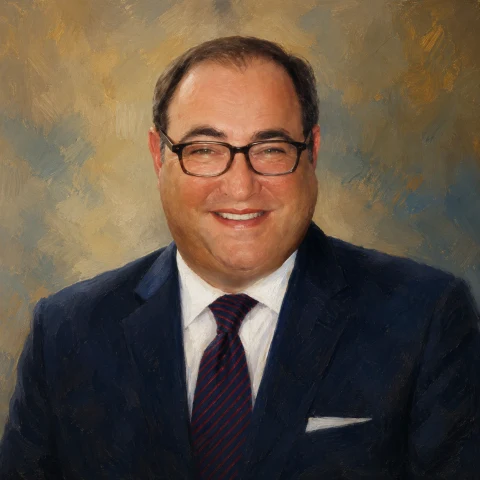
Natalie Khawam Case
Military Medical Malpractice · Feres Doctrine Reform · Whistleblower Law
I knew Congress was the best route, it was also the most impossible route.
H.R. 2422 to 10 U.S.C. § 2733a: Richard Stayskal, the Feres Doctrine, and Malpractice Claims Against the Pentagon
Natalie Khawam Case drafted the bill named for her client Richard Stayskal, a Green Beret barred by the Feres doctrine from suing over a lung tumor missed at an Army hospital. Congress replaced its right to sue with the first Defense Department claims process for active-duty malpractice, enacted in December 2019, and in 2022 she announced a multimillion-dollar settlement under that process for an Army widow.
On the afternoon of April 30, 2019, Sgt. 1st Class Richard Stayskal testified before the House Armed Services Subcommittee on Military Personnel in Room 2118 of the Rayburn House Office Building, at a hearing titled “Feres Doctrine—A Policy in Need of Reform?” Rep. Jackie Speier of California, the subcommittee’s chair, introduced him as the witness “whose radiologic diagnostic test was misread at an Army treatment facility, and who currently has stage 4 terminal cancer.” He was a Green Beret with Army Special Forces at Fort Bragg, North Carolina, coming up on seventeen years of service, and a former Marine who had survived an Iraqi sniper’s bullet in 2004 and received the Purple Heart. He gave his testimony in long, wheezing breaths.
Stayskal’s written statement set out what had happened at Womack Army Medical Center, the Army hospital at Fort Bragg. On January 27, 2017, he had CT imaging of his lungs as part of the physical required for dive school. A civilian physician reviewed the scan and cleared him for the course without identifying a tumor of more than 1.5 centimeters in the upper lobe of his right lung. On May 15, with his symptoms worse, he was taken by ambulance from the clinic at the Special Warfare Center and School to the Womack emergency room, where a doctor took an x-ray, found nothing and attributed his symptoms to walking pneumonia. Another emergency-room doctor reread the January scan before he was discharged, noted a mass of about 2.8 by 2.2 centimeters, and wrote that a follow-up should be scheduled. “However, I was never informed of this until a few months later, and no follow up was ever scheduled for me,” Stayskal wrote. By January 22, 2018, the cancer had spread to his lymph nodes, spleen, liver, bones and spine, and he was diagnosed at stage IV.
Near the end of the statement he thanked “my Attorneys Ms. Natalie Khawam, and Mr. Daniel Maharaj who are sitting beside me, for taking my case when no other attorneys would take it on due to the Feres Doctrine.” Natalie Khawam Case, who practiced then as Natalie Khawam at the Whistleblower Law Firm in Tampa and now leads Khawam Case Law in Washington, had also drafted the four-page bill that Speier introduced that day as H.R. 2422, the SFC Richard Stayskal Military Medical Accountability Act of 2019. Less than eight months later Congress enacted a Defense Department claims process in place of the bill’s right to sue, as Section 731 of the National Defense Authorization Act for Fiscal Year 2020, signed on December 20, 2019.
A 1950 Rule Applied to a Dive-School Physical
At the Special Forces dive school in Florida, Stayskal, in excellent physical condition, had found that he was struggling to breathe. After the May emergency-room visit he called the Womack pulmonary clinic and, in his words, “begged to be seen,” and was turned away as he had been the first time. By June 2017 he was coughing up blood. He obtained special permission to leave the base and see a civilian pulmonologist, Dr. Michael Pritchett, who gave him his first accurate diagnosis: lung cancer, stage 3. By then the tumor had nearly doubled in size. “The fact that he went six months without a diagnosis allowed that cancer to grow and very likely advanced its stage,” Pritchett said. Stayskal later recalled the pulmonologist asking “why nobody told us six months ago,” and he learned that Army doctors had noted the growth at two separate appointments and done nothing about it. “I knew deep down, something was not right,” he said.
At the hearing Speier asked him whether the first scan had shown the tumor. “Yes, ma’am,” he said, and later in his answer: “they noted that it was actually seen on the first scans, and nobody ever told me.” He added: “They never followed up.” He had taken what happened to the officer in charge at Womack, and he described that meeting to the subcommittee’s ranking member, Rep. Trent Kelly: “When I went into his office, explained everything that had happened to him, I was met with, ‘Things do happen.’” Rep. Charlie Crist asked how he had learned that he could not sue. His first stop, Stayskal said, had been the Judge Advocate General’s office at Womack. “And the answer I was met with was, ‘You cannot.’” He went on: “I don’t know why exactly, but there is a law that says you cannot.”
The law was a decision of the Supreme Court. On December 4, 1950, Justice Robert H. Jackson wrote for the Court in three cases decided together. Feres had died in a barracks fire at Pine Camp, New York, while on active duty. Jefferson, while in the Army, had been required to undergo an abdominal operation; about eight months later, in another operation after he was discharged, “a towel 30 inches long by 18 inches wide, marked ‘Medical Department U.S. Army,’ was discovered and removed from his stomach.” In the third case the complaint alleged that Griggs had died on active duty because of “negligent and unskillful medical treatment by army surgeons.” The Court held that the government is not liable under the Federal Tort Claims Act for injuries to service members that “arise out of or are in the course of activity incident to service.” Two of the three cases the Court closed that day were about the work of Army surgeons.
Decades of later decisions applied that rule, the Feres doctrine, to keep active-duty service members from suing the United States for medical malpractice, and it had survived one legal challenge after another. In a statement on the day of the hearing, Speier called it “a travesty” because it denied service members “the same access to the justice system enjoyed by service members’ spouses, other federal employees, and even prisoners.”
A Battlefield Bandage and a Scheduled Appointment
Khawam Case accepted the doctrine’s battlefield rationale and objected to its use at a hospital. “[The Feres Doctrine] says you can’t sue the government during times of war, or for injuries sustained in combat. I agree with the intent of the law when there is an emergency situation on the battlefield,” she said in April 2019. On the day of the hearing she said it in fewer words. “They don’t want people suing because you know you’re in combat, it’s an emergency situation,” she said. “You know that’s understandable, but you know, there’s no combat, there’s no war at Womack Hospital.”
Stayskal drew the same line from his own record. Rep. Ruben Gallego asked whether he had ever been taught that malpractice was incidental to serving in the military. It had never come up, Stayskal said: “when I was young in my career, you had faith in everybody.” Then he told the subcommittee about the sniper wound of 2004. “I have documentation in my records,” he said: “a bandage that was stuffed in my back from the battlefield itself wasn’t found and pulled out until I was stateside, all the way back in my duty station.” He had never complained about it. “That was part of my service, that was a part of combat, and we accepted stuff like that,” he said. A scheduled clinic visit was different: “But when I walk in in civilian clothes and I have a scheduled appointment and I am seeking medical care and treatment at that point, you know, I mean, there is no battlefield decisions at that point. It is just a standard of care that should be there.”
Khawam Case described the rule as designed to protect medics working in combat; applied as broadly as the courts had applied it, it left Stayskal with almost no recourse over a scan read at a stateside hospital before a training course. By that summer she represented dozens of service members whom the doctrine had kept out of court over malpractice or negligence. “[Military servicemen] don’t have a legal right or have any legal recourse when it comes to malpractice,” she said. Earlier that year she had called the rule “discrimination against a certain class of people” and stated the comparison directly: “The only people barred in the United States of America to sue for a malpractice claim are active soldiers.”
“The Most Impossible Route”
Stayskal’s mother had found Khawam Case after other lawyers turned the case away because of Feres. “Natalie got fired up and said we have to fix this,” Stayskal recalled. In March 2019 she gave her own reason: “I could not imagine if this happened to my son.” “So, I took it on, saying that I’m just going to focus on fixing and changing this law, even if that’s the last thing I do in law,” she said.
Stayskal met Khawam Case in 2018. In court his claim faced dismissal under Feres, and only the Supreme Court could overrule its own 1950 decision. She took the case to Congress. “I didn’t want to be another statistic and go to the Supreme Court and be dismissed,” she said. “I knew Congress was the best route, it was also the most impossible route.” To those who told her Feres was settled law she had an answer: “People tell me that [Feres] is the law, but you know what? Separate-but-equal was the law and people had to ride in the back of buses.” “Here’s the thing: the law changes, and it only gets fixed when it’s brought to the attention of everyone else,” she said.
On May 20, 2019, three weeks after the hearing, the Supreme Court declined to hear Daniel v. United States, the suit over the death of Navy Lt. Rebekah Daniel, who “died at a naval hospital due to a complication following childbirth.” The district court had held the suit barred by Feres, and the court of appeals had “regretfully” affirmed. Justice Ruth Bader Ginsburg would have taken the case. Justice Clarence Thomas dissented, repeating his view that “Feres was wrongly decided and heartily deserves the widespread, almost universal criticism it has received,” and wrote that its repercussions, among them the denial of relief to military personnel, “will continue to ripple through our jurisprudence as long as the Court refuses to reconsider Feres.”
She drafted the bill herself. When the office of Rep. Richard Hudson, the North Carolina Republican who represented Fort Bragg and Stayskal’s home county of Moore, called her in March 2019 to say it was working on a bill, she told the staff she had already drawn one up. In other circumstances, she said, she might have let a lawmaker’s office help draft it: “If my client wasn’t terminal, I’d let others do their work.” At Georgetown University Law Center, where she earned her law degree in 2005, she had taken the Federal Legislation Clinic, then taught by Professor Chai Feldblum, which covered such questions as which committees have jurisdiction over which issues and when state or federal action will be more effective. “Never did I think that clinic would apply to my life,” she said. The clinic also shaped how she lobbied: in meetings with senators and representatives, she said, she could explain how the bill would help their own constituents. “They knew I understood the obstacles they had to face,” she said of the bipartisan group of lawmakers who planned to support it.
The campaign reached Speier in late 2018, and before the April hearing she received Stayskal, his wife, Megan, and Khawam Case in her Washington office. The bill Speier introduced, with Hudson, Jamie Raskin, Guy Reschenthaler, Ted Lieu, Markwayne Mullin, Charlie Crist and Greg Steube as co-sponsors from both parties, carved an exception out of the Feres bar for medical malpractice at the major military hospitals and clinics, where civilians and service members were already treated in the same buildings. Malpractice during combat operations, aboard ships, or at battalion aid stations stayed outside it, on the battlefield side of the line Khawam Case had drawn. To limit the cost, it reached only cases still pending when it passed or arising afterward.
Paul Figley’s Defense of Feres
The subcommittee heard four other witnesses that afternoon. Alexis Witt testified about her late husband, Air Force Staff Sgt. Dean Patrick Witt, left in a vegetative state after a 2003 appendectomy at Travis Air Force Base when a nurse put a breathing tube into his esophagus instead of his airway. “I was outnumbered, I was alone, and I was without legal representation,” she said. Rebecca Lipe, a former Air Force judge advocate, described years of misdiagnosis after she deployed to Iraq. Dwight Stirling, chief executive of the Center for Law and Military Policy, called Feres “the most disparaged and discredited legal doctrine in modern history.”
Paul Figley, a professor of legal rhetoric at American University’s Washington College of Law, gave the case for keeping it. “From the perspective of one injured service member or one family, the remedy may seem obvious: allow the injured service member to sue in tort,” he said. “From the perspective of fostering the long-term success of a critically important institution, the United States military, that remedy is mistaken. Simply put, Congress should not alter the Feres doctrine.” In his written statement he argued that service members already had a compensation system broader than civilian workers’ compensation, with disability pay, medical care, education benefits and housing assistance, so that tort suits were unnecessary. Suits by service members, he argued, would require courts to second-guess military decisions and would erode the discipline and commitment on which effective service depends. He added that the military system treated every service member alike, while tort recoveries would vary with state law and with the exceptions written into the Tort Claims Act. The Pentagon’s concern ran the same way: ending Feres, it feared, would diminish the system that compensates troops injured on duty.
The members pressed him. Rep. Paul Mitchell put it to Figley that “a Federal prisoner has more rights to sue the Federal Government than does a member of the military” for medical malpractice. “Yes, a Federal prisoner can sue the government for medical malpractice,” Figley answered. “Military members cannot. They can’t,” Mitchell said. Typically, Figley agreed, they could not. Speier asked whether letting service members sue for malpractice in a noncombat setting would bring a worrisome number of lawsuits that might be called frivolous. “No. I don’t believe so,” Figley said.
Speier asked Stayskal whether the department’s response had violated the relationship of trust between the military and those who serve in it. “I believe it violates the trust completely,” he said. When Rep. Veronica Escobar asked the witnesses to put a number on what their injuries had cost them, he would not. “I can’t put a number on my life. There isn’t an amount,” he said. “You know, I think my kids would probably pay you money to get my life back. But my answer would be: whatever amount keeps that practitioner from practicing again.”
Stayskal spoke of his children. “The hardest thing I have to do is explain to my children when they ask me, ‘This doesn’t make sense, how is this happening?’ And I have no good answer to give them,” he said. Of his two daughters his written statement said: “They now will grow up without a father.” It asked Congress to end the gap: “There is no reason for the disparity in rights between our active duty military and the rest of our country’s citizens.”
From H.R. 2422 to Section 731
On July 10, 2019, the House draft of the defense authorization bill included the Stayskal bill’s exception to Feres. Speier said that “Feres represents the worst of judicial legislating” and that “it’s long past time that Congress fix this injustice.” The House passed its version on July 12. “We fought long and hard so that our troops can seek vindication with the success of the House passing our bill today,” Khawam Case said. The Senate had passed its own bill the month before, and the two had to be reconciled. In the Senate, Lindsey Graham of South Carolina had opposed the effort and had repeatedly argued for preserving Feres.
The fight moved to the Senate. Stayskal and Megan drove the 330 miles from Fort Bragg to Washington at least once a month to meet members of Congress, and the Stayskals and Khawam Case stepped up their meetings with lawmakers. “We were told that some people don’t support this, or it was not something we could achieve in a year, and we just continued to silence those comments and commit ourselves to the cause, in hopes of the right thing would occur,” she said. Stayskal described his own part in the same months: “I’m unable to continue serving downrange and overseas in that capacity, but I’m not done serving my country.” Speier later said the provision would not have gone forward without Stayskal, who had knocked on nearly every door in the House and Senate.
The right to sue dropped out of the final bill. Congress instead directed the Defense Department to receive and decide malpractice claims itself, which left Feres in place and kept service members out of court while giving them, for the first time, a claim against the military for malpractice in its medical facilities. Stayskal was driving home from softball practice with his daughter Addisyn when his lawyer called to tell him the claims process was in the final bill. “[My daughter] screamed and yelled that she was so happy and proud,” he said. “It was glorious yet very emotional,” Khawam Case said. “It’s been Christmas every day since then.” The House passed the bill on December 11 and the Senate on December 17, with Stayskal at the Capitol for both votes, and President Trump signed it on December 20.
Speier called the result “far from perfect” and said: “This is an avenue for relief for service members who have been egregiously victimized by a system of incompetence.” Hudson said, “When I first met Rich and his family last year, I promised him I’d work hard to fix the injustice of the Feres Doctrine.” Stayskal said: “Was it what we started with? No, but it’s a step in the right direction.” Khawam Case argued that although the provision left Feres in place, the “reality is we have just changed history and changed the law to allow the military to not be barred by Feres.” “We are providing legal recourse and compensation. The means may be different. But it’s the same end result, just a different means of accessing it,” she said. “I’m happy that our military will be provided for, compensated for, any kind of medical malpractice. They are victims too.”
Speier, who carried the provision through Congress, said the speed was unusual. “It typically takes 10 to 12 years for a measure like this,” she said. “Richard and his wife Megan made an incredibly compelling case for why we needed to change.”
Section 731 added a new section to Title 10 of the U.S. Code, 10 U.S.C. § 2733a. A member of the uniformed services, or an authorized representative, may file a claim for personal injury or death caused by the malpractice of a Defense Department health care provider at a covered military medical treatment facility, within two years after the claim accrues. The Secretary of Defense may pay up to $100,000 and must report any larger award to the Secretary of the Treasury for payment under 31 U.S.C. § 1304. No lawyer may take more than 20 percent of a claim paid. Within 30 days of a malpractice finding or a payment, the Secretary must report it to the Director of the Defense Health Agency for quality-assurance purposes. The statute set no cap on what a claimant could receive, required the department to document and respond to the claims, and provided for congressional oversight of how it handled them. Claims filed in 2020 had three years from accrual instead of two, long enough to reach back to the beginning of 2017. The Congressional Budget Office estimated the cost at $400 million over ten years.
Part 45 and the Pentagon’s Damages Rules
Claims began before the rules existed. In January 2020, while a new Pentagon committee was still working out how claims would be reviewed, the services told service members to file under their own procedures; a soldier could present a claim to the nearest staff judge advocate, to the judge advocate at the medical center involved, or by mail to the Tort Claims Division of the U.S. Army Claims Service at Fort Meade, Maryland. “We have dozens of calls coming in,” Khawam Case said that month. “These cases are really going to bring awareness to the issues at military hospitals.”
A claim is a demand for a specific sum. The Navy tells claimants: “You must demand a specified dollar amount.” The claimant files the government’s standard claim form, the SF-95, with complete inpatient and outpatient medical records of the care at issue, itemized bills, proof of active-duty status and an affidavit, sworn by the claimant’s lawyer when there is one, that a health care professional outside the Defense Department has been consulted and has found a breach of the standard of care, unless the error is one within a layperson’s ordinary knowledge. The service investigates each claim itself and tells the claimant whether it is settled or denied.
The Defense Department published its interim final rule on June 17, 2021, eighteen months after the signing, and the rule took effect on July 19, 2021, as Part 45 of Title 32 of the Code of Federal Regulations. Claims had been arriving in the meantime: the department received 149 malpractice claims from active-duty members in 2020, the one year in which claimants had three years from accrual to file. Liability under the rule turns on generally recognized national standards of care rather than the standard of any one state or locality. Economic damages cover medical expenses, lost earnings and household services, excluding care the Defense Department or the Department of Veterans Affairs provides or pays for, and most Defense and VA disability and survivor payments are offset against an award, though Social Security and Servicemembers’ Group Life Insurance are not.
The interim rule capped non-economic damages, for pain and suffering, emotional distress and lost enjoyment of life, at $500,000, a figure the department drew from the average cap in the states that limit such damages. The department adopted a final rule on August 26, 2022, after 93 public comments. It raised the cap to $600,000, required that a denial give a “meaningful” explanation of its specific basis in place of a “brief” one, required a meaningful basis for any settlement offer, extended the time to seek reconsideration or appeal from 60 to 90 days, and listed interviews of the health care providers among the steps an investigation may take. A claimant may appeal an initial determination within 90 days to a single Defense Department appeals board of three to five members, whose decision is final. On October 20, 2023, the department raised the non-economic cap again, from $600,000 to $750,000, and proposed confining the benefit offsets to economic damages, and a final rule adopted that change on May 10, 2024, so that disability and survivor benefits no longer reduce the award for pain and suffering.
Kait Brazel’s Settlement
Army Staff Sgt. Alfred “Fred” Brazel came home from his second deployment to Iraq feeling less than 100 percent and made an appointment at a military treatment facility. The doctor saw nothing immediately wrong, but his medical record noted that he should have “eyes inside his body”: a colonoscopy and an endoscopy every five to ten years. Each time Brazel asked for the exams, he was refused, despite blood test results that should have raised concern. When his health had deteriorated to the point that he clearly needed care, he was diagnosed with stage 4 rectal cancer that had metastasized. He was 37. He died two months later, in July 2017.
Kait Brazel later brought their two young sons from Colorado Springs to his grave at Arlington National Cemetery. The boys lay down there; one said he wanted to nap with his father, and the other prayed. She said the family never addressed his death as a “sad thing.”
On December 22, 2022, Khawam Case announced at a press conference in Washington that Brazel’s widow, Kait Brazel, would receive a “multimillion dollar” settlement under the 2019 law, one of the largest settlements under it to that date. At Kait Brazel’s request, the amount was not disclosed. “You kind of feel like you’ve been wronged by the people you grew up … looking up to,” she said. “It was very much a tug-of-war situation, how you continue to raise your children to be those proud Americans when you didn’t feel like you got that support when your husband died at the hands of his own doctors.”
“This legislation is a game changer … It’s probably not moving as fast as we like it to move but it’s moving and Kait Brazel is an example of it moving and it working,” Khawam Case said. By late October 2022, service members had filed 448 malpractice claims with the Army, Navy and Air Force, seeking more than $4 billion. Eleven had settled, and more than 25 percent had been denied. The Army had received 184 claims, approving 6 and denying 36, with 73 on appeal and 69 under investigation; the Air Force had received 118, settling 4 and denying 23; the Navy had received 146, settling one for $250,000 and denying 58. Speier, then retiring from Congress, said she sensed that the services wanted to “do right” by service members harmed by military malpractice. “It should not happen, but when it does happen, [doctors] need to be held accountable,” she said.
Fort Hood and the Claim the Guillén Act Left Out
Khawam Case also represented the family of Vanessa Guillén, a 20-year-old Army private first class stationed at Fort Hood, Texas, who disappeared in April 2020 after reportedly complaining of sexual harassment. Her remains were found two months later in Bell County. Another victim had recommended Khawam Case to the family, and she agreed to take the case without charge. Vanessa’s younger sister, Lupe, told her that Vanessa used to say, “Ignore the negativity, just go for it.” Khawam Case started crying, Lupe recalled, and said, “I wish I could have met her.”
On July 30, 2020, after a rally on the National Mall and a march from the Capitol to the White House, Khawam Case went with Vanessa’s mother, Gloria, and her sisters into the Oval Office, where the family asked President Trump to help uncover the truth about Vanessa’s death and to support their legislation. Trump promised a full investigation and offered to cover the funeral costs. “This bill will help us provide the protection and respect to others that was denied to Vanessa,” Khawam Case said. She negotiated over the bill with members of Congress, among them Speier’s office and Rep. Markwayne Mullin of Oklahoma. “We are talking about a family with a dead daughter,” she said.
As drafted in early August, the bill would have removed sexual-abuse cases from the military chain of command and created a new exception to Feres for civil suits against the Army for negligence in sexual-abuse cases. Speier introduced the bill on September 16, 2020, as H.R. 8270, the I Am Vanessa Guillén Act of 2020, with Mullin first among its co-sponsors. Rep. Sylvia Garcia’s office announced the noon event at the House Triangle with members of the Guillén family and Khawam Case, as their attorney, joining Speier and Mullin.
By then the suit had become a claim. Section 5 of the bill would have added a new section to Title 10, 10 U.S.C. § 2733b, letting the Secretary of Defense “allow, settle, and pay a claim against the United States for personal injury or death” arising from a sex-related offense, or from a negligent failure to prevent or investigate one. Its terms were the ones Congress had written for malpractice in Stayskal’s name: two years to file, $100,000 payable by the department with any larger meritorious amount reported to the Treasury for payment, and a 20 percent limit on lawyers’ fees.
Fourteen Army leaders were eventually fired or suspended after an inquiry into how sexual harassment and sexual assault had been investigated. In April 2021 an Army investigation found that a member of Guillén’s unit had sexually harassed her, that she had tried twice to report it, and that “her supervisor and other leaders failed to take appropriate action both times.”
Provisions of the I Am Vanessa Guillén Act went into the $770 billion National Defense Authorization Act that President Biden signed on December 27, 2021. Under the law, decisions to prosecute sexual assault and sexual harassment would be made outside the service member’s chain of command, with protections against retaliation, and prosecution authority for murder, kidnapping, domestic violence and child abuse would move to independent prosecutors. The act also made sexual harassment a crime under the Uniform Code of Military Justice, sent prosecutorial decisions in retaliation cases to a special prosecutor, and required annual reports to Congress on retaliation. “We literally moved the mountain here,” said Khawam Case, the Guillén family’s lawyer. “I don’t think many people outside the military understand the precipice these victims experience,” she said of retaliation against sexual-assault victims.
For Khawam Case, the act was missing a measure that would allow victims to file a claim against the Department of Defense when a sexual assault occurred and misconduct was found, the same kind of claim Congress had created for malpractice two years earlier in Stayskal’s name. Section 5 of the 2020 bill had written such a claim. At the end of 2022 the Feres doctrine still barred service members’ civil suits over training accidents, sexual assault and medical malpractice.