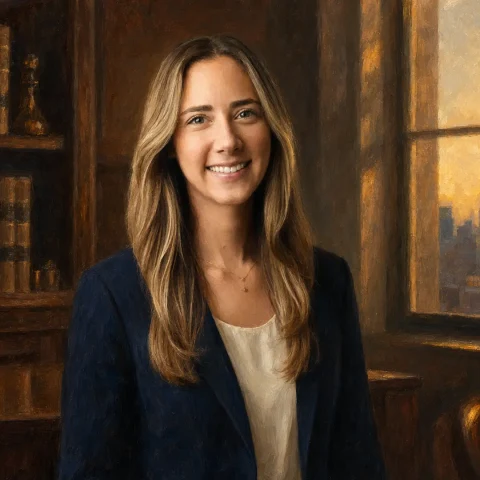
Ricardo M. Martinez-Cid
Aviation Litigation · Wrongful Death · Product Liability
On cross-examination the defendant’s own experts had to admit — based on their measurements and data — that the vibration dampener did not meet the specifications that they had promised the Federal Aviation Administration.
Johnson v. Continental Motors: A Miami-Dade Jury, an Engine Damper Measured Against Its FAA Specifications, and a $5 Million Verdict
Ricardo M. Martinez-Cid tried Carly Johnson’s wrongful-death case against Continental Motors over a Cessna 421 engine damper; a Miami-Dade jury found the engine maker 100 percent responsible, and the Third District Court of Appeal upheld the $5 million judgment. After the Champlain Towers South collapse, he led the wrongful-death subclass of a class that settled within a year for about $1.02 billion.
In December 2012 Timothy E. Johnson Jr. and his father, both registered pilots, went to North Palm Beach County Airport to pick up a Cessna 421, a twin-engine airplane, after its annual inspection. “Johnson lost his left engine on takeoff ... all while his father was watching,” Ricardo M. Martinez-Cid said years later. The crash killed Johnson, who had been married to his wife, Carly, for nine months. Martinez-Cid said it “totally wrecked” her life.
Carly Johnson hired Martinez-Cid and Podhurst Orseck. “I take all of my cases seriously, but I was a fairly young lawyer when Carly retained us, and she had met with a number of very good, very experienced aviation lawyers,” he said. He said the case “was one that we knew was challenging from the beginning,” and he cited the trust she had placed in him as a major motivation to win: “When she decided to hire me I took that very seriously. ... I knew I was going to do everything I could to get the result she deserved.” On April 23, 2014, as personal representative of her husband’s estate, she sued in Miami-Dade Circuit Court, naming Continental Motors Inc., which had manufactured the engine, along with Cessna Aircraft Co., RAM Aircraft and others.
Six years after the crash a Miami-Dade jury heard two explanations for why the engine quit. Continental, the Alabama company that built it, put the failure on maintenance and on the pilot, charging that Windward Aviation, the shop that had maintained the airplane and certified it for flight, had run the engine without oil. Martinez-Cid put it on a part Continental had sold and that had recently been changed on the engine: a viscous torsional vibration damper, which he said had been negligently manufactured.
Metal Against Metal Inside the Damper
Martinez-Cid described the damper as a part built to curb the vibration created when engine parts spin in opposite directions. Continental had sold it, and it was a recent change on Johnson’s engine. “We believe it was negligently manufactured by allowing metal-to-metal contact within the damper that would degrade its functionality,” he said after the verdict, adding that the part was not “dampening enough.” He described the wear in physical terms: “As the metal to metal wears on each other, the silicon shavings wear down the molecular chains and the vibration damper doesn’t do its job.” The plaintiffs contended that the faulty damper caused Johnson’s engine to fail.
The specifications came in through Continental’s own witnesses. On cross-examination, Martinez-Cid said, the company’s experts had to admit from their own measurements and data that the damper did not meet the specifications Continental had promised the Federal Aviation Administration. The experts maintained that the part still worked. “While they argued that it still functioned properly, I think that was pretty powerful,” he said.
Windward’s Mechanic and the Oil Charge
Continental’s defense pointed at the people who had handled the airplane. In its answer to the complaint, the company placed responsibility on Johnson and on Windward Aviation. It asserted that its parts “complied with the state of the art of scientific and technical knowledge ... at the time of manufacture,” and alleged that Johnson “and/or others failed to adequately maintain and repair the product.” At trial Continental charged that Windward had run Johnson’s engine without oil, damaging it and causing it to fail on takeoff.
Windward’s mechanic testified, and Martinez-Cid later called that testimony a turning point in the case. Continental’s lawyers went after the witness’s honesty. “They accused him of having lied or been coached by us. ... I think the jury was likely put off by that, because he was a very credible guy and explained very effectively to the jury what he had done,” Martinez-Cid said.
The Verdict of March 13, 2019
Trial began in February 2019, nearly five years after filing. As the case went on, the estate had voluntarily dismissed its claims against the other defendants until only Continental, which had manufactured the engine that failed, remained. Martinez-Cid tried the case with Lea P. Bucciero of Podhurst Orseck before Circuit Judge Peter R. Lopez. Christopher J. Jahr of Wicker Smith O’Hara McCoy & Ford and Will S. Skinner, Erik Slechta and Gary A. Gardner of Skinner Law Group defended Continental. “We were supposed to try this case a long time ago,” Martinez-Cid said. Continental, he said, “is very, very aggressive in the defense of their parts.”
On March 13, 2019, the jury found Continental 100 percent responsible for the crash. It left no share of fault with Windward or with Johnson. It awarded $2.35 million to Johnson’s estate and $2.65 million to Carly Johnson, a total of $5 million. That March, Continental changed its business name to Continental Aerospace Technologies.
Continental filed a motion for new trial and took the case to the Third District Court of Appeal. Lawyers from four firms appeared for it there: Bryan Cave Leighton Paisner, Wicker Smith O’Hara McCoy & Ford, Skinner Law Group, and Bowman and Brooke. Podhurst Orseck’s Joel D. Eaton joined Martinez-Cid and Bucciero for Carly Johnson. On April 21, 2021, a panel of Judges Logue, Lindsey and Lobree decided the appeal, No. 3D19-1232, and upheld the $5 million judgment against Continental.
The Lawyer Carly Johnson Hired
Martinez-Cid had finished the University of Miami in three years, graduating cum laude in 1997, and Yale Law School in 2000, where he was a William S. Beinecke Scholar, a director in the school’s clinical program, a member of the board of the Latino Law Students Association and an editor of The Yale Journal of International Law. He clerked for U.S. District Judge James Lawrence King of the Southern District of Florida, joined Podhurst Orseck in 2002 and became a partner in 2005. He once worked as a substitute teacher, and he attributes his professional success to a work ethic instilled by his family’s example. In 2010 the Florida Bar certified him as an expert in aviation law.
Before the Johnson trial he was part of the team that filed suits against the National Football League on behalf of former players, alleging that the league had concealed information about brain injuries. He served on the plaintiffs’ executive committee in that litigation, which produced a 2015 settlement potentially costing the league $1 billion. In 2017 he told Law360 that most of the public did not understand the repercussions of tort reform and that a plaintiffs’ lawyer had to keep that in mind when selecting a jury.
A Building Insured for Less Than $50 Million
Early on the morning of June 24, 2021, the Champlain Towers South condominium in Surfside partially collapsed, and 98 people died. The building carried less than $50 million in insurance, and experts predicted that claims could exceed $1 billion. The suits that followed went to Circuit Judge Michael A. Hanzman in Miami-Dade, who called hearings on short notice, among them an emergency Zoom hearing at 9:30 p.m. on July 4. At nearly every hearing Hanzman told the lawyers to move quickly because survivors were living in “temporary quarters.”
In a July 16, 2021, order he consolidated nearly 40 suits, stayed them, and divided the litigation into a personal-injury and wrongful-death track and an economic-loss and property-damage track. He named Michael Goldberg receiver for the condominium association. At a hearing on July 16 he approved the leadership structure Harley S. Tropin had proposed. Tropin and Rachel Furst would coordinate the lawyers on both tracks, and Martinez-Cid was appointed to lead the wrongful-death subclass of victims, the plaintiffs with personal-injury or wrongful-death claims. The steering committee on that side included John Scarola, Robert Mongeluzzi, Shannon del Prado, Gonzalo Dorta, Judd Rosen, Luis Suarez, Jorge Silva and Willie Gary. “To describe the job as herding cats would be an understatement,” Hanzman said.
“The judge made it clear from day one he would not grant continuances or other motions that would lead to delay,” Furst said. Seventeen firms divided the work among committees that handled discovery and investigation, evaluated experts and drafted complaints, and Tropin said they had to investigate more than 30 defendants in a short period. Martinez-Cid helped lead the plaintiffs’ investigation committee, which developed the theories of liability against the defendants. Podhurst Orseck represented the estates of about 39 of the 98 people killed, as well as the class of everyone killed.
The plaintiffs looked beyond the condominium association, to the construction next door and to the building’s security company. They contended that vibratory sheet-pile installation and the dewatering of the site where Eighty Seven Park was going up had weakened Champlain Towers South; during that construction, residents had complained of daily tremors in their apartments. They contended that the Securitas guard on duty the night of the collapse, who had worked at the building for five months, should have triggered the in-unit voice evacuation alert, which could have given residents another five to seven minutes. The cause of the collapse had not been determined, and the National Institute of Standards and Technology was still investigating.
Three-Hour Hearings, One Family at a Time
On October 6, 2021, Hanzman said he would bring in a mediator, the Miami lawyer Bruce W. Greer, to keep the families of the 98 dead from fighting one another over money that would not cover their losses. “These people are going to be left with significant shortfalls,” the judge said. He also said, “Everybody who suffered a loss here is a victim. Everybody will have a right to be heard.” Martinez-Cid, a lawyer for the wrongful-death victims, said, “We’re going to work very hard to get this done,” and, “Hopefully, it will be to the benefit of all victims.” Greer came out of retirement for the case and refused payment.
On May 11, 2022, Tropin announced a $997 million settlement at a hearing before Hanzman, who called it “a recovery that is far in excess of what I had anticipated.” The class had settled within a year. The money came from 37 sources, among them insurers, engineering firms and the luxury condominium built next door. The settling defendants included developers, engineering consultants, security firms and insurers; among them were the Town of Surfside, Securitas Security Services USA, Terra Group, 8701 Collins Development, Morabito Consultants and the law firm Becker & Poliakoff. Securitas’s insurers paid more than $500 million. None of the settling parties admitted wrongdoing.
The notice sent to class members that May put the settlement at approximately $1,021,199,000, listed Martinez-Cid among class counsel and told families how the money would be divided: the court would evaluate each personal-injury and wrongful-death claim under a claims protocol, review the claim forms and supporting materials, meet with the families and their lawyers, and then decide each class member’s eligibility for a payment and the amount of any payment. A family could instead file a simple claim for a preset amount without a court evaluation. Claims were due July 18, 2022. The notice said, in capital letters: “ALL AWARD DETERMINATIONS AND ALLOCATIONS BY THE COURT ARE FINAL AND NOT APPEALABLE.”
The fairness hearing before Hanzman was held on June 23, 2022, a day before the first anniversary of the collapse. Goldberg said no victim had objected or opted out, and Hanzman gave the settlement final approval. “It will never be enough to compensate them for the tragic loss they have suffered,” he said.
Then the judges heard the families. For five weeks Hanzman and a retired judge, Jonathan T. Colby, his friend of 30 years, held closed-door claims hearings, several three-hour hearings a day, with an accountant to help with the economic valuations. They did not rely on any formula. They weighed each victim’s age, occupation and potential lifetime earnings, along with how the survivors had coped since the death. Some families skipped the process and accepted a $1 million payment instead, and under state law not every relative was eligible. At one hearing the Spiegel family showed photographs and played video testimonials about Judy Spiegel. Her daughter, Rachel, said the judges “had a firm understanding of who we were and why we were there,” and that their understanding made the family comfortable to keep opening up and sharing stories. Colby called the approach “personalized justice.”
Individual awards ranged from $50,000 for some post-traumatic stress disorder claims to more than $30 million for some wrongful-death claims, Hanzman said, and the amount each family received was not made public. “I don’t think I have shed as many tears in my 61 years as much as I have throughout the last five weeks,” he said. The checks were expected by the end of September 2022, about 15 months after the collapse.
In July 2025 the American Association for Justice gave Martinez-Cid and Bucciero its Steven J. Sharp Public Service Award for their work for the Champlain Towers victims as court-appointed plaintiffs’ counsel. Bucciero accepted it for the team and dedicated it to the 98 people who died and to those who loved them. “No one in our profession ever hopes to work on a case born from such deep and needless tragedy,” she said.
Brazil, Russia, and the Dominican Republic
Martinez-Cid speaks English, Spanish and Portuguese, and several of his aviation cases began outside the United States. On July 17, 2007, TAM Airlines Flight 3054, an Airbus A320 arriving from Porto Alegre, could not stop on landing at Congonhas Airport in São Paulo; it ran off the runway, crossed Avenida Washington Luís and struck a TAM building, killing all 187 people aboard and 12 on the ground. He represented families in the litigation over that crash, a case that ran for a decade and ended with a multimillion-dollar payment from the aircraft manufacturer. He has chaired the American Bar Association’s Aviation and Space Law Committee and the American Association for Justice’s Aviation Law Section, and he has served as president of the Cuban American Bar Association.
After Russia invaded Ukraine in 2022, Russian authorities seized aircraft and engines belonging to Aviator Capital, a Miami aircraft-leasing company. Its insurers at first refused to cover the loss, although, the company contended, the policy language required them to pay. Martinez-Cid, Bucciero and associate Zachary Gorwitz represented Aviator Capital and reached a nine-figure settlement with most of the defendants.
In December 2021 the Puerto Rican music producer Jose Angel Hernandez, known as Flow La Movie, chartered a Gulfstream IV from Helidosa Aviation Group, a Dominican charter operator, to fly his family from Orlando to the Dominican Republic. On the return flight toward Florida the airplane crashed in the Dominican Republic, killing all nine people aboard: Hernandez, five members of his family, two pilots and a flight attendant.
Martinez-Cid, Bucciero and Gorwitz represent Hernandez’s family and the families of other victims in federal court in Orlando, alleging mechanical and maintenance failures; Hernandez’s mother, Keila Marie Pena, is among the plaintiffs. They allege that after the airplane reached the Dominican Republic, mechanics found problems with the ground spoilers on its right wing and that the replacement parts were installed incorrectly. In May 2024 Helidosa moved to dismiss, arguing that it lacked sufficient ties to Florida and that the case belonged in the Dominican Republic. By February 2025 U.S. District Judge Gregory Presnell had rejected both arguments, finding that about 30 percent of Helidosa’s revenue came from Florida, that its aircraft landed in Florida about three times a day and that Hernandez had used its charter flights to and from Florida before; the Montreal Convention, he found, did not bar the suits. In October 2025 Presnell denied Helidosa’s motion to dismiss, ruling that the plaintiffs had pleaded their claims sufficiently to proceed, which allowed the case to move toward discovery and trial.