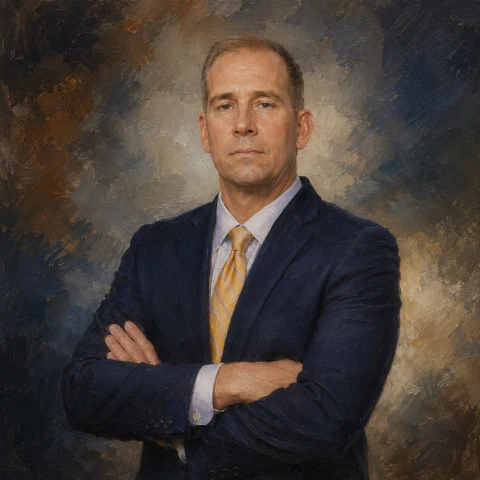
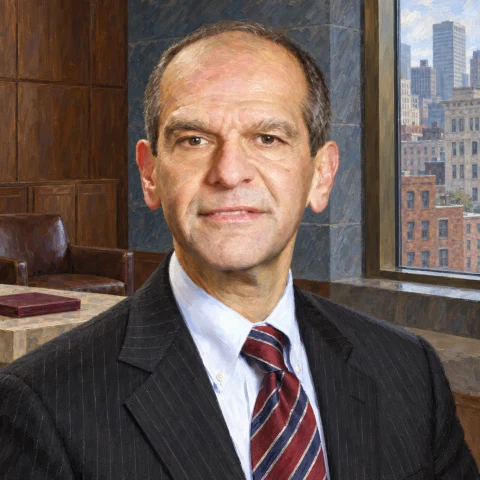
B. Robert Allard
Youth-Sports Safety · School Accountability · Civil Trials
The Complaint Marked Confidential
In 2009, USA Swimming’s executive director declared under penalty of perjury that he had not previously received any complaint or claim against a California swim coach.
Emails made public in 2010 showed otherwise. In January 2003, a woman who had swum for the coach in the early 1990s had written to USA Swimming about him. The executive director replied that the organization would open a file and take no action for now, adding, “This matter should be kept confidential by both you and us.” At least one other molestation complaint reached him at about the same time.
The coach spent roughly thirty years around young swimmers. He was sentenced to forty years in prison for sexually abusing them, and B. Robert Allard’s clients alleged that over those decades he had manipulated and sexually assaulted more than a dozen female swimmers.
Allard’s suits against USA Swimming, the sport’s national governing body, accused it of covering up assaults and of having no system to investigate complaints. In April 2010 the litigation was featured on ABC’s 20/20.
The Cost of a Background Check
In 2010 a man applied to coach in the West Valley Youth Soccer League. His application disclosed only that he had not been convicted of a felony, a violent crime or a crime against a person; he had a prior conviction for domestic violence, and the league ran no criminal background check, though he had authorized one. From May 2011 he sexually abused a girl he coached, until her father went to the police in March 2012.
Her suit named the United States Youth Soccer Association and its California affiliate, Cal North; Allard was among her lawyers. The trial court sustained the associations’ demurrers and dismissed the case. On February 22, 2017, the Sixth District Court of Appeal reversed in an opinion by Justice Nathan D. Mihara, holding that the associations “had a duty to conduct criminal background checks of all adults who would have contact with children involved in their programs.”
The national association’s bylaws required its state associations and leagues to follow its rules, and it set the standards under which coaches were hired. It knew of physical and sexual abuse of its members by coaches “at a steady yearly rate of between 2 and 5 per year,” and its own pamphlet warned that “Pedophiles are drawn to places where there are children.” Against that, the court set the cost of a check: the association had arranged nationwide searches at $2.50 each, and in California there “was and continues to be no cost” for them. A check, the court wrote, would have revealed the coach’s conviction, and he “would have had far fewer, if any, opportunities to sexually abuse plaintiff.”
In August 2018, three days before trial, the associations agreed to pay $8.2 million: $6.5 million from US Youth Soccer and $1.7 million from Cal North. US Youth Soccer said it now required criminal background checks for coaches, and Allard said he hoped sporting organizations would start “making athlete safety the primary goal.”
Four Children Spared a Return to the Stand
In August 2013, a Santa Clara County jury found a former teacher at O.B. Whaley Elementary School in San Jose guilty of molesting five girls in his class, all seven or eight years old. All five had testified for the prosecution. He was sentenced to seventy-five years to life.
Allard’s firm sued the Evergreen School District on behalf of a girl identified as Jane Doe. The suit alleged that the district had left the teacher in a position to abuse children despite two earlier sexual-harassment accusations by separate teachers, reported to two principals, and that one principal, finding him alone with a student, had told him to keep the door open. In November 2012 that principal was convicted of failing to report suspected child abuse. Allard called it “a systemic failure.”
The families’ claims went to trial in 2015. Three weeks in, a day before the girls were scheduled to testify, the district agreed to pay $15 million to the four children and their families, and no child took the stand a second time.
Kylie McKenzie
Kylie McKenzie trained full-time with the United States Tennis Association from the age of twelve to nineteen, in its player development program and later at its national campus in Lake Nona, Florida. There, on November 9, 2018, a coach the USTA had employed since 2012 sexually assaulted her.
About four years earlier, the same coach had sexually assaulted a USTA employee, who did not report it and was later promoted into a management role that carried a duty to report. In March 2022 McKenzie sued, alleging that the USTA had negligently supervised and retained him. On February 16, 2024, Judge Paul G. Byron of the federal court in Orlando granted her partial summary judgment, holding that the USTA’s special relationship with its players imposed “a duty of reasonable care to protect players in their training program from sexual abuse by their coaches,” and left breach and causation to a jury.
Allard tried the case with Amy Judkins of Newsome Melton. In May 2024, after a week-long trial, the jury unanimously awarded McKenzie $3 million in compensatory damages and $6 million in punitive damages, $9 million in all. Florida allows punitive damages only when the jury finds, on clear and convincing evidence, intentional misconduct or gross negligence. “I feel validated,” McKenzie said.
The USTA appealed to the Eleventh Circuit, which heard argument on January 27, 2026.
A Family-Inherited Trait
Allard is a partner at Cerri, Boskovich & Allard in San Jose, the firm he, Lauren Cerri and Mark Boskovich launched in January 2024; his practice is devoted to survivors of childhood sexual abuse and their families. He has brought claims against school districts from San Francisco and San Mateo through the South Bay to Los Banos.
“Our cases do not end with just a monetary payout,” Allard has said. He has worked with California legislators to abolish time limits that deny survivors compensation and to ban confidentiality agreements in sexual-abuse settlements so that victims are not silenced.
The son and grandson of lawyers, Allard grew up in Saratoga. His grandfather was a plaintiff’s lawyer in Oakland, and his father represented corporations as a litigator in Santa Clara County; Allard practiced with his father for a decade before joining Tim McMahon and Brad Corsiglia to form Corsiglia McMahon & Allard. He has called the wish to help and advocate for people “a family-inherited trait.”
He graduated from the University of Notre Dame in 1991 and from the University of San Francisco School of Law in 1994, and was admitted in California in 1995.
He has four children of his own.