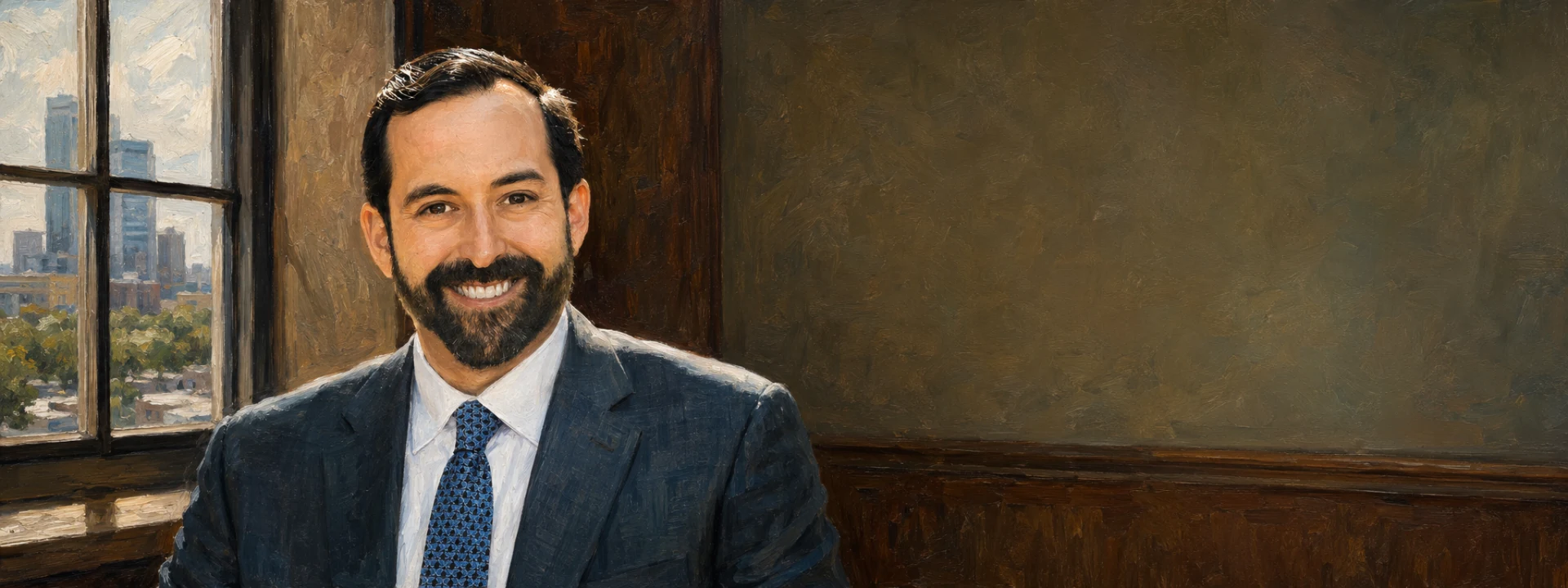
Sam Iola
Environmental Asbestos, Talc, and Mesothelioma Litigation
Asbestos brake dust should have never gone into a single bowling ball.
Proving the Invisible
Mesothelioma cases usually begin with a work history: the shipyard, the boiler room, the brake shop. Sam Iola's cases begin somewhere harder — a house a mile from a talc mine, a bowling alley's back room, a bag of industrial powder opened at a plastics plant decades ago. His practice reconstructs exposures that left no employment record, tracing a mineral from the ground, through commerce, into a particular set of lungs.
Three completed matters show the method: a $12.25 million New York verdict for a woman who simply lived near a mine, an affirmed California judgment tracing brake-dust filler into bowling balls, and a $22.5 million Connecticut verdict against a talc supplier's corporate successor.
The House Below the Mine: $12.25 Million
Anna Bishop lived in Balmat, New York, less than a mile from Vanderbilt Minerals' talc operation, from 1964 until 1984. She never worked at the mine. In October 2022 she developed symptoms; fluid accumulated around her lungs; and in January 2023 she died of mesothelioma at seventy-eight. Her daughter, Linda Weaver, continued the action as administrator of her estate.
The distance between the mine and the house created the central problem of proof. None of the links could rest on the occupational history common to asbestos cases, because Bishop had none. The estate needed evidence about the mineral deposit itself, the milling practices, the airborne releases, the direction and range of the dust, the residence, and medical causation across a latency of decades.
On July 29, 2025, Justice Paul E. Davenport denied Vanderbilt's motion for summary judgment, finding the defense had not met its initial burden and that the estate's experts raised material factual disputes concerning the company's milling practices and their relationship to Bishop's disease. At trial, the estate presented historical evidence concerning asbestos in the New York talc deposits, milling releases, corporate knowledge, and decades of denials and incomplete warnings. Bishop's sister — who had also received a mesothelioma diagnosis — testified, adding family evidence to the mineralogical and community-exposure record.
After four weeks of trial, a St. Lawrence County jury returned a $12.25 million verdict on August 28, 2025: $4.5 million for Bishop's pain and suffering and $7.75 million in punitive damages. The liability finding rested on environmental exposure from living near the mine — proof that the dust did not stop at the property line.
The Bowling Alley: An Affirmed Judgment
Donald Vanni and his brother opened Arcata Bowl in Northern California in 1957. When plastic bowling balls became popular, Vanni drilled the finger holes himself in a four-by-eight-foot room without ventilation — working over the drill, filing and sanding the openings, blowing dust from the balls, and sweeping the residue from the floor without respiratory protection. He was diagnosed with pericardial mesothelioma in 2012 and died in June 2013 at seventy-eight.
Iola's case for the family traced the dust to its source. Bendix Corporation, Honeywell's predecessor, supplied asbestos-containing HD-100 brake-manufacturing dust to Ebonite for use as filler in the balls — at least 232,000 pounds from 1967 through 1972, as Ebonite's exclusive asbestos-filler supplier from 1968 through 1972. At trial, specialists on both sides disputed exposure and medical causation in what the reviewing court later called essentially a battle of experts.
On April 19, 2019, the jury found Honeywell responsible for the asbestos exposure, found for Vanni's wife and sons on negligence and product-liability claims, and found Bendix's product a substantial factor in increasing Vanni's risk of mesothelioma. The trial court entered a $1,970,716 judgment and awarded $101,500 in costs. Honeywell appealed the product-identification and causation findings; on September 13, 2021, California's Second District Court of Appeal affirmed, holding that substantial evidence connected the balls Vanni drilled during the relevant period to Bendix filler and supported the causation finding.
The Successor Answers: $22.5 Million
Alfred Barone, a chemical engineer and Army veteran, worked during the 1960s at a General Electric plastics facility in Massachusetts, where bags of talc were opened for phenolic-resin production. He was diagnosed with mesothelioma in May 2022 and died on June 14, 2023.
Iola represented the Barone family in Connecticut with Benjamin Braly and Brian Kenney. The plaintiffs alleged that International Talc had supplied the contaminated talc and that Vanderbilt later became responsible as International Talc's successor — a corporate-succession question layered atop the exposure and causation proof.
The four-week trial included fifteen days of evidence, twelve witnesses, and 310 exhibits. On May 14, 2024, the jury unanimously found successor liability, awarded $15 million in compensatory damages, and determined that punitive damages were warranted. Judge William F. Clark rejected Vanderbilt's post-trial effort to revisit successor liability and, on November 26, added $7.5 million in punitive damages, relying on the jury's findings and evidence concerning historical mining, product sales, warnings, scientific advocacy, and corporate conduct. The awards totaled $22.5 million.
Practice and Background
Iola is a partner at Iola, Gross & Forbes-King in Dallas. He earned his law degree from Texas A&M in 2015, is admitted in California, Connecticut, and Texas, and previously practiced at Simon Greenstone Panatier, Waters Kraus, and Dean Omar Branham Shirley.
His cases share a discipline: mineral identification, source and product tracing, exposure reconstruction, and medical causation, assembled until a jury can see a path — from a mine, a bag, or a filler drum — into one person's life.