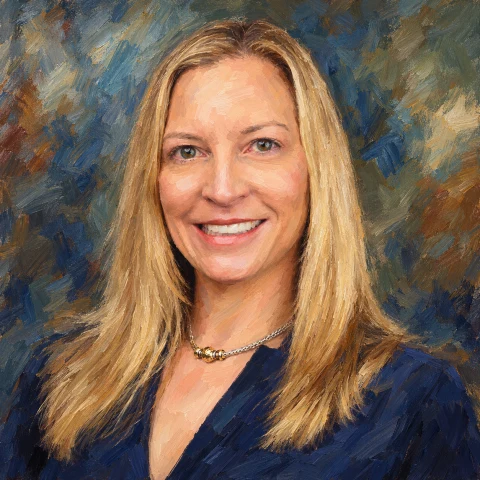
Sarah London
Rideshare Sexual Assault · Youth Vaping and Tobacco · Child Safety
For too long, Big Tech companies like Meta and Roblox have intentionally designed their platforms to prioritize growth and engagement over the safety of their youngest users.
Sarah London Tried the First Federal Bellwether Against Uber to an $8.5 Million Verdict
A Phoenix jury held Uber answerable for the driver its app sent to a nineteen-year-old passenger in the first of more than three thousand federal cases to reach trial. London co-leads that national litigation; she earlier co-led the Juul and Altria youth-vaping cases and now co-leads the child-exploitation litigation against Roblox.
Shortly after midnight on November 15, 2023, Jaylynn Dean opened the Uber app in Tempe, Arizona, and asked for a ride from her boyfriend’s apartment to her hotel. She was nineteen, alone, and had been drinking. Uber’s software scored the trip before it began. An internal system called Safety Risk Assessed Dispatch rated it 0.81 on a scale that ends at 1.0, a reading of elevated risk for a serious safety incident. Uber dispatched the ride to a driver named Hassan Turay. Dean was told nothing about the score.
Turay ended the trip early, switched off his GPS, pulled into a dark parking lot, climbed into the back seat, and raped her. Dean reported it at once — to a hotel employee, to the police, and to Uber, which removed Turay from the platform. A month later she sued, under her own name.
Twenty-six months after that ride, Dean v. Uber Technologies became the first of more than three thousand federal suits against the company to reach a jury. Sarah London, co-lead counsel of the national multidistrict litigation over sexual assaults by Uber drivers, tried it in Phoenix alongside Alexandra M. Walsh and Deborah Chang. For more than three weeks the trial turned on a question Uber had long answered the same way: whose driver was Hassan Turay?
Whose Driver
Uber’s answer was built into its business. Drivers on the platform are independent contractors, and the company has long maintained that a contractor’s crime is the contractor’s own. Its lawyers asked the jury to see the case that narrowly. Turay had passed a background check, completed safety training, and logged thousands of rides without a serious incident; the assault, they argued, was an unforeseeable criminal act. Under Uber’s own policies he was not acting as the company’s agent when he committed it.
The argument arrived in Phoenix with a result behind it. Four months earlier, in the first trial anywhere in the litigation, a San Francisco Superior Court jury found that Uber had been negligent in its safety practices but that the negligence was not a substantial factor in the passenger’s injuries, and returned a verdict for the company. The question in Phoenix was whether a jury would reach Uber through another door.
What the App Promised
The door was apparent agency. A company can answer for someone who is not legally its agent when its own conduct leads a customer reasonably to believe that he is, and the customer relies on that belief. The theory moved the case off Uber’s contracts and onto what Uber had shown Dean: the brand on her phone, the car its system chose for her, the promise of the ride itself.
The plaintiffs built their case on that promise. Uber had marketed itself as the safe way home for women traveling at night, Walsh told the jurors in closing — particularly women who had been drinking. Riders do not pick their drivers; Uber’s dispatch system does, and the app delivers the match under Uber’s name. Internal Uber documents, produced in the national litigation and public for the first time at trial, showed the company scoring the danger of Dean’s ride and sending it without a word to her or a change to the match.
The rest of the evidence went to how Turay had come to be in that car. In her opening statement Chang described a hiring process that asked him for no references, no proof of prior work, no résumé, and no fingerprints, and that included no search of his social media. Dean’s lawyers argued that Uber could have required cameras in its cars and offered women riders the choice of a woman driver, and had chosen not to. On the trial’s twelfth day Walsh cross-examined an Uber executive, Emily Bowman, on evidence that the rate of reported rapes on the platform had stayed substantially the same from 2017 through 2024. Uber pointed the jurors to its partnerships with women’s safety organizations and called an expert who testified that its safety program exceeded industry standards.
Six Women and Three Men
The jury of six women and three men deliberated for most of two days. On February 5, 2026, it found that Turay had been acting as Uber’s apparent agent — that Dean had reasonably taken him for Uber’s driver — and that the apparent-agency relationship Uber created was a substantial factor in causing her rape. It awarded her $8.5 million in compensatory damages.
The verdict reached the company through its own presentation of the ride. The contractor classification, the background check, the thousands of uneventful trips: none of it changed what Uber had led a nineteen-year-old to believe about the car that arrived for her. “I want to make sure this never happens to other women,” Dean said.
Uber said it would appeal, contesting the apparent-agency instructions Judge Charles R. Breyer had given the jury; Breyer, who manages the national litigation from San Francisco, had come to Phoenix to preside. Outside the courtroom London said, “We feel like justice was delivered.” The verdict, she said in a statement, meant something to “survivors who have come forward at great personal risk to demand accountability against Uber.” The jury, she said, “heard extensive evidence about Uber’s practices and recognized that Uber is responsible for the conduct of its drivers.” She called the result “a harbinger of what’s to come,” and said more cases remained: “justice will ultimately be measured by the outcomes of the ongoing litigation and whether meaningful safety reforms are implemented to protect passengers going forward.”
After Phoenix
It was not the last jury to find Uber liable. Before the second federal bellwether opened in Charlotte, North Carolina, in April 2026, Breyer ruled that Uber qualifies as a common carrier under North Carolina law — a classification that imposes a heightened duty to protect passengers, one a company cannot hand off to a contractor — and the jury there found Uber liable after a four-day trial. The third bellwether, a Texas case, settled on the eve of trial in October 2026. By then Breyer had criticized Uber for settling the litigation in small sets of cases and urged it to consider a settlement covering all of them.
The docket kept growing. By August 2026 it held 4,397 pending federal actions, and Uber had told the court that 972 of the federal claims were subject to pending settlement agreements. Breyer ordered the company to update its sexual-assault incident data every year and allowed limited discovery into the changes Uber made to its driver background checks in June 2026.
Healthy and Safe
London had litigated a company’s promise of safety to a young customer before. B.B. was twelve in 2017 when a friend handed her a Juul pod. The advertising she had seen made the device seem “healthy and safe,” her complaint alleged; had she known what the nicotine was doing to her, she would have stopped, or never started. London, then at Lieff Cabraser Heimann & Bernstein, represented her. B.B.’s was one of more than seven thousand cases consolidated in In re: Juul Labs, Inc., Marketing, Sales Practices, and Products Liability Litigation before Judge William H. Orrick in San Francisco, where London also served as co-lead and liaison counsel, responsible for holding more than sixty-five plaintiffs’ firms to a single litigation.
The complaints alleged that Juul and Altria Group, the Marlboro maker that bought 35 percent of Juul in December 2018, had deliberately marketed the devices to addict teenagers. In May 2022 Orrick denied the meaningful parts of the defendants’ motions to dismiss; that July he certified four consumer classes, nationwide and in California, on claims that included fraud and civil racketeering. In December 2022, on the eve of trial, Juul and its founders and directors entered four coordinated settlements covering the personal-injury plaintiffs, the school districts, cities, and counties, the tribal plaintiffs, and a nationwide class of purchasers. The class settlement, valued at $255 million, won final approval in September 2023.
Altria went to trial. In April 2023 the first bellwether against it, brought by the San Francisco Unified School District, opened in Orrick’s courtroom; after the district rested its case, Altria agreed to pay $235 million to resolve the remaining cases against it, among them more than 8,500 personal-injury claims and more than 1,400 brought by government entities. “The scope of these suits is beyond vast,” London said when Orrick granted final approval in March 2024. The school district’s allocation from the Juul and Altria settlements came to $24.65 million, money the district planned to use to hire seventy-six health professionals, nurses among them.
Behind Juul lay the cigarette litigation it echoed. In 2006 the Florida Supreme Court decertified the Engle class of Florida smokers but held that the jury’s core findings — among them that smoking causes disease and that the tobacco companies concealed what they knew about it — would carry into individual suits brought by members of the class. Thousands of those suits followed. London worked In re Engle Cases, the federal docket of more than three thousand of them, through to a $100 million settlement.
Condo Games
Her newest appointment takes the same question onto a platform built for children. In December 2025 the Judicial Panel on Multidistrict Litigation centralized the suits against Roblox Corporation before Chief Judge Richard Seeborg in San Francisco as In re: Roblox Corporation Child Sexual Exploitation and Assault Litigation, MDL No. 3166, and in February 2026 three plaintiffs’ co-lead counsel were appointed, London among them. The complaints describe a platform that let adults build anonymous accounts and message children directly, that hosted sexually explicit “condo games,” and whose Robux currency, they allege, became a tool predators used to coerce children into sending explicit images. On September 1, 2026, the docket held 182 pending actions.
That March, a New Mexico jury ordered Meta to pay $375 million over child sexual exploitation on Facebook and Instagram, and a Los Angeles jury found Meta and YouTube liable for designing products that addicted a young user. London and her Roblox co-counsel answered with a statement. “For too long, Big Tech companies like Meta and Roblox have intentionally designed their platforms to prioritize growth and engagement over the safety of their youngest users,” she said. “Children have suffered the most from this irresponsible approach, with thousands of kids groomed and exploited online by predators who are given direct access to them through these platforms. Lawsuits like this one and the pending Roblox litigation are what it takes to force these companies to stop facilitating the exploitation of the most vulnerable members of our society.”