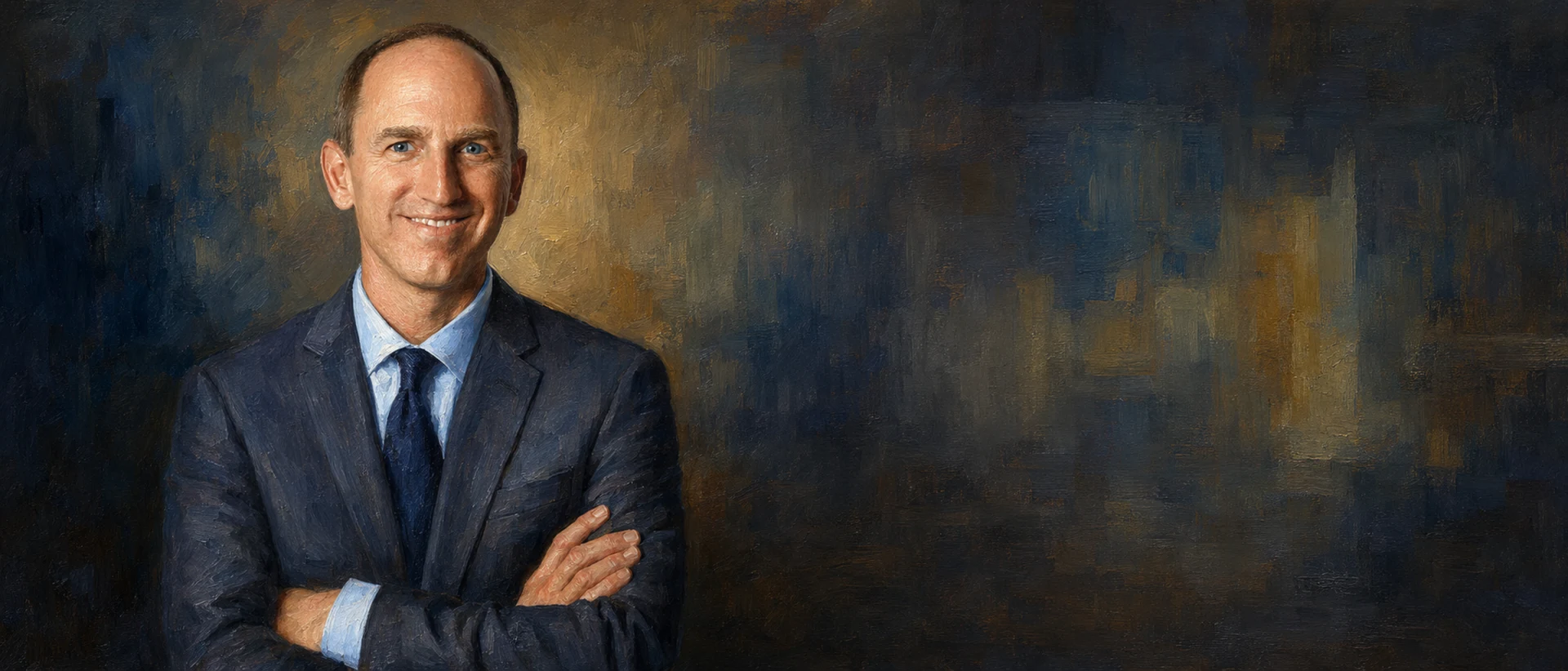
Scott Glovsky
Health-Insurance Denials · Insurance Bad Faith · Class Relief
I deliberately take fewer cases so I can personally devote the time and care each client deserves.
Arce v. Kaiser, the Dion Settlement, and the Aetna Deposition: Making Insurers Decide the Patient’s Case
Aetna had denied further intravenous immunoglobulin infusions to Gillen Washington, a college student with a serious immune deficiency, and Scott Glovsky deposed the former Aetna medical director who had signed the denial. The physician testified to never having reviewed Washington’s medical records, relying instead on nurses’ summaries.
A denial letter arrives addressed to one patient, and Scott Glovsky reads it for the rule behind it. The person refused may need speech therapy for a child with autism, residential treatment for severe mental illness, or an infusion a treating physician ordered months earlier. In each of them he asks whether the same internal rule — an exclusion, a review practice, an inaccurate provider list — has been giving the same answer to thousands of people whose medical needs differ. Health insurance makes timing decisive: the denial arrives before the treatment, and a damages award years later cannot recover a lost clinical window. His strongest cases seek relief at the moment the insurer decides, and he asks the court to make the coverage process do the work the policy promises.
Two questions Kaiser had joined
Arce v. Kaiser Foundation Health Plan challenged Kaiser’s treatment of applied behavioral analysis and speech therapy for children with autism. Kaiser denied the therapies under categorical labels — educational, non-health-care, custodial — without deciding whether a particular child needed them. The trial court refused to certify a class, reasoning that medical necessity varied from child to child. Glovsky argued the appeal, and the California Court of Appeal separated two questions Kaiser’s position had joined: whether therapy was medically necessary for one child, which required individual proof, and whether Kaiser could exclude the therapies for every child under the Mental Health Parity Act and its own plan contracts, which was a common question of law. Preserving that common question revived the class.
The litigation ended with a $9.29 million settlement for class members and autism research, reached more than 45,000 children, and led Kaiser to stop the categorical denials. The appeal removed a label that had kept any clinician from making an individual judgment about a child; after the settlement, physicians decided what each child needed. California Lawyer magazine named Glovsky an Attorney of the Year for the case.
Residential treatment for severe mental illness
Dion v. Kaiser Foundation Health Plan applied the same approach to residential treatment for severe mental illness, the level of care between acute hospitalization and outpatient therapy. The class action alleged that Kaiser’s coverage terms confined members to short-term acute care, so that a treating physician’s recommendation of residential treatment had no effect. The court-approved settlement covered 105,201 Kaiser members in California and set standards under which medically necessary residential treatment would be available to them. Kaiser was required to make, for each member, the individual medical-necessity decision that its earlier coverage terms had never allowed.
Who read the record
Glovsky’s case against Aetna opened a different part of the coverage process. Gillen Washington, a college student with a serious immune deficiency, had been receiving intravenous immunoglobulin infusions when Aetna denied further treatment. Glovsky deposed the former Aetna medical director who had signed the denial and drew out testimony that the physician had never reviewed Washington’s medical records, relying instead on nurses’ summaries. In February 2018, California Insurance Commissioner Dave Jones opened an investigation into Aetna’s review practices; the United States Senate and regulators in Colorado, Washington, and Connecticut followed, and CNN’s report on the deposition made the question of who reads a denied patient’s file a national one. Aetna settled the case in April 2019 on undisclosed terms.
The testimony fixed a question most patients never get to ask: what does an insurer actually do before it rejects a treating physician’s recommendation? A denial can fail long before any medical disagreement — when the reviewer lacks the record, relies on a summary, or applies criteria that are not in the policy. Glovsky’s network cases press a kindred gap, between the physicians a plan lists as available and the care its members can obtain, and that work recovered almost $25 million from Anthem Blue Cross and Blue Shield of California over misleading provider lists. In each case the policyholder had received a decision produced inside the insurer, where no one outside could see it, and litigation obtained the inputs, the rules, and the human steps behind it.
A deliberately small firm
Glovsky came to the plaintiffs’ bar from the other side. After the University of California, Berkeley, and Cornell Law School, he was admitted to the California bar in 1994 and began at a large firm defending corporate clients, an apprenticeship in the arguments he now meets across the table. He founded the Law Offices of Scott Glovsky, based in Pasadena and Claremont, where the practice centers on health-insurance denials, insurance bad faith, and catastrophic injury. The firm keeps a deliberately limited caseload, and he leads every case it accepts, so that the individual medical story stays present even when the evidence points to a pattern affecting thousands. His 2008 case exposing how insurers pressured hospitals to discharge patients with severe eating disorders earned Consumer Attorneys of California’s Street Fighter of the Year award.
Individual and class work belong together in that practice. A person facing a time-sensitive denial may need immediate authorization or a focused bad-faith claim, while a classification rule harming tens of thousands needs common proof. Glovsky teaches what both require, as a faculty member at Trial Lawyers College, as host of Trial Lawyer Talk, a long-running podcast in which leading trial lawyers take apart their own cases, and in Fighting Health Insurance Denials: A Primer for Lawyers, which turns his discovery habits into a checklist for patients and lawyers: obtain the complete plan document, collect the treating physician’s support, preserve every appeal, find out who reviewed the file, and compare the denial’s criteria with the contract.
The question running through his cases is a patient’s, asked with a litigator’s persistence: did anyone decide my case? In Arce a label had decided it; in Dion a coverage gap; in the Aetna case a signature on a file no one had read. Case by case, Glovsky has made insurers supply the one element their process kept omitting — a decision about a particular patient, made by someone who looked.