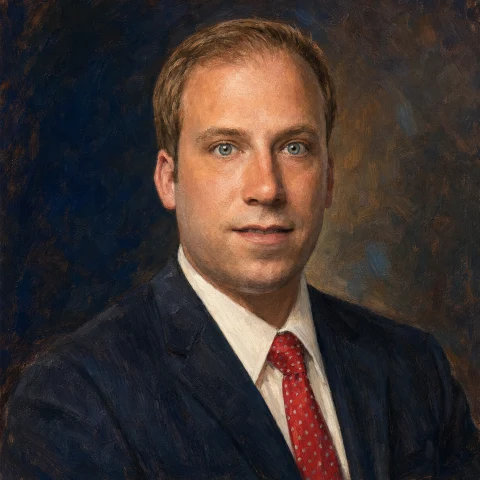
Serena P. Hallowell
Securities Litigation · Direct Actions · Opt-Outs · Investor-Side Litigation
I welcome the opportunity to collaborate with securities attorneys from both sides of the aisle under the shared goal of improving public understanding of this complex practice area.
Lord Abbett v. Valeant: Opt-Out Investors’ New Jersey Racketeering Claims Survive in Trenton
On July 31, 2018, Judge Michael A. Shipp of the District of New Jersey refused to dismiss the New Jersey racketeering claims that fifteen Lord Abbett funds, two Boeing retirement trusts and the Public Employees’ Retirement System of Mississippi had brought against Valeant Pharmaceuticals outside the class action. Serena P. Hallowell’s team was the first opt-out plaintiff to defeat dismissal of that theory; she resolved her last Valeant matters in 2025 and leads Motley Rice’s direct-action litigation for pension funds and other large investors, after class settlements of $140 million with Barrick Gold, $97.5 million with Computer Sciences and $50 million with Endo.
The complaint ran to 162 pages. Fifteen mutual funds managed by Lord Abbett & Co. of Jersey City filed it in federal court in New Jersey on Wednesday, August 23, 2017, against Valeant Pharmaceuticals International, its former chief executive J. Michael Pearson, its former chief financial officers Howard Schiller and Robert Rosiello, its former corporate controller Tanya Carro and its auditor, PricewaterhouseCoopers, over Valeant notes the funds had bought between 2013 and 2015. It pleaded eight counts, three of them under New Jersey’s racketeering statute, which lets a plaintiff who proves a violation recover three times its loss, a remedy the federal securities laws do not open to shareholders under the national racketeering act. The funds alleged that Valeant had hired Pearson in 2008 for “his business acumen and his cut-throat tactics to realize even greater profits,” had bought more than 100 companies between 2008 and 2014 while taking on as much as $31 billion of debt, had raised the price of Cuprimine, a treatment for Wilson’s disease, by nearly 5,800 percent and the price of Syprine by about 3,200 percent, and had needed Philidor, a specialty pharmacy it helped form, to make the pricing work; they accused PwC of helping to “conceal the relationship between Valeant and Philidor.” Investors, the funds said, had “suffered massive economic losses” of more than $80 billion.
Kasowitz Benson Torres filed the suit, and Labaton Sucharow, where Serena P. Hallowell was then a partner heading the direct-action practice, worked on it alongside Kasowitz. By early afternoon on August 25 Valeant’s shares were down 4.3 percent, at $14.11. The company owed about $28 billion, and under its agreement with lenders only $500 million of legal costs in any twelve months, with no single charge above $250 million, could be kept out of the earnings its debt holders measured; it had reserved $162 million for liabilities it called “probable and estimable.” Eleven months later, on July 31, 2018, Judge Michael A. Shipp denied the Valeant defendants’ motions to dismiss the racketeering counts in the Lord Abbett action and in two others pleading the same theory, brought by the Boeing Company Employee Retirement Plans Master Trust and the Boeing Company Employee Savings Plans Master Trust and by the Public Employees’ Retirement System of Mississippi. Hallowell’s team asserted claims under New Jersey’s racketeering statute and became the first opt-out plaintiff to defeat dismissal of that theory. The ruling preserved the clients’ transaction-specific claims and opened a path to discovery.
Hallowell leads Motley Rice’s direct-action litigation efforts and is a leader of its securities-fraud team, working from the firm’s New York office, and she has more than twenty years of complex-litigation and securities experience. Her clients include public pension funds, hedge funds, mutual funds, family offices, and other large investors. She evaluates each client’s transaction history, available claims, proof, governing time limits, objectives, and potential recovery before recommending class participation, class leadership, or a separate action, and she has led opt-out matters concerning Valeant, Perrigo, and Teva for public funds and other large investors.
Double-Digit Millions Above the Class Share
Thirty-seven groups of investors eventually left the Valeant class action to sue on their own in the District of New Jersey, where the class case, consolidated on May 31, 2016 as In re Valeant Pharmaceuticals International, Inc. Securities Litigation, was pending before the same judge, who had sustained most of the class complaint on April 28, 2017. On September 6, 2017 Maureen M. Hazen, general counsel of Florida’s State Board of Administration, wrote to Ashbel C. Williams that the board’s securities counsel, Bernstein Litowitz Berger & Grossmann, put its recoverable Valeant damages at about $65 million and its likely share of a class recovery at roughly $390,500, and that by filing its own action the board “may be able to enhance its recovery above the class action recovery by double-digit millions of dollars”; on November 7, 2017 the board’s trustees took up a request to file a direct action in New Jersey.
Hallowell’s review of a prospective client’s position begins with the securities held, the place and timing of each purchase, the challenged disclosures or conduct, and the route by which the alleged loss occurred. Client mandate, portfolio structure, internal authority, and the evidence available for each statutory element shape the procedural choice. Hallowell’s work in both aggregate and direct litigation allows her to compare an existing class record with the individualized pleadings, transactions, evidence, and settlement authority required for an opt-out case. In a direct action, the investor must establish its own transactions, reliance where required, loss causation, and damages. It also controls client-specific pleadings, discovery responses, experts, and settlement authorization rather than relying solely on the class record. Her teams preserve each investor’s transactions, causation and damages evidence, legal theories, discovery strategy, and settlement authority on a separate record.
The racketeering theory required the team to plead a pattern, enterprise, predicate conduct, injury, and causation rather than relabel a federal securities claim. New Jersey’s statute, N.J.S.A. 2C:41-2, makes it unlawful for anyone employed by or associated with an enterprise to conduct its affairs “through a pattern of racketeering activity,” and separately unlawful to conspire to do so, and the Lord Abbett, Boeing and Mississippi complaints pleaded both, together with aiding and abetting, alongside claims under Sections 10(b) and 20(a) of the Securities Exchange Act. They alleged that Valeant and its executives had run a “massive, fraudulent scheme” designed “to artificially inflate the price of Valeant’s securities” by means of “a clandestine pharmacy network, deceptive pricing and reimbursement, and fictitious accounting,” relying on a “secret network of controlled pharmacies and deceptive business practices” to impose price increases “that a transparent market would not tolerate” and to shield Valeant’s drugs from generic competition, and that as the truth emerged the stock “plummeted . . . more than 90%, and the value of its debt securities similarly collapsed.” Preserving the theory supplied an additional client-specific pathway into discovery for the opt-out investors.
Fifteen Motions in Three Actions
Fifteen motions to dismiss were pending when Judge Shipp ruled, five in each action, and he decided them on the papers. The Valeant defendants’ principal argument against the racketeering counts was that the complaints pleaded no enterprise existing separate and apart from the conduct alleged and no “ascertainable structure.” The plaintiffs answered that New Jersey law requires neither, and the court agreed. Under the New Jersey Supreme Court’s 1995 decision in State v. Ball, the statute is construed broadly: “The organization of an enterprise need not feature an ascertainable structure or a structure with a particular configuration,” and the evidence of the enterprise “need not be distinct or different from the proof that establishes the pattern of racketeering activity.” The complaints, Judge Shipp found, identified the participants, alleged that they had acted over eight years to deceive the public for the company’s benefit and their own, and set out specific acts by each Valeant defendant in furtherance of that objective, acts taken to conceal it, and knowledge of the participation. That pleaded an enterprise.
Schiller and Carro argued separately that neither had personally committed the two predicate acts a pattern requires; Carro said the only allegations against her concerned a pair of statements on an October 26, 2015 conference call, which counted as one act. The plaintiffs pointed to twenty-two misstatements by Schiller and four by Carro, to the Sarbanes-Oxley certifications Schiller had signed, and to Carro’s oversight of the financial reports, and the court held that a Section 10(b) claim is “undoubtedly a ‘predicate act’ under N.J. RICO” and that the pattern was adequately alleged. The conspiracy count is judged under Rule 8 rather than the particularity standard of Rule 9(b), and the court found ample allegations of agreement, among them that Valeant “pursued a deliberate strategy—devised at the highest level of the company, but hidden from investors,” carried out through inaccurate financial statements and a secret network of pharmacies, and left the knowledge and agreement of each individual for summary judgment. The aiding-and-abetting counts survived with the rest.
Lord Abbett’s complaint rested entirely on Valeant’s notes, and Valeant argued that a noteholder had suffered no racketeering injury because the company had neither missed an interest payment nor defaulted, and that funds which bought in the secondary market were not direct purchasers. Judge Shipp declined to dismiss on either ground: the funds had pleaded that they bought the notes at prices inflated by the defendants’ conduct, and whether a given plaintiff was an original or a downstream purchaser was a question for a full discovery record. Lord Abbett and Boeing had also sued under Section 18 of the Exchange Act, which gives a buyer who relied on a false statement in a document filed with the Securities and Exchange Commission a remedy of its own. Valeant said those claims were untimely under Section 18’s one-year and three-year limits, since Lord Abbett had filed on August 23, 2017 for purchases through October 5, 2015, and Boeing on September 28, 2017 for purchases between January 10, 2015 and March 23, 2016. The court held that the two-year and five-year periods of the Sarbanes-Oxley Act govern Section 18, following the Second Circuit’s 2016 decision in DeKalb County Pension Fund v. Transocean over earlier district-court decisions in New Jersey and Pennsylvania, because Section 18, unlike the proxy provision those courts had reasoned from, excuses a defendant who proves that he acted in good faith and did not know the statement was false, so that liability requires more than negligence. The Section 18 claims went forward.
By the autumn of 2018 twenty-nine groups of investors had filed separate Valeant actions in New Jersey, over purchases made between January 3, 2013 and August 10, 2016, and nine of them, Lord Abbett, Boeing and Mississippi among them, pleaded New Jersey racketeering claims. In January 2018 Judge Shipp had let most of the claims proceed in two earlier opt-out groups, led by T. Rowe Price and Discovery Global, and in rejecting Valeant’s attack on the Section 18 reliance allegations he noted that the company had not pressed the point again on reply after those decisions.
Two Years and Five Years
Timing is part of that preservation. The Supreme Court’s American Pipe doctrine, the limitations analysis in ANZ Securities, and later Valeant-related tolling decisions inform when an investor must act to keep individual claims and the selected forum available. Under American Pipe, the filing of a class complaint suspends the statute of limitations for the members of the proposed class; in 2017, in California Public Employees’ Retirement System v. ANZ Securities, the Supreme Court held that the doctrine does not reach statutes of repose, so the five-year repose period for Exchange Act fraud claims keeps running from each misstatement whatever happens in the class case, as does the three-year period for Securities Act claims. David Kaplan of Saxena White and Lane Arnold of UTIMCO described the result in 2021 as a catch-22: an investor that waits for a certification ruling before filing may satisfy the two-year limitations period and still lose most or all of its damages to repose, while an investor that files early must be ready to litigate the date on which it should have discovered the fraud.
Judge Shipp had read the doctrine narrowly in Valeant, holding in 2019 that an investor who sued before a certification ruling could not claim American Pipe tolling, a view he acknowledged most circuits had rejected and a doctrine he said should be applied “sparingly.” On June 16, 2021 the Third Circuit, in an opinion by Judge Fuentes in Aly v. Valeant Pharmaceuticals International, vacated a dismissal entered on that ground and held that “the filing of a class action is the operative event that tolls the limitations period” for every putative class member, including one who files an individual complaint before certification. The panel called the district court’s rule “counterintuitive” and “untenable,” said that requiring class members to wait “serves no compelling purpose,” and observed that under the rejected rule investors “would be penalized for giving the defendants and the Court earlier notice.” Kaplan and his colleague Hani Farah wrote afterward that an investor can now rely on the pending class action to preserve its claims under the limitations period and plan its filing against repose deadlines that are fixed and ascertainable from its own trading history.
The class action settled for $1.21 billion in cash on behalf of investors who bought Valeant common stock, debt securities or call options, or sold put options, between January 4, 2013 and March 15, 2016. Judge Shipp preliminarily approved the settlement on January 27, 2020, a special master recommended final approval on June 15, 2020, and on February 1, 2021 the court made it final over objections from two of more than 400,000 class members, releasing every defendant except PwC. By the middle of 2020 thirty of the thirty-seven opt-out actions remained pending, each of them disputed by the company, which had renamed itself Bausch Health. Hallowell resolved her final two Valeant opt-out matters for large investors in 2025, under confidential terms. Those completed individual settlements followed the favorable dismissal ruling and maintained client-specific pleadings and recovery decisions throughout the direct actions.
Pascua-Lama
In re Barrick Gold Securities Litigation, No. 13-cv-03581 in the Southern District of New York, concerned Pascua-Lama, a gold and silver project on the border of Chile and Argentina. Barrick obtained its environmental approvals between 2000 and 2006, subject to hundreds of conditions, and on May 7, 2009 announced that it was ready to begin construction, projecting double-digit returns from a mine expected to produce 800,000 to 850,000 ounces of gold a year in its first five full years. In June 2012 the company dismissed its chief executive and disclosed that costs had nearly doubled and production would be delayed; in July it raised the budget again and pushed production back at least a year; in November it raised costs and delayed again. On February 14, 2013 Barrick voluntarily halted certain development work over regulatory issues, and on April 10, 2013 a Chilean appeals court ordered construction stopped for environmental infractions. In May 2013 Chile’s environmental regulator fined Barrick’s subsidiary about $16 million for deviations from the project’s approval, among them reporting failures and non-compliance with water-management requirements, found that the company had been untruthful in its reporting, and ordered the water management system completed before construction on the Chilean side resumed; the subsidiary paid the fine that month. Barrick wrote the project down in June, recorded a $5.1 billion impairment against it in August, and on October 31, 2013, with about $5 billion invested, suspended construction indefinitely. Its shares had fallen from $42.05 on June 5, 2012 to $18.01 on November 1, 2013, nearly 43 percent.
The lead plaintiffs, Union Asset Management Holding AG and LRI Invest S.A., sued for everyone who bought Barrick common stock on the New York Stock Exchange from May 7, 2009 through November 1, 2013, alleging that the company had concealed that its original budget and timeline were infeasible from the start, that it was violating its environmental obligations, and that control deficiencies amounting to an undisclosed material weakness left it unable to report the project’s costs, timeline or impairment accurately. On April 1, 2015 the court sustained the claims that Barrick had deceived shareholders about the project’s environmental compliance, finding that the lead plaintiffs had sufficiently alleged that Barrick knew it was violating its environmental commitments while construction went on, and on March 23, 2016 Judge Shira Scheindlin certified the class. Hallowell and the investor team developed the project, regulatory, disclosure, and market-impact record supporting the class recovery; that record traced the project’s development, regulatory risks, challenged disclosures, and the market response, and years of discovery, expert work, and motion practice connected the project history with the investors’ class claims before the recovery was presented for approval. On May 31, 2016 Barrick announced that it would settle for $140 million, a sum it said was insured, while maintaining that the claims were unfounded and that it “has not accepted any charges of wrongdoing or liability”; James Hughes of Motley Rice, lead counsel for the plaintiffs, said, “I am pleased we were able to reach this resolution for investors.” The court approved the settlement on December 2, 2016.
27.6 Million Shares at $83.25
Endo resolved a state-court Securities Act matter for $50 million. On June 5, 2015 Endo International plc sold about 27.6 million shares of common stock to the public at $83.25 a share, and on February 28, 2017 the Public Employees’ Retirement System of Mississippi sued in the Court of Common Pleas of Chester County, Pennsylvania, for every purchaser in the offering, under Sections 11, 12(a)(2) and 15 of the Securities Act of 1933, against Endo, officers including Rajiv De Silva, Suketu Upadhyay and Daniel Rudio, and ten underwriters, among them Goldman Sachs, J.P. Morgan and Morgan Stanley. The complaint alleged that the offering documents failed to disclose “declining demand for Endo’s generic products” and that personnel in the generics division had “resorted to unsustainable business practices” to make their numbers; after the disclosures of early 2016 the stock traded at $16.17.
The action concerned a secondary public offering and required counsel to address the statute’s distinct elements, defendants, defenses, and state-court procedures. The defendants removed the case to federal court on March 31, 2017, invoking the Securities Litigation Uniform Standards Act; the plaintiff moved to remand on May 1, and on August 27, 2017 Judge Paul S. Diamond of the Eastern District of Pennsylvania sent the case back to Chester County, noting that the Supreme Court had taken up the Cyan case. An amended class complaint followed on October 16, 2017, and preliminary objections, Pennsylvania’s counterpart to a motion to dismiss, on December 8; Judge Edward Griffith overruled them and lifted the stay of discovery. The state-court setting and offering claims required a record separate from an Exchange Act fraud case. Pleading, discovery, class administration, and settlement work followed the Securities Act’s own elements and the procedural rules governing that forum. The parties signed a stipulation of settlement on June 27, 2019, for $50 million that Endo’s insurers agreed to fund; Judge Griffith preliminarily approved it on July 2, 2019, heard the settlement motion on November 25, and gave final approval on December 5, 2019.
A $5.4 Billion Contract and a 3G Network
Hallowell led or was a key member of litigation teams whose settlements included the $48 million CVS Caremark recovery, the $41.5 million settlement in In re NII Holdings in the Eastern District of Virginia’s “rocket docket,” the $42.5 million Intuitive Surgical settlement, and the $97.5 million all-cash settlement in In re Computer Sciences Corporation Securities Litigation; taken together, the class and direct-action settlements of the teams she led or served on approached $500 million. Her work on those teams included pleading, discovery, expert development, negotiation, judicial review, and approval, and it took her across the country at short notice and to London for depositions. In the Computer Sciences case, brought in the Eastern District of Virginia before Judge T. S. Ellis III for the Ontario Teachers’ Pension Plan Board and a class that bought between August 5, 2008 and December 27, 2011, the investors alleged that CSC had assured the market it was performing on a $5.4 billion contract with Britain’s National Health Service while knowing it could not deliver, had departed from the contract’s terms and was not accounting for it properly, and that the stock lost half its value when the problems came out; the class was certified on November 15, 2012, and Judge Ellis approved the settlement on September 20, 2013.
NII Holdings ran wireless networks in Latin America under the Nextel name and was moving its push-to-talk customers onto a 3G network, financed in part by $1.45 billion of publicly traded debt issued through NII Capital. Five pension funds served as lead plaintiffs, the Pension Trust Fund for Operating Engineers, Danica Pension, Industriens Pensionsforsikring, the IBEW Local 58 and SMC NECA funds and the Jacksonville Police and Fire Pension Fund, and they alleged that from February 25, 2010 to February 27, 2014 the company misreported the metrics behind its account of the transition, and that disclosures of network delays, subscriber losses and weak results drove down both the stock and the bonds. NII filed for Chapter 11 on September 15, 2014, which stayed the claims against the company; three weeks later, on October 6, the court denied the individual defendants’ motion to dismiss in its entirety, remarking that the complaint “struck this court as extremely well written, very detailed,” and a December 23, 2014 stipulation in the bankruptcy court let the class obtain targeted discovery in exchange for a temporary stay. The class was certified on November 17, 2015, and the $41.5 million settlement, reached after the company’s bankruptcy filing, was approved on September 16, 2016 in Alexandria.
In re Intuitive Surgical Securities Litigation, in the Northern District of California, was brought for the Employees’ Retirement System of the State of Hawaii, appointed lead plaintiff on November 18, 2013, and the Greater Pennsylvania Carpenters’ Pension Fund, for investors who bought between February 6, 2012 and July 18, 2013; they alleged that Intuitive, its chief executive Gary Guthart, its chief financial officer Marshall Mohr and its chairman Lonnie Smith had misrepresented the safety and efficacy of the da Vinci Surgical System and the company’s compliance with FDA regulations. Fact discovery closed on September 30, 2016 and the class was certified on December 22, 2016; on September 29, 2017 the court denied the defendants’ motion to dismiss the second amended complaint in its entirety, and on October 30 the Ninth Circuit refused their petition to appeal the certification. With expert discovery finished on December 15, 2017, a summary-judgment motion briefed and trial set for October 30, 2018, the parties agreed on June 6, 2018 to settle for $42.5 million, and Judge Edward J. Davila held the settlement hearing in San Jose on December 20, 2018. The $48 million settlement in Medoff v. CVS Caremark Corporation completed the group.
Trustees, Investment Staff and Outside Fiduciaries
Hallowell’s publications address foreign securities after Morrison, recovery strategies after ANZ Securities, mutual-fund participation, and direct actions involving foreign purchases. In July 2017 she published “Investor Recovery Strategies Following ANZ Securities,” and that October, for the NAPPA Report, “Direct Actions: A Path to Recovery for Foreign Purchases of Securities”; “China Agritech’s Positive Implications for Plaintiffs” followed in 2018, and in 2019 “Emulex Highlights Greater Scrutiny of Issues at High Court,” “Mutual Funds Should Consider Shareholder Litigation” and, again for NAPPA, “Around the World in a Decade: The Evolving Landscape of Securities Litigation Post-Morrison.” In 2021 she wrote “Justices Should Acknowledge ESG’s Importance to Investors” and “Don’t Forget the ‘E’ and the ‘S’ in ESG: Securities Lawsuits Are No Longer Only About Corporate Governance,” and in 2011, in the New York Law Journal, she had asked, “Does ‘Dukes’ Require Full ‘Daubert’ Scrutiny at Class Certification?”
For cross-border holdings, she examines the place of the transaction, listing, issuer, investor, and alleged conduct to determine which losses fit an existing class, which support a direct action, and which forum offers an available remedy. That mapping separates domestic and foreign transactions, identifies the governing limitation periods, and determines whether an existing class reaches the investor’s purchases. It also helps align the proposed forum and claims with the client’s actual trading record.
She also presents litigation options to trustees, investment staff, and outside fiduciaries for public entities with internal approval processes. Trustees and investment staff may need a documented comparison before authorizing class leadership, an opt-out, or a direct filing. Hallowell translates the transaction and legal analysis into those internal approvals and maintains the separate record supporting the selected route. Her participation in public-pension and securities-law organizations keeps those governance requirements central during case selection and resolution: she serves on the Securities Litigation Committee and the Fiduciary and Governance Committee of the National Association of Public Pension Attorneys and on the Securities Litigation Committee of the New York City Bar Association, and belongs to the Federal Bar Council and the National Association of Women Lawyers. On October 26, 2026 she is scheduled to speak in Nashville, on a panel at the NCPERS Public Safety Conference, about the life cycle of a securities class action brought by a public pension fund. When she joined Law360’s Securities Editorial Advisory Board in 2022 she said, “I welcome the opportunity to collaborate with securities attorneys from both sides of the aisle under the shared goal of improving public understanding of this complex practice area.”
Regeneron, Meta and Fiserv
Hallowell is a member of Motley Rice and leads its direct-action litigation efforts while serving as a leader of the securities-fraud team, which she joined in March 2021. She previously headed a direct-action practice and developed extensive securities-class experience as a partner at Labaton Sucharow, a combination she now applies when investors must choose between aggregate and individualized remedies. Hallowell has served as an officer of the Institute for Law and Economic Policy and previously co-chaired Labaton Sucharow’s Women’s Networking and Mentoring Initiative; she co-chaired events on institutional investing in women- and minority-led investment firms, represented immigrant detainees in removal proceedings pro bono, and worked with the Securities Arbitration Clinic at Brooklyn Law School. She earned her B.A. from Occidental College in 1999 and her J.D. from Boston University School of Law in 2003, and she is admitted in New York, before the Courts of Appeals for the First, Ninth and Eleventh Circuits, and in the Northern District of Illinois and the Southern and Eastern Districts of New York. Her active matters include securities cases involving Regeneron Pharmaceuticals, Fiserv, and the directors and officers of Meta.