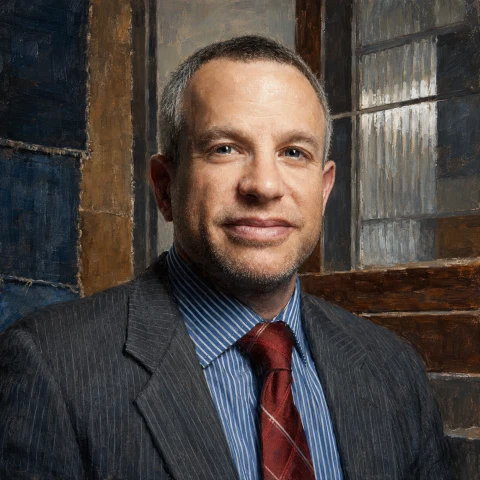
Shannon Liss-Riordan
Worker Classification · Wage and Hour · Employment Class Actions
Just because you set your own hours doesn’t mean you are completely autonomous and you own your business.
Skycaps, O’Connor v. Uber, and Two Thousand Twitter Arbitrations: The Substance of Work
Elon Musk bought Twitter in November 2022 and cut most of its workforce, and within days Shannon Liss-Riordan had class actions on file for the employees. When arbitration clauses fragmented those claims, she filed roughly two thousand individual arbitrations for the severance the company had promised them, and in September 2024 an arbitrator ordered the company to pay a former employee the severance it had withheld.
In 2008 a Boston jury listened to American Airlines skycaps describe what had happened to their earnings after the airline began charging travelers $2 for each piece of curbside baggage, a charge that looked, to the passenger handing over the money, exactly like a gratuity. Shannon Liss-Riordan tried the case under the Massachusetts tips statute, the jury found for the skycaps, and the airline afterward abandoned the charge nationwide. The case fixed her method early: find the statute that protects the gratuity, the wage, or the expense; find the practice quietly diverting it; and litigate until the money moves back to the people who earned it.
It also announced the premise of her career. A company can call its workers almost anything, “independent contractors,” “franchisees,” “platform users,” and a contract can describe an arrangement; neither decides who sets the price, controls the work, shoulders the risk, collects the revenue, or bears the ordinary cost of doing the job. From those answers, not from the paperwork, she determines which wages, tips, reimbursements, and legal protections must follow. Harvard College, in 1990, and Harvard Law School, in 1996, educated her; two years clerking for Judge Nancy F. Atlas in the Southern District of Texas and more than a decade at a Boston union-side firm trained her; and in 2009 she co-founded Lichten & Liss-Riordan, the firm from which she has carried that premise through more American industries than perhaps any employment lawyer of her generation: cleaning companies, airlines, coffee chains, delivery fleets, ride-hailing platforms, convenience-store franchises, and one of the world’s most prominent technology companies.
Cleaners, drivers, baristas
Long before app-based labor became a national argument, Liss-Riordan was litigating misclassification for FedEx delivery drivers, securing Massachusetts rulings recognizing the drivers as employees, followed by multimillion-dollar resolutions, and for immigrant cleaners working inside commercial-franchising arrangements. Her cases against Coverall, Jani-King, and Jan-Pro exposed a bleak bargain: workers formally purchased a business opportunity, the franchisor kept extensive control, and deductions ate through what the cleaners earned. The resulting decisions and settlements gave those workers a practical route to recover the expenses the contracts had shifted onto them, and the precedents became foundation stones of modern classification law. In 2022 she won a Massachusetts Supreme Judicial Court ruling in her case for 7-Eleven franchisees confirming that the state’s employee-classification test can reach franchise relationships. Her litigation for Starbucks baristas under the same tips law that had protected the skycaps, challenging the inclusion of supervisors in the tip pool, produced more than $14 million for the workers in 2012 and changed how the company distributed tips in Massachusetts.
Trying the gig economy
When the platform economy arrived, insisting its drivers were merely “users” of software, Liss-Riordan was the lawyer the moment had been preparing for. She brought classification and expense-reimbursement claims for drivers against Uber, Lyft, DoorDash, GrubHub, Amazon, and other platforms, becoming the single most recognizable courtroom adversary of the gig-economy business model; the drivers themselves took to calling her “Sledgehammer Shannon.” “Just because you set your own hours,” she said in 2016, “doesn’t mean you are completely autonomous and you own your business.” Her case against Uber, O’Connor v. Uber, fought from 2013 through certification battles and appeals, resolved in 2019 with a $20 million settlement for California and Massachusetts drivers. And she gave the gig economy its first misclassification trial: Lawson v. Grubhub, tried in San Francisco in 2018, which she pursued through a Ninth Circuit appeal in 2021 and California’s transformation of its classification test until, in 2023, the district court held that her client had been misclassified. Her IBM age-discrimination litigation showed the same persistence in a different register: her cases unsealed internal documents that laid bare, in the company’s own words, how it discussed easing out its older workers, evidence that reverberated far beyond her individual clients.
What runs through the industries
Politico once placed her among its fifty thinkers, doers, and visionaries transforming American politics, an unusual honor for a wage-and-hour lawyer and an accurate measure of how far her cases travel beyond their captions. She is admitted in Massachusetts, New York, and California, and before the United States Supreme Court. An app can change how work is assigned; a franchise agreement can change the paperwork; a mass email can change how a layoff is announced; none of it answers the legal question by itself. Liss-Riordan anchors even her largest cases in the daily economics of labor, who performs the work, who controls its terms, who bears its cost. The skycap at the curb, the cleaner paying for her own franchise, the barista pooling gratuities with her supervisor, the driver buying his own gas, the engineer holding a promise from a vanished employer: each found in her a lawyer willing to treat their ordinary economic life as a matter worth years of litigation.
After the fork in the road
The largest campaign of her career began in November 2022, when Elon Musk bought Twitter and cut most of its workforce. Liss-Riordan filed class actions within days, and when arbitration clauses fragmented the claims she did what almost no plaintiffs’ firm has the capacity to do: she filed roughly two thousand individual arbitrations for former Twitter employees seeking the severance they had been promised, alongside a dozen class actions and charges before the National Labor Relations Board. The gambit turned the company’s own arbitration architecture into a liability. In September 2024 an arbitrator ordered the company to pay a former employee the severance it had withheld, and by February 2025 arbitrators had begun awarding severance to employees terminated after Musk’s “fork in the road” ultimatum email, rulings that landed just as the same ultimatum language reappeared in Washington, aimed at federal workers, making her the person reporters called to explain what happens after the fork. In August 2025 the company reached an agreement in principle to settle a separate class action over its severance plan, and in October 2025 that case’s named plaintiffs retained her firm as the settlement worked its way toward the courts. The litigation is unfolding still, in courtrooms and arbitration hearings across the country, with the two thousand arbitrations moving one hearing at a time.