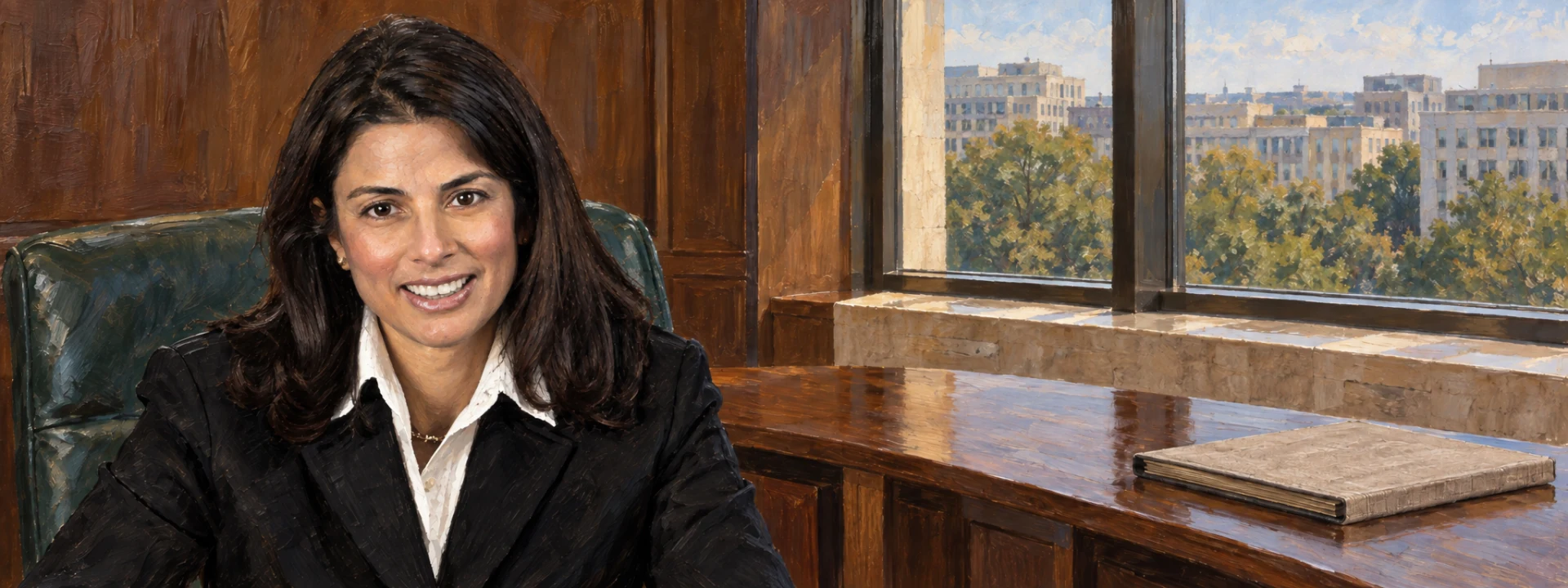
Shelley R. Slade
False Claims Act · Healthcare Fraud
I enjoy the investigative process, and more generally, the search for truth.
Assembling the Novartis Case
Pharmaceutical-kickback and health-care False Claims Act litigation — Partner, Vogel, Slade & Goldstein, Washington, D.C.
When the federal government joined part of David Kester's whistleblower case against Novartis, Shelley R. Slade and her colleagues still had claims to pursue on his behalf. They brought Susman Godfrey into the litigation, adding trial lawyers who shared the discovery work with the existing team, federal prosecutors and participating states. Kester, a former Novartis sales manager, alleged that the manufacturer was paying specialty pharmacies to recommend its drugs and encourage patients to order refills.
Accredo, one of the pharmacies, was initially outside the government's case. The private lawyers prosecuted the claims against it before the government joined that portion at settlement. They also participated in discovery on the Novartis claims, while the government led the settlement negotiations and obtained the company's factual admissions.
Referrals and Refill Rates
Kester's allegations concerned medications for cancer, transplant patients and people with cystic fibrosis, with prescriptions reimbursed by Medicare and Medicaid. The pharmacies dispensed drugs and counseled patients, but the payments at issue rewarded recommendations and refills. Novartis controlled referrals of patients taking Exjade and tracked the pharmacies' refill rates. The government alleged that pharmacies obtaining more refills received more referrals and higher rebates, while nurses called patients to encourage continued use without adequately explaining serious side effects. For Myfortic, a drug used after kidney transplants, the alleged inducement was a rebate in exchange for recommending that doctors switch patients from competing medicines.
Slade and her colleagues had to connect the pharmacies' agreements and financial incentives with the recommendations they made and the prescriptions billed to public programs. Their inquiry distinguished payment for genuine pharmacy services from compensation intended to influence treatment. Slade described Kester's contribution as exposing a way for manufacturers to buy influence over pharmacies that recommended refills, compromising the independent medical judgment patients expected.
Novartis paid $390 million in 2015: $370 million to resolve federal and state false claims and $20 million in civil forfeiture. Accredo's $60 million settlement and BioScrip's $15 million settlement brought the total recovery in Kester's litigation to $465 million, with Kester entitled to a statutory whistleblower share. Novartis also accepted responsibility for factual admissions concerning its pharmacy relationships and agreed to independent review of those relationships under an extended corporate integrity agreement.
Government Service and the Insider's Evidence
Slade graduated magna cum laude from Princeton University, earned her law degree at Stanford and began practice at Arnold & Porter in Washington. She spent ten years at the Justice Department, working as a Civil Fraud Section trial attorney and as Senior Counsel for Health Care Fraud. Her work earned the Department's Meritorious Award, an Integrity Award from the Inspector General of the Department of Health and Human Services, and a Public Service Award from the General Services Administration. She has been a partner at Vogel, Slade & Goldstein since 2000.
In representing whistleblowers, Slade considers the evidence and damages a government lawyer would need to evaluate intervention. The client may know how a transaction worked without possessing all the records needed to prove the resulting claim for payment. She has described her enjoyment of the investigative process as "the search for truth." Her pharmacy cases require testing an account against agreements, payments, prescription records and reimbursement requirements.
Testifying before House Judiciary subcommittees in June 2008, Slade used an engineer and a billing employee to explain a problem with demanding actual invoices at the outset of a case. An engineer might know that a military product was defective but lack access to billing files; a billing employee might have the invoices without knowing that the engineers had supplied false information. She urged Congress to allow insiders to bring cases despite that division of knowledge. She also cautioned lawmakers that a case counted as government-intervened might have been litigated privately for years before the government joined.
Pharmacy Prices and Quantities
In the Omnicare litigation, Slade represented a former financial analyst who challenged the prices charged to Medicaid. Massachusetts and Michigan required the pharmacy to give their programs its most favorable customer price. The complaint alleged that Omnicare nevertheless charged those programs more than private insurers. The company paid $21.05 million to settle the two states' claims in 2010, bringing its settlements in lawsuits involving the firm's client and other whistleblowers to $197.5 million since 2006. Slade credited the state investigative teams and urged other public programs to seek comparable pricing protections.
A later case at her firm concerned the quantity of medication dispensed. Pharmacist Adam Rahimi, represented by her partner Robert Vogel, alleged that CVS recorded a shorter days' supply of insulin pens than it actually provided, causing its computer system to schedule refills before patients needed them. At one Maryland pharmacy, he alleged, a fifty-day supply was entered as thirty days and followed by seven premature refills over eight months. The comparison was between the prescription, the amount supplied, the computer entry and the subsequent reimbursement claims.
The resolution announced in December 2025 totaled $37.76 million: $36.5 million for the federal and state False Claims Act cases and $1.26 million for additional insulin-pen claims resolved with the California Department of Insurance. The allegations covered 2010 through 2020. CVS acknowledged that understating the days' supply had caused some pharmacies to dispense refills before patients needed them and before government plans would have approved reimbursement.
Enforcement and Public Service
Slade returned to the House Judiciary Committee in 2013 and has also addressed the New York City Council and the National Association of Attorneys General on fraud enforcement. From 2018 to 2022, she co-chaired the American Bar Association's committee on procurement fraud and false claims. Her writing has addressed health-care fraud, civil investigative demands and the conduct of qui tam litigation, alongside service on the boards and advisory council of Taxpayers Against Fraud and its Education Fund.
The Education Fund named her Whistleblower Lawyer of the Year in 2013, and the D.C. Bar has honored her as a Pro Bono Lawyer of the Year. Her public-interest work in Washington also extends to the Potomac watershed. She serves as vice chair of the Potomac Riverkeeper Network and chairs its litigation and strategic-planning committees.