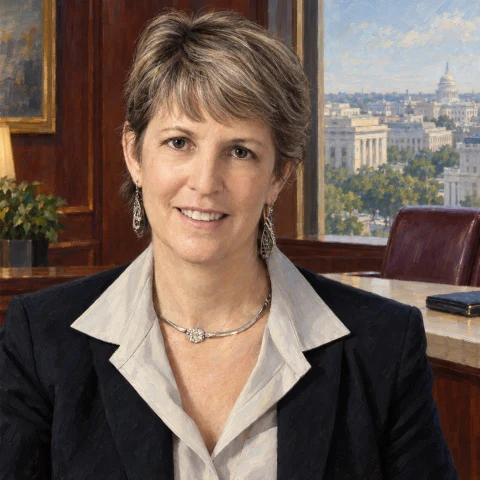
Stephen M. Kohn
Whistleblower Rewards · Qui Tam · Retaliation
The U.S. reward programs are filling the void caused by a lack of international whistleblower protections.
Birkenfeld, the SEC Rulebook, and the Whistle-Blowers of 1777: Choosing the Door Before the Evidence Arrives
Between February and March 2011, Stephen M. Kohn presented to each of the five commissioners of the Securities and Exchange Commission on the rules for the whistleblower program Dodd-Frank had created the year before. The final rules the Commission approved incorporated language he had recommended to strengthen protections for corporate employees. He had helped shape the modern IRS reward law as well.
In February 2009, UBS entered a deferred prosecution agreement with the United States on a charge of conspiring to defraud the government by impeding the Internal Revenue Service. The bank agreed to pay $780 million in fines, penalties, interest, and restitution, to leave the business of serving American clients with undeclared accounts, and to hand over the identities and account information of certain of its United States customers. In the years that followed, the number of taxpayers voluntarily disclosing hidden foreign accounts rose from fewer than a hundred in a typical year to nearly fifteen thousand. The disclosure behind that shift came from one former UBS banker, Bradley Birkenfeld, and his lawyer was Stephen M. Kohn.
Kohn treated the enforcement action and the reward claim as two proceedings needing two campaigns. He connected Birkenfeld’s knowledge of the bank’s private-banking operations to investigators, then carried him through the separate process that establishes eligibility under the IRS whistleblower program. In 2012 the IRS paid Birkenfeld $104 million, the first whistleblower award of nine figures and a public demonstration that the reward laws Congress had written would be honored. Two more nine-figure awards have since gone to Kohn’s clients, alongside a $112.6 million award to a confidential tax whistleblower whose disclosures led 461 taxpayers to pay more than $562 million in fines and penalties, and a $17.4 million joint award, won after two Tax Court victories, establishing that tax whistleblowers whose information produces criminal convictions share in the recovery.
Which door
By the time an agency learns that evidence exists, the decisive moves in a whistleblower case have usually been made. The same internal record can open several legal doors: a False Claims Act complaint filed under seal, a securities submission to the SEC, a commodities filing at the CFTC, a tax claim at the IRS, an anti-money-laundering or foreign-corruption disclosure. Each door has its own definitions, deadlines, confidentiality rules, and award standards, and a strong factual account loses its force when it goes through the wrong one, arrives stripped of context, or is separated from the records that let investigators test it. Kohn’s first judgment in every case is one of classification: identify what the source knows, determine which agency can act on it, and preserve both the claim and the person before an avoidable disclosure narrows the field. He has been making that judgment since 1984, longer than most of the reward programs he practices under have existed, in part because he helped write them.
Writing the rules
When Dodd-Frank created the SEC whistleblower program in 2010, the statute left the operating questions to rulemaking: what counts as original information, how internal reporting interacts with direct contact with the Commission, how confidentiality and award claims work. Kohn took part in answering each of them. He filed formal comments on the proposed rules in December 2010, a provision-by-provision analysis with recommended changes in March 2011, and a rebuttal of the Chamber of Commerce’s proposals; between February and March 2011 he presented directly to each of the five commissioners, and language he recommended to strengthen protections for corporate employees was incorporated into the final rules the Commission approved. He helped draft or shape whistleblower provisions associated with Sarbanes-Oxley, Dodd-Frank, the Anti-Money Laundering Act, the modern IRS reward law, and the Whistleblower Protection Enhancement Act, and in March 2024 he wrote to the Justice Department about the design of its proposed corporate whistleblower rewards program, pressing for the features that decades of practice had shown to be essential.
The advocacy extends to Congress. His written testimony on the False Claims Act was entered into the record of the House Judiciary Committee’s April 2016 oversight hearing on the government’s principal civil anti-fraud statute. A year earlier, before the Senate Judiciary Committee, he opened with a blunt assessment of the process for FBI employees: “The Department of Justice’s program for protecting FBI whistleblowers is broken.” He urged protection for disclosures made through the chain of command and enforceable deadlines for agency decisions, arguing that delay is itself a harm no later ruling can fully repair.
The Center and its clients
The institutional side of the work began in 1988, when Kohn, Michael D. Kohn, and David K. Colapinto founded the National Whistleblower Center after representing employees at the Comanche Peak nuclear plant. That early fight challenged settlement agreements that kept workers from raising safety concerns with federal regulators, and it produced strict limits on such gag provisions that remain in force. Kohn still chairs the Center’s board, serving pro bono. His clients over the decades map the field: Frederic Whitehurst, the FBI crime-laboratory scientist whose disclosures led to the laboratory’s accreditation and the review of thousands of tainted cases, and who became the first nationally recognized FBI whistleblower; Bunnatine Greenhouse, the Army Corps of Engineers contracting official who objected to no-bid contracts; Dr. Aaron Westrick, whose False Claims Act case exposed defective Zylon body armor sold to police departments and the military, brought sanctions of more than $100 million against the companies involved, and earned him an award of more than $6.5 million; and Howard Wilkinson, the insider who exposed the $230 billion Danske Bank money-laundering scandal, a matter Kohn continues to press abroad, where about $2 billion has been recovered for victims.
The whistle-blowers of 1777
Kohn earned his B.S. magna cum laude from Boston University in 1979, an M.A. from Brown University in 1981 as a National Endowment for the Humanities fellow, and his J.D. from Northeastern University in 1984, and he has taught whistleblower law at Northeastern and at Antioch. He is admitted in the District of Columbia and before the United States Supreme Court, every numbered federal court of appeals, and the Federal Circuit, a breadth matched to a practice in which one disclosure may move from agency intake to award proceeding to retaliation case to petition for review. He has also written the field’s library, from Protecting Environmental and Nuclear Whistleblowers: A Litigation Manual in 1985, published when the discipline scarcely had a name, to Rules for Whistleblowers in 2023, a working guide for the people the laws were written to protect. He lectures on the reward laws abroad, from the Balkans to South Asia, as instruments of accountability across borders.
His research also recovered the field’s founding record: the Continental Congress’s 1778 resolution supporting two naval officers who had reported the misconduct of their commander. He recounted the episode in a New York Times essay, “The Whistle-Blowers of 1777,” and the history helped persuade the Senate to designate July 30 as National Whistleblower Appreciation Day, now marked each year in Washington. The officers of 1777 had chosen their forum, protected each other, and put their proof before the only body that could act on it. Kohn’s practice runs on the same sequence.