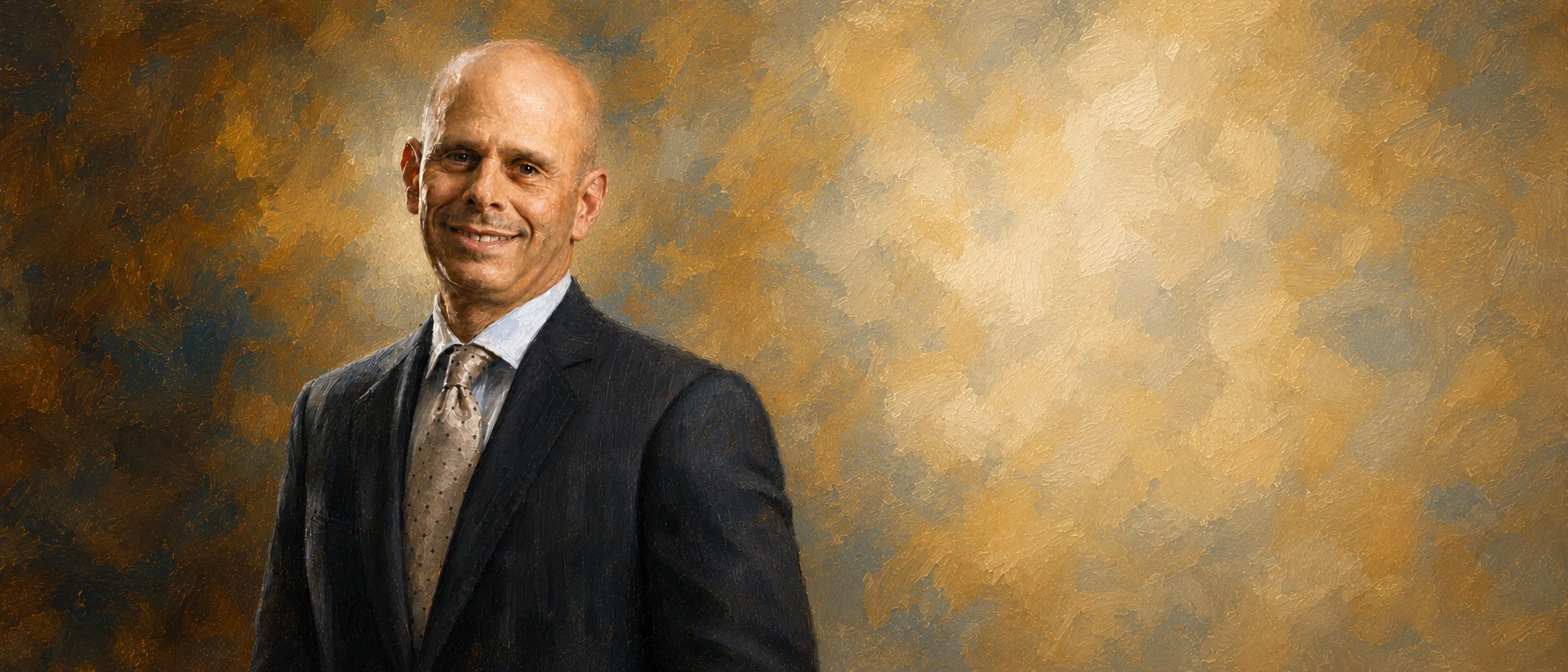
Stuart L. Berman
Global Shareholder Litigation · Securities Fraud · Direct Actions · Public Funds And Other Large Investors
Every Exchange but New York
In 2004 Royal Dutch Shell recategorised a large share of the oil and gas it had booked as proved reserves, and shareholders who had bought its stock on the London, Amsterdam and other exchanges outside the United States needed a route of their own. Stuart L. Berman of Kessler Topaz Meltzer & Check helped assemble the answer: a cross-border group of shareholders, a Dutch foundation to speak for them, and a settlement under the Netherlands' Act on the Collective Settlement of Mass Claims, a statute in force only since July 2005, under which a court could declare an agreement binding on every affected investor at once. Shell agreed to pay $352.6 million to shareholders anywhere in the world outside the United States who had bought between April 8, 1999 and March 18, 2004 on any stock exchange other than the New York Stock Exchange, and on May 29, 2009 the Amsterdam Court of Appeal declared the settlement binding, taking jurisdiction over the foreign shareholders because their claims were so closely connected to the Dutch ones that separate proceedings risked irreconcilable judgments. No collective settlement of that kind had been approved under Dutch law before. When the Supreme Court of the United States held in Morrison v. National Australia Bank the following year that the federal securities laws reach only transactions on American exchanges or in American securities, the route Berman had helped build in Amsterdam became the one that investors with foreign-traded shares would have to take.
Fortis was the second time down it. In 2007 the Belgian-Dutch bank had joined the consortium that bought ABN Amro and had raised the money for its share in a rights offering; by the autumn of 2008, with its subprime and collateralised-debt exposure disclosed, it had been rescued by the governments of Belgium, the Netherlands and Luxembourg and broken up, and its shareholders had lost up to ninety percent of their investment. Berman led the action filed in 2011 for Stichting Investor Claims Against Fortis, a foundation of more than 180 institutional investors holding more than eighty million shares, with Grant & Eisenhofer and DRRT as co-counsel; the Dutch courts let it proceed over the jurisdictional objections, and three other investor groups pressed parallel claims in the Netherlands and Belgium. The settlement announced in March 2016 came to about €1.2 billion. In June 2017 the Amsterdam Court of Appeal refused to approve it because its allocation favoured the investors who had sued over those who had not, and the parties rewrote it: the agreement dated April 13, 2018 paid €1.3 billion to every Fortis shareholder of February 28, 2007 through October 14, 2008, active or not, and the court declared it binding on July 13, 2018. "This was an extraordinary result achieved for the benefit of all Fortis shareholders," Berman said. "By approving this global settlement through the WCAM – the Dutch statute for settling mass damages – the court reinforced the importance for a mechanism designed to protect all shareholders, not just those who have the largest damages or those who can afford legal representation."
Twelve Billion Pounds
The Royal Bank of Scotland raised £12 billion from its shareholders in a rights issue in April 2008, months before it failed and was taken into public ownership, and the prospectus, the claimants said, had misstated the bank's capital and liquidity and the purpose of the money it was raising. Berman represented public funds and other large investors in the claims under section 90 of the Financial Services and Markets Act, brought together under a Group Litigation Order in the High Court, the first section 90 claim to reach the point of trial, after more than twenty pre-trial hearings and with the bank's former chief executive, Fred Goodwin, expected in the witness box. The bank settled with the first groups of claimants in December 2016 and with the last in June 2017, for about £900 million in all; Kessler Topaz's clients recovered £267 million of it. In Japan, after Olympus's former chief executive Michael Woodford exposed in 2011 that the company had hidden more than $1 billion of losses through sham transactions, many of them disguised as fees for financial advice, and the company restated five years of earnings and three of its executives pleaded guilty, Berman's institutional clients sued under the Japanese Company Law, and after a two-day mediation the claims settled for 11 billion yen, about $92 million, documented in March 2015.
The German cases are the longest. On March 14, 2016 the firm and its co-counsel filed in the Regional Court of Braunschweig for nearly 280 institutional investors claiming more than €3.2 billion from Volkswagen, which, the complaint alleged, had failed to publish in time what it knew about the emissions of its diesel engines; further complaints followed through May 2017, and Berman's group now numbers more than five hundred institutional investors with claims of about €5 billion against Volkswagen and Porsche, proceeding under the Capital Markets Model Case Act with Deka Investments as the model plaintiff. His docket has run through Vivendi in France, Toshiba and Mitsubishi in Japan, BHP Billiton in Australia and Banco Espírito Santo in Portugal, and in the United States he was among the counsel who obtained $450 million from Kraft Heinz in January 2023 for investors who had bought on the strength of its asset values and margins.
General Counsel
Berman heads Kessler Topaz's global litigation practice and is the firm's general counsel. The work begins, for every account, with where the shares were bought, by what route, under whose law and in what court, because after Morrison those facts decide which procedure is open, and it continues through the claimant groups, the local counsel, the records each system demands and the reporting each fund's trustees require; he helped create the firm's Securities Tracker program, through which its investor clients review potential claims across markets worldwide. He took his bachelor's degree with honors at Brandeis University and his law degree at the George Washington University Law School, is admitted in Pennsylvania and New Jersey, in the federal courts for New Jersey, the Eastern District of Pennsylvania and the Eastern District of Wisconsin and before the Second, Ninth and Tenth Circuits, and he speaks to trustees and investment staff at the European Pension Symposium, the European Investment Roundtable, the Public Funds Symposium and the International Foundation of Employee Benefit Plans on shareholder actions, governance and fiduciary duty. He raises money for the National Kidney Foundation. What the Shell and Fortis settlements have in common is the point he made in Amsterdam: a mechanism that pays every shareholder, not only the ones with the largest losses or the means to sue.