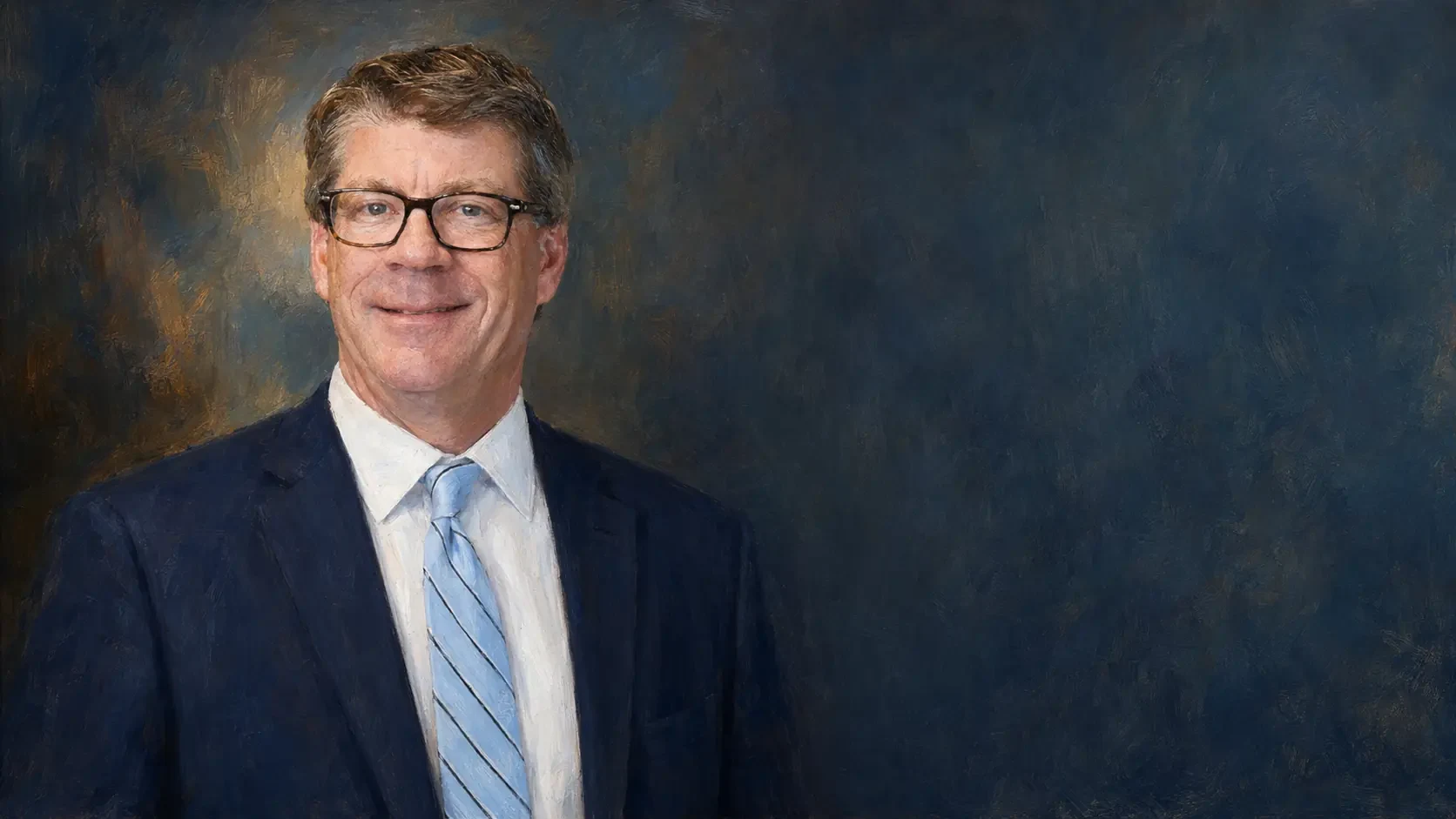
Tor Gronborg
Securities Fraud · Jury Trials · Appellate Pleading · Electronic Discovery
There is no substitute for diligence.
Appellate Pleading, Electronic Evidence, and Jury Trials
Tor Gronborg has restored securities claims on appeal, prepared Twitter for jury selection, helped try Puma Biotechnology to a plaintiffs’ verdict, and coordinated pharmaceutical records involving millions of pages and numerous defendants. As lead or co-lead counsel, he has helped recover more than $4.4 billion for investors.
Evidence Across the Life of a Case
Gronborg’s securities work has involved the internal records supporting challenged statements, the witnesses who can explain those records, expert analysis, market evidence, and the administration of funded recoveries. His matters have required pleadings and evidence to remain aligned as cases moved through appeal, electronic discovery, trial preparation, jury presentation, settlement, and claims work.
Diligence in a securities action is not measured by document volume alone. Counsel must test whether internal records support each alleged misstatement, whether witnesses can authenticate and explain those records, and whether the theory connects the disclosure to investor loss. Information that cannot be tied to an element may distract from the case. Gronborg’s lectures on civil procedure and electronic discovery fit that practical problem: preserving, locating, challenging, and presenting evidence within rules that govern its use.
He has worked on investor matters involving Valeant, Cardinal Health, Motorola, Duke Energy, Sprint Nextel, Prison Realty, Twitter, Puma Biotechnology, and Immunomedics. Those matters have produced recoveries including $1.21 billion in Valeant, $600 million in Cardinal Health, $200 million in Motorola, $146.25 million in Duke Energy, $131 million in Sprint Nextel, and $104 million in Prison Realty. The records have included corporate databases, messages, presentations, scientific materials, regulatory communications, market data, and successive reporting documents.
Twitter required a complete trial presentation by a fixed jury-selection date. Puma required statement-by-statement proof that jurors could evaluate and then a claims process that preserved the verdict’s value. Staehr required a pleading chronology precise enough for the Second Circuit to restore investor claims. Gronborg’s work spans those distinct tests of preparation.
Gronborg is a partner in Robbins Geller Rudman & Dowd’s San Diego office and a member of the firm’s Management Committee. He also teaches and speaks on civil procedure and electronic discovery.
Twitter: $809.5 Million on the Eve of Jury Selection
Gronborg served as a lead attorney on the trial team in In re Twitter, Inc. Securities Litigation, representing the National Elevator Industry Pension Fund and a class of investors who purchased Twitter stock in 2015. Investors challenged statements about user growth and engagement during part of that year.
The trial record required exact definitions of internal user metrics, comparison with public descriptions, the timing of changing trends, and the market’s response to later disclosures. Gronborg’s electronic-discovery work helped organize databases, messages, presentations, dashboards, analyses, and successive reporting materials into authenticated exhibits, expert analysis, and witness examinations.
Across five years of litigation, the team completed its witness, exhibit, and expert preparation for trial. On September 20, 2021, the parties entered a binding $809.5 million settlement, with jury selection and trial scheduled to begin the following day. The court later granted final approval.
After Twitter settled, Gronborg called the jury trial “a great equalizer” — a forum that lets investors present proof under the same rules governing a powerful company. His point captured the value of trial readiness: a completed witness, exhibit, and expert record gives clients real leverage at the moment settlement and trial become immediate alternatives.
Daniel Drosman served as lead trial counsel. Gronborg worked with Lucas Olts, J. Marco Janoski Gray, Heather Geiger, Christopher Kinnon, Lance Oliver, Terry Koelbl, pension-fund clients, experts, and support staff.
Gronborg helped direct a team prepared to begin jury selection when the $809.5 million agreement was reached — a resolution priced by the trial the defendants knew the plaintiffs were ready to conduct.
Puma Biotechnology: Jury Verdict and $54.2 Million Resolution
Hsu v. Puma Biotechnology reached a two-week securities jury trial in January 2019 in the Central District of California, with the Norfolk Pension Fund serving as lead plaintiff and class representative. The case concerned statements about clinical-trial results for neratinib, a breast-cancer drug — and it became only the fifteenth securities class action tried to a jury verdict since the Private Securities Litigation Reform Act was enacted in 1995.
The trial team presented the challenged statements with documentary and scientific evidence, evidence concerning state of mind, and expert analysis of inflation. On February 4, 2019, the jury returned a verdict finding a knowing violation and attributed $4.50 per share in inflation. Gronborg served on the trial team with Jason Forge, Trig Smith, J. Marco Janoski Gray, Ting Liu, Grace Cho, and others.
Post-verdict proceedings included a claims process and calculation of approximately $50.7 million in principal damages, together with prejudgment interest through September 2021. The parties then reached an approximately $54.2 million settlement — full recognition of the claimed damages plus interest — and the court approved the resolution in August 2022.
Gronborg’s work continued from presentation of the securities evidence to the claims, interest, negotiation, and approval stages that converted a jury’s finding into a funded class recovery paying class members in full.
Staehr and Daou
In Staehr v. Hartford Financial Services Group, the Second Circuit restored investor claims and established a rule requiring close attention to the content, timing, and entity identified in public information before that material could trigger inquiry notice.
Gronborg’s chronology and public-information analysis contributed to the appellate rule that now governs when securities claims may be dismissed as untimely — a rule that keeps meritorious claims alive when generalized press coverage is mistaken for actual notice.
His related work in Daou addressed pleading of alleged misstatements, corrective disclosures, and investor loss.
Valeant and Immunomedics
The Valeant litigation alleged undisclosed pricing and distribution practices, involved more than twenty-five defendants, and generated roughly eleven million pages from defendants plus material from approximately 150 third parties.
The team divided responsibility across pleadings, document review, experts, motion practice, witness preparation, trial planning, and negotiation. Gronborg’s work included coordinating electronic evidence and case assignments within that record. The court approved a $1.21 billion settlement in 2021 — among the largest securities recoveries ever obtained in the pharmaceutical industry.
Large cases succeed when custodians, search terms, productions, testimony, and expert opinions remain tied to the same factual theory and client objective. Gronborg’s management role places him in the work of allocating lawyers and resources so those separate streams mature on the schedule the case requires.
The Immunomedics action concerned a data-integrity breach at a drug-manufacturing facility and company statements before an FDA rejection. The evidence included facility records, regulatory communications, public disclosures, and market proof. The matter produced a $40 million recovery.
These matters added pharmaceutical evidence, multiple defendants, large discovery systems, and regulatory records to Gronborg’s securities practice.
Leadership and Education
Gronborg’s practice combines appellate pleading, electronic discovery, pharmaceutical evidence, jury presentation, post-verdict calculation, class administration, negotiation, and court approval. His roles have included the detailed chronology used to restore claims in Staehr, trial-team leadership in Twitter, trial work in Puma, and coordination of large pharmaceutical records.
He earned his undergraduate degree at the University of California, Santa Barbara and his law degree from the University of California, Berkeley, where he participated in moot court.
His current practice combines responsibility for investor cases with instruction on procedure and discovery. Those subjects are operational rather than abstract in his matters: they determine which evidence can be found, which witnesses can explain it, and whether the case is ready when an appeal, mediation, or jury date arrives.
In Staehr, Twitter, and Puma, Gronborg worked at successive points in the life of a securities case: investigating allegations, locating the systems and custodians that held the proof, preserving a loss-causation theory, briefing appellate questions, preparing witnesses, and carrying a jury result into claims administration. Valeant and Immunomedics added pharmaceutical evidence, multiple defendants, and large discovery systems. Each matter required the factual theory to remain stable while the procedural demands changed.
As a partner and Management Committee member, Gronborg works with lawyers, clients, experts, and support teams across the successive stages of complex securities cases. Large litigation teams depend on accurate connections among each lawyer’s assignment, the client’s authority, expert opinions, discovery rulings, and the changing posture of the case. Gronborg’s management work includes allocating lawyers to defined stages, maintaining discovery systems, matching expert subjects to the evidentiary record, and keeping client decisions current as a matter moves from pleading to trial preparation or settlement.