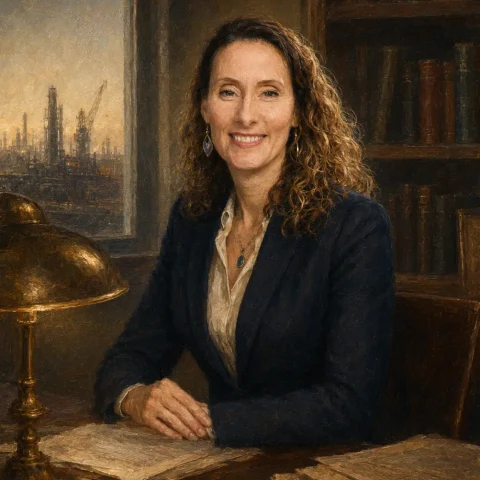
Christopher V. Tisi
Talc and Mesothelioma · Pharmaceutical Liability · Mass Torts
That, and their effort to paint the widow of Dr. Casaretto as having tampered with evidence clearly backfired.
Christopher Tisi Tried Casaretto v. Johnson & Johnson in Broward County and Decker v. GE Healthcare in Cleveland
Christopher V. Tisi opened for the family and led the trial team when a Broward County jury found in October 2025 that asbestos in Johnson & Johnson’s talc caused a Fort Lauderdale nephrologist’s fatal mesothelioma and returned a $20 million verdict for his estate. Twelve years earlier he tried the first Omniscan case against GE Healthcare to reach a jury, then argued the Sixth Circuit appeal that kept the $5 million verdict.
On September 24, 2025, in a Broward County courtroom in Fort Lauderdale, Christopher V. Tisi of Levin Papantonio gave the opening statement for the family of Dr. Alberto A. Casaretto Sr., a nephrologist who had used Johnson & Johnson’s talc products for nearly fifty years before he died of mesothelioma. Tisi told the jurors that the evidence would show J&J’s talcum powder contained asbestos, that the company’s own documents showed it had known for decades that asbestos could be present in its talc, that it had relied on testing methods not sensitive enough to find it, and that for years it had refused to replace talc with cornstarch. “They didn’t switch to cornstarch, and they didn’t tell anyone what they knew. They continued to say talc was pure,” Tisi said. “And they marketed to men, women, and for use on children.”
Michael Brown of Nelson Mullins opened for the defense. “The dose is what matters,” he told the jurors, and even on the family’s worst case, he said, “it isn’t enough to cause Dr. Casaretto’s mesothelioma.”
On October 27, J&J’s lawyer used his closing argument to attack the family’s physical evidence. Scott Richman of Nelson Mullins pointed the jury to evidence that, he said, showed the bottles of talc products Casaretto had allegedly used, bottles that had been tested for asbestos, may have been damaged, affecting any test results. “When you look at the body of the evidence, when you look at all the testing, when you look at all the science, it makes very clear,” Richman said, that the products did not contain asbestos.
The next day the jury returned a $20 million verdict for Casaretto’s estate. It found that J&J’s talc was contaminated with asbestos, that the contamination caused the malignant pleural mesothelioma that killed him, and that the company was liable on design and manufacturing defect claims. Tisi was lead trial counsel for the family.
Twelve years before Casaretto, Tisi tried the first case over GE Healthcare’s contrast agent Omniscan to reach a jury, in federal court in Cleveland, and both trials turned on what the manufacturer’s own scientists had tested and written down. In Decker v. GE Healthcare the central document was a 1995 company study that had never been published and that GE Healthcare had not disclosed. In Casaretto it was J&J’s internal documents and test results on its talc. In Cleveland, GE Healthcare asked the judge to tell jurors that documents it had lost were unlikely to have mattered; in Fort Lauderdale, J&J told jurors the family’s bottles may have been damaged. Both juries found the company liable.
Five Decades of Baby Powder and Shower to Shower
Alberto Casaretto was a longtime nephrologist in Fort Lauderdale, and John Uustal, one of the family’s trial lawyers, described him as the first to bring outpatient dialysis treatment centers to South Florida. From the late 1960s until 2018 he used Johnson’s Baby Powder and Shower to Shower at home, nearly five decades of use. His family’s lawyers described him standing in a cloud of powder every morning for fifty years, the way other people brush their teeth. He never worked with asbestos and had no other known exposure to it.
On October 30, 2017, he was diagnosed with pleural mesothelioma, a cancer of the lining of the lungs. In December 2018 he and his wife, Irene, sued in the Circuit Court of the Seventeenth Judicial Circuit in Broward County. The defendants were Johnson & Johnson, its consumer-products subsidiary, and three retailers: Publix Super Markets, CVS Health, and Eckerd Corporation of Florida.
Casaretto did not live to see the trial. He died of the disease in December 2022, and his son, Alberto Casaretto Jr., carried the wrongful-death action forward for the estate. The case, No. CACE18028502, went to trial before Judge Martin Bidwill in late September 2025, nearly seven years after it was filed.
Opening for the Casaretto Family
Tisi tried the case with Cameron Stephenson and Sara Papantonio of Levin Papantonio and with John Uustal and Cristina Pierson of Kelley | Uustal. After the openings on September 24, the family called its first witness, Barry Castleman, one of the eight experts it listed. Tisi conducted his direct examination, Kayla Quintana cross-examined him for the defense, and Tisi took him back through redirect. On October 6, Tisi conducted the direct examination of another of the family’s experts; Brown cross-examined him, Tisi took him back through redirect, and Brown recrossed.
Uustal examined Dr. Gilberto Lopes, Pierson examined Elina Casaretto, and Uustal gave the family’s closing argument.
The family’s case rested on J&J’s own records. Through internal company documents and expert testimony, Tisi’s team set out to prove that J&J knew of the asbestos risk in talc, chose testing protocols unlikely to detect asbestos reliably, and declined to replace talc with safer alternatives such as cornstarch. The family’s experts had also tested one of Casaretto’s own bottles and found asbestos in it. J&J listed eleven experts of its own.
Background Levels and a “Tortured Effort”
J&J defended on two grounds. Its lawyers argued that the talc in its products never contained asbestos, and that if it did, the amount was far too small to cause Casaretto’s mesothelioma. Asbestos, they told the jury, exists at low background levels throughout the environment, and any dose from the powder was negligible. The second ground was the attack on the tested bottles in Richman’s closing.
Uustal answered the dose argument in his closing. “There is no known safe level of asbestos,” he told the jury, and if no safe level is known, a company that says its talc contains no asbestos has to use the most sensitive test available. The more sensitive methods, he said, had found asbestos in J&J’s talc.
The jury returned its verdict on October 28. Tisi said afterward that he believed J&J’s approach in the courtroom may have worked against the company with the jurors. The company’s “tortured effort to dismiss their own documents and tests that clearly showed that talc had asbestos was compelling,” he said. “That, and their effort to paint the widow of Dr. Casaretto as having tampered with evidence clearly backfired.”
In his statement the day of the verdict, Tisi put the result in terms of the people who had used the powder. “This verdict is for the families who never knew the dangers hidden in Johnson’s Baby Powder,” he said. “For too long, Johnson & Johnson has ignored the pain of the people harmed by its product. Today, this family was finally heard.”
J&J called the decision “predicated on junk science that is refuted by decades of studies that demonstrate Johnson’s Baby Powder is safe, does not contain asbestos and does not cause cancer,” and it promised to appeal.
A Red Cross Petition and Four Discovery Committees
Tisi graduated from the State University of New York at Albany in 1982 and from Wake Forest’s law school in 1986, and he was admitted to practice in the District of Columbia and Maryland. In the 1990s he represented people who had contracted HIV through blood transfusions, work recounted in the 1996 book Bad Blood.
In 1990 he and Michael H. Feldman represented Roland and Janet Ray, who had sued the American National Red Cross in D.C. Superior Court alleging that Roland contracted HIV from blood products the Red Cross supplied. The Red Cross removed the case to federal court, claiming that its congressional charter conferred federal jurisdiction, and the Rays moved to send it back. When the district court certified the jurisdictional question for interlocutory appeal without deciding it, the Red Cross petitioned the D.C. Circuit. On December 21, 1990, a panel of Judges Abner Mikva, Ruth Bader Ginsburg, and Clarence Thomas denied the petition. An interlocutory appeal under section 1292(b), the court wrote, quoting the Wright and Miller treatise, requires “that the district court have made an order,” and the district court had certified only a question of law.
Over the following decades Tisi worked in national pharmaceutical litigation. He chaired or co-chaired the plaintiffs’ discovery committees in the federal Rezulin, Vioxx, gadolinium contrast agent, and Tylenol litigation, served on the plaintiffs’ steering committees in the Vioxx and testosterone-replacement cases, and worked as litigation counsel in the diet-drug, phenylpropanolamine, and Zyprexa cases. He tried Decker as a lawyer at Ashcraft & Gerel, and he joined Levin Papantonio in Pensacola in 2018.
Omniscan and the Muller Report
Paul Decker, of Mount Blanchard, Ohio, had retired after thirty years with a tire company. He had end-stage renal disease, which compromises the body’s ability to excrete toxic substances quickly. In September 2005, at Riverside Radiology Associates, he received a single dose of Omniscan, a gadolinium-based contrast agent made by GE Healthcare, for an MRI. He developed nephrogenic systemic fibrosis, a painful, progressive disease that causes fibrosis of the skin, connective tissue, and organs throughout the body, and he was diagnosed with it in 2010. It left him immobile and dependent on round-the-clock care, which his wife, Karen, provided.
The Deckers sued GE Healthcare in February 2012 under the Ohio Products Liability Act. Their case became part of MDL No. 1909, the consolidated federal gadolinium litigation before Judge Dan Aaron Polster in the Northern District of Ohio, where Tisi chaired the plaintiffs’ discovery committee.
Discovery in that litigation had already turned up the document at the center of the Decker trial. In 2010 Robert Muller, a Belgian chemist and GE Healthcare consultant, produced a copy of an unpublished 1995 company study at his deposition. The plaintiffs’ steering committee then learned that GE Healthcare had the study and had not disclosed it. The study, the Sixth Circuit later wrote, “suggested that Omniscan did release significant amounts of free gadolinium.” That was the plaintiffs’ causation theory: in patients whose kidneys hold the drug in the body for a long time, the gadolinium comes loose from the ligand that binds it and can set off the disease.
The trial opened in federal court in Cleveland in March 2013, the first of the hundreds of consolidated cases to be tried. Tisi tried it with his Ashcraft & Gerel colleagues Michelle Parfitt and Brianne Rideout and with William Hawal and Peter Brodhead of Spangenberg Shibley & Liber. In his opening statement Tisi told the jurors that Decker’s skin felt like wood or granite and that he “has a really hard time doing most anything.” The company’s internal studies, Tisi argued, had shown problems decades earlier, putting up a “big yellow light,” and the company that owned Omniscan before GE Healthcare acquired it in 2004 had gone “forward fast” to put it on the market.
He gave the jurors another example: a study done for that company in the 1990s. The researchers collected all the gadolinium excreted through the kidneys, and after three weeks about 25 percent of what had been injected was still missing. The company reassured them, Tisi said, that the missing gadolinium had been sweated out. The researchers published a study concluding that Omniscan was safe and effective, and later, Tisi said, they withdrew it after learning they had not been shown “secret studies” revealing some of Omniscan’s problems, among them an animal study showing skin changes. The package insert said that “caution should be exercised in patients with renal impairment.” Tisi told the jury that was not enough.
Tisi also told the jurors that a company researcher, Karen Saebo, had been told to “burn the data” because her results were unfavorable and would have to be submitted to the FDA. Saebo had reached those findings in 1994. In testimony played for the jury on video, she said the request from her boss had left her “terrified” that she would be fired, and she retained the data. GE Healthcare’s lawyer, John Fitzpatrick, did not dispute the request in his opening statement; a company spokesperson later said the manager denied it. Fitzpatrick told the jurors that Saebo never destroyed her data and turned in her report, and he acknowledged that an outside researcher would testify he would not have published a study calling the dye safe had he been shown certain internal company research.
Fitzpatrick’s defense was that GE Healthcare’s accusers were twisting the evidence. He called Omniscan a “wonderful product” that had “saved millions of lives,” described the company’s research submitted to the FDA as the “gold standard,” and told the jurors that when Decker was scanned in 2005, months before the link between contrast agents and the disease was first disclosed in 2006, the company was already warning doctors of possible side effects.
At trial, GE Healthcare’s own corporate designee, Patrick Murphy, testified that the Muller report had been produced late, that a four-to-five-inch stack of documents a company scientist named Saebo had pulled from a file cabinet was missing, and that three more documents concerning Muller had been destroyed. GE Healthcare asked Judge Polster to instruct the jury that the lost and discarded documents were unlikely to have been essential to the Deckers’ claims. He refused.
Cheryl Blume, the Deckers’ pharmacovigilance expert, testified that four adverse event reports concerning Omniscan amounted to a safety signal. An adequate label, she said, would have reflected what GE Healthcare knew about the risk of gadolinium toxicity to patients with impaired kidney function, warned that gadolinium could be retained in an unchelated state, described the four reports and the patients’ symptoms, and contraindicated Omniscan for patients with severe renal impairment. Dr. Shaffer, the radiologist who decided to give Decker the contrast agent, testified about what a warning like that would have meant to him: “I probably wouldn’t have used the contrast if I knew these things were all true.”
After twelve days of testimony and two days of deliberation, the eight-member jury found GE Healthcare liable for failing to warn, and it rejected the company’s argument that the Deckers had sued too late. It awarded Paul Decker $4.5 million, $1 million for economic loss and $3.5 million for noneconomic loss, and awarded Karen Decker $500,000 for loss of consortium. Judgment for $5 million was entered on March 28, 2013. “We applaud Paul and Karen Decker’s courage in helping expose the public-safety risks that GE took,” Tisi said after the verdict.
Partial Recusal and Free Gadolinium in the Sixth Circuit
On July 25, 2013, Judge Polster denied GE Healthcare’s motion for a new trial, to alter or amend the judgment, and for remittitur. GE Healthcare appealed, challenging the judge’s partial recusal, several evidentiary rulings, the proof of causation, and two refused jury instructions. Tisi argued for the Deckers in the Sixth Circuit on August 7, 2014, against Pierre H. Bergeron of Squire Sanders. The company’s lead argument came out of the settlement talks. Judge Polster had been so heavily involved in mediating the case that, when the Deckers moved for prejudgment interest, he recused himself from that motion alone, explaining that he would likely be a witness to a dispute over the parties’ settlement efforts and could not act as both judge and witness. GE Healthcare argued that 28 U.S.C. § 455 prohibits piecemeal recusal, so that stepping aside from the prejudgment-interest motion meant recusal from every other ruling in the case, including GE Healthcare’s motion for a new trial.
Judge Julia Smith Gibbons, writing for the panel on October 20, 2014, rejected the argument. The court held that “the reasons for questioning judicial impartiality in one proceeding of a case do not necessarily obtain in every proceeding of that case.” Judge Polster’s first-hand knowledge of the settlement efforts, the court explained, had no bearing on his later rulings, including his denial of GE Healthcare’s motion for a new trial.
GE Healthcare also argued that the plaintiffs’ experts were only speculating when they blamed free gadolinium for the disease. The precise pathogenesis of NSF is unknown, but the court held that the theory met Daubert’s reliability standard. It rested on animal studies, in vitro and in vivo studies, human clinical studies, and retrospective case studies, and published studies and GE Healthcare’s own studies showed that kidney patients take significantly longer than other patients to clear the agents and do not clear them completely. The court noted that “Most researchers (including research scientists employed or retained by GEHC)” accepted it. The panel also upheld the exclusion of a defense dermatologist’s opinion that the four adverse event reports were not a safety signal, because that question called for pharmacovigilance expertise the dermatologist did not have, and the exclusion of defense testimony about NSF cases said to have occurred without gadolinium exposure, because the studies behind it had not confirmed the absence of exposure.
On causation, GE Healthcare relied on testimony from Geoffrey Wiot, a partner in the radiology practice where Decker was scanned, to argue that a better warning would have made no difference. The court separated the practice from the physician. “Even assuming an improved warning would not have caused Wiot” to stock a different contrast dye in the practice’s dispensary in 2005, the court wrote, it was Shaffer who decided whether Decker would receive a gadolinium agent, and Shaffer had told the jury he probably would not have used it. The court relied as well on Blume’s testimony that the label should have carried a contraindication for patients with severe renal impairment.
The panel upheld Judge Polster’s refusal to give the lost-documents instruction, finding that Murphy’s testimony had been limited and that the instruction would have given the issue more weight than it carried at trial. GE Healthcare’s other proposed instruction would have told jurors that adverse event reports “do not prove that the reaction was actually a side effect or caused by the drug administration.” Judge Polster had dropped it from the final charge because it singled out one type of evidence and added confusion instead of reducing it, and the panel agreed that it “would have been confusing.” The panel affirmed the $5 million judgment and the denial of GE Healthcare’s motion for a new trial.
The FDA had acted on the risk within two years of Decker’s scan. It issued a public health advisory about NSF after gadolinium-based contrast agents in June 2006, and in May 2007 it asked the manufacturers to add a boxed warning about the risk to patients with renal failure. The boxed warning, together with the policies healthcare facilities adopted and the notice given to providers, had, the Sixth Circuit observed, “all but led to the eradication of new NSF cases.”
Seventy Thousand Talc Plaintiffs
Alongside the Casaretto trial in state court, Tisi worked the national talc litigation. He was appointed to the plaintiffs’ leadership in MDL No. 2738, the federal Johnson & Johnson talcum powder litigation established in the District of New Jersey in 2016, and co-chaired its plaintiffs’ discovery committee. Michelle Parfitt, who had tried Decker with him, served as the MDL’s co-lead counsel. J&J withdrew its talc-based products from the U.S. and Canadian markets in 2020 and completed the worldwide removal of its talcum powder in 2023.
From 2021 to 2025, J&J and its subsidiaries tried three times to resolve the talc claims through Chapter 11 bankruptcy, and the courts rejected each attempt. In the J&J bankruptcy proceeding, Tisi was appointed committee representative for the Official Talc Claimants Committee and was part of the team that forced J&J out of bankruptcy court. In March 2025 a bankruptcy court rejected the company’s third proposed plan, and J&J later said it would not appeal, which let the cases in the federal MDL and the state courts go forward.
In January 2026 the MDL’s special master, Freda Wolfson, a retired federal judge who had been chief judge of the District of New Jersey, issued a 658-page recommendation that the plaintiffs’ experts be allowed to tell juries that perineal use of J&J’s talc can cause ovarian cancer. She found that the studies showed “a positive, statistically significant association between genital talc powder use and ovarian cancer.” She also recommended allowing science and geology experts to testify that J&J’s talc contained trace or ultra-trace asbestos and that historical testing methods, properly applied, could detect it. J&J said it would appeal to the district judge, Michael Shipp, who would decide whether to adopt the recommendation. More than 67,500 lawsuits were then pending in the MDL.
Tisi said the recommendation showed the case was “based on sound evidence that Johnson’s Baby Powder can cause ovarian cancer.” “It is the role of juries, not corporations, to decide whose science is more credible,” he said. “At the end of the day, these are factual disputes, and they belong where they always have—with a jury.”
On July 27, 2026, the Plaintiffs’ Negotiation Committee in the talc MDL announced an uncapped settlement with J&J expected to provide at least $5.5 billion to approximately 70,000 plaintiffs in MDL No. 2738 and related state-court proceedings. Compensation is to be set on a tiered grid based on objective claim criteria. The agreement is subject to conditions, including participation requirements and enrollment deadlines.