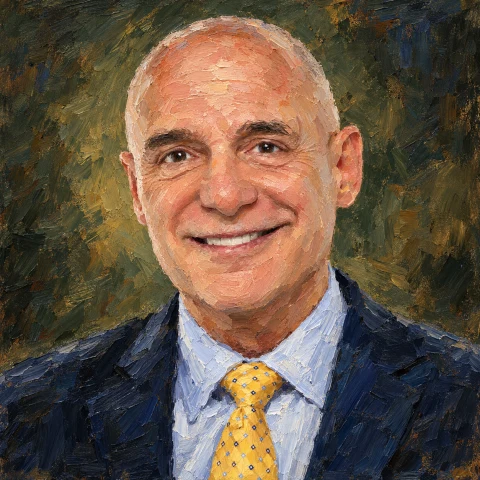
W. Mark Lanier
Mass Torts · Talc and Asbestos Litigation · Trial Advocacy
You’ve got to react immediately, and generally you’re doing it when you’ve not had any sleep; when you’re not well-fed; when your brain is focused on three different plates, and not one of them can fall while you run over and grab something new.
Ingham v. Johnson & Johnson: Twenty-Two Women, a St. Louis Jury, and J&J’s $2.5 Billion Payment
Mark Lanier led the trial team that put twenty-two women’s ovarian cancer claims, and decades of Johnson & Johnson’s own talc-testing history, before one St. Louis jury in 2018. The Missouri Court of Appeals upheld about $2.1 billion of the award, the U.S. Supreme Court declined review, and J&J paid approximately $2.5 billion with interest in June 2021.
When Johnson & Johnson asked the U.S. Supreme Court in March 2021 to set aside a St. Louis talc judgment, its lawyers singled out the woman whose name led the caption. If Gail Ingham’s case had been tried alone, J&J told the Court, the jury “would have heard about her year with cancer, how she went into full remission, and how she spent the next 32 years cancer-free.” J&J’s point was that a single trial of twenty-two women had hidden the differences among them and let the jury infer causation from the number of plaintiffs before it.
The jury had heard about Gail Ingham. It heard that she went through serious pain and a hysterectomy, was put into surgically induced menopause, and endured thirteen chemotherapy treatments; that she lost her hair, her memory, and her ability to think clearly; and that she was kept in isolation to lower her risk of infection while her young son cried in her arms, afraid she would die. It heard that she would live the rest of her life knowing the cancer was likely to come back and take her life. In April 2021 the women’s lawyers put that testimony back in front of the Supreme Court, with the transcript pages where the jury had heard it.
Gail Ingham was seventy-three in July 2018, a mother of two sons from O’Fallon, Missouri. She had worked in payroll at Mallinckrodt for about two decades and finished her career at Boeing, and she had used baby powder for decades. She was diagnosed with stage 3 ovarian cancer in 1985, and she later wrote a book about survival and nutrition. She called her fight with the disease “earth-shaking.” She joined the lawsuit, she said, because women “need to know what’s in there. They need to know what’s going on.”
Mark Lanier, the founder of The Lanier Law Firm in Houston, led the trial team in Ingham v. Johnson & Johnson. In July 2018, after six weeks of testimony in the Circuit Court of the City of St. Louis, the jury returned a verdict for all twenty-two women on every claim against both J&J and its consumer-products subsidiary. In June 2020 the Missouri Court of Appeals upheld about $2.1 billion of the award. The Missouri Supreme Court declined to take the case, and on June 1, 2021, the U.S. Supreme Court denied review. J&J paid the award that month.
Twenty-Two Women, Twelve States’ Laws, One Jury
The women had sued J&J and Johnson & Johnson Consumer Companies, Inc., alleging that years of using Johnson’s Baby Powder and Shower to Shower had caused their ovarian cancer. Twenty-two of them went to trial together before Judge Rex M. Burlison: five from Missouri and seventeen from other states. Six had died before trial, and their husbands and families carried their claims. Lanier tried the case with his daughter Rachel, his colleague Lee Cirsch, and the St. Louis lawyer Eric D. Holland.
J&J wanted separate trials. The women differed in age, medical history, home state, and how they had used the powders. Some had a genetic or family predisposition to cancer and some did not; some had gone into remission, and others had died after years of illness. Their claims arose under the laws of twelve states, and it took the trial court more than five hours to instruct the jury on all of them. A joint trial, J&J argued, would bury each woman’s circumstances and each of its own individual defenses under the sheer volume of testimony and instructions.
The trial began on June 4, 2018. In his opening statement Lanier called talc J&J’s “sacred cow” and told the jurors that the company had protected the sales of profitable brands instead of warning women about the asbestos he said was in Johnson’s Baby Powder and Shower to Shower. Earlier ovarian cancer trials against J&J had turned on whether talc itself causes cancer. This was the first in which a jury would decide whether asbestos in the talc had caused the women’s cancers. Peter Bicks of Orrick, Herrington & Sutcliffe opened for J&J. He told the jurors that the company’s testing was rigorous, and that a microscopist whose credentials included testing the Shroud of Turin had concluded that J&J’s talc never contained asbestos.
Krystal Kim came from Philadelphia. She was fifty-three, lived in the Roxborough section of the city, and worked part-time as an airline booking agent. She remembered putting powder on herself at about ten, when she played on a co-ed baseball team in Teaneck, New Jersey, and she kept using it. Her cancer was found in 2014, during minor surgery; an oncology surgeon was brought in, and, as she recalled it, he said, “She’s a mess, it’s everywhere.” Her youngest son, Bryce, was with her for that diagnosis. “That’s when I say he lost his innocence,” she said: he went from being her “little baby” to her caretaker. The cancer came back after remission. She went through six rounds of chemotherapy and a hysterectomy, and surgeons removed parts of her colon and intestines. Later a doctor in Boston tested her lymph nodes and found evidence of asbestos, and she broke down and cried. “Asbestos?” she said, recalling her reaction. “Where’d that come from?” Her sons were with her at the trial.
Rachel Lanier took the direct examination of Carole Williams, who loved to bake, and laid out the outline of Williams’s story for the jury in the shape of a cake. Then she and her father brought out a real one: a cake Williams had baked for another of the plaintiffs to mark that woman’s wedding anniversary, its decoration showing how many years she and her husband had been married.
Twenty of Thirty-Six Samples
Proving that the powders contained asbestos fell to Dr. William Longo, the women’s microscopy expert. He tested thirty-six samples of the products, originating from the four mines that had supplied J&J’s talc, and using transmission electron microscopy he found asbestos in twenty of them, including one that came straight from J&J’s own museum. He also showed the jury a videotaped simulation of the dust that using the powder released into the air.
Lanier questioned Longo on direct for more than three hours. As Longo testified, Lanier wrote short notes, and sometimes quick sketches, that an overhead projector put in front of the jurors while they listened. He wrote the claims J&J’s lawyers had made in their opening statement in red; beneath the word TRUTH, in green, he wrote Longo’s answers to them. He also wrote across copies of J&J’s own demonstrative exhibits, marking where Longo’s testimony showed their statements to be inaccurate.
The Court of Appeals later described the dust video as a simulation “of a man wearing a respirator applying Johnson’s Baby Powder to his legs and/or underwear.” The bottle used in it held, Longo testified, “fifteen million asbestos fibers in bundles per gram.” At that concentration, he told the jury, a person who bought a fourteen-ounce bottle of Johnson’s Baby Powder would be exposed to 5.9 billion asbestos fibers.
The women’s lawyers asked a second expert, Dr. Madigan, to calculate from Longo’s results the probability that a woman had been exposed to asbestos if she had used 20, 50 or 100 containers of Johnson’s Baby Powder in her life. If a woman had used 50, he testified, his calculations “suggest[ ] the probability they were not exposed to asbestos is very, very small.” And: “It’s the chance of winning [the] Powerball [lottery] with 10 tickets.” At 100 containers, he testified, the odds that she had not been exposed were the odds of winning the Powerball with a single ticket. Longo’s samples, Madigan said, “couldn’t possibly be biased because there’s no way of knowing which one has asbestos and which one doesn’t.” The Court of Appeals rejected J&J’s argument that his testimony was unreliable because it rested on Longo’s test results. “Here, the representativeness of Dr. Longo’s samples was established,” the court wrote.
J&J argued that every bottle Longo tested had been opened before it reached him, so that he could not know whether it held J&J’s powder in its original condition, and that the dust simulation used the bottle with the most asbestos of any he had tested. The Court of Appeals held the testimony admissible. Longo had testified that the caps and lids on the Johnson’s Baby Powder he tested could not be removed by hand without leaving visible evidence, and that none of his samples showed signs of tampering. He had compared particle sizes and found them consistent from sample to sample and with J&J’s own particle-size specifications. J&J’s objection to the opened bottles, the court held, “goes to the weight of his testimony, not its admissibility.”
Medical experts testified that microscopic asbestos fibers enter the body when talc is inhaled or applied to the genital area, and asbestos fibers and talc particles were found in the ovarian tissue of many of the women. Dr. Dean Felsher then went through each woman’s history and risk factors and testified that her talc exposure had directly caused or directly contributed to cause her ovarian cancer. The Court of Appeals found that through Felsher the women had presented evidence of specific causation for each of them.
J&J called experts of its own, who testified that other risk factors, family history among them, had made the women more susceptible to ovarian cancer. Among the company’s witnesses was Dr. Cheryl C. Saenz, a gynecological oncologist, whom Lanier cross-examined.
J&J denied that its products contained asbestos or caused cancer. It told the Supreme Court that it had run thousands of its own tests to make sure there was no asbestos contamination, that the FDA, the National Cancer Institute, and the American Cancer Society had reached the same conclusion it had, and that the three largest epidemiological studies, following tens of thousands of women, had found no meaningful relationship between talc and ovarian cancer.
“Too Sensitive”: The Test J&J Set Aside
The case on what J&J knew began in its own files. The jury saw a 1969 internal memorandum that acknowledged asbestos in the company’s talc and warned of the “furor” and “litigation” that could follow “if it became known that our talc formulations contained any significant amount” of it. A J&J scientist who found trace amounts of tremolite asbestos wrote in an internal letter that “[t]his is not new.” The FDA replicated that finding in 1972, and an independent laboratory confirmed it in 1975. Mine Safety and Health Administration testing found asbestos at a J&J talc mill in 1984. In 1991 a Rutgers mineralogist, later retained by J&J, found asbestos in samples from the company’s talc mines and testified that its talc had contained asbestos since the 1970s. Another independent laboratory found asbestos in the powders in 2004.
The jury also heard how the company had chosen to test. In 1973 the Colorado School of Mines told J&J that pre-concentration—using a centrifuge to separate asbestos fibers from talc—was “essential” for detecting asbestos in talc. J&J already knew the technique. It had used it earlier that year, found asbestos, and decided the method was “too sensitive.” It opposed a 1976 FDA proposal to use concentration techniques, and it advised its trade group, the Cosmetic, Toiletry and Fragrance Association, that it was “critical for the C.T.F.A. to” recommend a different method “before the art advances to more sophisticated techniques with higher levels of sensitization.” J&J deliberately passed over pre-concentration, the evidence showed, because the company “felt it would not be in worldwide company interests.”
Lanier brought the testing problem into the courtroom in objects the jurors could see. “I brought a bale of hay into the court and inserted a needle inside,” he wrote in a column the following year, to show “that just because the needle may be difficult to find doesn’t mean it isn’t there,” as with asbestos in talc. He showed the jury, he wrote, “how the weight of a needle would not register on a common bathroom scale,” though a more accurate jeweler’s scale would register it. “The obvious point is that J&J might have historically tested its baby powder for asbestos, but the methods they used were not sensitive enough to find the truly dangerous components in the product,” he wrote. “They didn’t find what they were looking for because they didn’t look hard enough.” He cut into a block of veined cheese to show the jurors how talc is mined: “there’s no way to separate the naturally comingled minerals of talc and asbestos when they’re dug out of the ground.” “Every good teacher uses such tools,” he wrote, and “advocacy doesn’t have to be boring.”
The jury heard that in 1975 J&J demanded that Mount Sinai “immediate[ly] remov[e]” its researchers’ “hostile” findings of asbestos in talc, without claiming the findings were wrong, only that the samples were three years old. It heard that J&J secretly funded a 2008 article concluding that cosmetic talc does not cause cancer, routing the payment through a law firm. And it heard that in 2016 J&J told the FDA that “[n]o asbestos-form structures have ever been found during any testing.”
The jury heard why the companies had stayed with talc: replacing it with cornstarch would have eliminated the risk, but cornstarch cost more, and the change would have ended the revenue from talc mines the companies owned. The evidence showed that they feared “economic hardship” if the public learned they had sold powders containing asbestos. One of their own experts acknowledged that asbestos had been a “common contaminant” in cosmetic talc in the 1970s and that the contamination persisted into the 1980s.
“Say Something Johnson and Johnson Will Hear”
Closing arguments came on Wednesday, July 11. Judge Burlison had set aside a full day to read the jury nearly 400 instructions. Lanier told the jurors that theirs was the first jury to see documents showing that J&J knew its products contained asbestos and had not warned the people who used them. “Your voice is not just the voice of the community but the voice of the world,” he said. “You don’t jack with people’s lives like this.” It was, he said, “just not right.” Bicks had called the women’s paid experts “science for hire” and argued that J&J’s testing exceeded industry standards. “Yes, this is terrible,” he told the jury. “But just because something terrible happened doesn’t mean Johnson & Johnson had anything to do with it.”
During the closings a J&J lawyer shook a bottle of baby powder to make a point. A white plume came up, and he stepped out of its path. Krystal Kim believed that was the moment that decided the case. When the jurors saw it, she said, their reaction was: “He didn’t even want to be near it!”
The jury heard over thirty witnesses across six weeks. Many of the women testified about how they had used the powders and what ovarian cancer had done to their lives. On Thursday, July 12, after deliberating for eight hours, the six men and six women on the jury found the companies liable on every claim and awarded each woman $25 million in compensatory damages. As the verdicts were read, a sheriff’s deputy walked down the rows of the packed courtroom handing tissues to the women and their families.
The same jury then heard argument on punitive damages. Lanier began by telling the jurors, “I don’t have the words to say thank you.” He asked them to use their punitive verdict to “say something Johnson and Johnson will hear,” and told them that J&J’s executives would either celebrate the verdict or go into damage control. “You can change the world,” he said. Morton Dubin answered for J&J that the picture of celebrating executives was “not real life.” The first verdict, he told the jurors, had already done that: “You’ve sent a very powerful message.” Shortly afterward the jury returned punitive damages against both companies.
Karen Hawk, sixty-seven, a mother of five from Kansas City, had used baby powder most of her life. She was diagnosed in 2003 and beat the cancer in 2008. “I hope it gets taken off the market,” she said. “People don’t know what they’re dealing with.”
After the verdict, Lanier said in a statement: “For over 40 years, Johnson & Johnson has covered up the evidence of asbestos in their products.” He pointed to the alternative the company already had—“J&J sells the same powders in a marvelously safe corn starch variety”—and said J&J “should pull talc from the market before causing further anguish, harm, and death from a terrible disease.” If it insisted on selling talc, he said, it should mark the product with a serious warning.
J&J said it was “deeply disappointed in the verdict, which was the product of a fundamentally unfair process,” and that it would appeal.
That December, Reuters and The New York Times published internal J&J documents showing that the company had long worried about asbestos in its products. Kim had seen much of that evidence in the St. Louis courtroom. Seeing it published, she said, “gave me a sense of vindication.” “I just want them to admit that they are wrong,” she said. “It’s just like a kid that won’t say ‘I did it, I’m sorry.’”
Biblical Languages and Stick Figures
Lanier grew up in Lubbock, the son of a railroad company salesman and a homemaker. He earned a bachelor’s degree in biblical languages, with a minor in economics, from David Lipscomb University in 1981 and a law degree from Texas Tech in 1984. He started that year at Fulbright & Jaworski and left in 1990 to found his own firm.
Lanier teaches a weekly Sunday school class of more than 750 members at Champion Forest Baptist Church in Houston. He founded the Lanier Theological Library, and he has written books whose titles come from his trade: Christianity on Trial (2014), Atheism on Trial (2022), and Religions on Trial (2023).
He has also been perfecting his stick figures. “I’m trying to learn how to draw not in the sense of Picasso or Rembrandt, but in the sense of, how do I get really good at Pictionary?” he said in 2018. By then he had begun supplementing his slides with a document camera that projects his drawings as he makes them. Each summer he headlines his own Lanier Trial Academy for more than a thousand plaintiffs’ lawyers, and in 2025 he gave the inaugural lecture in Case Western Reserve University’s Anatomy of a Trial series.
His daughter Rachel joined the firm’s New York office in 2016. In 2026 she was his co-lead trial counsel when he led the plaintiff’s lawyers in a first-of-its-kind social media addiction trial in Los Angeles County Superior Court, brought against Meta and Google’s YouTube by a 20-year-old woman identified by her initials, K.G.M. On March 25, 2026, the jury found Meta 70 percent and YouTube 30 percent responsible for her harm and awarded her $3 million in compensatory damages; it then added $3 million in punitive damages. After the verdict, both companies said they would explore their legal options, including appeal.
Clear and Convincing Evidence of Reckless Indifference
J&J appealed nearly every part of the trial: the joint trial, personal jurisdiction, Longo’s testimony, the causation proof, a remark in the plaintiffs’ closing argument about but-for causation, and the punitive damages. Kevin Parker of the Lanier firm represented the women on appeal, with Lanier, Ken Starr, Natalie Armour, Benjamin Major, and Megan Waida assisting on the brief, alongside Eric Holland and Patrick Dowd of the Holland Law Firm and John Torbitzky of Behr McCarter & Potter.
Three judges of the Court of Appeals’ Eastern District heard the appeal: Presiding Judge Philip M. Hess, who wrote the opinion, and Judges Kurt S. Odenwald and Lisa P. Page, who joined it.
The Missouri Court of Appeals rejected J&J’s challenge to the joint trial. Whatever set the women apart, the court wrote, their claims “arose out of the same occurrence: each Plaintiff used Defendants’ Products,” and they shared common questions of law and fact. Differences in risk factors did not by themselves defeat joinder. As for the matching awards, “[I]dentical damages awards, without more, simply are not sufficient evidence of juror confusion,” the court held, and a jury’s reasoning is not open to attack for faulty logic or mistaken calculation.
The court also held that Missouri’s courts could hear the claims that the out-of-state women who had used Shower to Shower Shimmer Effects brought against the subsidiary, JJCI. JJCI had contracted with Pharma Tech Industries, a Missouri company, to manufacture, package, and label Shimmer, and Pharma Tech did that work at its plant in Union, Missouri, to JJCI’s specifications. Those dealings, the court held, “firmly connect JJCI’s activities in Missouri to the specific claims” of the women from other states.
On June 23, 2020, the Court of Appeals rejected J&J’s challenges to the joint trial, to Longo’s testimony, to the causation evidence, and to the closing argument, which it found had answered an argument by J&J’s own counsel and tracked the trial court’s causation instruction. It held that the evidence supported punitive damages. The court found clear and convincing evidence that the companies had acted with an evil motive or reckless indifference to their customers’ safety, and it found their conduct significantly reprehensible. The women’s injuries were physical and severe. The companies had known for years that their talc had contained asbestos, yet they refused to adopt more accurate testing methods, promoted less accurate ones, and declined to use a safe alternative because of the expense—conduct that, the court held, showed reckless disregard for the health and safety of others. It upheld about $2.1 billion of the award.
“The opinion carefully explains the reprehensible conduct of J&J,” Lanier said the day it came down.
On November 3, 2020, the Missouri Supreme Court, sitting en banc, denied J&J’s application to transfer the case. “The trial jury sent a loud message alerting the world to the dangers of talc,” Lanier said. “Now that message has been confirmed through each level of the state’s appellate system.” By then J&J had decided to stop distributing its talc-based powders in North America. Lanier applauded the decision and said that much more needed to be done to provide justice for victims, then and in the future.
Certiorari Denied, Judgment Paid
J&J went to the U.S. Supreme Court. Its petition, filed in March 2021 by Neal Katyal of Hogan Lovells, asked whether a court must assess if consolidating several plaintiffs for one trial violates due process instead of presuming that jury instructions cure confusion and prejudice; whether a punitive award far exceeding a substantial compensatory award violates due process; and whether Missouri’s jurisdiction could rest on a link in the chain of causation. The U.S. Chamber of Commerce, the American Tort Reform Association, the National Association of Manufacturers, and several defense-bar organizations filed briefs supporting J&J. The National Women’s Health Network filed in support of the women.
Ken Starr, then of the Lanier firm, was counsel of record on the women’s brief in opposition, which also carried the names of David Frederick, Thomas Goldstein, Arthur Miller, John Ashcroft, Lanier, and Rachel Lanier. The brief told the Court that J&J had elected not to address damages in its closing argument at trial. By the time it was filed, three more of the women had died of ovarian cancer.
On June 1, 2021, the Supreme Court denied the petition; Justice Alito and Justice Kavanaugh took no part. J&J said the matters before the Court were related to “legal procedure, and not safety.” Lanier said the decision sent “a clear message to everyone: you will be held to account when you cause grievous harm under our system of equal justice under law,” and that J&J “should move forward in honoring the judgment of the Missouri courts.”
In its quarterly report that July, J&J described the facts and circumstances of Ingham, including the terms of the award, as unique to that decision and not representative of other claims brought against the company. It also reported what it had done in June 2021, after the Supreme Court turned it away: it paid the award, which with interest totaled approximately $2.5 billion.