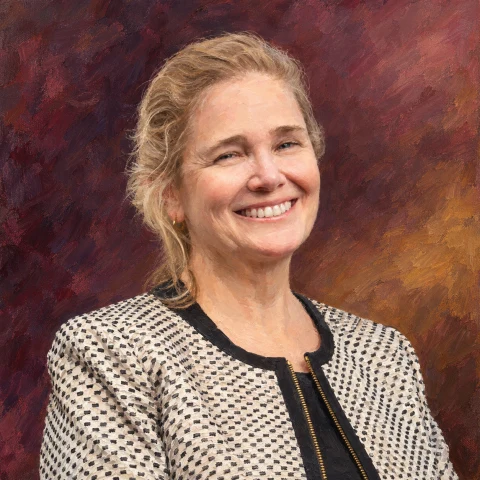
Dan Stormer
Civil Rights · International Human Rights · Constitutional Litigation
The system was making life hard for my clients, but I won a lot of cases by making life hard for the system.
Doe v. Unocal: Forced Labor on Burma’s Yadana Pipeline, the Ninth Circuit’s Aiding-and-Abetting Ruling and the 2005 Settlement
Dan Stormer represented Burmese villagers who said soldiers guarding Unocal’s gas pipeline forced them to work, raped women and killed a child. The Ninth Circuit reinstated their claims in 2002, a Los Angeles judge ruled that they could go to a jury, and Unocal agreed to compensate them in 2005.
On January 4, 1995, John Imle, the president of Unocal Corporation, met with human rights organizations at the company’s headquarters in Los Angeles. Unocal was a minority partner in a $1.2 billion project to carry natural gas from the Yadana field, off the coast of Burma, through the country’s Tenasserim region to Thailand, and the Burmese army was providing security for the project. Imle acknowledged that the army might be using forced labor in connection with it. People were threatening to damage the pipeline, he said, and “if you threaten the pipeline there’s gonna be more military.” He also said that “[i]f forced labor goes hand and glove with the military yes there will be more forced labor.”
Seven years later a three-judge panel of the Ninth Circuit quoted those words in an opinion that reinstated claims of forced labor, murder and rape brought against Unocal by villagers from the pipeline route. Dan Stormer, a Pasadena civil rights lawyer, was one of the villagers’ lawyers on that appeal. He also represented them in a parallel case in Los Angeles Superior Court, where in September 2004 Judge Victoria Gerrard Chaney ruled that they could take their claims against Unocal to a jury. In March 2005, three months before the trial, Unocal agreed to compensate the villagers.
Testimony From the Pipeline Route
The villagers first sued Unocal in federal court in Los Angeles in 1996. They brought claims under the Alien Tort Claims Act for forced labor, crimes against humanity, violence against women and torture, along with California claims for battery, false imprisonment, wrongful death and negligence. Stormer’s firm, then called Hadsell & Stormer, represented fourteen of the villagers, who sued under pseudonyms. Ka Hsaw Wa of EarthRights International served as liaison and interpreter for eleven of them.
Along the proposed route, the army built helipads and cleared roads for the project, and in deposition testimony the villagers described what soldiers guarding that work had done to them. John Doe IX testified that in 1994 he was forced to build a helipad near the pipeline site, and that Unocal and Total officials used it when they visited the pipeline during its planning stages. He and John Doe V testified that they were required to serve as “pipeline porters.” Jane Does II and III testified that while they were conscripted to work on pipeline-related construction projects, soldiers from a battalion that was supervising the work raped them at knifepoint. Jane Doe I testified that after her husband, John Doe I, tried to escape the forced-labor program, soldiers shot at him, and that in retaliation she and her baby were thrown into a fire that injured her and killed the child. Other witnesses, the Ninth Circuit later recounted, described “the summary execution of villagers who refused to participate in the forced labor program.”
The complaint Stormer later filed in Los Angeles Superior Court set out the same events village by village, each village identified only by a letter. It alleged that the army ordered Jane Doe I’s village relocated, that in November 1994 an army officer kicked her and her infant into a fire, that soldiers’ checkpoints delayed medical care, and that “Baby Doe I died that night.” It alleged that John Doe IX was forced to serve as a pipeline porter in 1996, was beaten and was not paid, that his village paid to secure his release, that he later paid “forced labor fees,” and that he fled with his family.
What Unocal Was Told
Burma’s army overthrew the government in 1988, and the country was renamed Myanmar. The army established a state company, the Myanmar Oil and Gas Enterprise, to produce and sell the nation’s oil and gas. In 1992 that company licensed the French oil company Total to produce, transport and sell gas from the Yadana field, and Unocal and its subsidiary Union Oil Company of California acquired a 28 percent interest in the project from Total. Before buying in, Unocal hired a consulting company, Control Risk Group, to assess the risks. In May 1992 the consultants told Unocal that “[t]hroughout Burma the government habitually makes use of forced labour to construct roads.” Stephen Lipman, Unocal’s vice president of international affairs, testified at his deposition that in discussions with Total before Unocal bought in, the Unocal side had said that if the army provided protection, “they might proceed in the manner that would be out of our control.”
A Unocal memorandum of the company’s meetings with Total on March 1 and 2, 1995, recorded its understanding that “[f]our battalions of 600 men each will protect the [pipeline] corridor.” On March 16, 1995, Joel Robinson, Unocal’s on-site representative, wrote to Imle that human rights publications he had received depicted “in more detail than I have seen before the increased encroachment” of the army’s activities into the villages of the pipeline area. He concluded that “[o]ur assertion that [the Myanmar Military] has not expanded and amplified its usual methods around the pipeline on our behalf may not withstand much scrutiny.” That May, a cable from the U.S. Embassy in Rangoon reported that Robinson had “stated forthrightly that the companies have hired the Burmese military to provide security for the project.” The same cable reported Robinson’s account that “Total/Unocal uses [aerial photos, precision surveys, and topography maps] to show the [Myanmar] military where they need helipads built.”
On December 11, 1995, John Haseman, a former military attaché at the U.S. Embassy in Rangoon who was working as a Unocal consultant, reported to the company that the army was using forced labor and committing other human rights abuses in connection with the project. By seeming to accept the army’s version of events, he told Unocal, the company “appears at best naive and at worst a willing partner in the situation.” A January 1996 meeting document listed “daily security coordination with the army” as a “working procedure.”
Unocal denied that human rights abuses occurred during the project. It acknowledged that troops had forced villagers to carry military supplies but denied that this involved the pipeline. In 1997 the federal district court in Los Angeles refused Unocal’s request to dismiss the case. After three years of discovery, the villagers had presented evidence showing, in the district court’s words, that “Unocal knew that the military had a record of committing human rights abuses; that the Project hired the military to provide security for the Project, a military that forced villagers to work and entire villages to relocate for the benefit of the Project; that the military, while forcing villagers to work and relocate, committed numerous acts of violence; and that Unocal knew or should have known that the military did commit, was committing and would continue to commit these tortious acts.” But in 2000 the court held that Unocal could not be liable under the Alien Tort Claims Act unless it had controlled the military units that committed the abuses, and it granted summary judgment to Unocal. The villagers appealed. On October 4, 2000, they also sued Unocal in Los Angeles Superior Court under California law.
The state complaint carried the names of Stormer, Anne Richardson of his firm and Paul Hoffman. It pleaded what the soldiers had done as wrongs California law recognizes—wrongful death for Baby Doe I, battery, assault, false imprisonment, negligent hiring and negligent supervision—and added a claim under the provision of the California Constitution that prohibits slavery and involuntary servitude. A claim under the state’s unfair competition law asked the court to order Unocal to disgorge its profits.
Paying the Army and Showing It Where
Stormer and his colleague Anne Richardson were among the villagers’ lawyers on the appeal, with Paul Hoffman, the Center for Constitutional Rights, EarthRights International and Judith Brown Chomsky. Hoffman argued the appeal. A Ninth Circuit panel heard argument on December 3, 2001, and decided the appeal on September 18, 2002, in an opinion by Judge Harry Pregerson. Unocal had asked the court to apply the law of Myanmar, where the events occurred. The panel applied international law instead, reasoning that where, as in this case, only violations of jus cogens norms—norms of international law binding on nations even if they do not agree to them—are alleged, it may be preferable to apply international law rather than the law of any particular state. The panel concluded that forced labor is “a modern variant of slavery” and that, like traditional slave trading, it does not require state action to give rise to liability under the Alien Tort Claims Act. State action was likewise unnecessary, the panel held, for the murders and rapes alleged to have been committed in furtherance of the forced-labor program.
Unocal’s position was that it had never directed the soldiers. “Unocal does not have, nor ever had, any control over the actions of the Myanmar military,” Daniel Petrocelli, Unocal’s lead lawyer, said after the panel ruled. Terry Collingsworth of the International Labor Rights Fund, who represented some of the villagers, described the company’s argument this way: “Unocal was saying you can’t hold us liable because we didn’t hold the gun.”
The panel then took up whether Unocal had aided and abetted the army. Drawing on international criminal law, including the 1998 decision of the International Tribunal for the former Yugoslavia in Prosecutor v. Furundzija, the panel asked whether Unocal had given knowing practical assistance or encouragement that had a substantial effect on the perpetration of the crime, and it found genuine issues of material fact on both what Unocal did and what it knew. The evidence, the panel wrote, supported the conclusion that Unocal gave practical assistance by hiring the army, in exchange for money or food, to provide security and to build roads, helipads and other works along the pipeline route, and by using photos, surveys and maps in daily meetings to show the soldiers where to do that work. That assistance had a “substantial effect,” the panel reasoned, because the forced labor “most probably would not have occurred in the same way” without someone hiring the army to provide security and showing it where to do so. And a reasonable factfinder could conclude that Unocal “knew or should reasonably have known” that its payments and its instructions would assist or encourage the army to subject the plaintiffs to forced labor.
The district court had applied a different test, “active participation,” taken from war crimes cases before the Nuremberg Military Tribunals involving the role of German industrialists in the Nazi forced-labor program. The panel held that the borrowing was a mistake, because the tribunals had used the active-participation standard only to overcome those defendants’ necessity defense. It reversed the summary judgment for Unocal on the forced-labor, murder and rape claims and sent them back to the district court.
In 2003 the Ninth Circuit granted rehearing before an eleven-judge en banc court. At argument that June, Unocal contended that the case wrongly relied on the Alien Tort Claims Act, a 1789 statute that gives the federal district courts jurisdiction over cases in which aliens allege acts committed “in violation of the law of nations or a treaty of the United States.” The en banc court withheld its decision while the Supreme Court considered the statute in another case, Sosa v. Alvarez-Machain. In June 2004 the Supreme Court held that the statute conferred jurisdiction and created no new causes of action, but that federal courts could still recognize claims for a narrow set of international-law violations no less definite in content, and no less widely accepted, than the eighteenth-century paradigms of offenses against ambassadors, violations of safe conducts and piracy. The en banc court had not ruled when the case settled.
Unocal’s Subsidiaries as Its Agents
In the state case, Judge Chaney denied Unocal’s motion for summary judgment in 2002 and held that the case should go to trial because the villagers had presented evidence that Unocal was responsible for the abuses. The villagers were trying to hold a multinational corporation accountable in an American court for abuses committed on foreign soil, and Stormer said theirs was the first such case to go to trial. In July 2003 she ruled that the villagers could use California law to try their claims over what had happened in Burma.
Stormer and Collingsworth argued for the villagers before Chaney. Petrocelli argued that the villagers had sued the wrong company. Unocal subsidiaries had built and operated the pipeline, Unocal said, and those subsidiaries had assets and revenues worth hundreds of millions of dollars and could pay any judgment. Chaney heard that question herself, without a jury, beginning in December 2003. Stormer said he would call Unocal executives to “show they were working on the ground, controlling every aspect of the pipeline.” “Every person making every decision about everything was a Unocal employee,” he said. “It is incontrovertible that [the subsidiaries] are the agents [of Unocal].” “This case is very simple, if the subs can pay, this case goes away,” Petrocelli told the court in January 2004.
In September 2004 Chaney rejected Unocal’s argument that the case should be dismissed because the subsidiaries should have been sued instead, and she ruled that the villagers could pursue before a jury their theory that the subsidiaries had acted as Unocal’s agents. The villagers remained free, she wrote, to prove that Unocal had controlled parts of the Yadana project “to an extent beyond that permissible by a mere owner.” She set the jury trial for June 2005, on the claims of murder, rape and forced labor.
“Unocal is going to have to stand before a jury of 12 people and defend the despicable conduct which literally destroyed the lives of tens of thousands,” Stormer said. Petrocelli said Unocal would ask to have what he called “false allegations” about the dead baby removed from the case, and he predicted that a jury would find Unocal not responsible for what the soldiers did.
Three Months Before Trial
In December 2004 Unocal announced a settlement in principle. “We have reached a settlement in principle to settle the federal lawsuit,” said Barry Lane, a company spokesman, and a scheduled hearing in the Ninth Circuit was postponed while negotiations continued. The agreement was completed in March 2005, three months before the state trial, and it ended Doe v. Unocal and a companion suit, Roe v. Unocal, in both federal and state court. The amount was not disclosed. Unocal agreed to compensate the villagers, most of whom, their lawyers said, were destitute and living in hiding from the Burmese regime. The settlement funds were also to let the plaintiffs develop programs to improve living conditions, health care and education and to protect the rights of people from the pipeline region.
The villagers’ lawyers, among them Stormer, Richardson and Cornelia Dai of Hadsell & Stormer, said in a joint statement that their clients had “suffered horribly at the hands of the Burmese military, with the complicity of Unocal,” and had “risked their lives for the last eight years seeking justice through these suits.” John Doe IX, who had testified that soldiers forced him to build the helipad and to serve as a porter, said: “I don’t care about the money. Most of all I wanted the world to know what Unocal did. Now you know.”
A Legal Aid Lawyer in Wayne County
On Christmas Eve 1959, in Wayne County in rural northeastern Pennsylvania, twelve-year-old Dan Stormer was sitting between his mother and his older brother, who was driving, when the family car collided with another vehicle on a dark country road. Stormer has said the other driver was clearly at fault, but that driver sued the family for damages, and Stormer came to regard the suit as an attempt by a wealthy person to use the law to bully the poor. The Stormers could not afford a lawyer. A local legal aid lawyer represented them at trial without charge, and they paid nothing in damages. She was the only lawyer he met growing up. What struck him most, he said, was “that this person could actually help us.”
He graduated from Wagner College in 1968 with a degree in medieval European history and was drafted. The barracks at Fort Jackson, near Columbia, South Carolina, were, he said, “basically divided in half.” On one side were white, relatively wealthy young men who had gone to college and joined the National Guard and would not serve long enough to go to Vietnam. On the other, where Stormer bunked, were mostly poor and minority young men without the connections to join the Guard or the money for college, and they were going. “In the office for the commanding officer,” he said, “there was a map which indicated where white and black soldiers could go.” Military police once stopped him and an African American friend because Stormer was in an African American area. “That was really my first experience seeing racism up close,” he said. He volunteered for combat, but the Army sent him to Germany, where he worked in an office and on an underground antiwar magazine. By the time he was discharged and enrolled at New York University School of Law, he had become attuned to issues of race and class in American life.
Jury Trials in La Junta
Stormer graduated from NYU in 1974 and went to work for Colorado Rural Legal Services in La Junta, a farming town in the southeastern part of the state. In law school summers he had worked in the Colorado public defender’s office, where he was allowed to represent people charged with misdemeanors, and in La Junta he took mostly criminal cases. “Most of it was petty stuff because the local authorities used the criminal law as a tool for picking on brown people,” he said. La Junta’s county judges worked part time, and the town could not try every case its police brought. Instead of negotiating pleas, Stormer demanded jury trials whenever he could. One judge quit the bench rather than face a docket of endless trials with him. “He just said, ‘You win, I quit,’” Stormer recalled. “The system was making life hard for my clients, but I won a lot of cases by making life hard for the system.”
He moved on to prisoners’ rights work in Washington state and then to the Western Center on Law and Poverty in California. There he sued the city of Tulare, alleging racial discrimination in its hiring, and won almost half a million dollars for several clients who had been denied civil service jobs. He also represented families with dependent children whose assistance checks stopped when the Legislature failed to pass a budget on time. The California Supreme Court ordered the state controller to send the checks whether or not the Legislature had passed its budget.
From Litt & Stormer to Hadsell & Stormer
In 1984, with legal aid budgets being cut and new federal limits making it difficult for legal aid lawyers to bring class actions or represent undocumented immigrants, Stormer and Barry Litt formed a civil rights firm, Litt & Stormer. In the early years of his practice Stormer also worked with Ben Margolis and John McTernan. Barbara Hadsell, who became his partner, has described them as the lawyers who defended people accused of being communists during the McCarthy period, came on board for farmworkers in their fights with Central Valley growers and defended the longshore workers. “We inherited their mantle in many ways,” she said. Hadsell joined Litt & Stormer in 1989. When that firm dissolved, she and Stormer founded Hadsell & Stormer in Pasadena in September 1991.
“We are a civil rights firm,” Stormer said in 2022. “Civil rights is a huge area. It extends from class action employment cases to police abuse cases and everything in between.” In 2015 he said: “Our society treats people who don’t fit the norm poorly. Police treat people of color poorly. Our bureaucracy treats poor people poorly. I love being a lawyer because I like fighting for people who need help.”
Sergeant Grobeson’s Two Suits
Stormer represented Mitchell Grobeson, an openly gay Los Angeles police sergeant who resigned in 1988 and sued the department, alleging sexual-orientation discrimination. That suit settled in 1993. Grobeson rejoined the department and, after retaliation by supervisors, sued again in 1996. In 2007 the city agreed to strengthen its administrative-code guidelines against sexual-orientation discrimination. Grobeson’s back pay took six more years to resolve, and the dispute ended twenty-five years after it began. “Cops are no different,” Stormer said. “Anyone can be wronged by the system.” The litigation, he said, changed the LAPD’s hiring practices, “and at the same time society changed dramatically on gay rights.” “The real change,” he said in 2015, “doesn’t happen in the courtroom. It happens out in the street every single day.”
A Post-it Note on Each Defense Exhibit
In 2008 Stormer sued on behalf of Denise Steffens, who said her employer, Regus Group, a Texas-based company that rents office suites, fired her because she raised concerns about possible wage-and-hour violations within the company. His co-counsel, Susan L. Guinn, called it “a pretty typical he said/she said employment case.” Stormer argued that the evidence showed a Regus executive telling Steffens’s supervisor that she was a problem five minutes after she told the executive that the company was not in legal compliance. On cross-examination, Stormer said, he “pretty much let [the executive] hang himself with the jury.”
Regus’s lawyer built a summation largely on “The Emperor’s New Clothes,” using Hans Christian Andersen’s tale to punch hole after hole in Steffens’s case. “Dan didn’t prepare remarks in advance,” Guinn said. “He just got up, took one of the key defense exhibits, and one by one refuted each point. And each time he did, he put a Post-it note on the exhibit saying, ironically, ‘No clothes here, no clothes there.’” The jury returned a $4.6 million verdict for Steffens. It found that Regus had acted with fraud, oppression or malice when it fired her, and $3.5 million of the verdict was punitive damages.
The City’s Suit Against Ben Camacho
In September 2022 the City of Los Angeles, settling a California Public Records Act suit brought by the journalist Ben Camacho, gave him a flash drive with the photographs, names and serial numbers of over 9,000 LAPD officers, along with a letter stating that the records did not include undercover officers. The Stop LAPD Spying Coalition published the photographs online. In April 2023 the city, saying it had mistakenly included officers working in sensitive assignments, sued Camacho for the return of the records and an order barring him from publishing them.
Stormer represented Camacho with the Press Freedom Project at the University of California, Irvine School of Law and the Law Office of Colleen Flynn, and they moved to dismiss the city’s suit under California’s anti-SLAPP statute. “The City of Los Angeles’ lawsuit is a transparent attempt to silence Mr. Camacho and other journalists who report on law enforcement,” Stormer said. Within two months Judge Mitchell Beckloff of the Los Angeles Superior Court denied the city’s request for an order requiring Camacho to return the flash drive, ruling that the city had not produced admissible evidence to support its claims.
In June 2024 the city agreed to settle its suit. It dropped its demands that Camacho and the coalition return the photographs, take them off the internet and stop publishing them, including the images of officers in what it had called sensitive roles, and the City Council approved the settlement that August. On June 18, 2024, in a separate proceeding, Judge David Cunningham granted Camacho’s anti-SLAPP motion against claims the city had filed in January 2024 to make him and the coalition share liability in a class action officers had brought over the release. “It’s clearly protected activity, protected by the First Amendment, as it relates to his role as a journalist,” Cunningham said. “The media cannot be punished for publishing truthful information. And that extends to re-publication.”
Joaquin Diaz and the Buses From Chino
In May 2020, California prison officials moved incarcerated people who had not been tested for COVID-19 from the California Institution for Men, which had active cases, to San Quentin State Prison, which had no recorded cases, and housed them among elderly and medically vulnerable prisoners without isolating or testing them or distributing masks. The buses carried 122 men from the prison in Chino, where more than 600 prisoners had been infected and nine had died. Some of the men showed symptoms on the way, and the department had turned down offers of testing from two research laboratories, one of them free. At least 28 people died, and about 2,500 were sickened. Prison officials described the transfer as a flawed but well-intentioned effort to move vulnerable men away from the outbreak at Chino.
Joaquin Diaz was 79 and a year from his release date. His family’s lawyers described him as a “model inmate” who had been looking forward to rejoining his wife and children; he died in the outbreak. Stormer and his partners Brian Olney and David Clay Washington were among the lawyers for his family in a suit against eleven officials of the California Department of Corrections and Rehabilitation and California Correctional Health Care Services. The district court denied the officials’ motions to dismiss in July 2022.
In 2023 the Ninth Circuit affirmed the denial of qualified immunity and of immunity under the federal PREP Act, allowing the family’s Eighth Amendment claims to proceed. The officials had asked the court to consider news articles, COVID-19 data and transcripts from Plata v. Newsom to show that they acted reasonably, and they argued that “the Federal Receiver directed or oversaw the challenged actions.” The panel—Judges Michelle Friedland and Mark Bennett, with Judge Richard Bennett, a district judge sitting by designation—declined to consider the disputed material. Its decision, filed October 13, 2023, covered the Diaz family’s case and others arising from the transfer. The PREP Act protects the use and administration of covered countermeasures; the panel held that it did not apply because the claims concerned the officials’ “failure to use a covered countermeasure.” Read together with the inspector general’s report on the transfer, each complaint stated a clearly established Eighth Amendment claim, and “Defendants are therefore not entitled to qualified immunity on the face of the Complaints.”
The officials took a related case, brought by the family of Sergeant Gilbert Polanco, a San Quentin officer who died after the outbreak, to the Supreme Court. In May 2024 the justices declined to hear it, without comment or dissent.
A Monitor for Moreno Valley’s School Police
C.B. was ten years old in 2019 and weighed hardly 70 pounds when, his lawyers said, school police in the Moreno Valley Unified School District repeatedly tackled him, handcuffed him and referred him to law enforcement for behavior that came from his disabilities. His father said C.B. “did nothing wrong except being born Black with disabilities.”
In October 2023 Stormer and Washington, working with Disability Rights California, the Disability Rights Education and Defense Fund and Barajas & Rivera, obtained a ruling in C.B. v. Moreno Valley Unified School District for an eleven-year-old Black student with disabilities. The federal court found it undisputed that the district discriminates against students with disabilities: it authorized handcuffing and shackling them without regard to their disabilities, failed to train its staff adequately and directed staff to call in untrained police in response to disability-related behavior. The student’s lawyers said students with disabilities in the district’s schools were nearly nine times as likely as other students to be handcuffed and referred to law enforcement. The court ordered the parties to design injunctive relief under the Americans with Disabilities Act and the Rehabilitation Act.
It also sanctioned the district for hiding evidence during discovery, including by failing to produce witnesses for depositions. It ordered that a jury be instructed it could infer that the missing testimony would have been harmful to the district, and it barred the district from offering evidence about its policies, training and data on the use of force and restraints.
The district settled C.B.’s claim for damages in November 2023, and on June 28, 2024, Judge Jesus G. Bernal entered a permanent injunction the parties had negotiated. The district must rewrite its policies so that students with disabilities are not disproportionately removed from class, restrained or referred to police; restraint, under the order, includes handcuffs, prone restraint, pepper spray and grabbing a student’s arm or wrist to move him. Everyone who works with those students, including campus security officers and the school resource officers assigned to the district, must be trained in disability-specific de-escalation and alternatives to removal and restraint, and the district must write the officers’ training requirements into its contracts with law enforcement, including the Riverside County Sheriff’s Department. Every year it must report removals, restraints and referrals broken down by race and disability. An independent monitor, Dr. Jaime Hernandez, oversees the work for a presumptive four-year term, at the district’s expense, and the court kept jurisdiction for as long as the monitor serves. The court approved settlements under which the district agreed to pay $1.2 million and Riverside County $650,000 on C.B.’s damages claims.
“There is no place in our society for the violent and racist behavior that forced us to bring this lawsuit,” Stormer said when the injunction was entered. He said he believed “this will put other school districts on notice.”
Jailed for Five Days on a Bail Schedule
In November 2022 Stormer and his partner Brian Olney, with lawyers from Civil Rights Corps, Public Justice, Munger, Tolles & Olson and Schonbrun Seplow Harris Hoffman & Zeldes, sued the city and county of Los Angeles in Los Angeles Superior Court over the bail schedule that fixed how much money a person arrested, but not yet arraigned, had to pay to be released. The suit also named Sheriff Robert Luna, Police Chief Michel Moore and Attorney General Rob Bonta. The named plaintiffs, among them Philip Urquidi, had been jailed for five days because they could not raise the cash. “These individuals are not detained on the basis that they are too dangerous to release: the government would release them right away if they could pay,” the plaintiffs alleged. “Rather, they are too poor.” Salil Dudani of Civil Rights Corps, the plaintiffs’ lead lawyer, said several of his clients had been arrested for vandalism and held on $20,000 bail, and that most such cases were dismissed at arraignment.
Judge Lawrence P. Riff heard weeks of testimony. The plaintiffs put over a dozen academic studies before him, and he found that “secured money bail regimes are associated with increased crime and increased FTAs”—failures to appear—“as compared with unsecured bail or release on non-financial conditions.” Secured money bail as Los Angeles County used it was, he found, “criminogenic,” causing more crime than would occur if the schedules were no longer enforced. Enforcing the schedules “against poor people who are detained in jail solely for the reason of their poverty,” he wrote, “is a clear, pervasive, and serious constitutional violation.” He concluded: “[O]n this substantial record, it would be an abuse of the court’s discretion not to enter a [preliminary injunction].”
On May 16, 2023, he issued a preliminary injunction that stopped the county from enforcing its bail schedule against people awaiting arraignment, except those accused of serious or violent felonies and certain misdemeanors, including domestic violence. The order required the sheriff’s department and the LAPD to follow a pandemic-era policy that did not require people arrested for low-level, nonviolent offenses to pay money bail before release. The Superior Court then adopted a new bail schedule built on those principles, which took effect in October 2023. The plaintiffs have continued the suit against money bail in the many other categories of cases the injunction did not reach.