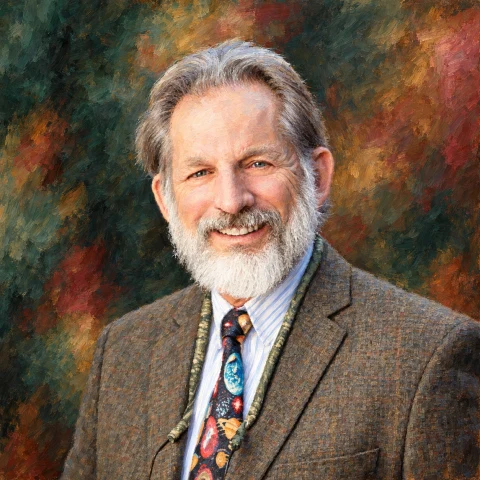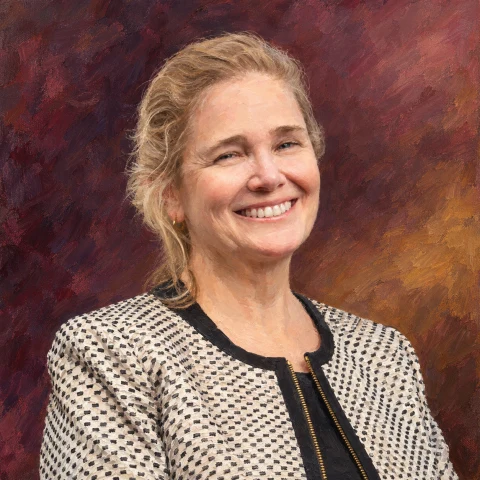
Rupali Sharma
Reproductive Rights · Abortion Access · Human Rights Litigation
No one should be forced to remain pregnant, give birth, and become a parent against their will.
Whole Woman’s Health, Mellet v. Ireland, and the Young People Missouri Left Out: Measuring a Right in the Units the Patient Pays
Amanda Mellet was pregnant in Ireland when she received a fatal fetal diagnosis, and the country’s near-total abortion ban forced her abroad for care. Rupali Sharma helped litigate Mellet v. Ireland before the United Nations Human Rights Committee, the first individual abortion-rights complaint it ever decided; in 2016 the Committee found that Ireland had subjected her to cruel, inhuman, and degrading treatment, and Ireland compensated her.
A constitutional right is written in stately abstractions, but an abortion restriction operates in smaller denominations: miles to the nearest open clinic, days of mandated delay, dollars for gas and a motel room, the finite capacity of the facilities still standing. For a teenager, the law adds units of its own: a parent’s signature, a notary’s stamp, a stranger’s courtroom, a judge’s calendar running against medicine’s. Rupali Sharma has spent her career litigating in exactly those units. Her cases braid together constitutional doctrine, clinical evidence, and international human-rights principles, but their center never drifts from the concrete: the person who must travel, wait, pay, disclose, endure risk, or lose access altogether because of a rule someone else wrote. Medicine keeps its own calendar, and a right that arrives late has already failed the person it was written for.
From a Chicago shelter to a federal chambers
She came to that understanding early and from the ground up. Raised in Edison, New Jersey, the first in her family to attend college (she has said she doesn’t “come from a family of people who go to places like Yale”), Sharma graduated magna cum laude from Northwestern University in 2007 and then spent two years at Apna Ghar, a Chicago domestic-violence shelter serving immigrant women, where she watched legal status, protective orders, and paperwork decide the shape of her clients’ lives and, as she later put it, “was struck by how powerful the law could be.” Yale Law School followed, and she wrung everything from it: student director of the Immigration Legal Services Clinic, managing editor of LawFem, work in the Lowenstein International Human Rights Clinic on a fact-finding mission into forced pregnancy testing in Tanzania, and a period at the Supreme Court of India. Clerkships with Judge Matthew F. Kennelly of the Northern District of Illinois and Chief Judge R. Guy Cole, Jr. of the Sixth Circuit taught her how records are actually read, training that would prove decisive when she began building them.
Texas, weighed and found wanting
As a legal fellow at the Center for Reproductive Rights, Sharma joined the team litigating the challenge to Texas’s admitting-privileges and ambulatory-surgical-center requirements, the case that became Whole Woman’s Health v. Hellerstedt. The state defended the mandates as health protections; the litigation’s task was to test that claim against reality, clinic by clinic. The record the team assembled drew closures, driving distances, wait times, and system capacity into the constitutional analysis itself, demanding a rigorous comparison between a restriction’s real-world burdens and its actual contribution to patient health. In 2016 the Supreme Court struck down both requirements as undue burdens on abortion access, holding that neither delivered the medical benefit Texas asserted. The decision restored evidence to the center of the undue-burden standard, and it bore the signature of the method Sharma has practiced ever since: make the court see the miles and the days, and the abstraction resolves into a judgment.
A letter from Geneva
In the Center’s Europe Program, Sharma worked on a case that carried the same logic across an ocean. Amanda Mellet, pregnant in Ireland and given a fatal fetal diagnosis, was forced by her country’s near-total abortion ban to travel abroad for care, separated from her doctors, her family, and her home at the worst moment of her life. Sharma helped litigate Mellet v. Ireland before the United Nations Human Rights Committee, the first individual abortion-rights complaint the Committee ever decided. In 2016 it found that Ireland had subjected Mellet to cruel, inhuman, and degrading treatment and had violated her rights to privacy and equality; Ireland compensated her before the country’s broader constitutional and statutory reform of its abortion law. The decision gave international human-rights law a holding it had never had, and it gave Sharma’s practice its transnational register: the insight that a border crossed under compulsion is itself a harm the law can name.
Full rights for the young
Sharma became a founding member of the Lawyering Project, the national litigation organization devoted to expanding abortion access, and now serves as its co-director of litigation, where she has concentrated on the clients the movement can least afford to overlook: young people, whose rights on paper come hedged with consent forms, notification windows, and bypass hearings. In Missouri, after voters enshrined reproductive freedom in the state constitution through Amendment 3, she brought suit in Jackson County in April 2025 on behalf of Right By You, the state’s only youth-focused abortion access organization, challenging the forced-parental-consent regime, the judicial-bypass process, and the ban on helping minors seek care. “The text of the amendment is clear,” she said when the case was filed. “It doesn’t leave young people out.” When the court closed the suit’s first round that October on a question of corporate registration, without reaching the merits, Right By You pledged to press forward on every available avenue; the constitutional question Sharma framed still awaits its answer.
In Tennessee, she brought a federal challenge in 2024 for the reproductive-justice organization SisterReach and the Midwest Access Coalition to a law that criminalizes helping a minor obtain a legal out-of-state abortion without notarized parental consent, arguing that the statute is unconstitutionally vague and burdens the speech and association of those who would simply give a young person accurate information. And in Colorado, the Lawyering Project is part of the team representing Denver physician Rebecca Cohen in a challenge to the state’s Parental Notification Act, arguing that its forty-eight-hour delay violates young people’s rights under the state’s voter-approved reproductive-rights amendment and its Equal Rights Amendment. On August 21, 2026, Denver District Judge Ian Kellogg refused to dismiss the constitutional claims and sent the suit forward. “No one should be forced to remain pregnant, give birth, and become a parent against their will,” Sharma said of the ruling, a principle, in her telling, with no age limit attached.
Home waters
Sharma works from South Portland, Maine, where her national docket coexists with a local devotion: she sits on the board of SAFE, Maine’s abortion fund, the kind of organization that fills the gaps litigation has not yet closed. She has taught as an adjunct professor at the University of Maine School of Law, lectured at NYU School of Law, and returned to Yale as an instructor, handing the next generation the craft she assembled across Chicago, New Haven, Texas, Geneva, and a dozen state courthouses. For Sharma, the medical record and the human story are one document. Distance, timing, cost, clinic capacity, a notary’s stamp, and health risk are not context surrounding the right; they decide whether the right can be exercised at all. By grounding doctrine in those conditions, by making courts measure the rule in the units the patient actually pays, she shows how a law operates in the body and the life of the person required to obey it, and she keeps narrowing the distance between what the law promises and when it arrives.