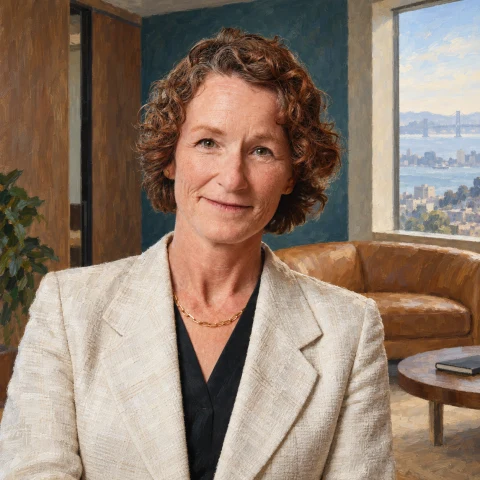
Dianne M. Nast
Antitrust Class Actions · Pharmaceutical Antitrust · Drug and Device Litigation
Sandoz, Taro and the Direct Purchasers’ Settlements in the Generic-Drug Price-Fixing MDL, E.D. Pa.
Since 2016 Dianne M. Nast has represented the wholesalers and pharmacies that bought generic drugs directly from manufacturers accused of fixing their prices. Eight settlements have followed, to be shared among those buyers in proportion to what each purchased, while the defendants’ appeal from the certification of two bellwether classes is before the Third Circuit.
In 2020 two generic-drug makers signed deferred prosecution agreements with the Justice Department’s Antitrust Division, which filed the charges against both in the federal court in Philadelphia. In March, Sandoz Inc. admitted that from about March 2013 until about December 2015 it had agreed with a New York generic company to allocate customers, rig bids, and fix prices for clobetasol—in cream, emollient cream, gel, ointment, and solution—and for desonide ointment and nystatin triamcinolone cream, and it agreed to pay the United States $195 million. In July, Taro Pharmaceuticals U.S.A. admitted a conspiracy with Sandoz over the same drugs in the same months and agreed to pay $205,653,218 plus interest. Each company admitted that its sales affected by its conspiracies exceeded $500 million. Taro’s conspiracies, Assistant Attorney General Makan Delrahim said, had “robbed consumers at pharmacy counters across America.”
Neither agreement provided for restitution. The Sandoz agreement explained that omission by citing “the availability of civil causes of action, and civil cases already filed against Sandoz.” Each agreement pointed to the civil cases already filed against the company, and each named one of them: In re Generic Pharmaceuticals Pricing Antitrust Litigation, MDL No. 2724, in the Eastern District of Pennsylvania.
Dianne M. Nast has represented the direct purchasers in that case since its first months. Judge Cynthia M. Rufe appointed her liaison counsel for the direct-purchaser plaintiffs in September 2016, co-lead counsel in March 2017, and in May 2017 lead and liaison counsel of the direct purchasers’ steering committee. The class she represents is made up of businesses that bought the drugs straight from the manufacturers—wholesalers, pharmacy chains, and companies holding such buyers’ claims. The first settlement class had more than 700 members and reached purchases of the named drugs from May 1, 2009, through December 31, 2019. The direct purchasers have reached eight settlements, the largest Sandoz’s agreement to pay $265 million, and the court has authorized distribution of the money from six of them in proportion to each claimant’s purchases. In March 2025 Judge Rufe certified two litigation classes in the bellwether cases, one for clobetasol and one for clomipramine; by February 2026 the defendants’ appeal from that ruling was fully briefed in the Third Circuit, and on June 2, 2026, the manufacturers argued it before a panel of that court.
From Digoxin and Doxycycline to 159 Drugs
When the first cases reached Judge Rufe in 2016, the MDL carried the names of two drugs: In re Generic Digoxin and Doxycycline Antitrust Litigation. By May 2017 the case was captioned In re Generic Pharmaceuticals Pricing Antitrust Litigation, and the private plaintiffs were organized by where they stood in the chain of distribution. The direct purchasers, with Nast as lead and liaison counsel, had bought from the manufacturers; they alleged that the manufacturers conspired to fix prices, rig bids, and allocate markets for generic drugs, and they sued under the Sherman Act to recover what they had overpaid. The end payers, led by Roberta D. Liebenberg of Fine, Kaplan and Black, and the indirect resellers, led by Don Barrett of the Barrett Law Group, had bought or paid for the drugs further down the chain and pressed claims under state law. The MDL also took in claims brought by forty states through their attorneys general.
Judge Rufe’s Pretrial Order No. 10, entered in March 2017, named Liebenberg and Nast co-lead counsel and wrote out their job wherever the plaintiffs’ interests aligned. They were to determine the plaintiffs’ common position and present it to the court and the defendants; enter stipulations and file motions for all plaintiffs; propose discovery schedules and negotiate discovery with the defendants and third parties; issue discovery requests, motions, and subpoenas in the plaintiffs’ names; conduct discovery “in a coordinated and consolidated manner”; assign work to other lawyers; report periodically on the case’s status; and monitor the other plaintiffs’ counsel to keep the work on schedule and avoid duplicated expense. Where the direct purchasers’ interests and the end payers’ diverged, each group could proceed on its own so long as the work was not duplicated. As liaison counsel from September 2016, Nast had also been responsible for receiving the court’s orders and notices on the plaintiffs’ behalf, sending copies to the other lawyers, and keeping complete files available to them.
The direct purchasers filed eighteen single-drug complaints and two multi-drug complaints. In October 2018 the court denied the defendants’ motions to dismiss six of the drug complaints. The multi-drug complaints charged one conspiracy reaching across drugs. The plaintiffs alleged that competing manufacturers divided customers under an understanding known as “fair share,” which the states described as “how much market share each competitor is entitled to,” and that a company that undercut a competitor was seen as “not playing fair.” The direct purchasers alleged that executives and sales staff of competing manufacturers met at gatherings of the Generic Pharmaceutical Association, the National Association of Chain Drug Stores, the Healthcare Distribution Management Association, and other trade and customer groups, and at happy hours, dinners, lunches, golf outings, and events for women in the industry; they attached a 49-page list of trade-association contacts. The states counted at least 513 phone or text contacts between Heritage Pharmaceuticals and its alleged co-conspirators from July 2013 through July 2014, and two Heritage executives, Jeffrey Glazer and Jason Malek, had pleaded guilty.
In August 2019 the court denied the motions against the first multi-drug complaint. In her opinion of August 15, Judge Rufe found that the complaints alleged price increases close in time and amount, together with motive, conduct against the companies’ own interests, and communications among competitors, and that the industry gatherings “were not partitioned into drug-specific conclaves.” She concluded: “Plaintiffs have sufficiently alleged the existence of an overarching conspiracy.”
Discovery ran to hundreds of document requests, interrogatories, and requests for admission, millions of documents produced and reviewed, and numerous depositions, across about three dozen defendant families and 159 drugs. By February 2026 the direct purchasers’ lawyers had advanced more than $15.5 million in out-of-pocket expenses, and they told the court that a case of that size unavoidably required heavy spending on electronic discovery and experts.
Clobetasol and Clomipramine Against 3,400 Other Generics
In July 2020 the court chose bellwether cases to move first toward trial, and after reworking the selection in 2021 it kept clobetasol and clomipramine as the direct purchasers’ bellwethers. Clobetasol is a potent topical corticosteroid prescribed for inflammatory skin conditions and one of the drugs in Sandoz’s and Taro’s criminal admissions; the direct purchasers’ clobetasol case named Actavis, Akorn, Fougera, Hi-Tech Pharmacal, Morton Grove, Sandoz, Taro, and Wockhardt. Clomipramine is an oral medication for obsessive-compulsive disorder, and its makers in the case were Mylan, Sandoz, and Taro. The direct purchasers alleged that the makers of clomipramine began colluding in 2013 and the makers of clobetasol in 2014, and they pointed to large price increases beginning in May 2013 for clomipramine and in June 2014 for clobetasol. Bellwether fact discovery closed on October 2, 2023.
The criminal cases also named individuals. Taro admitted that its conspiracy with Sandoz had included Ara Aprahamian, Taro’s former vice president of sales and marketing. Hector Armando Kellum, a former senior Sandoz executive, pleaded guilty in February 2020 to conspiring to fix the prices of clobetasol and nystatin triamcinolone cream from March 2013 to at least June 2015, and he agreed to cooperate with the federal investigation.
The defendants’ answer rested on the economics of markets with few sellers. Their expert, Dr. Richard Gilbert, testified that economics provides no basis or principles for distinguishing conscious parallelism—competitors matching one another’s prices without agreeing to do so—from an anticompetitive agreement, and that the price increases were consistent with each firm acting in its own unilateral self-interest. On that account, a price increase that competitors matched could not by itself show a conspiracy.
The direct purchasers answered with two economists. Dr. Thomas McGuire set a hypothesis of independent pricing against a hypothesis of collusion and tested both against the data: whether shocks to supply or demand accounted for the sudden increases, whether comparable spikes appeared in other generic drugs or at other times, and how the bellwether drugs compared with control drugs that had similar markets and therapeutic characteristics. He also identified the market conditions that facilitate collusion, among them high concentration, barriers to entry, the ability to monitor rivals, and the ease of communicating with them. Neither demand shocks nor supply shocks, he found, explained the increases. He compared clomipramine with control sets of 22, 54, and 135 drugs and clobetasol with sets of 2, 6, and 14, and Judge Rufe summarized one result: “None of the drugs he observed except the bellwether drugs experienced price spikes of more than 200 percent.” A conditional-probability test he ran found that the spikes indicated collusion with a probability of over 99 percent.
Dr. Jeffrey Leitzinger built a two-stage model. In the first stage he used IQVIA data on 3,400 generic drugs to estimate how generic prices ordinarily move with market size, clinical prevalence, the number of manufacturers, concentration, time on the market, and the producer price index; that model explained about 95 percent of the variation in generic prices. In the second stage he applied those relationships to the average manufacturer prices of clobetasol and clomipramine, isolating the increases that neither the industry-wide relationships nor drug-specific factors—supply disruptions, changes in demand, brand price increases—could explain. He concluded that virtually all of the class members for whom he had data had paid inflated prices because of the defendants’ conduct, and his report noted that Taro had initiated the list-price spikes for both drugs.
After a hearing on October 8, 2024, Judge Rufe decided the competing motions to exclude on December 5, 2024. Gilbert could tell a jury that economics offers no clear standards for separating lawful from unlawful parallel pricing and that the increases were consistent with independent decisions, but he could not testify that economics provides no basis or principles at all for that judgment; that blanket opinion contradicted Third Circuit precedent and risked confusing jurors. McGuire could testify that the economic evidence was indicative of collusion. “The Court agrees with DPPs that Dr. McGuire’s opinions, including his finding that common evidence is indicative of collusion, are appropriate in these cases,” Judge Rufe wrote. The defendants had relied on the Third Circuit’s decision in Valspar, and Judge Rufe answered that Valspar decided a motion for summary judgment, while the question before her was whether expert testimony was admissible, and that McGuire’s empirical analyses made up a more complex model than the parallel price increases and plus factors at issue in Valspar. Both stages of Leitzinger’s model came in.
Assignees and a Bankruptcy Trust as Class Representatives
After a hearing on December 18, 2024, Judge Rufe certified both classes on March 7, 2025. The clobetasol class covers direct purchases of clobetasol propionate 0.05 percent, in its five forms, from June 3, 2014, through December 31, 2018, and has 128 members; the clomipramine class covers purchases of clomipramine hydrochloride capsules in 25, 50, and 75 milligram strengths from May 1, 2013, through December 31, 2018, and has 69. Forty-three of the 69 clomipramine purchasers and 85 of the 128 clobetasol purchasers bought less than $1 million of the drug; fifteen and forty-three of them, respectively, bought less than $100,000. The defendants argued that classes of this size could be joined as plaintiffs. Judge Rufe found joinder impracticable: adding the members as parties would require hundreds of docket entries and add significant burden and complexity to a matter she described as uniquely complex, both factually and procedurally.
The defendants attacked Leitzinger’s model as an average that masked differences among purchasers. Judge Rufe noted that she had already found the model reliable, that it produced virtually the same results with multiple data sets, and that Leitzinger had tested it against the defendants’ own transaction data without finding significant variation. She rejected the argument that the model failed to tie damages to a single theory of liability, because the direct purchasers asserted one claim, a conspiracy under Section 1 of the Sherman Act. The class definitions leave out buyers that had purchased in a defined earlier period and saw no price increase; the defendants said that made membership depend on winning, and Judge Rufe held that membership turns on objective price comparisons, whatever a jury decides about the conspiracy.
The defendants also challenged the four companies proposed to represent the classes: César Castillo, LLC; KPH Healthcare Services, also known as Kinney Drugs; Rochester Drug Co-Operative, a wholesaler that declared bankruptcy in 2020; and FWK Holdings, a company created in 2016 to buy antitrust claims from the bankruptcy estate of the wholesaler Frank W. Kerr Co. They called FWK a shell company and pointed to a court that had found it inadequate in another case because of its close relationship with class counsel there. They argued that Rochester Drug, as a bankrupt debtor, would seek to maximize its assets for its creditors rather than for the class. And they argued that the companies’ deposition witnesses knew too little about the case.
Judge Rufe rejected each objection. An assignee may adequately represent a class, and a company that exists to hold claims is not disqualified for that reason alone. FWK’s own lawyer in the MDL, who had lent it money, was not proposed class counsel, which the court called a significant difference from the earlier case; the direct purchasers represented that FWK had repaid all of his loans and that he had no financial interest in the clobetasol and clomipramine cases; other courts had since found FWK adequate; and FWK had taken a thorough part in the suit, including a voluminous discovery production, and understood its obligations as a class representative. Rochester Drug’s claims had passed under its 2021 bankruptcy plan to a liquidating trust that continued to litigate in the company’s name, its designee said it was motivated to litigate on behalf of the class, and a Chapter 11 filing does not by itself make a class representative inadequate; a disqualifying conflict must be more than speculative or hypothetical. A representative needs only a minimal degree of knowledge about the case. César Castillo’s witness, Luis Vazquez, testified that he had reviewed the complaints before they were filed, that the company was aware of rising generic-drug prices, and that it communicated actively with its lawyers during the litigation. The defendants raised no objection to Nast or NastLaw as class counsel, and Judge Rufe granted the motions for class certification and for appointment of class counsel.
César Castillo, the company Vazquez testified for, is a pharmaceutical wholesaler in Guaynabo, Puerto Rico. Kinney Drugs traces to the drugstore Burt Orrin Kinney opened in Gouverneur, New York, in 1903; by 2019 the chain had about a hundred stores in central and northern New York and Vermont and was wholly owned by its employees. In an August 2022 declaration, Nast told the court under oath that the direct purchasers had “participated in all facets of the litigation” and that the named plaintiffs had “been involved in this MDL since inception,” helping with the pleadings and the investigation of the claims, answering the defendants’ discovery requests, and “preparing for and sitting for depositions.”
Judge Rufe had set a jury trial for August 4, 2025, though she had not yet decided whether the direct purchasers’ bellwether claims would be tried then. In June 2025 the Third Circuit granted the defendants leave to appeal the certification under Rule 23(f), and Judge Rufe stayed the bellwether trials on the parties’ stipulation. In October 2025 Actavis and Mylan asked the court of appeals to reverse the certification of two classes of buyers; in November the direct purchasers and the end payers answered that the case was a “classic example of a class action matter.” The appeal was fully briefed by February 2026. On June 2, 2026, two of the manufacturers told a Third Circuit panel, among other arguments, that the groups of buyers lacked the numbers needed for class certification, the objection Judge Rufe had rejected when she found joinder impracticable.
Seventeen years before the clobetasol and clomipramine certification, GlaxoSmithKline (GSK) had pressed the assignee argument against a class Nast represented. The case was In re Wellbutrin SR Direct Purchaser Antitrust Litigation, and the direct purchasers alleged that GSK had made fraudulent misrepresentations to the Patent and Trademark Office and filed sham infringement suits against generic manufacturers, keeping generic Wellbutrin SR off the market for nearly two years after the patent monopoly would have expired. On May 2, 2008, Judge Bruce W. Kauffman certified a class of about 100 businesses that bought the 100 mg or 150 mg dose directly from GSK between January 24, 2002, and June 30, 2006, and appointed Nast and RodaNast, P.C. lead class counsel. The named plaintiffs—SAJ Distributors, Stephen L. LaFrance Holdings, Meijer, and Meijer Distribution—held direct purchasers’ claims by assignment, and GSK argued that they could not represent a class of which they were not members. Judge Kauffman answered that the Third Circuit had long recognized that antitrust claims can be assigned and that GSK had offered no persuasive authority for barring an assignee from representing a class.
GSK also argued that the national wholesalers in the class had profited from the delay, because once generics arrive their makers often sell around the wholesalers, and so had interests at odds with the rest of the class. Judge Kauffman rejected the argument under Hanover Shoe and Illinois Brick: a purchaser may recover an antitrust overcharge whether it ended with a net loss or a net gain, so every member shared the same interest in recovering what it had been overcharged. The wholesalers told the court they supported the case. The judge noted that proposed class counsel had spent time and resources researching the history of the case, consulting economists, and developing legal theories. In 2011 GSK agreed to pay $49 million to settle the direct purchasers’ claims that it had used baseless patent suits to delay generic competition, and the court entered an order and final judgment approving the class settlement, seven years after the case began.
Separate Counsel for Players Already Diagnosed
In the NFL players’ concussion litigation before Judge Anita B. Brody, also in the Eastern District of Pennsylvania, Nast was counsel for one of two subclasses of retired players. The settlement agreement, dated as of June 25, 2014, placed in Subclass 1 the players who had not been diagnosed with a qualifying condition before the court’s preliminary approval order, and in Subclass 2 the players who had been diagnosed with one—Level 1.5 or Level 2 neurocognitive impairment, Alzheimer’s disease, Parkinson’s disease, or ALS. Subclass 2 also took in the representatives of players who died after such a diagnosis, and of players who died before that order and were diagnosed with CTE after death. In the final judgment approving the settlement on April 22, 2015, Judge Brody confirmed the appointments of Arnold Levin of Levin, Fishbein, Sedran & Berman as counsel for Subclass 1 and of Nast as counsel for Subclass 2, and of Shawn Wooden as the Subclass 1 representative and Kevin Turner as the Subclass 2 representative.
Judge Brody’s opinion approving the settlement, issued the same day, explained the division. Turner, like every other retired player who already had a qualifying diagnosis, had an interest in obtaining the greatest possible compensation immediately. Wooden, who could not know which condition, if any, he would develop, had an interest in a settlement that compensated as many conditions as possible. Class counsel had divided the class into two subclasses for that reason, and “Each Subclass has its own independent counsel.” When Judge Brody found that the parties had already retained well-qualified medical experts, who advised them on the kinds of head trauma associated with professional football and its long-term effects on retired players, she cited Nast’s declaration among others.
Relying on the Supreme Court’s decision in Amchem, some objectors argued that the class suffered from a conflict of interest between present and future injury plaintiffs. The Third Circuit affirmed class certification and approval of the settlement on April 18, 2016, in an opinion by Judge Ambro, and it found the most important distinction from Amchem in the subclasses: class counsel had taken that decision into account by dividing the class to protect the sometimes divergent interests of the retired players. “The subclasses were represented in the negotiations by separate class representatives with separate counsel,” the court wrote, “and, as discussed, each was an adequate representative.”
Kevin Turner was, in the court’s words, “a retired player living with ALS. Like other retired players with currently known injuries, he sought a monetary award.” He had been a fullback and a captain at Alabama, which won the 1992 national championship, and was drafted by the New England Patriots before playing for the Philadelphia Eagles from 1995 through 1999. He was diagnosed with ALS in 2010, and he agreed to donate his brain and spine for research into concussions and ALS. Christopher Seeger, the lead lawyer for the players who supported the settlement, said Turner had fought for compensation and benefits for retired players by pushing to finalize the settlement. Turner died on March 24, 2016, at forty-six, twenty-five days before the Third Circuit ruled, and the court granted class counsel’s motion to substitute his father, Paul Raymond Turner, as a party.
Lancaster Years and the Class-Counsel Task Force
Nast graduated magna cum laude from Rutgers University School of Law. For almost twenty years she was a senior shareholder of Kohn, Nast & Graf, the Philadelphia firm founded by Harold E. Kohn, and for several years while her five children were young she lived and worked in Lancaster, Pennsylvania, carrying on a national mass-tort and antitrust practice from there. She served on the Lancaster Catholic High School Board of Education, chaired a local elementary school board for four years, and co-founded the Center for Research on Women and Newborn Health, serving ten years as its board president. She was a senior shareholder of RodaNast, P.C. from 1995 to 2012 and then founded NastLaw LLC, which had opened its Philadelphia office at 1101 Market Street by January 2013.
Nast has also worked on how courts choose class counsel and manage aggregate litigation. Judge Edward Becker, then chief judge of the Third Circuit, appointed her to the fifteen-member Third Circuit Task Force on Selection of Class Counsel, and she served on the American Law Institute’s project on the Principles of the Law of Aggregate Litigation. Chief Judge Alfred L. Luongo appointed her to chair the Eastern District of Pennsylvania’s Lawyers Advisory Committee, which she led for four years, and Chief Justice William H. Rehnquist named her chair of the board of the Federal Judicial Center Foundation in 1998, during her eleven years as one of its directors. Before the generic-drug case she was sole lead counsel for the direct-purchaser classes in the Wellbutrin SR and Augmentin antitrust cases and co-lead counsel in the Paxil antitrust class case, and she sits on the advisory board of the American Antitrust Institute.
Cash and Cooperation From the Settling Defendants
The first settlements came in November 2021, after negotiations that Nast told the court had taken place almost entirely during the COVID-19 pandemic. Taro agreed to pay the direct purchaser class $67,643,000, and Sun Pharmaceutical Industries agreed to pay $17,357,000. Under the agreements’ terms, opt-outs lowered the $85 million total to $75 million, and most-favored-nation clauses could raise it by $20 million. Sun and Taro agreed to cooperate with the class in its case against the remaining defendants and, to the extent the law allows, to leave their sales in the case, so that the defendants who had not settled could be held jointly and severally liable for them. The summary notice published in June 2022 listed Nast and her NastLaw colleague Joseph N. Roda, at the firm’s Philadelphia number, as the lawyers to call. On March 9, 2023, Judge Rufe approved the settlements for a class of more than 700 members spread across the United States; none had objected.
Three more settlements followed. Heritage Pharmaceuticals, Emcure Pharmaceuticals Ltd., and Satish Mehta agreed in October 2023 to pay $10 million; Apotex agreed in December 2023 to pay $30 million; and Breckenridge agreed in January 2024 to pay $5 million. Each promised cooperation in carrying out its settlement and information to help the class’s continued case against the defendants that had not settled. Judge Rufe approved all three on October 15, 2024, finding that the negotiations had been conducted at arm’s length and that discovery had given counsel enough information to value the claims.
Sandoz agreed in February 2024 to pay $265 million. The agreement was signed on February 28 after negotiations that the direct purchasers’ lawyers told the court were “hard fought, at arm’s length, and spanned several months.” Sandoz said the agreement contained no admission of wrongdoing by Sandoz US and resolved all of the direct purchaser class’s damages claims. Under the agreement’s terms the amount could fall to $233.2 million or rise to $327,351,850, and Sandoz committed to substantial cooperation in the class’s continued case against the remaining defendants. Judge Rufe granted preliminary approval on June 26, 2024. Notice went out by mail on July 10, 2024, and was published in The Pink Sheet and The Wall Street Journal and through PR Newswire. Judge Rufe granted final approval on March 17, 2025. Her judgment lists by name 404 entities that had asked to be excluded from the class and were not bound by it, among them Walmart, CVS, Walgreens, and many hospitals and health systems.
Greenstone and Pfizer reached a $33 million settlement on June 13, 2025, and Glenmark a $37.75 million settlement on August 4, 2025. Glenmark’s cooperation paragraph obliged it to answer the class’s data inquiries, to authenticate documents and support their admission, and to produce any additional documents, data, or materials produced in the action. Opt-outs reduced the two payments to $29.04 million and $33.22 million; most-favored-nation clauses could raise them to $41,235,150 and $47,170,512.50. On July 16, 2026, Judge Rufe approved both, finding that experienced counsel had negotiated them at arm’s length over a significant period and that there had been no objections; without them, she wrote, it would likely be several years before the direct purchasers’ claims were resolved. The eight settlements carry stated amounts totaling $465.75 million, before adjustments for opt-outs and most-favored-nation clauses.
Divided by What Each Buyer Bought
The settlement funds are allocated pro rata: each authorized claimant receives the share of the net fund that matches its share of qualifying purchases of the named drugs. The claims administrator, A.B. Data, mails claim forms to members whose purchase information is available, and economists working for the class calculate the shares from purchase data. The court authorized distribution of the Sun and Taro funds on February 3, 2025, and a second distribution on November 10, 2025, and authorized distribution of the Apotex, Breckenridge, and Heritage funds on November 6, 2025. The Glenmark and Greenstone-Pfizer funds come next; with them the direct purchasers’ lawyers plan to distribute $1,846,000, plus accrued interest, from a bankruptcy involving the defendant Mallinckrodt Inc., and they told the class they would not seek expenses, service awards, or a set-aside for attorneys’ fees from that money.
The Sun and Taro money went out first. A.B. Data mailed claim forms already filled in from the defendants’ sales data to the members it could identify, mailed blank forms to others the class’s lawyers had found, and posted a blank form and the list of covered national drug codes online. Claims were due May 6, 2024, and on August 30 the administrator wrote to members who had not responded. Of 1,575 claims, it accepted 125, thirty of them late but otherwise complete, and rejected 1,450; 1,276 of the rejected claims came from individual consumers who had not bought the drugs directly. Claimants whose forms were defective had twenty-eight days to cure them. Econ One and Dr. Jeffrey Leitzinger, the economist whose overcharge model Judge Rufe had admitted, worked with A.B. Data and class counsel to compute each claimant’s share of qualifying purchases. On January 15, 2025, in a motion Nast signed as lead and liaison counsel, the direct purchasers asked the court to distribute $45,822,840 among the 125 claimants, with a minimum payment of $25 and checks that could not be negotiated after ninety days.
On August 6, 2026, the direct purchasers moved to distribute the Sandoz fund, in a motion Nast signed as lead and liaison counsel with the steering committee: David F. Sorensen of Berger Montague, Thomas M. Sobol of Hagens Berman, Robert N. Kaplan of Kaplan Fox & Kilsheimer, Linda P. Nussbaum of the Nussbaum Law Group, and Michael L. Roberts of the Roberts Law Firm US. Claimants had filed 147 claims. The motion asked the court to approve the claims administrator’s acceptance of 139, including 13 that arrived late but were otherwise complete, and its rejection of eight: six duplicates, one from an individual consumer, and one from a claimant that was not a known class member and lacked sufficient documentation or did not answer the administrator’s letters. By Econ One’s estimates, the approved claimants accounted for more than 95 percent of the fund. After a 2 percent reserve for taxes, $168,209,295.32 of the $171,642,138.08 net fund was to be divided among them by purchases. The court authorized the distribution on August 10, 2026.