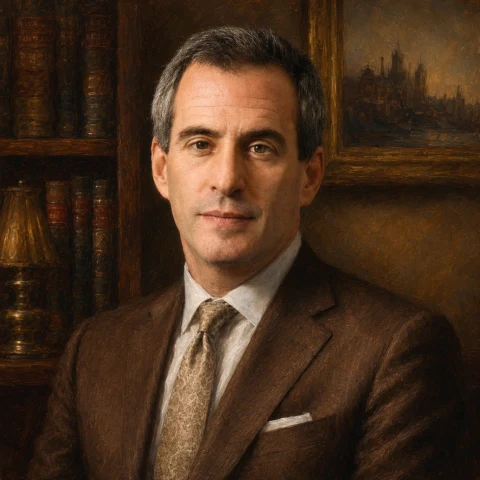
Roberta D. Liebenberg
Antitrust Class Actions · Price-Fixing Litigation · Mass Torts
The economic inequality and lack of resources I witnessed motivated me to go to law school because I believed that becoming a lawyer would help me to effectuate real social change.
From the Dow Urethane Verdict in Kansas to the Generic-Drug Payer Classes: Proving a Cartel’s Overcharge on Negotiated Prices
Roberta D. Liebenberg was one of trial counsel for the class that won a $400 million verdict against Dow Chemical in In re Urethane; the Tenth Circuit affirmed the trebled judgment, and Dow settled for $835 million while its Supreme Court petition was pending. As court-appointed lead counsel for end payers in the generic-drug price-fixing litigation, she has pressed the same classwide question for the health plans and consumers that paid for the drugs.
On January 22, 2013, one day before trial was to begin in the urethane price-fixing case, the Dow Chemical Company asked Judge John W. Lungstrum, sitting in Kansas City, Kansas, to decertify the class he had certified in July 2008. “The Dow Chemical Company moves the Court to decertify the class,” the motion began, and its first ground was that the plaintiffs’ “common evidence will not prove every class member was impacted by the alleged conspiracy.” The class was made up of industrial purchasers of polyether polyols and related urethane chemicals, which are used to make foam bedding, carpet padding, refrigerator insulation and skateboard wheels. Dow’s defense, pressed from the trial court to a petition in the Supreme Court, was that these buyers had negotiated their prices one contract at a time, so no single trial could prove that a conspiracy among manufacturers had overcharged all of them.
Roberta D. Liebenberg was one of trial counsel for the class. Her firm, Fine, Kaplan and Black, was one of four serving as co-lead counsel; Dow’s lawyers included David Bernick of Boies, Schiller & Flexner. On February 20, 2013, after a four-week trial, the jury returned a verdict for the class and assessed its damages at $400,049,039. Five weeks later, with Dow’s motion still undecided, the Supreme Court decided Comcast Corp. v. Behrend. It reversed the certification of a class of cable subscribers, holding that their damages model “falls far short of establishing that damages are capable of measurement on a classwide basis.” The Comcast subscribers had relied solely on the testimony of Dr. James McClave, the same expert who had testified for the urethane class.
Liebenberg has faced Dow’s argument in two postures. In Kansas, the courts tested it against a trial that had already happened. In the Eastern District of Pennsylvania, where Judge Cynthia M. Rufe appointed her lead counsel for the end payers in the generic-drug price-fixing litigation, the manufacturers raised a version of it before any trial, arguing that drug prices varied from buyer to buyer as they passed through wholesalers, pharmacies and pharmacy-benefit managers. Both times the class relied on McClave to show that the conspiracy it alleged had raised the prices nearly every class member paid.
Lockstep Announcements, Individual Contracts
The urethane cases were consolidated in the District of Kansas in 2004 as MDL No. 1616, against Bayer, BASF, Huntsman, Lyondell and Dow. The class representatives were three purchasers of the chemicals, Seegott Holdings, Industrial Polymers and Quabaug Corporation. The class alleged that the conspiracy began in January 1999, when the polyurethane market was depressed, and ran through 2003; executives coordinated “lockstep” price-increase announcements, the class said, and agreed to try to make the increases stick in individual contract negotiations. Bayer, BASF, Huntsman and Lyondell settled before trial for a combined $139.3 million. Dow went to trial alone.
The class had no government case to build on. Dow said that it had cooperated with an extensive Justice Department investigation, which the department closed in 2007 “without taking any or proposing any action against Dow.” In his July 2016 order on the Dow settlement, Judge Lungstrum wrote that class counsel “achieved this verdict and judgment without the benefit of a government investigation or prosecution.”
At trial the class’s proof came from inside the industry. Stephanie Barbour, who worked in Dow’s MDI business, admitted that Dow had participated in a price-fixing conspiracy and implicated at least three Dow executives; she, Michele Blumberg and Gerard Phelan gave what Judge Lungstrum called “direct evidence of agreements regarding pricing.” Lawrence Stern of Bayer testified that he had discussed prices with a Dow executive on eight to fifteen occasions and had exchanged confidential pricing information with competitors to spur industry-wide price increases. He described his conversations with competitors as “inappropriate,” because they concerned future pricing and “the possibility of raising prices.” He also testified that he had taken “unusual steps” to conceal those conversations. Edward Dineen of Lyondell implicated Jean Pierre Dhanis of BASF and Robert Wood of Dow. An expert for the class, Dr. Solow, counted the price-increase announcements among the collusive conduct he had observed: they came within weeks of one another, communicated the same or similar increases, and were to take effect at about the same time.
The jury also saw the companies’ own documents. A Bayer memorandum reported that the price increases were becoming effective and being paid. Dow e-mails acknowledged that Dow had obtained “the full increases.” A Dow pricing document from March 2002 recorded the company’s announcements of 10 cents on polyols and 15 cents on TDI, both effective March 1, and then said: “Its [sic] Working!!!!!!!”
Dow answered with the individual contract, arguing that purchasers could have avoided the announced increases by negotiating a lower price or switching to a substitute product, and that it was entitled to show, in individualized proceedings, that certain class members could not have been injured by the alleged conspiracy. The district court had reasoned that the industry’s price lists and parallel price-increase announcements “presumably establishe[d] an artificially inflated baseline” for those negotiations. At trial some of Dow’s own witnesses acknowledged that the announcements had affected the starting point for price negotiations, and Richard Beitel of Dow testified that price increases were paid in full on 40 to 50 percent of the announcements. McClave testified that the horizontal price-fixing conspiracy the class alleged had affected nearly every class member, because prices during the conspiracy period were higher than they would have been without it.
The jury found that Dow had participated in a conspiracy to fix, raise or stabilize prices for urethane chemicals and that the conspiracy had caused the class to pay more than it would have paid without one. “The people of Kansas administered justice, consistent with the evidence,” said Joseph Goldberg of Freedman Boyd, another of the class’s lawyers, after the verdict came in.
Comcast, Decided After the Verdict
After the verdict Dow filed a supplemental brief pressing decertification. The class’s answer, filed on March 22, 2013, carried the names of its co-lead counsel, among them Liebenberg and Allen D. Black of Fine, Kaplan and Black, and it opened: “Dow does not cite even a single antitrust case in its supplemental brief.” Dow could have sought decertification on the same grounds during at least the twenty-one months before trial, the class argued. “But it chose not to,” the brief said. “Then, on the eve of trial, Dow abruptly reversed course.”
Once Comcast came down, Dow relied on it against the class and the verdict, arguing that the Supreme Court had just rejected a damages model built by the same expert. On May 15, 2013, in a thirty-page decision, Judge Lungstrum denied decertification. He noted that he had certified the class on July 28, 2008, that Dow had filed its motion one day before trial, and that so late a challenge would severely prejudice the class. He held that Comcast did not require decertification, because McClave’s trial testimony rested on a single theory of impact, overcharges caused by price-fixing, and supplied the causal link between the class’s theory of liability and classwide impact. He also refused to set the verdict aside, pointing to parallel conduct in price announcements and price increases and to “communications, including those involving prices, at or near the time of that parallel conduct.” The same day, the court entered judgment against Dow for three times the jury’s award, $1,200,147,117. In July, after crediting Dow with the $139.3 million in settlements with the other defendants, the court amended the judgment to $1,060,847,117.
On Dow’s appeal, the Tenth Circuit heard argument on May 14, 2014, in the Byron White United States Courthouse in Denver. Carter G. Phillips of Sidley Austin argued for Dow, and Paul D. Clement argued for the class; Liebenberg and her Fine, Kaplan and Black colleagues Donald L. Perelman, Gerard A. Dever and Matthew Duncan were on the brief with lawyers from Cohen Milstein Sellers & Toll and three other firms. Dow challenged the order certifying the class, the refusal to decertify it, the admission of McClave’s testimony, the sufficiency of the evidence and the award of damages.
The class’s brief met the individual-contract argument with Dow’s own example. Dow had pointed to Quabaug, one of the class representatives, as a customer that negotiated and switched suppliers. McClave’s model, the class answered, showed that Quabaug had been overcharged too, by $45,584, and Dow’s claim that Quabaug’s contract pricing had insulated it from the conspiracy “is factually inaccurate.”
Judge Bacharach, writing for a panel that included Judges Lucero and Murphy, took up the individual contract directly. The court acknowledged that some purchasers may have avoided damages, but it held that the district court had not abused its discretion in certifying the class, because price-fixing “affects all market participants, creating an inference of class-wide impact even when prices are individually negotiated.” The case presented “two common questions that could yield common answers at trial: the existence of a conspiracy and the existence of impact.” That set it apart from the Supreme Court’s 2011 Wal-Mart decision, which had turned on discretionary pay and promotion decisions.
On Comcast, the court pointed, among other things, to timing. In Comcast the question had been whether the district court could determine before trial, with only McClave’s expert report before it, that the plaintiffs could prove damages on a class-wide basis. “These problems do not exist here because Dow waited until after trial to raise the issue,” Bacharach wrote. “Thus, by the time Dow presented its argument, Dr. McClave had already testified at trial.” He had told the jury that nearly all class members had been overcharged, and that testimony gave the district court discretion to find a fit between the class’s theory of liability, a nationwide conspiracy to fix prices, and its theory of classwide damages. Dow’s final argument, that using McClave’s model to divide the award among class members violated the Seventh Amendment, failed because “Dow has no interest in the method of distributing the aggregate damages award among the class members.” On September 29, 2014, the Tenth Circuit affirmed.
Dow’s Changed Risk Assessment
Dow’s petition for certiorari, Dow Chemical Co. v. Industrial Polymers, Inc., No. 14-1091, filed on March 9, 2015, argued that the judgment violated class-action law in several ways, particularly as the Court had stated it in two opinions by Justice Antonin Scalia, Wal-Mart in 2011 and Comcast in 2013. Clement was counsel of record for the class, and Liebenberg was among the Fine, Kaplan and Black lawyers on the class’s brief in opposition, filed May 11, 2015, which told the justices: “Dow does not challenge the jury’s finding that it participated in this price-fixing cartel.” The Court held the petition while it decided Tyson Foods, a case that Dow said shared a class-action issue with its own.
Justice Scalia died in February 2016, with Tyson Foods still undecided. On February 26, Dow announced that it would pay $835 million to settle. “Growing political uncertainties due to recent events within the Supreme Court and increased likelihood for unfavorable outcomes for business involved in class action suits have changed Dow’s risk assessment of the situation,” the company said. Dow maintained that “it was not part of any conspiracy and the judgment was fundamentally flawed as a matter of class action law.” At the parties’ request the Supreme Court held the petition in abeyance in March 2016, and it dismissed the petition under Rule 46 on September 30, 2016.
Judge Lungstrum ruled on the division of the money on July 29, 2016. The plan of allocation paid each class member on the basis of “calculations of actual damages as found by the jury.” Class counsel had spent more than 193,000 hours over more than eleven years and had been required to advance all expenses and attorney time; the court wrote that the case “required great skill in a highly specialized field” and that counsel had won “what is reported to be one of the largest verdicts of its kind in United States history.” He found that class members would receive approximately 1.4 times their actual damages as determined at trial. With the earlier settlements, the class’s settlements with all five defendants totaled about $974 million.
Who Gets to Try the Case
Liebenberg grew up in the Washington, D.C., area and went to a yeshiva through the ninth grade. In seventh grade the girls took a class on running a Jewish home while the boys studied Talmud. “I sort of channeled my inner ‘Yentl’ and ‘Norma Rae’ and organized the other girls,” she has said. “My parents helped me petition the principal to open up the [Talmud] class to girls.” She has tied that study to the work she chose: “Studying the Talmud is, obviously, arguing about different viewpoints, which is exactly how you analyze cases.”
She came to the law from teaching. Before law school she taught at a junior high school in Detroit and at a rural high school in Calvert County, on the southern shore of Maryland. She has described her Calvert County students as the children of tenant farmers who had no indoor plumbing and had never been outside the county. She took them on a field trip to Washington, fifty miles away, and has said the trip inspired her to try to bring about social change on a broader scale.
She graduated with distinction from the University of Michigan in 1970 and magna cum laude from the Columbus School of Law at the Catholic University of America in 1975, where she was a notes editor of the law review, and then clerked on the United States Court of Appeals for the Fourth Circuit. In 1976 she joined Hunton & Williams in Richmond, Virginia, as the first woman associate in its antitrust practice group. “At the time, there were only about 20 practicing women lawyers in Richmond,” she has said, and she helped found the Metropolitan Richmond Women’s Bar Association, which let those lawyers support and network with one another. When her family moved to Philadelphia, she joined Wolf, Block, Schorr & Solis-Cohen. “Again, I was the first woman in its antitrust group,” she said. “Ultimately, I became just the third woman partner since the firm’s founding in 1903.”
“In 1992, I left the security of my Big Law partnership to start the first women-owned firm in Philadelphia focused on class actions and complex commercial litigation,” she said. The firm was Mager, Liebenberg & White. She had three children by then, and she has said that the partnership had limited her ability to chart her own career and that she wanted more control over the kinds of cases she handled. In 2000 she joined Fine, Kaplan and Black, a Philadelphia antitrust firm, as its first woman partner.
Asked to name the highlights of her career, Liebenberg put the urethane trial first. It came thirty-seven years after she began practicing. With Stephanie Scharf, she has written reports for the American Bar Association on women’s careers in law, among them a 2019 study of why experienced women lawyers leave private practice, and their research found that women lawyers who work as government prosecutors have the greatest likelihood of gaining first-chair trial experience. Asked whether she would do anything differently, she said: “In retrospect, I would like to have started in a U.S. Attorney or District Attorney office, as that would have enabled me to gain valuable in-court experience early in my career.” She tied that answer to the prosecutor finding and added that government work would also have given her a better work-life balance while she was raising three children.
In the ABA she chaired the Standing Committee on the Federal Judiciary in 2006–07 and co-chaired the practitioners’ reading group for the committee’s evaluations of Elena Kagan, Sonia Sotomayor and Ketanji Brown Jackson for the Supreme Court. She chaired the ABA Commission on Women in the Profession from 2008 to 2011 and again from 2013 to 2014.
Negotiated Prices Again, Through Pharmacies and PBMs
By August 2016, the generic-drug price-fixing cases had been assigned to Judge Cynthia M. Rufe in the Eastern District of Pennsylvania as MDL No. 2724. On September 8, 2016, Judge Rufe appointed Liebenberg liaison counsel for the end-payer plaintiffs, the health plans, insurers, public employers and consumers that indirectly purchased, paid for or reimbursed the cost of the drugs. On May 19, 2017, the court organized the plaintiffs into three steering committees, for direct purchasers, end payers and indirect resellers, and named her lead and liaison counsel of the end payers’ committee. The order directed the committees’ leaders to give attorneys not named to the committees, particularly less-senior attorneys, opportunities to participate meaningfully in the litigation.
The plaintiffs allege that the leading generic manufacturers fixed prices on more than 180 generic drugs. The Justice Department separately brought criminal charges against several of the same companies, among them Heritage, Sandoz and Taro.
Judge Rufe chose the first bellwether cases from the end payers’ and direct purchasers’ proposed class actions, and two drugs went first: clomipramine, which the court described as “an oral medication used to treat obsessive compulsive disorder,” and clobetasol, “a potent topical corticosteroid that is prescribed for various inflammatory skin conditions.” The end payers asked the court to certify classes of third-party payers that had paid for clomipramine from August 2013, or for clobetasol from September 2014, through the end of 2018. Their named representatives included the District Council 37 Health & Security Plan of the American Federation of State, County and Municipal Employees; the City of Providence, Rhode Island; Hennepin County, Minnesota; Blue Cross and Blue Shield of Louisiana; Self-Insured Schools of California; a Uniformed Fire Officers Association plan; funds of 1199SEIU; and the health and welfare fund of the Sergeants Benevolent Association of the Police Department of the City of New York.
Dr. Russell Lamb, one of the end payers’ experts, found that their drug costs rose 89 to 95 percent for clomipramine and 55 to 82 percent for clobetasol. The end payers also relied on testimony from the defendants’ own corporate witnesses admitting that the purpose of the price increases was to increase the prices customers paid.
The manufacturers answered with a version of Dow’s argument fitted to the drug supply chain. “Defendants argue that transaction prices varied extensively between customers due to the nature of the drug supply chain and the role that intermediaries, such as PBMs, play in setting the ultimate price for end-payers,” Judge Rufe wrote. They argued that the classes took in many payers that had suffered no injury, pointing to end payers that obtained Mylan’s clomipramine from CVS, whose price Mylan had not raised after the list-price increase, and that class members could not be identified reliably from pharmacy-benefit-manager data, the approach that had failed in the Niaspan litigation.
The end payers’ expert on impact and damages was Dr. James T. McClave. In December 2024 Judge Rufe, who noted that he had been the subscribers’ expert in Comcast, refused to exclude his testimony; she found that although he used averages to show high-level trends, his regression examined transaction-level data for every purchase of the two drugs, creating millions of but-for prices for each pharmacy and end payer. That regression found that all, or nearly all, members of the end payers’ classes had paid at least one overcharge. McClave drew on pharmacy-benefit-manager data covering about 95 percent of third-party-payer transactions, and he found that more than 99 percent of pharmacies experienced a price increase for each drug. At certification she held that the defendants had mischaracterized how the end payers’ experts used averages and that, where averaging did occur, “it was appropriate under the circumstances.” On price variation she wrote: “But even where there is significant price variation, the question for injury is whether class members paid artificially high prices, regardless of differences between the class members.” Of the payers said to have escaped any overcharge, she wrote: “This Court has not made and does not make such a finding at this time.” On identifying class members, the end payers’ data expert testified that the question here, unlike the one in Niaspan, was whether class members could provide data and authoritative business records confirming their eligibility, and Judge Rufe found that end payers would be able to obtain their purchase records because several plaintiffs already had.
On March 7, 2025, Judge Rufe certified antitrust damages classes and consumer-protection and unfair-competition damages classes of third-party payers for both drugs. Although each company in the generic-drug supply chain negotiated individually with those above and below it, she held, the end payers had shown for purposes of class certification that common evidence could show economic impact. The posture differed from Kansas. There, the Tenth Circuit had been able to check Dow’s objection against testimony McClave had already given to a jury. Here, Judge Rufe had to evaluate his model at the certification stage, as Comcast requires, before any trial and for payers that bought the drugs only indirectly.
Actavis and Mylan took the question to the Third Circuit, which on June 17, 2025, granted them permission to appeal the certification of both the direct purchasers’ and the end payers’ classes; Judge Rufe then stayed the clomipramine and clobetasol bellwether trials while the appeals went forward. Against the end payers, the two companies argued that the classes could not be ascertained because the plaintiffs had not accounted for variations among multi-step payment chains and individually negotiated contracts. The end payers and direct purchasers filed their briefs defending certification in November 2025, and on June 2, 2026, the two manufacturers argued their appeal before a Third Circuit panel.
Pro Rata to Health Plans and Consumers
Court approval of the end payers’ settlements followed. On September 26, 2025, Judge Rufe approved a settlement with Sandoz and Fougera Pharmaceuticals for a payment of between $230,000,000 and $275,000,000, depending on the number of opt-outs. The settlement class reached all persons and entities in every state except Indiana and Ohio, and in the District of Columbia, Puerto Rico and the U.S. Virgin Islands, that indirectly purchased, paid for or reimbursed any of the drugs at issue from May 1, 2009, through December 31, 2019, consumers as well as health plans. A group of states, appearing as amici, argued that the settlement could extinguish their attorneys general’s claims and would give consumers inadequate relief. Judge Rufe held that the states had not shown that their parens patriae authority supplanted consumers’ ability to sue for damages. No class member objected. The funds are to be allocated pro rata among all class members that file claims.
On November 19, 2025, the court approved settlements with Apotex for $48 million and with Heritage for $10 million. On January 23, 2026, it approved a $200 million settlement with Sun Pharmaceutical Industries and Taro Pharmaceuticals U.S.A., again with no class member objecting and again for distribution pro rata among claimants, with service awards of $30,000 for each third-party-payer representative and $5,000 for each consumer representative. Together the four settlements she approved between September 2025 and January 2026 come to between $488 million and $533 million, depending on how far opt-outs reduce the Sandoz payment.
Liaison Counsel and Mentor in the GLP-1 Litigation
Her recent appointments include product-injury litigation. In April 2024 Judge Gene E.K. Pratter appointed her and Nina Spizer of Dilworth Paxson liaison counsel for the plaintiffs in MDL No. 3094, in which plaintiffs allege gastrointestinal injuries from glucagon-like peptide-1 receptor agonists, including Ozempic and Wegovy. She holds the same role in MDL No. 3163, the litigation over non-arteritic anterior ischemic optic neuropathy attributed to the same class of drugs. Both cases are now before Judge Karen S. Marston, who set a Rule 702 hearing on two cross-cutting issues in the gastrointestinal cases for September 14 through 18, 2026, and on October 8 directed the parties to give closing arguments on those pending Rule 702 motions at a status conference on October 13.
The April 2024 order made one more appointment: “Roberta Liebenberg is also appointed to serve as a mentor to Sarah J. Foster of Schlesinger Law Offices, P.A.”