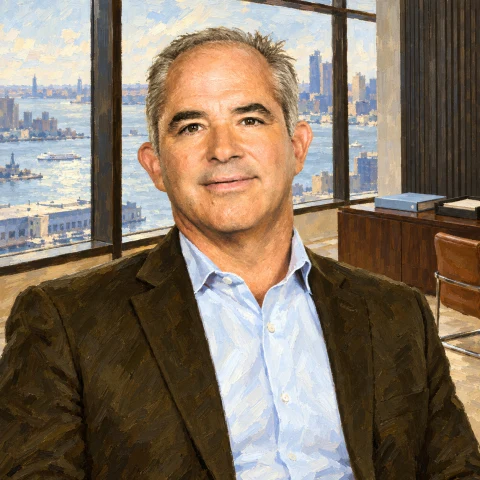
J. Edward Bell III
Camp Lejeune Justice Act Litigation · Toxic Exposure · Product Liability
This is a historical precedent which allows a victim to have an equal footing in Court, rather than the unfair standard of more likely than not.
Lead Counsel J. Edward Bell III and the “At Least as Likely as Not” Standard in the Camp Lejeune Water Litigation, E.D.N.C.
Bell helped draft the Camp Lejeune Justice Act’s lower burden of proof and has led the plaintiffs’ side in the Eastern District of North Carolina since July 2023, through rulings on water modeling and expert deadlines, a federal fixed-sum settlement program, and kidney-cancer trials set for October and November 2026.
On December 3, 2025, at a status conference in In re Camp Lejeune Water Litigation, J. Edward Bell III asked Magistrate Judge Robert B. Jones Jr. to invite the Department of the Navy to come to court and give an update on what it was doing. A significant number of people, he said, had not yet given the Navy the minimum information it needed. Bell gave the judge his count of the pace under the government’s fixed-sum settlement program, the Elective Option: “Judge, they are paying out Elective Option 40 to 50 a month. And using Judge Dever’s timeline, we might be into the second Roman Empire just to get those paid.” He asked the judge to picture an elderly claimant who just wanted to be done with it and move on: “It will take you 4 years to get your payment, maybe 6.”
Adam Bain, the government’s chief litigation counsel in the cases, told the court the pace was higher than that, and that the court had no jurisdiction over the Navy’s process. Bell answered, “Let’s say it’s 500 a month. That’s still the second part of the Roman Empire.” He told the judge, “I will pay for the man to fly down, Judge,” and pressed for an explanation of the Navy’s procedure: “But someone’s got to give us straight answers and what is their process, Judge.” Later in the hearing he told the court what claimants say to him: “But we do have people and we talk to them all the time. Mr. Bell, I don’t want to take that because I don’t think it’s fair but we are getting old; we are sick; please get that done.”
Bell is lead counsel of the Plaintiffs’ Leadership Group that four federal judges in the Eastern District of North Carolina appointed in July 2023 to run the plaintiffs’ side of the suits over Camp Lejeune’s water. Those suits exist because of a statute he worked toward for over fifteen years. The Camp Lejeune Justice Act of 2022 lets a person who lived, worked or was otherwise exposed to the base’s water for at least thirty days between August 1, 1953, and December 31, 1987, sue the United States, and it lets that person prove causation by showing the link is “at least as likely as not.” Bell helped draft the Act. As lead counsel he has taken it through discovery, a three-phase expert contest, settlement talks before two court-appointed settlement masters, and, in September 2026, the setting of trial dates.
North Carolina’s Ten-Year Repose Statute and a Sunday Afternoon With Greg Murphy
Jerry Ensminger, a retired Marine whose daughter had died of leukemia, filed a damages claim with the Navy in October 2002. Michael Partain, born on the base in 1968, filed his in February 2009. Both were denied, and in 2019 the Navy denied more than 4,500 such claims. Former residents who sued in federal court ran into a North Carolina law that cuts off damage claims against a polluter ten years after its last act of pollution. After the Supreme Court held in a separate case in 2014 that the North Carolina law blocked such claims, the Camp Lejeune suits were dismissed. On May 22, 2019, the Eleventh Circuit affirmed: “Because we hold that North Carolina’s ten-year statute of repose applies to and bars Plaintiffs’ claims, we affirm the District Court’s judgment without reaching the FTCA, Feres doctrine, and default judgment issues.”
Bell took the fight to Congress. “At that point in time, I said the only thing we could do was go to Congress,” he said in August 2022. He had joined the effort about fifteen years before the Act passed, and he spent those years taking Camp Lejeune families from office to office on Capitol Hill. Bell worked on the bill with veterans service officers and with people who had been exposed on the base, helped draft its language, and met with more than 200 members of Congress. “We didn’t have a single senator or congressman say no after we met with them, not one,” he said. Bell has said he spent as much as $15 million over the years advocating for Camp Lejeune victims, including pressing for the bill.
One of the members he went to see was Representative Greg Murphy, a surgeon and conservative lawmaker who had taken up the cause after reading a report on the diseases afflicting veterans in his district. Bell met with him on a Sunday afternoon and did not expect him to back a bill that would let people sue the government. “Goddammit Ed, what have they been doing to our Marines? They’ve been killing them,” Murphy told him, as Bell recalled it. Murphy joined forces with Representative Matt Cartwright, a Pennsylvania Democrat, and the two helped Bell gather support. Then a call came from the office of Senate Minority Leader Mitch McConnell, setting up a meeting on the bill in June 2022. “I didn’t think McConnell would call us if it wasn’t going to happen,” Bell said. When people heard how many claims there would be and worried about the cost, he had an answer for them: “If you’d only killed 10 Marines it wouldn’t be very expensive, would it?”
Section 804(c) and the Words “At Least as Likely as Not”
The cause of action is section 804 of the Honoring our PACT Act, which passed the House 342–88 and the Senate 86–11. President Biden signed it on August 10, 2022, and the Camp Lejeune claim took effect that day. The Act set aside the defenses that had stood between Camp Lejeune families and a damages suit against the government—statutes of limitations and repose, the Feres doctrine, and governmental and discretionary immunity—and in subsection 804(c) it changed what a plaintiff has to prove. The evidence must be “sufficient to conclude that a causal relationship exists” or “sufficient to conclude that a causal relationship is at least as likely as not.”
An ordinary civil plaintiff must show causation is more likely than not. Bell has called the lower bar a first: “This standard has never been used in any legislation or any litigation in the history of our country.” He has said he hopes courts will come to consider this “equipoise standard” “as a way to replace an antiquated burden of proof.” He has also put the purpose of the Act in plain terms: “The Camp Lejeune Justice Act does not exist to punish our Government, it exists to allow everyday citizens to do something that, up till now, has been virtually impossible to do—hold our Government responsible for its bad conduct.” “Our country exists on ideals such as honor and integrity, but our Government does not always live up to the expectations of its citizens,” he has said, and “If our country is not held accountable then we eventually evolve into a tyranny.”
The court has held that Congress meant the change. In a 2024 opinion, and again in a June 2026 order, the judges wrote that in subsection 804(c) Congress “‘expressly departed’ from the common-law preponderance burden of proof standard,” while leaving the common-law rules of causation in place.
Jerry Ensminger and Michael Partain on the Day the Act Took Effect
President Biden signed the bill in a crowded East Room. The largest group of veterans there had been sickened by smoke from burn pits in Iraq and Afghanistan. A smaller group of Camp Lejeune veterans and family members owed their places in the room to Bell.
Bell said that week that the law had been a long time coming, and that the government had forgotten its veterans, its Marines and their families.
On August 10, 2022, Bell Legal Group filed an initial wave of lawsuits against the United States in the Eastern District of North Carolina. Among the first clients were Jerry Ensminger, a retired Marine master sergeant whose daughter Janey was conceived while the family lived on the base and died of leukemia as a child, and Michael Partain, co-founder of The Few, The Proud, The Forgotten. Bell had worked with both men to bring the bill into law; his firm called Ensminger “the leading advocate for the cause.” The firm also refiled the two men’s administrative claims with the Navy, and on August 10 it submitted 3,000 claims to the Navy’s Judge Advocate General’s office.
Ensminger joined the Marine Corps in 1970 and served more than twenty-four years, part of it as a drill instructor. Janey, the second of his four daughters, was diagnosed with leukemia at six. Chemotherapy took her hair, and she was teased relentlessly at school. “We’d ride out there to the beach and try to make some sense of what the hell she was going through,” Ensminger said in 2023. She died on September 24, 1985, at nine. “They killed my daughter. And I watched that child for two years go through hell before she died,” he said in July 2026.
Ensminger learned about the water in 1997. He was getting ready for dinner when he heard a report on the public health assessment the Agency for Toxic Substances and Disease Registry had done for Camp Lejeune, and he concluded that its dates were wrong and that the contamination had begun earlier. It took him until 2004 to get a major news outlet to cover the story; the Washington Post did. From 2004 until August 2012, when President Obama signed the Janey Ensminger Act, which let dependents apply for VA health care, he testified before Congress nine times.
Partain was born on the base on January 30, 1968, while his father was a Marine officer there, and his mother was exposed to the water while she carried him. In 2007, at thirty-nine, he felt a lump in his chest after his wife hugged him. A mammogram and a biopsy found male breast cancer. Surgeons removed his right breast and a lymph node under his right arm, and he went through eight rounds of chemotherapy. His father, a retired Marine and Vietnam veteran, urged him to watch CNN, where Ensminger was testifying before Congress. “That’s the first time I had heard about Camp Lejeune, the first time that I realized that something bad had happened, and also the first time I realized why I had breast cancer,” Partain has said. He organized thousands of pages of documents into a 44-page timeline of events, testified before Congress in 2009 and 2010 on the base’s history, and has since found 125 men exposed to the water who developed male breast cancer.
Four District Judges Name a Georgetown Trial Lawyer Lead Counsel
Bell is a South Carolina native. He graduated from Wofford College in 1975 and the University of South Carolina School of Law in 1978, and he founded his firm in Georgetown more than forty years ago, building a practice in medical malpractice, product liability, and automobile safety and defects. The firm’s Georgetown headquarters holds a research center with engineers, researchers and support staff. He has also served as president of the Charleston School of Law.
The Camp Lejeune complaints were divided among four district judges—James C. Dever III, Richard E. Myers II, Terrence W. Boyle and Louise W. Flanagan—who manage them together on a master docket. On July 19, 2023, in Case Management Order No. 1, the four judges named Bell lead counsel and appointed six co-lead counsel: Zina Bash of Keller Postman, who also served as liaison to the government; Elizabeth Cabraser of Lieff Cabraser Heimann & Bernstein; Michael Dowling of the Dowling Firm; Robin Greenwald of Weitz & Luxenberg; James A. Roberts III of Lewis & Roberts; and Mona Lisa Wallace of Wallace & Graham. About 75,000 claims had been filed with the Navy by then. Bell said at the time, “No one really knows what these cases are worth.”
The first appointment ran to July 31, 2024, and renewal requires an accounting. In May 2024 the judges directed each member seeking reappointment to describe, in no more than two single-spaced pages, “the nature and scope of the [Applicant’s] work on this Litigation, including the time and resources that he or she expended,” along with any concerns about the litigation’s progress and proposals to improve it. The judges reappointed Bell as lead counsel for a year in July 2024 and for six months from August 2025, and entered further reappointment orders in January and June 2026. “I literally work on this case 30, 40, 50 hours a week,” Bell said in August 2026.
The judges sorted the cases by disease. Their February 2, 2024 Track 1 Order took up bladder cancer, kidney cancer, leukemia, non-Hodgkin’s lymphoma and Parkinson’s disease, and the Track 1 proof was later divided into phases: first, what chemicals were in the water from 1953 to 1987; second, general causation; third, each plaintiff’s specific causation. Bell said in June 2024: “So we think that the track system is a genius concept. We think that the court has done an excellent job in setting it up.”
Settlement work ran alongside the litigation. In January 2024 the leadership group and the government jointly recommended Thomas J. Perrelli of Jenner & Block as a settlement master. On July 9, 2024, in Case Management Order No. 14, the judges appointed Perrelli and Christopher G. Oprison of DLA Piper to facilitate the parties’ settlement talks in Camp Lejeune Justice Act cases, with Magistrate Judge James E. Gates as settlement liaison.
The Discovery Pool and the Former ATSDR Director
Case Management Order No. 2 gave plaintiffs a one-time option to opt out of consideration for the Track 1 discovery pool. When the government’s revised pool selections included sixteen plaintiffs who had already opted out, the leadership group Bell leads moved to strike them. The government argued that the pool had to stay representative, pointing out that plaintiffs still eligible for it had, on average, more than a year of additional exposure to the base’s water than those who had opted out. On January 19, 2024, the court struck all sixteen. Nothing in the order let a plaintiff opt back in, the court held; plaintiffs who opted out were removed from consideration, and continued reevaluation would defeat the purpose of an order meant to streamline and expedite the litigation.
The government also moved for a protective order to block the deposition of Dr. Christopher Portier, a former director of the Agency for Toxic Substances and Disease Registry, who now lives in Switzerland. It argued that the burden of the deposition outweighed the value of his testimony, pointing to the official passports, country clearances and visas its lawyers would need to travel to Italy, near his home, to take it. The leadership group opposed the motion and offered remote participation. On June 11, 2024, the court denied the government’s motion. As the agency’s director, the court reasoned, Portier had been intimately involved in its Camp Lejeune investigations, so his testimony was likely relevant; plaintiffs had to establish the levels and timing of their exposure, and their experts relied on the agency’s water model; and travel costs alone were not a reason to bar a deposition abroad.
Phase 1 Water Modeling: Disputes Over an Expert’s Data Go to Weight
Phase 1 asked what chemicals were in the water at Camp Lejeune from 1953 to 1987. No chemical-specific measurements of the drinking water exist from before 1982, when Grainger Laboratories detected contaminants at Hadnot Point. At Hadnot Point, where the sources were the base’s industrial area and a landfill, trichloroethylene, or TCE, reached 1,400 parts per billion in the drinking water in May 1982. At Tarawa Terrace, whose only identified source was ABC One-Hour Cleaners, a dry cleaner across the street, perchloroethylene, or PCE, was measured at 215 parts per billion in February 1985. The current limit for each chemical in drinking water is 5 parts per billion. The most contaminated wells were shut down by February 1985.
For the years before 1982 the answer had to come from the computer models of the Agency for Toxic Substances and Disease Registry. Its Tarawa Terrace model, released from 2007 to 2009, reconstructed monthly PCE concentrations in the groundwater and in the finished water, and the agency’s modeling found PCE above 5 parts per billion there for 346 months, between November 1957 and February 1987. Its Hadnot Point–Holcomb Boulevard model, published in 2013, estimated mean monthly concentrations for certain wells from 1942 to 2008. The agency acknowledged how little it had to work with: monthly pumping records existed only for 1978 and, intermittently, for 1981 through 1985. Morris Maslia, an engineer and one of the leadership group’s experts, called the agency’s models and techniques “state of the art, consistent with standard practices in the field, and subject to peer review.” The government’s position is that the models are biased high and unreliable.
The leadership group disclosed six water-modeling experts and a historian. R. Jeffrey Davis and Dr. Norman L. Jones, engineers with more than sixty years of combined experience, had performed a post-audit of the agency’s Tarawa Terrace water model. Dr. Mustafa M. Aral, who had spent fifty years developing environmental models, had co-authored chapters of the agency’s modeling reports. Dr. Rodney Kyle Longley, director of the War, Diplomacy, and Society Program at Chapman University, was the group’s historian.
The government moved to exclude certain opinions of Davis and Jones, arguing that they had not read most of the agency’s reports and had not answered criticisms from the Navy and the National Research Council; certain opinions of Aral, who it said had worked on only limited aspects of the models; and all of Longley’s testimony.
At the December 3, 2025 conference, Bain asked for a live hearing at which the court would hear the experts and make findings on historic contamination levels and on when the contamination began. “Our expert says the contamination started in the early ’70s,” he said. Bell answered that the motions and exhibits already gave the court what it needed. “Our position is, Judge, that this will probably delay this case by months if not a year,” he said. “It will determine thousands of people’s exposure when we could be doing it as we go through the trial.”
On December 12, 2025, the court denied each of those motions. Questions about the factual underpinnings of an expert’s opinion, the court held, go to the weight and credibility of the testimony, not its admissibility, and many of the parties’ arguments framed credibility questions as questions of reliability. In a bench trial, the court added, a judge has greater discretion over how strictly to screen expert evidence. Aral did not need to have performed every step of the models himself to speak to their reliability. “Today, however, Dr. Aral has cleared the Rule 702 bar,” the court wrote. Longley’s three citation errors, among 198 reliance materials and 132 footnotes, did not warrant exclusion, and a historian’s method could not be held to the exactness of the hard sciences.
Dr. Bailey’s Regulatory Benchmarks Struck as Late General-Causation Opinions
The phased schedule required general-causation experts to be disclosed by February 7, 2025. In April 2025 the government designated Dr. Lisa Bailey as a Phase 3 specific-causation expert for Track 1 plaintiffs. Her reports measured each plaintiff’s exposure against EPA and ATSDR regulatory toxicity values; under her analysis, an exposure at or below those values strongly supported the conclusion that it was not likely causally associated with the disease.
The leadership group moved to strike that part of her reports as an untimely general-causation opinion. The government answered that the regulatory criteria were part of a plaintiff-specific exposure analysis, not a general-causation method, and it conceded that no Phase 2 expert had relied on Bailey’s method. Magistrate Judge Jones granted the motion on March 5, 2026, and on June 5, 2026, the district judges affirmed. A method that rules out a chemical’s capacity to cause disease on the basis of dose is a general-causation method, the court held, and Bailey had brought an undisclosed general-causation method into Phase 3 after the Phase 2 deadline. Chief Judge Richard E. Myers II, Judge Boyle and Judge Dever wrote that ruling otherwise “would frustrate the stated purpose of the court’s scheduling orders,” under which each phase is a building block for the next.
The Navy’s Fixed-Sum Offers and the People Waiting on Them
On September 7, 2023, the United States filed notice of the Elective Option, which it called “a voluntary settlement process” to help veterans and others resolve qualifying claims more quickly. The government sorted diseases into two tiers. Tier 1 covered kidney cancer, liver cancer, non-Hodgkin lymphoma, leukemias and bladder cancer, with offers of $150,000 for 30 to 364 days of exposure, $300,000 for one to five years and $450,000 for more than five years. Tier 2 covered multiple myeloma, Parkinson’s disease, kidney disease or end-stage renal disease, and systemic sclerosis or systemic scleroderma, at $100,000, $250,000 and $400,000 for the same periods. A claim showing a qualifying injury that resulted in death drew an additional $100,000, for a maximum offer of $550,000. The release a claimant signed would not affect any VA disability award, payment or benefit; a claimant had 60 days to accept or decline; and the Navy would process the documents for payment within 60 days.
The leadership group answered that the Navy had outlined an approach that could satisfy people who would prefer a discounted amount in exchange for a shorter wait, that those with an urgent need for compensation should have a quick route to it, and that it supported injured people in whatever process they chose. It also said the proposal did not provide a just resolution for most claimants and did not address many illnesses linked to the water, including some the VA itself treats as presumptively service-connected. “It is never lost on me that every day we lose someone to the effects of Camp Lejeune,” Bell said in September 2023; the veterans and families who had waited decades, he said, “deserve to have their day in court.” Bell was blunter in June 2024: “The settlement offers that are out there for some people are worth looking at,” he said, but for others, “They’re just ridiculously low.”
At the December 2025 status conference, Bell pointed out that, by the government’s count, only 177,478 of some 409,000 claims filed with the Navy had at least one supporting document. Patti Mobley, whom he introduced as “our director of this project,” told the court that people requesting military service records through the National Archives were warned of a backlog of up to 18 months. Bain answered that many claimants had received their records within a few weeks and that, as he understood it, Camp Lejeune claimants were given priority. He offered to answer written questions from the court or Bell at the next status conference, and Judge Jones agreed to try that first.
The leadership group also wanted the Marine Corps’ muster rolls. In November 2025 Bell told Judge Jones that their digitization had not been completed and that the plaintiffs were being told they would have to pay about a million dollars to get them. “If they’ll give us the terabytes, we’ll do the work,” he said. “We’re under a protective order here.”
The government’s own numbers came in its June 15, 2026 settlement notice. Of the cases in litigation, the Justice Department had made 178 offers to plaintiffs—164 to veterans, six to civilians and eight to estate representatives—and payments had been sent on 105 accepted offers. The Navy had approved 3,094 offers to administrative claimants; 2,468 had been accepted, payments had been sent on 2,341, and 446 were pending. “Payments for accepted settlements for both Navy and DOJ total $723,850,000,” the government reported, and “The total amount of all approved offers is more than $907,550,000.” In mid-September the government reported offers to 3,637 claimants totaling $1.08 billion, with payments of $872 million made to 2,822 of them. By September 2026 the Navy’s claims unit was processing 408,500 deduplicated claims and reported that more than 90 percent of the claims it reviewed lacked enough documentary evidence to support an Elective Option settlement. From February 11, 2023, through September 11, 2026, plaintiffs filed 3,784 complaints under the Act in the district.
“We did a study about six months ago, and we were losing about four and a half clients a week,” Bell said in August 2026.
Judge Boyle Sets the Mousser and Fancher Trials
On November 12, 2025, the leadership group asked the court to let the first Track 1 trials begin before every pending expert motion was decided, to start with kidney cancer, and to set a trial date in early 2026. The government had filed more than thirty motions challenging expert testimony, and its Phase 2 and Phase 3 briefs ran 690 pages. Seventy-two years had passed, the group wrote, since the first service members began to be exposed to the base’s water, and “it is time to give America’s poisoned Marines their day in Court.” Two days later Bell told Judge Jones why kidney cancer should go first: “we suggested that kidney would be a good one to start because kidney is the most relevant.” “No one could have predicted that the government would attack every single witness we have,” he said.
On September 9, 2026, Bell appeared with Michael Dowling and James Roberts at pretrial conferences before Judge Boyle in four Track 1 kidney-cancer cases. Boyle said he would set his four cases for trial in Elizabeth City and felt “perfectly capable of resolving” each one. As he saw it, each case turned first on causation—“Did you get in the door; yes or no?”—and then on how much. “We’ll be there, Your Honor,” Bell said. “We think it’s a little more simple than the Government thinks it is.” The judge asked which standard governed: “Is it more likely so than not, or equipoise?” “Equipoise,” Dowling answered. If a plaintiff’s expert said it was unlikely the plaintiff would have gotten kidney cancer at that age in the ordinary course, the judge went on, “then you should be home.” “Yes,” Bell said.
Bain told the judge that thousands of people had already been paid under the Elective Option. “We have offered over $1 billion in payments in that program,” he said. The judge asked how many party plaintiffs had become estates. “Quite a number,” Bain answered, “just because of the age of the population that was there.” Then the judge asked, “What’s left to be done?”
“Just pick a trial date, Your Honor,” Bell said. Bain proposed November 2, which he said would give the parties time to get to the end of what the court had ordered on negotiating a resolution. Bell said the plaintiffs had done a lot of work, were ready to go and had already checked that their experts were available, and he told the court: “The way things are going, Judge, I wouldn’t give a lot of hope for anything to happen, and that extra month is not going to help us a bit.” When the government argued that two other cases, Tukes and Downs, turned on whether the plaintiffs had been exposed to the contaminants at all, Bell answered that the plaintiffs would not be in court if things were as the government said. He asked that the two cases with the same experts go together: “Judge, it only makes sense for Mousser and Fancher be tried back to back, because they do have almost identical experts.”
The next day Judge Boyle set Frank Mousser’s case for trial on November 9, 2026, and David Fancher’s for November 16. On September 16 he moved both trials earlier: Mousser’s to October 26 and Fancher’s to November 9.
Frank Mousser, David Fancher and What a Claim Is Worth
Frank Mousser enlisted in the Marine Corps on July 19, 1982, and trained as a field artillery batteryman and a nuclear field artilleryman. He was at Camp Lejeune from October 18, 1982, to September 7, 1986, apart from deployments, and he contends that he lived in areas served by the Hadnot Point water system, including the Hadnot Point and French Creek barracks, during “a period of particularly high contamination for trichloroethylene and perchloroethylene.” In November 1983 he had blood in his urine; he was not diagnosed with cancer then. He left the Corps in January 1988 as a lance corporal and worked in automotive finance, sales and customer service. In September 2017 the blood came back. On August 25, 2020, doctors found a 3.7-centimeter mass in his right kidney, and on October 20, when he was fifty-seven, surgeons removed the kidney and its ureter. The cancer was a high-grade urothelial carcinoma of the right renal pelvis. He has lived since with chronic kidney disease, and he retired in October 2023. In January 2025 a polyp removed from his prostate proved to be low-grade urothelial carcinoma.
David Fancher enlisted in the Marine Corps reserves in December 1976 and went on active duty in June 1977. He contends that he was stationed at Camp Lejeune from October 1979 until June 1981, apart from deployments, living for parts of that time in the Mainside Barracks, and that during the months he lived off base he still showered at the barracks, stayed there a night or two a week and ate at the chow hall about three times a week. He was honorably discharged on June 12, 1981. In December 1997, at thirty-nine, he was diagnosed with clear-cell renal cell carcinoma in his right kidney, a tumor 9.5 centimeters across. On December 12, 1997, surgeons removed the kidney through an open incision. The wound became infected, and the operation left a scar thirty-nine centimeters long on his right flank.
Both trials turn on the questions the Act left for a court: whether each man was exposed to the water for at least thirty days and to how much, and whether it caused his cancer under the at-least-as-likely-as-not standard. In both pretrial orders the government contends that only the Tarawa Terrace, Hadnot Point and Holcomb Boulevard systems were contaminated and that the agency’s models are biased high; in Fancher’s, it adds that only TCE has a supported link to kidney cancer, and only at occupational exposures higher than those at Camp Lejeune. Fancher answers that his modeled exposure to TCE and PCE places him among the more heavily exposed kidney-cancer plaintiffs, that the cancer came at thirty-nine, and that no one in his family had had kidney cancer.
On September 29 the judges reappointed Bell as lead counsel for November 1, 2026, through October 30, 2027, ordered the leadership group and the Justice Department to keep meeting weekly with the settlement masters, and said they expected both sides to keep using their best efforts to reach a global settlement by October 30, 2026. “This is a very positive thing for the court to do,” Bell had said in August of the judges’ push for a global settlement. “We welcome it.” On October 9, calling in to a status conference before Judge Jones, he said the parties were “in the middle of resolution right now” and asked to use the muster rolls in that work. “We’ve waited two years to get it, and now they don’t want us to use it just to go get data and use it within resolution,” he said. “Judge, literally, I needed that information yesterday.”
At the September conference Judge Boyle had said that once a plaintiff cleared causation, “then it’s just a settlement issue. It’s, how much is the claim worth?” He set out the range himself: “Is a judge going to give somebody $1 million dollars, $2 million; or is a judge going to give somebody $50,000?” In July 2023 Bell had said that no one really knew what these cases were worth. Frank Mousser’s case is set for trial on October 26, 2026.