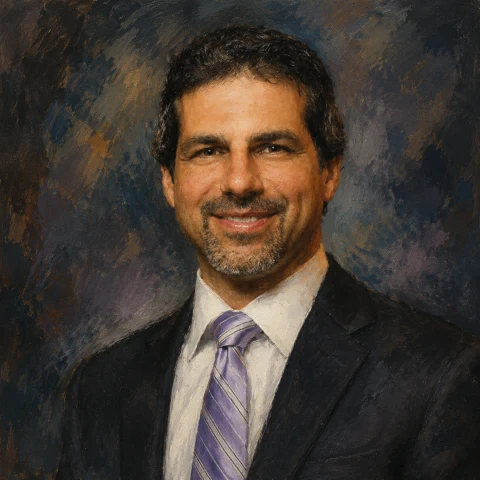
Joshua D. Koskoff
Firearms-Industry Litigation · Medical Malpractice · Personal Injury
For the gun industry, it’s time to stop recklessly marketing all guns to all people for all uses and instead ask how marketing can lower risk rather than court it.
Soto v. Bushmaster in the Connecticut Supreme Court: A CUTPA Marketing Claim Against Remington Clears Federal Gun-Industry Immunity
Joshua D. Koskoff argued Soto v. Bushmaster, in which the Connecticut Supreme Court held that federal gun-industry immunity did not bar the Sandy Hook families’ claim that Remington marketed its rifle to civilians for criminal purposes. The case ended in 2022 with Remington’s four insurers agreeing to pay the full $73 million of coverage and the families free to make the company’s documents public.
At a packed hearing in the Connecticut Supreme Court in Hartford on November 14, 2017, the justices pressed Remington’s lawyer, James Vogts, about advertising that touted the Bushmaster rifle’s ability to “single-handedly” overcome “forces of opposition.” “If it’s used for hunting or for target practice, what’s the purpose of that?” Justice Richard N. Palmer asked. “It’s not clear to me what type of target practice requires one to really eviscerate a target,” he said, noting that the families suing the company had described the weapon as a “killing machine.”
Vogts answered that the advertising was meant to build interest in a rifle suited to self-defense. “If I felt the need to have a firearm to protect myself and my family, I’d certainly want to choose the weapon that would force the opposition to bow down,” he said, adding that the rifle was “being used to hunt deer at this very moment all across the country.” Remington also argued that whether such rifles should be sold to the public was a question for legislators rather than juries.
Joshua D. Koskoff, the families’ lead lawyer, argued their appeal. He told the justices that Remington “marketed the weapon for exactly what it was” and that the company had used product placement to put its rifle in first-person shooter games the gunman played. “The weapon he needed for his mission was never in doubt,” he said. “Remington may never have known, but they had been courting him for years,” he told the court. Outside the courthouse afterward, Ian Hockley, whose son Dylan was six, objected that rifles like it were sold to civilians without the training and psychological screening required of soldiers. “The manufacturer of the Bushmaster takes no such precautions when unleashing their product in the civilian market,” he said.
Sixteen months later, in March 2019, the court allowed the families of nine people killed at Sandy Hook Elementary School to proceed with their claim that Remington Arms had marketed the rifle used in the attack to civilians for criminal purposes, holding that a federal law protecting gunmakers from suits over crimes committed with their products did not bar it. Koskoff represented the families with his colleague Alinor C. Sterling at Koskoff Koskoff & Bieder in Bridgeport; Katherine Mesner-Hage, then a lawyer at the firm, helped formulate the legal strategy. In February 2022 Remington’s four insurers agreed to pay the full $73 million of coverage available, and the families obtained the right to make the company’s internal documents public.
The federal law, the Protection of Lawful Commerce in Arms Act, was passed by Congress in 2005. It bars actions against manufacturers and sellers for harm “resulting from the criminal or unlawful misuse” of their products, but it excepts an action in which a manufacturer or seller “knowingly violated a State or Federal statute applicable to the sale or marketing of the product,” when the violation was a proximate cause of the harm. The families’ case depended on that exception and on the premise that the Connecticut Unfair Trade Practices Act, known as CUTPA, was a statute applicable to the way Remington marketed its Bushmaster rifle. The court’s majority, in an opinion by Palmer, accepted that premise. The families could go forward, it held, on “the single, limited theory that the defendants violated CUTPA by marketing” the rifle “to civilians for criminal purposes, and that those wrongful marketing tactics caused or contributed to the Sandy Hook massacre.”
From Probate Questions to a Marketing Claim
On December 14, 2012, a gunman killed twenty first-grade children and six staff members at Sandy Hook Elementary School in Newtown. The attack lasted less than four and a half minutes, and he fired at least 154 rounds. Koskoff was ordering hard-boiled eggs from the coffee shop in his Bridgeport office when flashes about a school shooting began appearing on television. He had young children then, and he remembers going home and crying, as he was sure many parents did.
The case reached him through a chance conversation. A driver taking him to the airport asked what he did for work, said he worked a second job with the father of Victoria Soto, a first-grade teacher killed at the school, and asked whether he could give Koskoff’s name to his colleague. Koskoff expected questions about probate or the distribution of donated money. Soto’s family did reach out to the firm, which helped with probate, the flood of media requests and charitable work. Other families came to his firm and to other firms with similar needs, and some began to think about how to prevent another Sandy Hook.
Asked in 2022 how much he had known about guns going into the case, Koskoff said, “If there was such a thing as less than zero, I would say that,” and added, “Nothing about guns, nothing about gun law.” In the months after the shooting he was not a gun-policy activist. “I thought that battle had been fought, and lost,” he said later. What shocked many of the families, in his account, was that while politicians were at least talking about solutions, “the gun industry doubled down.”
Man Cards and Taped Magazines
Bushmaster, the Remington brand that made the rifle used at Sandy Hook, had for years marketed its AR-15 rifle to civilians through targeted online ads. “They were reaching out to people like the shooter, for example, with this aggressive, violent imagery and copy,” Koskoff said. One ad showed the rifle with the tagline “Consider Your Man Card Reissued,” and visitors to Bushmaster’s website could complete a “manhood” survey to receive a ceremonial “Man Card.” To young men who might suffer from anger or social or mental challenges, Koskoff argued, the ads offered a powerful seduction. “The clear message is: You use this thing to kill people. That’s what makes you a man,” he said.
The families also cited advertising that called the rifle “the ultimate combat weapons system” and promised “military proven performance,” and an ad that told readers, “Forces of opposition, bow down. You are single-handedly outnumbered.” Of that line, Koskoff said: “There’s no non-criminal use for making your forces of opposition ‘bow down’ in our neighborhoods and our towns. That’s an assault, period.”
When Connecticut released photographs from the crime scene, Koskoff saw in one of them two thirty-round magazines duct-taped together, which allowed continuous fire with almost no pause to reload. He recognized the setup from Call of Duty, the video game series he had played to spend time with his sons, and the hair on his forearm stood up. “This takes a rifle with a magazine that holds 30 rounds, and instead gives you 60 rounds with almost no downtime,” he said in a March 2022 talk. “This was content and branding meant to reach kids,” he has said. The simulated rifle in the game was Remington’s Bushmaster ACR, which Koskoff said Remington had licensed for the game. “This allowed children and teenagers to experience what it was like to use a combat weapon,” he said. “You could feel the vibrations of the controller.”
Koskoff has compared Remington to a carmaker. “While you can’t sue Ford for drunk drivers, this was as if Ford was courting drunk drivers as customers,” he said in the same talk. “Why court people to kill people? Why court people who are more likely to kill people?” Of the video game, he said: “They knew this would be played by children and teenagers, to create future customers.”
In December 2014 the nine families sued Bushmaster, Remington, a distributor and the store that sold the rifle. They alleged that the gunman had dreamed as a child of joining the Army Rangers, that he chose the XM15-E2S partly because of its marketed association with the military, that he was a devoted player of first-person shooter games featuring versions of the rifle, and that he had taped magazines together for faster reloading, a technique taught in those games. His mother had bought the rifle in March 2010 from a gun store in East Windsor. When an interviewer raised that purchase in 2022, Koskoff answered: “Well, that’s the way marketing works. Marketing isn’t targeting the purchaser; they’re targeting the end user.” He offered Disney as an example of a company that markets its products to children rather than to their parents.
“Capable of Being Applied”
Remington and its co-defendants relied on the federal law. They argued that treating a general statute such as CUTPA as a qualifying statute would produce an absurd result: if the exception reached every statute capable of being applied to the sale or manufacture of firearms, virtually any action seeking to hold gunmakers liable for third-party gun violence could proceed. They also invoked the rule that exceptions to a statute are read narrowly.
The court divided four to three. Palmer wrote for himself and Justices Andrew J. McDonald, Raheem L. Mullins and Maria Araujo Kahn; Justices Richard A. Robinson, Christine S. Vertefeuille and Nina F. Elgo dissented in part. The majority held that the families could sue under CUTPA although they had never done business with Remington. A party directly injured by conduct resulting from unscrupulous and illegal advertising, the majority wrote, can bring a CUTPA action “even in the absence of a business relationship with the defendant.”
On the federal question, the majority gave “applicable” its ordinary dictionary meaning, “capable of being applied.” CUTPA prohibits unfair or deceptive acts in the conduct of any trade or commerce, so it can be applied to the sale and marketing of firearms. To Remington’s warning that such a reading would let virtually any suit go forward, the majority answered that the families’ claims could proceed without crippling the federal law, because they alleged only that one family of sellers had advertised one assault weapon in a uniquely unscrupulous way, promoting it as suitable for illegal, offensive assaults. The majority described the regulation of advertising that threatens public health and safety as a core exercise of the states’ police powers. It noted that the Connecticut legislature intended rulings under the Federal Trade Commission Act to guide the reading of CUTPA, and that those rulings supported treating wrongful advertising that poses a genuine risk of physical harm as within the federal act’s reach, and so within CUTPA’s. After reviewing the federal law’s text and legislative history, the majority concluded that “Congress has not clearly manifested an intent to extinguish the traditional authority of our legislature and our courts to protect the people of Connecticut from the pernicious practices alleged in the present case.”
The families had pleaded enough to survive a motion to strike, the majority held, and were entitled to the opportunity to prove their marketing allegations. At trial they would have to prove their theory that Remington’s advertising had inspired the gunman or caused him to select a more efficiently deadly weapon. “Proving such a causal link at trial may prove to be a Herculean task,” the majority wrote. On standing, it wrote: “If the defendants’ marketing materials did in fact inspire or intensify the massacre, then there are no more direct victims than these plaintiffs; nor is there any customer of the defendants with a better claim to standing.” Koskoff had asked the court to return the case to Superior Court in Bridgeport so that “the discovery phase of this case can begin and we can start uncovering documents on how this military weapon ended up in civilian hands.”
Remington petitioned the United States Supreme Court for review. Donald B. Verrilli Jr. of Munger, Tolles & Olson, the families’ counsel of record there, filed their brief in opposition, and on November 12, 2019, the Court denied the petition.
Depositions, Cartoons and School Records
Back in the trial court, the families narrowed the case in February 2020 to a single claim that Remington’s marketing violated CUTPA. In June 2020 Judge Barbara Bellis denied Remington’s motion to shield its executives from discovery, and over the life of the case the families’ lawyers deposed members of Remington’s leadership and marketing teams. Remington, which had filed for bankruptcy in 2018, filed again in July 2020 in Alabama. Chris Boehning and Janus Schutte of Paul, Weiss joined the families as additional counsel and took the lead in protecting the case in that proceeding.
The families also challenged Remington’s document production, which included more than 18,000 files depicting cartoons and emoji, along with thousands of seemingly personal photographs and videos. People associated with Remington said the images had appeared on websites and social-media pages the company operated, where people unaffiliated with Remington could post. In a July 2021 filing the families wrote that “Remington has treated discovery like a game.” They called it “inconceivable” that the company’s entire marketing department, which had more than thirty employees in 2010 alone, had sent “a mere 2,194 relevant, non-privileged emails during the seven-year period from 2006 to 2012,” and asked the court to set an August 1 deadline for the remaining documents. Jury selection was then scheduled for September.
The documents the families did obtain included, as Koskoff has described them, contract papers indicating a quid pro quo between Remington’s owner and Activision, the maker of Call of Duty, and records in which the private-equity firm behind Remington boasted of what its marketing was doing with young buyers. His reaction, as he tells it, was: “Get me to a jury, and let me read this!” He said later: “Even I couldn’t lose that case.”
In September 2021 Remington subpoenaed attendance records, report cards and other documents for five of the children and four of the educators killed at the school. The families’ lawyers moved to seal them. “The only relevant part of their attendance records is that they were at their desks on December 14, 2012,” Koskoff said. The records, he said, “cannot possibly excuse Remington’s egregious marketing conduct, or be of any assistance in estimating the catastrophic damages in this case.”
Four Insurers and the Documents
The families announced a settlement on February 15, 2022. Remington’s four insurers agreed to pay the full coverage available, $73 million, to be divided among the nine families: those of Victoria Soto, Dylan Hockley, Mary Sherlach, Noah Pozner, Lauren Rousseau, Benjamin Wheeler, Jesse Lewis, Daniel Barden and Rachael D’Avino. Remington admitted no liability. The families obtained the right to make public thousands of pages of internal company documents produced in the case.
At the news conference announcing the settlement, Koskoff showed Remington ads with messages such as “Consider Your Man Card Reissued” and “Clear the Room, Cover the Rooftop, Rescue the Hostage.” He also talked about the rifle itself. “It’s not a modern sporting rifle. It’s not a family Swiss Army knife. It’s a combat weapon,” he said. “A combat weapon was used not by a highly trained soldier, but by a deeply troubled kid.”
“What I would say is, the proof is in the pudding,” Koskoff said after the settlement. “You have four insurance companies, they’re all represented by different people. They all paid their very last dollar.” The families’ lawyers described what the case had revealed: driven by profit goals set by its parent company, the private-equity firm Cerberus, Remington had abandoned a previously sober approach to marketing firearms for an aggressive, multimedia campaign that pushed sales of AR-15s through product placement in first-person shooter video games and by touting the rifle’s effectiveness as a killing machine.
Koskoff told reporters that about 100,000 AR-15s were sold each year in the United States in the mid- to late 2000s and that by 2012 the number had passed 2 million. The families’ lawyers began organizing Remington’s emails, internal presentations and business projections for public release. Koskoff described the change the families wanted in how gun companies sell their products: “We want them to do it in a way that promotes safety, not danger and death.”
David and Francine Wheeler, whose son Ben was six when he was killed, had not seen Remington’s marketing before the case. David Wheeler said: “I was aghast. Unbelievable. My first thought was, ‘Do you think this is a game? My son is gone.’” Law enforcement, he said, recovered eighty casings in the small classroom where Ben was in school. On the day the settlement was announced, Francine Wheeler said: “Today is about how and why Ben died. It is about what is right and what is wrong.”
Standing with David at the news conference, Francine Wheeler said the legal system had given them some justice that day, but “David and I will never have true justice.” Ben would have been fifteen, and true justice, she said, would have been their son, healthy, standing beside them. Nicole Hockley, Dylan’s mother, said she was waiting for access to Remington’s documents. “This is a case about creating change,” she said. “This is about being responsible in your marketing.”
David Wheeler on the Stand in Waterbury
Seven months after the settlement, David Wheeler testified in a different case before the same trial judge. Judge Barbara Bellis had found the broadcaster Alex Jones and his company, Free Speech Systems, liable by default for failing to turn over documents in a defamation suit brought by relatives of five children and three educators killed at the school and by an FBI agent who responded to it. In September 2022 a jury in Waterbury heard the evidence on damages. Wheeler told the jurors that people had come to his home twice, one of them demanding to see Ben and insisting the boy was alive, and that a student film he made in college had been held up as proof that he was a “crisis actor.” “It’s very stressing,” he said. “It makes you feel like you don’t matter.”
Koskoff’s colleague Christopher Mattei gave the families’ closing argument on October 6, 2022, and suggested that the jury award at least $550 million. Koskoff also addressed the jurors. Lies like the ones Jones tells get people killed, he told them: “We don’t know when, but it is going to happen at some point.” Jones had not come to court to hear the families testify, and Koskoff called him a “coward.”
On October 12, 2022, the jury awarded the families and the agent $965 million in compensatory damages. Koskoff said afterward that the families, “who never asked for any of this,” had lost their safety and sanctuary because of Jones.
A Vascular Surgeon on the Phone
In 2016 Koskoff and Mesner-Hage represented Virginia Schneider at a medical-malpractice trial in Superior Court in Bridgeport. In November 2009, when she was eighteen and a recent high-school graduate, Schneider went to Griffin Hospital in Derby with an asthma attack. Her lawyers said that doctors there were concerned about numbness and pain in her left leg, that a test showed a clot, and that because the small community hospital had no vascular surgeon, its doctors called Dr. Marsel Huribal, the on-call vascular surgeon. Huribal, they said, asked for another test and then sent her home, to be seen at his office three days later. Her condition worsened, and her left leg was amputated below the knee.
The trial lasted five weeks. The defense denied responsibility and blamed the hospital, Koskoff said: “He said he wasn’t her doctor because he was just on the phone, and therefore, it wasn’t a doctor-patient relationship.” Mesner-Hage said Schneider needed to be admitted and that it was not safe to release her. On October 14, 2016, the jury awarded $24.9 million, including about $4.2 million in economic damages, such as medical expenses, and about $20.7 million for pain, suffering and reduced ability to participate fully in everyday life. It found Huribal 60 percent responsible and assigned the rest to other physicians and the hospital. “He was the expert on the phone, and this case goes to the question of ‘where does the buck stop?’” Mesner-Hage said. “The jury is saying that the buck stops with the specialist.”
Koskoff has said his trial work changed in a malpractice case that his client, a widow, insisted on taking to trial after he suggested she settle. “Something happened during that trial where things started to click for me,” he said. “I think I stopped trying to be other people.” Eric J. Stockman of Stockman O’Connor Connors has described Koskoff’s cross-examination as “lulling a witness into complacency” with malaprops and mispronunciations, “only to turn on his excellent command of the medical record when the witness gets sloppy.”
A Complaint His Father Wanted Filed
Koskoff is the third generation of his family at Koskoff Koskoff & Bieder, after his grandfather, Ted Koskoff, the son of a Jewish-Russian immigrant, and his father, Michael Koskoff, who had trained as a Shakespearean actor. Both brought their work home. One of his grandfather’s clients, whom the family called Uncle Frank, brought bagels to the house, and one of his father’s clients, a member of the Black Panther Party, babysat for the children. Koskoff graduated from Syracuse University and from Suffolk University Law School, and he was admitted to the Connecticut bar in 1994.
Michael Koskoff wanted one complaint filed before he died: Tamara Lanier’s suit against Harvard University over daguerreotypes made in the 1850s of an enslaved man, Renty, and his daughter Delia, whom Lanier identifies as her ancestors. The Harvard biologist Louis Agassiz had commissioned the images to support theories of racial superiority. “One thing he really wanted to get done before he left the planet was for us to file this complaint,” his son has said. “We filed it about a month before he died.” Koskoff’s team represented Lanier until the case ended in a settlement in May 2025 that sent the daguerreotypes to a Black history museum in South Carolina, the International African American Museum, which has since received them.
Smith & Wesson and the Causation Question
Eduardo Uvaldo, sixty-nine, of Waukegan, was one of seven people killed at the 2022 Independence Day parade in Highland Park, Illinois, where the gunman also wounded nearly fifty people between eight and eighty-eight years old. “Eduardo was a kind, loving, hardworking man who adored his family,” his family said. In the summer of 2024 Koskoff and his firm sued Smith & Wesson, the maker of the rifle used in the shooting, along with a distributor, two dealers and other defendants, in Lake County Circuit Court on behalf of Uvaldo’s family and other people who were at the parade. The plaintiffs alleged that Smith & Wesson kept marketing and selling its M&P 15 rifle, and pushed it on teenagers, despite the rifle’s use in four major mass shootings over the preceding decade, and that the company’s conduct amounted to negligent entrustment and violated an Illinois consumer-protection law. “With each new mass shooting came a sales surge, and the company doubled down on its strategy to reach youth and promote a first-person style shooting experience,” Koskoff said.
On April 1, 2025, the court ruled that the Uvaldo family’s wrongful-death suit against Smith & Wesson could go forward and allowed claims against the two dealers to proceed. Judge Jorge L. Ortiz, who rejected Smith & Wesson’s attempts to dismiss twenty-five consolidated suits over the shooting, described them as aimed narrowly at the company’s marketing, which he agreed appeared to raise the risk that people like the shooter would use Smith & Wesson weapons in such attacks. “It’s about time that Smith & Wesson answers for its actions, and we’re grateful that they will now have their day in court,” Koskoff said.
Smith & Wesson appealed Ortiz’s ruling, asking the Illinois Appellate Court’s Second District to decide whether Illinois’s Firearms Industry Responsibility Act can reach conduct that predated the statute, whether the law is constitutional, and whether the federal immunity law preempts the suits; it also argued that the plaintiffs had yet to prove the shooter ever saw a Smith & Wesson advertisement. The Second District denied Smith & Wesson’s petition without explanation in September 2025. On January 28, 2026, the Illinois Supreme Court ordered the appellate court to take up the appeal anyway, and no decision had followed by the end of July 2026.
Discovery went on while the appeal was briefed. On April 23, 2026, the Second District denied Smith & Wesson’s motion to stay discovery pending the appeal, and on July 24, 2026, the Illinois Supreme Court denied the company’s motion for a supervisory order that would have halted it. In that motion the company said it had already produced hundreds of thousands of pages of documents from forty-six custodians. Smith & Wesson’s argument about the advertisement goes to the causal link the Connecticut Supreme Court said in 2019 might be a Herculean task to prove against Remington. Remington settled before a Connecticut jury had to decide it.