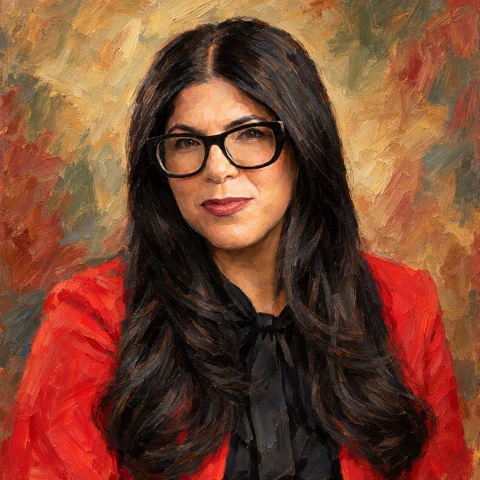
Charla G. Aldous
Medical Malpractice · Wrongful Death · Catastrophic Injury
It’s not enough to say we close our eyes, we did not see anything else. No, it is your duty to monitor.
Stacey Jackson’s Dram-Shop Suit Against Beamers: A $25 Million Dallas County Verdict in Jerry Brown’s Death
Charla Aldous represented the mother of Dallas Cowboys linebacker Jerry Brown Jr. against Beamers, the nightclub that served his teammate Josh Brent before the 2012 crash that killed him, and opened the trial with the Irving officer who questioned Brent at the scene. A Dallas County jury assigned the club the same share of fault as Brent and returned a $25 million verdict, and in 2021 the Fifth District Court of Appeals in Dallas affirmed the judgment against the club.
Charla Aldous’s first witness against Beamers was a police officer. On Wednesday, December 5, 2018, the opening day of trial, Kevin Palms of the Irving police told a Dallas County jury about the crash he had responded to six years earlier, in which the Dallas Cowboys defensive tackle Josh Brent, driving drunk, killed his teammate Jerry Brown Jr. Others should have known Brent was intoxicated, Palms testified, and no police training is needed to know when someone has had too much to drink. “We like to call it common sense,” he said.
Aldous put the officer first because of the club’s video, which showed Brent leaving Beamers and getting into his Mercedes. “He walked straight and there was construction outside the bar,” she said years later. “And in the video, he did not look intoxicated.” When she interviewed the officer who responded to the crash, he told her that if Brent had tried to leave the scene of the accident, “I would’ve arrested him immediately.” Brent had driven out of the club’s parking lot at 2:15 a.m., and at 2:19 his car dialed 911 on its own as it lost control. Aldous wanted the jurors to hear from the officer, who saw Brent minutes after he left the club, before they watched the video of Brent walking out. “So that gave us the opening to say if he were that obviously intoxicated four minutes after he left the bar, despite what the video showed, if you were there face-to-face with him, he obviously had to have been intoxicated,” she said.
Aldous represented Brown’s mother, Stacey Jackson. Beamers, a private club in northwest Dallas that had closed in 2013, and its management company put the whole of Brown’s death on Brent, who, they said, was drunk and speeding when he lost control of the car. He had not been intoxicated when he arrived at the club or when he left, they argued, and no one at Beamers had seen a sign that he was.
Texas allows a claim against a seller of alcohol on demanding terms. Section 2.02 of the Alcoholic Beverage Code requires proof that “at the time the provision occurred it was apparent to the provider that the individual being sold, served, or provided with an alcoholic beverage was obviously intoxicated to the extent that he presented a clear danger to himself and others,” and that the intoxication was a proximate cause of the damages. Beamers’ defense went to the first of those requirements: if no one at the club had seen an obviously intoxicated man, the statute did not reach the club. Aldous’s answer was that the club had a duty to watch the man it was serving, and that what an officer could see on an Irving access road minutes after Brent drove away had been there to see inside the club.
Eddie V’s, the Privae Lounge, and an Irving Access Road
Brent and Brown had been close friends since they were teammates at the University of Illinois, and in Dallas they shared an apartment. In December 2012 Brent was a starting defensive tackle for the Cowboys; Brown, 25, played linebacker on the team’s practice squad. On the evening of December 7, Brent had dinner with a group of teammates at Eddie V’s restaurant from about 9:30 to 11:30, and the Fifth District Court of Appeals later wrote that he drank the equivalent of six alcoholic drinks there. He went back to the apartment, picked up Brown, and drove the two of them to Beamers. They arrived at 12:42 a.m. and went upstairs to the Privae Lounge, the club’s VIP section, which sold alcohol by the bottle. A large group joined them, and the club provided bottle service throughout the evening.
Brent ordered three bottles of champagne and a bottle of Hennessy. Emerald Khan, a server, brought the champagne and, with help, about twenty glasses to his table. Maria Fembres brought the Hennessy and poured him one Hennessy and Coke. Brent poured a second himself and kept the bottle. The club’s video showed him pouring his own drinks instead of having a server do it, shaking bottles, and dancing while he held up two bottles and appeared to drink straight from them.
The two men left the club’s parking lot at 2:15 a.m., Brent driving. At 2:19 he was going 110 miles an hour on a highway access road in Irving, in a 45-mile-an-hour zone, when he hit a dip, failed to navigate a curve, and lost control. The Mercedes rolled over multiple times, came to rest on its roof, and caught fire. Brent got out and pulled Brown from the car. Stacie McWilliams, who came upon the wreck and left her car to approach Brent, later told police she heard a man yell, “Help me!” Brown died at 2:57 a.m. Blood drawn from Brent at 3:27 measured his alcohol concentration at 0.189 percent, more than twice the legal limit.
Palms questioned Brent at the scene. He smelled alcohol on Brent and in the car, saw that his eyes were red, glassy and bloodshot, and found him confused about where he had been driving. Brent told him he had been drinking only champagne and had been going 70 miles an hour. A second officer, Travis Huckaby, gave him roadside intoxication tests. Brent failed all but one.
Stacey Jackson Asked Brent to Meet Her at the Airport
Brown grew up in St. Louis and had wanted to play in the NFL since he was six. At his funeral, held at Hopewell Missionary Baptist Church in St. Louis a week after the crash, his peewee coach remembered him crying after a 48–0 win because he had not touched the ball enough. He had worn No. 53 for the Cowboys. “If you needed a shoulder to lean on, he was always there,” his mother said.
Jackson forgave Brent from the start. When the Cowboys flew her to Dallas for a private memorial, she asked that Brent be the one to pick her up at the airport. They hugged, and he told her he wished he had died in the crash. She told him it would be okay. “I have no hard feelings against my boy. I love him like he is my son,” she said. A year later she was still calling him every week. “If being mad at Josh would bring Jerry back, I would be the No. 1 person,” she said.
Beamers closed in 2013, six months after the crash. That August the Texas Alcoholic Beverage Commission announced that it had found “sufficient evidence” that the club sold alcohol to an intoxicated person and that it was “conducting practices that promote excessive consumption by patrons.” Jackson sued the club, its management company, Bavarian Management, and Brent in Dallas County, in Cause No. DC-13-13245. The club said it “promotes responsible drinking.”
Jackson testified at Brent’s criminal trial and told the jury that she had forgiven him. “He is still responsible, but we can’t go on in life holding a grudge,” she said. In 2014 the jury convicted him of intoxication manslaughter and sentenced him to 180 days in jail and ten years’ probation.
What the Servers Said and What the Video Showed
The civil case was tried in December 2018 in the 191st Judicial District Court in Dallas County, before Judge Gena Slaughter. Aldous tried it with Brent Walker, her partner at Aldous Walker; Josh Bennett of Carter Arnett represented Brown’s estate. Spencer Markle represented Beamers, and Carlos Cortez represented the management company. On the first day Jackson sat behind her lawyers, looking ahead and bouncing her left knee. Walker gave the jurors the rule in his opening statement: “A bar cannot serve alcohol to a person who is intoxicated.” Beamers’ own policy, he told them, required a party of at least six for bottle service and forbade customers to serve themselves.
The people who served Brent testified that he never seemed drunk. Khan said she served him one glass and did not know how many drinks he had. The server who sold his table its bottle of Hennessy told the jury she had poured him one drink in a visit of nearly an hour and a half and had seen no signs of intoxication; in a year of bottle service, she said, she had seen only one person pour their own drink. The club’s owner gave the same account. Jackson’s lawyers showed the jurors the video from the VIP section that night: guests pouring their own drinks, some drinking straight from bottles, and Brent holding up what appeared to be two champagne bottles.
Jackson called Dr. Sarah Kerrigan, a forensic toxicologist, who testified that the 0.189 result came from a reliable test and that Brent had to have consumed the equivalent of about fourteen standard drinks over the course of the night to reach it. She also conceded that a person can be legally intoxicated without showing visible signs. Jackson’s other expert, Dr. Mark Willingham, a retired Florida alcohol regulator, testified that Beamers served Brent, or let him serve himself, while he was obviously intoxicated. He pointed to Brent’s handling of the bottles, his pouring for himself, and how fast he was drinking, conduct that “even a poorly trained server who was paying attention should have noticed.”
Brent’s Testimony on Monday, Jackson’s on Tuesday
Brent did not mount a defense; he testified that he could not afford to bring a lawyer. He was in court only on the day he testified, Monday, December 10, and it was his first public account of the night. He said he had two shots and two cognacs at dinner and did not feel impaired. At Beamers, he said, he remembered drinking about a glass and a half of champagne and two Hennessy and Cokes, and he did not recall how many drinks he had in all. He had seen the video of himself drinking from the bottle. “I cannot honestly recall,” he said of doing it. Aldous put the point to him: “You just flat don’t remember a lot of the events at Privae, do you?” He agreed that he did not. He also told the jurors that he had not been intoxicated when he arrived at Beamers but was when he left.
Brent said he had asked Jackson to forgive him and that the two remained close and still talked regularly. He told the jurors that he accepted full responsibility for his actions. He had met Brown at Illinois, and they were like brothers. Brent later quit football, and money and fame came to seem less important. “They can’t replace friendships, brothers,” he said.
His acceptance of blame fit the club’s defense. Beamers maintained that Brent had not appeared intoxicated that evening, that he was not intoxicated when he arrived or when he left, and that he alone should be held responsible. Its lawyers contended that his blood-alcohol level had risen after he left the club. Cortez said a bar should be punished if it serves obviously intoxicated people, but that “the uncontroverted testimony is that he was not served when he was obviously intoxicated.” If the jurors accepted that account, the statute’s first requirement failed, because nothing would have been apparent to the provider.
On Tuesday, December 11, Aldous called Stacey Jackson. She described Brown and Brent as “gentle, humble giants.” On the night of the crash, she testified, she had a feeling something was wrong; she texted and called her son and got no answer. The next day an Irving police detective called to tell her he had been killed. “I dropped my phone,” she said, crying as Aldous questioned her. The video of Brent dancing with the champagne bottles did not look like the young man she knew, and she put the difference down to alcohol. She had sued, she said, so that no other parent would have to do what she had done: choose a casket, look at her son’s body, and bury him. “This is unbearable,” she said. “They don’t see the days and the nights that I cry behind closed doors.” Both sides rested that day.
What Was Apparent at the Table
Aldous answered that defense with the club’s own conduct. Her explanation of why the club kept serving Brent was commercial. “This establishment chose to continue serving this celebrity guest because he was buying expensive bottles and running up a large tab,” she said. “No one bothered to consider the consequences when he got behind the wheel.” “There’s a reason why Texas law holds bars accountable for injuries caused by overserved patrons,” Aldous said.
On the requirement that intoxication be apparent to the provider, she argued that the club could not satisfy the law by declining to look. “Beamers, you can’t just say, ‘We didn’t see it, so we’re not responsible,’” she said. She put the same point another way. “It’s not enough to say we close our eyes, we did not see anything else,” she said. “No, it is your duty to monitor.” The club could have put more servers on its bottle-service tables to watch them, she said, and could have warned patrons not to pour their own drinks.
“He had many options. He ignored them all,” Spencer Markle told the jury in his closing argument for Beamers. “Nobody forced him to drink. Nobody forced him to drive.” On December 13, 2018, after about five hours of deliberation, the jury in the 191st Judicial District Court assigned 48 percent of the responsibility for Brown’s death to Beamers and its management company, 48 percent to Brent, and 4 percent to Brown. It returned a $25 million verdict: $15 million for Jackson and $10 million for Brown’s estate. When it was over, Jackson hugged Aldous.
Aldous aimed her comments after the verdict at the business Beamers had been in. “I hope that this sends a message to bars—especially bars that do bottle service—to say if they’re going to undertake that type of business, they need to do it safely,” she said. “They need to protect the public. They need to make sure that their patrons aren’t being served drinks when they’re intoxicated. And our hope and prayer is that, through this verdict, it may save a life in the future.”
Jackson said she could not be more grateful, and that she was sure her son was “looking down and happy.” She talked about her nonprofit organization for Jerry and its plans to give scholarships and help children with school supplies. Parents, she said, “prepare our children for us passing away. You don’t prepare yourself for seeing them going before you.”
“I’m still going to have the same feeling that I had on Dec. 8, 2012,” she said. “But if this can help somebody else where they don’t go through what I’m going through, it was well worth it.”
A Blind Eye Before the Fifth District Court of Appeals
Beamers and its management company, Bavarian Management, appealed. Before the Fifth District Court of Appeals in Dallas they argued that Brent was never visibly or obviously intoxicated at the club, so it could not have been apparent to them that he was. They also attacked Willingham’s testimony and the estate’s award.
On April 20, 2021, the court affirmed. Writing for the panel, Justice Bill Pedersen III explained that the statute’s requirement that intoxication be apparent to the provider does not mean that the provider must actually observe the signs of intoxication. “In the end, the test for liability under the Act is an objective one,” he wrote. If actual observation were required, a provider of alcohol could escape liability “by turning a blind eye to signs of intoxication that would otherwise be plain, manifest, and open to view.”
The court then set out the proof. A video exhibit showed Brent dancing, waving two bottles and drinking directly from them. The officers at the scene had “reported visible signs of intoxication mere minutes after Brent left the club.” His blood-alcohol level about an hour later was more than twice the legal limit. On that evidence a reasonable jury could find that the club had served Brent, or let him serve himself, while he was obviously intoxicated. The club’s employees and Brent’s teammates had given accounts favorable to the club, and jurors, the court wrote, could reasonably have concluded “that their statements were subject to personal interest and were not credible.”
The court held that Willingham’s opinions had been properly admitted and that conflicts between his account and other witnesses’ went to the weight jurors gave it. It upheld the estate’s award for Brown’s pain and mental anguish, relying on McWilliams’s account of the man calling for help from the burning car and on the violence of the crash. The judgment the court affirmed assessed the 48 percent share of the club and its management company at $12 million.
The Traffic Queen of Grayson County
Aldous was raised in a small town about 60 miles north of Dallas. “I was a Pentecostal preacher’s kid,” she said. In the vocational office-education program at her high school in Sherman, a woman family lawyer came to speak to her class. “After that, I knew that’s what I wanted to do, I wanted to work in a law firm,” Aldous recalled. A constitutional law class later turned her toward becoming a lawyer herself: “that class changed my life.” She graduated from Austin College in 1982 and from Southern Methodist University’s Dedman School of Law in 1985.
Her first firm was in Sherman. “I was the only female and the only associate, so you can imagine how it trickled downhill,” she has said. To make her billable hours she handled traffic cases and quashed enough tickets to become known as “the traffic queen of Grayson County.” An insurance adjuster took notice. “You’ve got real talent,” he told her. “I want you to start doing my work.” She started out defending businesses and insurance companies and spent about ten years in insurance defense, medical-malpractice cases among them. She disliked that she could not choose her cases; when an insurer called about one of its clients, she had to take the case.
Her firm’s one plaintiff’s case, a water-pollution suit, changed her course. Residents of a trailer park in Wilmington, North Carolina, had sued Conoco over the contamination of their drinking water, and it was the first plaintiff’s case Aldous tried. After the jury was picked, the judge said, “Ms. Aldous, call your first witness.” She had not told her trial team what she was about to do. She told the court, “I call whomever on behalf of Conoco is going to tell this jury they take responsibility” for polluting her clients’ well water. The judge agreed she had a point and told Conoco’s lawyers to put somebody up. Conoco put up the vice president of its East Coast division, and she kept him there for almost two days. The jury returned a verdict for the residents on liability, and in 1997 Conoco settled with them before the jury finished deliberating on the amount of punitive damages. “It felt like this was what I was born to do,” she has said.
After about ten years she had paid off her school loans. “Okay, now I’m going to do what I really want to do,” she remembers saying. “At some point, I decided I wanted to choose the people and companies I represent, to know them personally and believe in their cause,” she has said. She was a single mother of four. She practiced for about a year with her friend Steve Malouf and then went out on her own, and she kept pictures of her clients on the refrigerator and told her children about the cases. Later she asked three judges whom she should practice with, and all three named Brent Walker, then a medical-malpractice defense lawyer.
She has tried over 200 jury trials, for plaintiffs and for defendants. “The first time I ever stood up in front of a jury, I knew that it was where I belonged,” Aldous has said. “I’ve been told that, in front of a jury, I seem to have the opposite of stage fright, and I suppose that’s true.” In one of her first trials, in Greenville, Texas, Judge Johnny Johnson called her back to chambers as jury selection was about to begin and asked, “Are you one of those lady lawyers with a chip on your shoulder?” She answered, “I don’t think so, Judge, but I have a feeling if I am, you’re going to knock it right off.” In a 2018 episode of the podcast Criminal, she talked about how Richard “Racehorse” Haynes, the Houston criminal-defense lawyer, had changed the way she approached a jury.
Unpopular Cases, the Texas Caps, and Bad Facts in Voir Dire
Her plaintiff practice came to center on medical malpractice. In a January 2025 episode of the Elawvate podcast, she described remaking herself from a defense lawyer into a plaintiff’s lawyer specializing in medical-malpractice cases, criticized Texas’s caps in those cases, and talked about taking unpopular cases. The caps limit noneconomic damages in a health-care-liability claim to $250,000 per claimant against physicians and other providers that are not health-care institutions, and to $250,000 per claimant against each institution, with $500,000 the ceiling for all institutions together.
She takes up a case’s bad facts in jury selection and defuses them there. “Own it,” she has said. “Embrace it and act like it’s no big deal.” In her view, “the only way you can completely be credible is to be authentic.” She tells jurors during voir dire that she has asked her client not to come, “because I want the jury to be able to talk freely.” In a product-liability trial against Honda, her client was quadriplegic. The client’s parents sat in the courtroom every day while the client stayed away. When the client later wheeled herself into the courtroom, Aldous recalled, the jurors were “so anxious to hear from her.”
She has tried birth-injury, medical-malpractice, and sexual-assault cases along with other injury claims. Her daughter, Eleanor Aldous, practices with her at Aldous Law in Dallas. The two tried a wrongful-death case for the family of a Texas electrician killed at a Frito-Lay plant in Irving when a boom lift backed into the scissor lift on which he was working, and they talked through their trial strategy on a Mother’s Day 2024 episode of the Keep It Legal podcast. The electrician was Hernan Murillo, 40, of Arlington, the father of four. On October 4, 2019, he and two other workers were stringing new electric lines from the scissor lift when the boom lift knocked it over, and all three fell about 30 feet. His widow, Laura Lopez, and their children sued in the 44th Civil District Court of Dallas County.
Walker Engineering, the subcontractor on the job, blamed its subsidiary, Walker Industrial. Aldous sued the parent company to get past the Texas workers’ compensation bar and argued that the two companies, which shared an address, a phone number and a website, operated as one, calling the arrangement a shell game. “When this tragedy happened, it deprived a woman of her husband and four children of their dad,” she said.
Since May 2025 Charla Aldous has co-hosted More Likely Than Not, a podcast about decisions and strategy in high-stakes injury and wrongful-death trials, with Eleanor Aldous and Caleb Miller of the firm. She is licensed in Texas and Oklahoma and is one of the founders of Athea Trial Lawyers, an all-female trial firm.
She has taken cases that could never pay. For a fourteen-year-old girl raped by three football players, “we sued the rapists knowing we’d never collect anything, but she needed somebody to fight for her,” Aldous has said. “Bad stuff is going to happen,” she said in 2023. “The thing is, people need to be held accountable.” Her advice to young lawyers was this: “You are the voice for those that, but for you, would not have a voice. And if you ever lose sight of that fact, you need to go do something else for a living.”