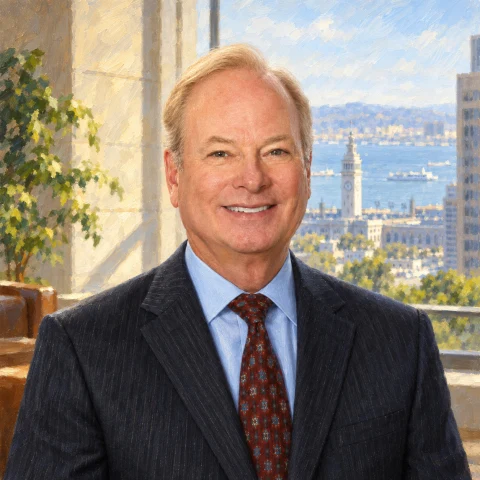
Kimberly A. Justice
Antitrust Class Actions · Price-Fixing Litigation · Consumer Protection
Through this litigation, Plaintiffs identified for Toyota a safety Defect in the Class Vehicles and developed and proposed to Toyota an appropriate remedy
United States v. Norris and Murphy v. Toyota: A Cover-Up Conviction in Philadelphia and a RAV4 Battery Settlement in Texas
Kimberly A. Justice was one of three Antitrust Division trial attorneys who prosecuted Morgan Crucible’s former chief executive for conspiring to obstruct a price-fixing grand jury. Representing RAV4 owners, she and her co-counsel would not settle without a safety recall, and a federal judge found their litigation a driving force behind Toyota’s recall of 1.85 million vehicles.
On July 27, 2010, a federal jury in Philadelphia convicted Ian P. Norris, the former chief executive of the Morgan Crucible Company, of conspiring to obstruct a grand jury’s investigation of price-fixing in carbon products. Norris, a British citizen, had fought extradition in the British courts for years before he was sent to the United States that March. Kimberly A. Justice, then a trial attorney in the Philadelphia field office of the Justice Department’s Antitrust Division, was one of the three lawyers who prosecuted him, and she later helped defend the conviction in the Third Circuit.
Fourteen years later, in Sherman, Texas, Judge Amos L. Mazzant III gave final approval to a class settlement for owners of about 1.85 million Toyota RAV4s from the 2013 through 2018 model years. The owners alleged that the SUVs’ 12-volt batteries could short-circuit against the metal bracket that held them in place and start fires in the engine compartment. When the settlement came before the court, Judge Mazzant appointed Justice and three other lawyers class counsel. In January 2023 she and her co-counsel sent Toyota an engineering analysis and told the company that the owners would not agree to any settlement that lacked a safety recall. Toyota recalled the vehicles that November. On November 19, 2024, Judge Mazzant found that the lawyers’ litigation had been “a driving force compelling Defendants to implement the Recall.”
False Minutes and a Clean-Up of the Sales Files
The grand jury sat in the Eastern District of Pennsylvania, the court where Justice, a graduate of Kalamazoo College and Temple’s law school, clerked for Judge William H. Yohn Jr. In April 1999 it was investigating price-fixing in carbon and graphite products, and it subpoenaed Morganite, Morgan Crucible’s American subsidiary, for documents of its communications with competitors in the sale of carbon products, wherever the documents were located. A cover letter said the government would not seek to enforce the subpoena for documents outside the United States unless it gave notice.
Witnesses at Norris’s trial described years of price-fixing before the investigation began. Morgan and its European competitors—Le Carbone Lorraine, Schunk and Hoffmann—fixed the prices of carbon brushes sold in Europe, meeting about twice a year to agree on price schedules. Between 1995 and 1998 Morgan employees met Carbone about fourteen times to coordinate prices for American customers. Norris, who ran Morgan’s carbon division from 1986 until January 1998 and was chief executive when the subpoena arrived, had sent a subordinate to Toronto in February 1995 “to discuss not competing on price,” and his handwritten notes of the meetings recorded the firms’ “[a]bsolute commitment” to exchange information before quoting prices to customers.
After the subpoena, Norris met with the Morgan employees most involved in the price-fixing in the United States: Robin Emerson, Morgan’s pricing coordinator; Melvin Perkins, Morganite’s vice president of sales and marketing; William Macfarlane, head of the electrical carbons division; and Jack Kroef, who ran the industrial and traction carbon business. They agreed to describe the meetings with Carbone as joint-venture discussions and the meetings with Schunk as general market or acquisition talks. Norris directed his subordinates to write summaries that told that account and to be “very careful” about what went into them. Perkins, who had attended every competitor meeting, drafted many of the summaries. Emerson testified that when Perkins showed them to him, “I told [Perkins], these are false minutes,” and that Perkins agreed. The summaries were to become the employees’ “new memory” if anyone questioned them about the meetings.
The cartel members had long kept the records of their European meetings off-site, but Morgan employees sometimes wrote prices they had learned from competitors on copies of customer inquiries in the sales files. Kroef testified that he had gone through those files to remove such papers about five times in his twenty years in the cartel, and that shortly after the subpoena Norris asked him whether it was time for another “check.” Kroef sent Emerson and two other employees to Morgan’s European sales offices. Whenever they found a quotation to a customer with handwritten notes of cartel activity, “they would take them out of the file, and throw them away, destroy them.” Kroef testified that the subpoena had triggered the check.
Keeping Employees and Schunk to the Story
Morgan’s outside lawyers interviewed the employees. Kroef testified that before one interview Norris told him, “You have to stick to the scripts.” The employees gave the joint-venture account, and the company’s counsel, Sutton Keany, passed it to government investigators and told Norris he was doing so; an email recorded Keany’s statement to them that “no agreements were ever reached (indeed, never discussed).” When Keany learned that employees had drafted meeting summaries, Norris gave him permission to produce the false summaries in response to the subpoena, and Norris agreed that Morgan should offer to make employees, including several who had helped draft the scripts, available to testify before the grand jury.
When Perkins told Norris and Macfarlane that he “did not feel able to carry the party line forward” and needed to “fess up,” the two of them went to Wales to see him the next day. Norris and Macfarlane arranged for Emerson to retire five years early and made sure he was compensated for his reduced pension. After he left, Macfarlane wrote to him suggesting that he meet with the company lawyer “to confirm . . . your role in the many meetings we held to exit our joint ventures with Le Carbone.” Emerson had no role in forming or leaving any joint venture with Carbone.
In the fall of 2000 Norris asked Kroef to find out how Schunk was responding to the investigation. On November 30, Kroef met Helmut Weidlich, the head of Schunk’s carbon division, explained what Kroef called the “Morgan strategy” of attributing the competitor meetings to joint-venture and acquisition discussions, and gave him copies of Morgan’s false scripts. Kroef asked Weidlich to pass the documents to four Schunk and Hoffmann employees who had attended the meetings, and Weidlich shared copies with his colleagues. Norris then met Weidlich’s superior, Dr. Kotzur, and wrote on the restaurant receipt that he had met Kotzur at Macfarlane’s request to discuss an acquisition. Macfarlane testified that, to the best of his recollection, he had made no such request.
A few weeks later Norris and Kroef met Weidlich and Kotzur again. Weidlich testified that Norris “strongly suggested that we make sure our people answer in the same way.” Norris proposed that Schunk identify the employees most likely to be interviewed and move those who might not hold to the story into early retirement or consulting arrangements, because “if they are no longer employees, they cannot be forced by the company to be a witness.” He suggested that Schunk go through the documents in its offices and destroy those “which might be compromising at a future time.” The last thing Norris said, Weidlich testified, was: “Okay. But be aware that meeting here never happened.”
Extradition on the Obstruction Counts and a Seven-Day Trial
Morgan Crucible pleaded guilty in 2002 to witness tampering and document destruction and was fined $1 million; Morganite pleaded guilty to price-fixing and was fined $10 million. In 2003 Kroef, Emerson and F. Scott Brown pleaded guilty to obstruction charges. A grand jury first indicted Norris in September 2003. The indictment on which he was eventually tried, returned on September 28, 2004, charged him with fixing the prices of carbon brushes and other carbon products, conspiring to obstruct justice, and two counts of obstructing justice.
Norris contested extradition. On March 12, 2008, the House of Lords held that price-fixing without fraud or other aggravating conduct had not been a crime under English law during the period charged, so he could not be extradited on the price-fixing count. It sent the three obstruction counts back to a district judge to decide, under human-rights law, whether he could be extradited on those counts alone. On March 23, 2010, he was extradited to face them.
In Philadelphia he moved three times to dismiss. He argued that the indictment charged conduct abroad without alleging a substantial effect in the United States, that it relied on acts after May 31, 2000, the cutoff in his extradition order, and that one alleged instruction, concerning mechanical carbon documents, had no connection to any official proceeding because those products were not under investigation when he gave it. Judge Eduardo C. Robreno denied all three motions on June 22, 2010. He held that Congress had written the witness-tampering statute to reach conduct outside the United States, that the British government had confirmed the prosecution would not breach the extradition treaty’s rule of specialty, and that no proceeding had to exist yet: “the offense can occur even before a grand jury is empaneled.”
Before trial the government asked Judge Robreno to let Morgan’s former outside counsel testify against Norris. Keany would say that when he interviewed Norris and his subordinates for the company’s internal investigation, they had all given him the same agreed account of their meetings with competitors, and that with Norris’s authorization he had handed the government the meeting summaries, which were later shown to be false. Norris moved to suppress the summaries and claimed a personal privilege over his conversations with Keany. On July 12, 2010, the day jury selection began, the judge ruled against him: Norris had not sought legal advice for himself, Keany had not represented him personally, and their conversations had concerned Morgan’s business. Keany’s testimony, Judge Robreno wrote, was “directly relevant to the obstruction of justice charges and Defendant’s role in the events,” and “a jury could infer from this evidence Defendant’s intent to obstruct justice.”
The trial before Judge Robreno lasted seven days, from opening statements on July 14 to closing arguments on July 22. Emerson, Perkins, Macfarlane and Kroef testified about the scripts and the files, Weidlich about his meetings with Norris, and Keany about his dealings with Norris over the investigation and the subpoena. Justice prosecuted the case with Lucy McClain and Richard Rosenberg of the Antitrust Division’s Philadelphia field office. The jury convicted Norris of conspiring to obstruct justice.
Norris asked Judge Robreno to acquit him or grant a new trial. He argued that the scripts were not materially false and had been prepared for a legitimate legal defense, that Emerson’s retirement had been legitimate, and that the government’s witnesses had testified under plea agreements. On November 30, 2010, the judge denied both motions. “The evidence produced at trial readily demonstrates that, after learning of the grand jury investigation, Defendant and others agreed to misrepresent Morgan’s meetings with competitors via false non-contemporaneous scripts they and others were to parrot when questioned,” he wrote, and “a rational jury could find these scripts were for the express purpose of influencing testimony that might be presented to the grand jury.” The evidence about Emerson, he found, “strongly indicates that Emerson’s retirement was affirmatively designed to influence him not to offer incriminating testimony.” Norris had been held at the federal detention center in Philadelphia since the verdict. On December 10, 2010, Judge Robreno sentenced him to eighteen months in prison, three years of supervised release and a $25,000 fine.
Whom the Scripts Were Written For
On appeal Norris argued that the evidence showed, at most, an agreement to mislead Morgan’s lawyers and the government’s investigators, not to influence testimony before the grand jury. No Morgan or Schunk employee ever testified before the grand jury, as the government acknowledged. He argued that the documents had been destroyed to keep them from European investigators rather than the American grand jury, and that Keany should not have been allowed to testify because a personal attorney-client privilege protected their conversations.
Justice was among the Antitrust Division lawyers on the government’s brief, filed February 11, 2011. The government answered that the jury had correctly concluded that Norris conspired with his subordinates “to corruptly persuade others to give false testimony to the grand jury and to destroy documents to keep them from the grand jury.” On March 23, 2011, a Third Circuit panel of Judges Rendell, Barry and Chagares affirmed. Writing for the panel, Judge Chagares held that “a rational trier of fact could certainly conclude that Norris corruptly persuaded others with intent to influence their grand jury testimony.” The court rejected the instruction Norris had requested, which would have told the jury that it is not “corrupt persuasion” to persuade a co-conspirator to withhold information, because he had been charged with conspiring to persuade others to give false testimony. It also held that Norris had not carried his burden of showing that a personal privilege covered his conversations with Keany.
A Field Office Marked for Closing and a Securities Trial in Manhattan
Justice spent nearly a decade as a federal antitrust prosecutor before she began representing plaintiffs. Her work at the Antitrust Division also included cartel investigations and prosecutions involving graphite electrodes, ocean shipping and the LIBOR benchmark interest rate. The Philadelphia field office where she worked had opened in 1940 and handled criminal antitrust cases from Pennsylvania, southern New Jersey, Maryland, Delaware and Virginia; in 2011 it had fourteen lawyers. On October 5 of that year Attorney General Eric Holder proposed closing it, along with the Division’s offices in Dallas, Atlanta and Cleveland. Robert Connolly, who had been chief of the Philadelphia office while she was there, later wrote that she left when the Division announced it was closing four field offices. After she left the government she co-chaired the antitrust practice group at Kessler Topaz Meltzer & Check.
In November 2014, in a rare trial of a securities class action, she and Gregory Castaldo led the team that tried the Longtop Financial Technologies case in the Southern District of New York. Their clients, a New York pension fund and other investors, had bought American depositary shares of Longtop, a software company in Xiamen, China. In May 2011 the New York Stock Exchange halted trading in Longtop, then valued at about $1.08 billion; days later its chief financial officer, Derek Palaschuk, resigned, and its auditor, Deloitte Touche Tohmatsu, quit, citing the “recently identified falsity” of the company’s records. Longtop and its chief executive, Weizhou Lian, did not appear in the case, and Judge Shira Scheindlin had entered an $882.3 million default judgment against them in 2013. Palaschuk went to trial in Manhattan. On November 19, 2014, Justice told the jurors that he had recklessly signed off on fraudulent results for 2010 and 2011. “The price of Longtop’s shares were artificially inflated on this foundation of lies,” she said. Before he resigned, she told them, Palaschuk had spoken with Lian; in an email recording the call, Palaschuk wrote that Lian had “informed me the company had been a fraud since 2004.” His lawyer, John Sylvia, answered that the investors had no evidence Palaschuk made the statements with reckless disregard. The jury deliberated for less than three hours. It found Palaschuk liable for securities fraud on all eight misstatements the investors had challenged and found that he had acted recklessly, and it awarded damages at the full amounts they sought, from $11.89 to $19.27 a share.
Runner Peanuts and Granulated Sugar
She joined Freed Kanner London & Millen in early 2019. In December 2020 Judge Raymond A. Jackson of the Eastern District of Virginia appointed Justice and Brian D. Clark co-lead counsel for a settlement class of runner-peanut farmers who alleged that three shellers had conspired to hold down the prices paid for their crop; by March 2021 the shellers had agreed to pay a combined $102.75 million. In October 2024 Judge Jerry W. Blackwell of the District of Minnesota appointed Justice one of six co-lead counsel for commercial buyers who purchased sugar indirectly in the granulated sugar antitrust litigation, in which the purchasers allege that sugar producers conspired to raise prices by sharing competitively sensitive, nonpublic information about their prices, capacity and sales.
She practices in the Philadelphia office of Justice Jagher London & Millen, which took that name, with hers first, in April 2026; until then the firm was Freed Kanner London & Millen.
RAV4 Fires in Dover, Bedias and Rochelle Park
Juliet Murphy of Oxford, Michigan, leased a new 2015 RAV4 from Suburban Toyota in Troy in July 2015 and bought it when the lease ended three years later. On March 4, 2021, she filed the owners’ first complaint against Toyota in the Eastern District of Texas. She alleged that shortly after a service visit to a Toyota dealership in or before February 2020, excessive corrosion around the battery and its terminals had interfered with the vehicle’s operation, and that she had paid to replace the battery herself.
A week before Murphy sued, on February 25, 2021, the National Highway Traffic Safety Administration’s Office of Defects Investigation had opened a preliminary evaluation, PE21-005, covering an estimated 1.86 million RAV4s from the 2013 through 2018 model years. Matthew Martens, the investigator who opened it, cited eleven complaints from the public and early-warning data describing fires and other thermal events that started on the left side of the engine compartment. Most had begun while the vehicles were being driven, and in half of those the engine had stalled first. The 12-volt battery was the area of origin in most of the incidents the agency reviewed. Improper battery installation or earlier front-end collision repair had played a part in the early-warning field reports, the agency noted, but the number of fire allegations with the battery as the area of origin was still larger than for comparable vehicles. In June, Penni Lavoot of La Habra, California, who had bought a new 2018 RAV4 in 2017, and Ranay Flowers of Rockport, Texas, filed a second suit. Flowers’s used 2017 RAV4 had gone back to the dealer for flickering displays and then for battery and engine problems. On August 2, 2021, Judge Mazzant consolidated the cases.
The amended complaint the owners filed on February 10, 2023, asserted claims under the Magnuson-Moss Warranty Act, for fraudulent concealment and unjust enrichment, and under the consumer protection and warranty laws of several states, and it included owners whose vehicles had burned. Pamela Woodman of Dover, New Hampshire, alleged that on May 12, 2020, she smelled burning rubber while driving her 2018 RAV4, pulled to the side of the road and saw flames coming from the center console; the vehicle burned to its frame with everything inside it. Melissa Willis of Bedias, Texas, alleged that on March 17, 2022, her 2015 RAV4 shut off while she was driving, that she restarted it and noticed a burning smell, and that she then saw flames under the hood on the left side. The vehicle was declared a total loss.
Maria Mora of Rochelle Park, New Jersey, bought a used 2014 RAV4 on June 7, 2022. Late on November 30, she alleged, her son was driving it when it stalled again and he noticed smoke. He parked it in her driveway at about 12:20 the next morning. At about 12:31 a.m. it caught fire. The SUV was a complete loss, and the fire damaged her home. Woodman, Willis and Mora were among the thirteen owners the court later appointed class representatives, along with Murphy, Lavoot and Flowers.
An Inspection Campaign, Eleven Field Investigations and a Recall Demand
In November 2021 Toyota began a consumer advisory, 21TG01, that offered inspections of the batteries in the affected RAV4s, a caution label for the hold-down bracket and a $32 discount on a replacement battery. Toyota took the position that the problem was limited to owners who had installed batteries of the wrong size, and that fires and failures were caused by what third parties had done rather than by any defect in the vehicles. The owners’ lawyers told the court that Toyota “steadfastly declined to implement a fix” for what they had identified as a safety risk in the design of the battery retention system. Judge Mazzant appointed Patrick A. Juneau as mediator on November 10, 2021. Juneau met with both sides on April 27, 2022, and they did not settle.
“There was a tremendous imbalance of knowledge,” Justice later stated in a sworn declaration, because Toyota’s engineers and personnel “possessed all the technical and historical knowledge of the design and function of the Class Vehicles.” As the case went on, reports of battery fires kept coming in. “Some of these Class Vehicle owners contacted me, and I arranged for counsel and expert consultants to conduct joint inspections of the affected Class Vehicles,” she wrote. Justice and her co-counsel retained automotive engineers, who examined eleven RAV4s in field investigations around the country, most of them vehicles that had burned. The first was a 2013 model in Middletown, Connecticut, on March 8, 2022; the others were in Sayre, Pennsylvania; Gainesville, Georgia; Houston; La Habra, California; Lake Zurich, Illinois; Avenel, New Jersey; Belleville, Michigan; Lemoore, California; and, in July and August 2023, two in Oakland. The inspectors were Michael Nranian, Myles H. Kitchen and the firm Advanced Analysis Associates. The lawyers monitored the laboratory testing that followed and retained a consultant in Japan to obtain information and automotive parts for their analysis of the alleged defect and its remedy.
They reviewed more than 130,000 pages of documents Toyota produced and more than 3,000 pages from third parties. In January 2023, after that discovery and their experts’ testing, they gave Toyota a settlement demand with a detailed engineering analysis, a PowerPoint presentation titled “Engineering Analysis re: Cause of Toyota RAV4 Battery Initiated Fires.” The negotiations went nowhere, and the lawyers made clear that the owners would not agree to any settlement that did not include a safety recall addressing the alleged defect. In her declaration Justice dated that position to January 2023, “seven months prior to filing a motion for class certification and almost one year prior to Toyota announcing a safety recall.” In July 2023 they deposed four Toyota employees—Brad Kilwy, a supervisor, and Brent Beard, a product engineer, at Toyota Motor Sales; Cory Hoffman and Shaun Austin, managers at Toyota Motor North America—and a corporate designee who testified for three Toyota companies.
An Uncoated Flange Beside the Positive Post
The engineers traced the hazard to the bracket that held the battery down. Michael Nranian, one of the owners’ experts, found that the battery retention system had been designed with the metal flange of the hold-down bracket close to the battery’s exposed positive post, terminal clamp and wiring, creating the potential for a short circuit. Myles H. Kitchen, an expert on battery systems, found that the bracket lacked any protective non-conductive coating or guarding. If the battery moved “even slightly, from its original intended location outboard (toward the driver’s side),” Nranian concluded, the battery’s positive power could short to the vehicle’s ground.
The experts proposed a fix as well: a new, properly sized battery tray, a redesigned hold-down clamp, a plastic guard over the hold-down bracket and a wire-harness protector against arcing. The owners moved for class certification on August 14, 2023, with more than thirty pages of briefing, over 500 pages of attachments and declarations from all thirteen proposed class representatives, and served their expert reports, which identified for Toyota what the owners alleged was the defect and proposed design remedies. Toyota denied the owners’ allegations.
On August 31, 2023, Justice sent the certification brief and the redacted declarations of Nranian and Kitchen to two officials in NHTSA’s Office of Defects Investigation: Gregory Magno, chief of its Defects Assessment Division, and Matthew Martens, the investigator who had opened the RAV4 evaluation in 2021. The same day, before Toyota had answered the motion, the parties jointly asked Judge Mazzant to stay the case so they could keep trying to settle. He granted the stay on September 8, and the depositions of class representatives that had been scheduled were taken off the calendar.
Recall 23V-734 and What the Settlement Paid For
Toyota submitted the recall, No. 23V-734, on November 1, 2023, less than three months after the certification motion. It covered 1,853,568 RAV4s from the 2013 through 2018 model years; hybrids were excluded. In its defect report Toyota explained that some aftermarket batteries of the specified size, Group 35, had a top case smaller than the rest of the battery, and it wrote: “An oversized tray, together with reduced clamping force (resulting from using incorrect torque), can allow battery movement that is greater than the distance between the battery positive terminal and the bracket of the hold down assembly.” That movement was possible, Toyota wrote, “even if all parts of the battery hold down assembly are present.” NHTSA’s summary of the recall attributed the risk to certain replacement 12-volt batteries that “may not fit properly in the battery tray, allowing the battery to move and contact the hold-down bracket, possibly causing a short circuit.” Dealers were to replace the battery clamp sub-assembly, the battery tray and the positive terminal cover at no charge. Class counsel told the court that the recall gave the owners what they had demanded: newly designed parts in place of the old clamps and trays, and guards over the positive terminals.
Justice, her co-counsel and the owners’ engineering expert reviewed the remedy and concluded that the repairs were consistent with what the owners had recommended in the January 2023 presentation and the certification motion; in December 2023 and January 2024 the lawyers took confirmatory discovery on the recall and oversaw their experts’ analysis of it. The new parts were not yet ready. In its first notice to dealers, Toyota estimated that the remedy would be available in the middle of 2024 and told them to encourage owners who had not had the free 21TG01 inspection to get one. It asked dealers to take rental and service-loaner RAV4s covered by the recall out of service, and before selling a used one a dealer had to complete the inspection, make sure the battery was properly secured and tell the buyer that the remedy was still being prepared.
The parties signed a settlement agreement in March 2024, and Judge Mazzant granted preliminary approval on April 9. Class members could take their RAV4s to Toyota dealers for inspections confirming that the battery was the correct size, with damaged or missing hold-down parts replaced free, from the time notice went out until the recall repair was available for their vehicles. Owners who had replaced a Group 26R battery with a Group 35 could claim $75; those who had already received the $32 discount under Toyota’s advisory could claim $43. Owners could also recover unreimbursed costs of repairing the battery hold-down assembly, with related towing and rental expenses, and unreimbursed damage to their vehicles or other property from fires caused by the alleged defect. Where insurance had paid for a fire, reimbursement was limited to the deductible the owner had paid.
Juneau, whom Judge Mazzant had appointed settlement special master in February 2024, was to decide the claims as settlement claims administrator together with Patrick Hron of his firm. An owner whose claim was incomplete would get a letter and sixty days to fix it; an owner whose claim was rejected would get a letter and sixty days to answer before a final decision, and class counsel and Toyota’s lawyers could confer to resolve denied claims. Losses from collisions, misuse or abuse were excluded.
With notice and administration costs, class counsel valued the settlement’s benefits at $77.3 million. Their actuarial expert, Lee M. Bowron, valued the recall at over $600 million to the class; at completion rates of 60 to 80 percent, he estimated, the recall would deliver between $389.9 million and $519.9 million of that value.
A Tray Designed for a Bigger Battery
On August 12, 2024, NHTSA closed its investigation, recording the outcome as a recall. The Office of Defects Investigation found that the 2013 through 2018 models used a battery, Group 35, that was “dimensionally smaller” than the Group 24F battery of the generation before, and that the shorter battery sat in a tray originally designed to fit a Group 24F. That mismatch, the agency found, “contributed to increased potential for battery movement which was exacerbated by the diversity in aftermarket battery configuration and irregularities intrinsic to battery replacement procedures.” It described the chain of events this way: “Battery movement coupled with the proximity of the B+ terminal on the battery and the grounded electrically conductive hold down bracket set the stage for a short to ground leading to an engine stall (if in operation) followed by a vehicle fire.” None of the fires the agency identified had involved the battery Toyota originally supplied. Toyota had argued from the start that the trouble lay with replacement batteries of the wrong size. The tray and the clamp were Toyota’s own parts, and the recall replaced both and put a cover over the positive terminal.
Judge Mazzant’s Findings in Sherman
Notice began in June 2024. By mid-October the administrator had sent 2,227,036 email notices and about 1.78 million postcards to class members who had no valid email address or whose email could not be delivered, reaching an estimated 97.9 percent of identified class members. By November 12, about 98.1 percent of identified class members had received individual notice at least three times. The settlement website had logged 241,358 visitor sessions, the toll-free line had taken 14,445 calls, and 6,288 claim forms had arrived, though most claim deadlines were months away. No class member objected. Thirty people and State Farm asked to be excluded.
In asking for final approval, class counsel acknowledged that “Toyota advanced compelling defenses” and that without a settlement the case could have run for years through class certification, discovery from the foreign parent company, Toyota Motor Corporation, summary judgment, trial and appeals. Toyota, represented by John P. Hooper of King & Spalding and Christopher Chorba of Gibson, Dunn & Crutcher, denied all of the owners’ allegations and any violation of law, and it joined in asking for approval, telling the court that the settlement gave the class “substantial and immediate relief.” At the fairness hearing on November 19, 2024, Judge Mazzant found the settlement fair, reasonable and adequate. It had come out of extensive arm’s-length negotiations, he found; the stage of the case and the discovery already completed favored settlement; and the settlement’s immediate benefits outweighed the owners’ probability of success on the merits.
Justice’s declaration set out the history of the case in support of the fee request. The same day, Judge Mazzant awarded $13.25 million in fees, the figure the mediator had proposed after the parties agreed on every material term of the relief, and $306,811.17 in expenses. The lawyers had put more than 8,776 hours into the case, a lodestar of $6,847,863.40. The judge found the settlement’s benefits reasonably valued at up to $77.3 million and the recall at over $600 million, and he found that the lawyers’ litigation had been a driving force behind the recall. The settlement, he found, gave the class relief “by way of both monetary recoveries and redesigned vehicle components that specifically remedy the alleged Defect,” and had the lawyers failed to obtain it or to prompt the recall, “there would remain a safety risk to all Class Members regarding the approximately 1.85 million Class Vehicles.” Each of the thirteen class representatives was awarded $5,000.
Remedy Letters in Three Phases
The settlement’s claims ran on separate deadlines. Owners had until December 1, 2024, to claim repair costs incurred before June 25, 2024; until June 25, 2025, to claim battery reimbursements; and until July 1, 2025, to claim losses from fires. Payments were to begin within sixty days after final approval and continue on a rolling basis as claims were processed.
Toyota notified owners of the recall by December 31, 2023. It mailed letters about the repair to owners of 2013 and 2014 RAV4s on December 27, 2024, and scheduled further letters in two more phases, the second to begin on May 14, 2025, and the third in late July 2025. Those letters told owners that any authorized Toyota dealer would replace the hold-down clamp, the battery tray and the terminal cover “with improved ones FREE OF CHARGE,” and asked them to schedule the repair as soon as possible. Toyota told dealers it expected the repair to be available for 2015 and 2016 models in late April 2025 and for 2017 and 2018 models in late July 2025.