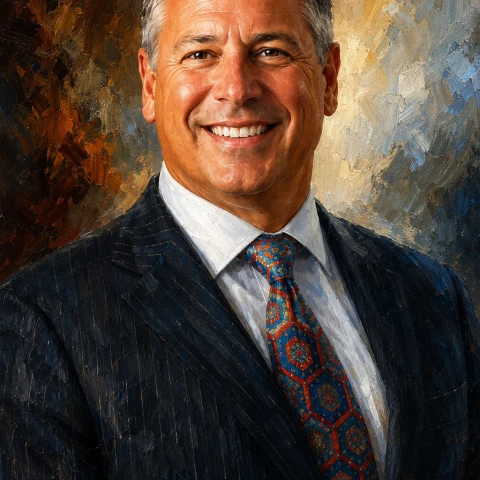
Previn Warren
Social Media Product Liability · Technology & Media · Consumer Protection
We’re not here to be the content police. We’re looking at the structure of how they use operating machinery to hook kids, irrespective of what’s being shown.
Previn Warren Argued in Oakland That How Instagram Hooks Children Falls Outside Section 230; Judge Gonzalez Rogers Let MDL 3047’s Design-Defect Claims Proceed
Three months after Previn Warren’s name went on Laura Ashman’s August 2022 complaint against Instagram, Judge Yvonne Gonzalez Rogers made him one of three co-lead counsel in MDL No. 3047, the federal litigation over whether Instagram, Snapchat, TikTok, and YouTube were built to addict children. In October 2023 he argued in Oakland that Section 230 does not reach how the platforms are engineered to hold a child’s attention, and the court let the design-defect claims proceed.
On August 4, 2022, Previn Warren’s name went onto a forty-seven-page complaint filed in San Mateo County Superior Court for Laura Ashman, a twenty-one-year-old from Fredericksburg, Virginia, against Instagram LLC and Meta Platforms, Inc. Its first paragraph was set in October 2003, when a Harvard sophomore named Mark Zuckerberg hacked into the websites of the college’s residential dorms to collect students’ photographs and built Facemash, a site that invited users to rank the “hotness” of female students by comparing their photos side by side. Users cast more than 22,000 votes in a day. The site’s homepage stated the premise: “Were we let in for our looks? No. Will we be judged on them? Yes.” Eighteen years on, the complaint alleged, Instagram was designed to capitalize on the same insecurity—young people’s craving for social acceptance and their desire to be judged attractive by their peers—and, unlike Facemash, used complex algorithms and behavioral cues to addict pre-teen and teenage children and maximize their use of the product.
The complaint then turned to Ashman. She first used Instagram in 2013, at twelve or thirteen, and came to spend up to ten hours a day on it, staying awake into the early morning to keep scrolling, and started skipping school. In eighth grade, the complaint alleged, she began cutting herself, and the self-harm grew more frequent and more severe. In her freshman year of high school she attempted suicide, the first of three attempts. She developed an eating disorder and depression, was hospitalized at multiple facilities for emergency mental-health treatment, spent three months in residential treatment and went through three partial-hospitalization programs, and fell from straight A’s to failing most of her classes. The complaint pleaded six causes of action—strict liability and negligence for design defect and for failure to warn, negligent infliction of emotional distress, and concealment—and demanded a jury. It quoted Meta’s own presentations from 2019 and 2020: “We make body image issues worse for one in three teen girls.” “Mental health outcomes related to this can be severe.” And it listed the features it called defective: appearance filters, an algorithm that favored provocative and stimulating posts, expiring posts, texts and emails sent to teenagers who tried to stay off the app, the “likes” deployed as intermittent variable rewards, and a scroll with no end. The same features would be argued over in federal court during the next three years, with Warren among the three lawyers leading the plaintiffs.
Six Plaintiffs, One Petition, and an Order From Oakland
In September 2022, Motley Rice petitioned California’s Judicial Council to coordinate Ashman’s case with five others brought by young people and their families against Instagram. “The number of children struggling with an addiction to Instagram seems to grow by the day,” Warren said that month. “We are hopeful that the Judicial Council coordinates these cases, which will create a more efficient process for these children and their families.” The California cases were coordinated in Los Angeles County Superior Court as JCCP No. 5255 before Judge Carolyn B. Kuhl. In the federal courts, on October 6, 2022, the Judicial Panel on Multidistrict Litigation assigned In re: Social Media Adolescent Addiction/Personal Injury Products Liability Litigation, MDL No. 3047, to Judge Yvonne Gonzalez Rogers of the Northern District of California, sitting in Oakland. Five days later she invited applications from any lawyer who wanted to be considered for a leadership appointment, due October 20, set objections for October 27, and set the initial case management conference for November 9.
On November 10, 2022, after a hearing her order called comprehensive, Gonzalez Rogers appointed Christopher Seeger of New York, Lexi Hazam of California, and Previn Warren of Washington, D.C., as the plaintiffs’ co-lead counsel, named Jennie Anderson as liaison counsel, and seated a steering committee of seven chairs and eleven members. She had considered the applications and the lawyers’ presentations at the hearing, including her “assessment of actual availability to diligently and efficiently advance this case given other commitments, the sources of litigation funding, as well as confidential ballots submitted by counsel during the hearing.” No one objected. Warren’s statement afterward ran two sentences: “I look forward to giving our clients the opportunity to be heard in court, backed by a group of attorneys with such deep experience in high-stakes litigation. We will work together to seek justice for the families that have suffered as a result of allegedly defective and dangerous social media platforms.”
Royalties Before Safety
Warren was born in California to parents who emigrated from India, and he graduated magna cum laude from Harvard College in 2004 with an honors thesis on Jürgen Habermas and Charles Peirce that won the Hoopes Prize. He played bass for five years in a Brooklyn rock trio called The States and worked as an investigator for the Federal Defenders of New York. At Harvard Law School he was an articles co-chair of the Harvard Law Review, won the Sears Prize for the highest second-year grades, held a Paul & Daisy Soros Fellowship, and graduated magna cum laude in 2011. He went to Washington as an enforcement attorney and senior adviser to the director of the Consumer Financial Protection Bureau, clerked for Judge Merrick Garland on the D.C. Circuit in 2012 and 2013, and then joined a large corporate law firm in Washington, where he became a partner. He litigated against Sirius XM, Google, and iHeartMedia over what they paid artists for the use of their music: he worked on the 2017 rate-setting trial that produced the largest-ever increase in the royalty rate Sirius XM owed, and in 2020 he represented SoundExchange in a proceeding that substantially increased the royalties musicians receive from internet radio services. Pro bono, he argued prisoners’ constitutional-rights appeals in the D.C. and Seventh Circuits and worked on a federal challenge to the conditions of confinement in South Carolina’s juvenile detention centers. He advised Mayor Michael Bloomberg’s administration on criminal-justice policy and was counsel to Pete Buttigieg’s presidential campaign. By August 2022 he was at Motley Rice’s Washington office, and Ashman’s complaint carried his name and that office’s address on Ninth Street.
Intermittent Variable Rewards
In May 2023, six months after the appointment, Warren went on the Tech’ed Up podcast with its host, Niki Christoff, and traced the case to the tobacco wars his firm had fought and the fight to stop the companies from marketing to kids. “So, we won that fight in the nineties. And to me, this is really the sequel.” He described a pattern among the families: “So, you’ll have a kid, boy or girl, or non-binary, who was a happy, bright, socially engaged kid,” he said, a child with interests and activities outside school, around ten or eleven or twelve. “They get a smartphone.” Some of his clients ended up on the apps as many as eleven hours a day. Eating disorders had kept some “hospitalized for months and months at a time in residential programs.” “Many, many of our clients have attempted to take their own lives,” he said.
The design feature he named first was intermittent variable rewards, which he traced to the 1950s and to “a psychologist at Harvard named B.F. Skinner who experimented on mice.” “So, that randomization of delivering a reward creates compulsion,” he said. One of Meta’s own studies, cited in the plaintiffs’ complaint, had “found that every single day, there are half a million underage Instagram accounts that have an inappropriate interaction between a child and an adult.” Meta, he said, “actually understood that its timer didn’t work” and released its time-limit tool anyway. Parents, in his words, were “totally outgunned.”
It was his younger child’s eighth birthday that day, he mentioned; there had been doughnuts that morning. His ten-year-old was in fifth grade. “The sixth graders that he talks to on the bus, they’re all on Snapchat. That’s how they communicate.” The families he represented, he said, were owed compensation, and “there should be some financial consequences too to these companies.” He and Christoff had first met standing in the line of Supreme Court Bar members waiting to hear the argument in Gonzalez v. Google; he had not worked on that case, he said, though he “did help coordinate some of the amicus filings.” The companies, as he put it, “wave Section 230 around to say they deserve zero accountability.”
What Warren Told Gonzalez Rogers About Section 230
The companies—Meta, Snap, TikTok and its parent ByteDance, and Google’s YouTube—moved to dismiss the individual plaintiffs’ five priority claims. Their position was that Section 230 of the Communications Decency Act barred every one of them, because whatever harm a child suffered was “inextricably related to the third-party content they see on defendants’ sites,” and that the First Amendment independently “precludes tort liability for protected speech, including choices about presenting and disseminating content.” On Friday, October 27, 2023, in a packed courtroom in the federal courthouse in Oakland, the judge heard argument. Paul Schmidt, for the defense, said that to label content as possibly harmful in any way is to limit speech; Brian Willen said the claims that algorithms expose children to harmful content were liability claims that called for speech regulation; Geoffrey Drake said the question of what duty the companies owed child users was “amorphous.”
Warren argued for the plaintiffs. Section 230, he told the court, was meant to empower parents to restrict certain content. “The notion that it is now being weaponized is to me a perversion of what the statute was intended to do.” He said his side took a “profoundly different view” of the immunity cases the companies cited, because what was at issue was the use and design of the apps and their algorithms—computers pulling data from children and deciding how to keep them engaged for as long as possible. “We’re not here to be the content police,” he said. “We’re looking at the structure of how they use operating machinery to hook kids, irrespective of what’s being shown.” The companies knew, he said, that it would hook children and keep them from “going outside.” Elizabeth Cabraser, also for the plaintiffs, argued that features built to manipulate a user psychologically, exploiting cognitive and emotional vulnerabilities, were unprotected. Gonzalez Rogers asked Schmidt whether Section 230 let a company publish potentially harmful content to a child whose parents did not want the child to have an account, and she asked whether the statute immunized the computer code that designs an algorithm: “To think that Congress anticipated this is also a stretch.” “Why isn’t the injury to the brain, and the brain’s interaction with the device, physical?” she asked. To the argument that no duty ran to child users: “You seem to suggest that you have no duty.” She did not say how she would rule, and she voiced frustration with both sides’ reliance on causation. “It’s not clear to me that the entire thing is thrown out,” she said, adding that she expected to rule by mid-November.
The Line Drawn on November 14, 2023
Eighteen days later she ruled. The order granted the motions in part and denied them in part, and it began by rejecting the way both sides had framed the question: “the parties’ ‘all or nothing’ approach to the motions to dismiss does not sufficiently address the complexity of the issues facing this litigation.” The court went defect by defect through the complaint. Section 230 did not bar claims that the platforms failed to provide effective parental controls, including notification to parents; failed to give users tools to restrict their own time on the platform; made deleting an account difficult; failed to use robust age verification; made it hard to report predatory accounts and child sexual abuse material; and offered appearance-altering filters and did not label filtered images. Parental controls and notices to parents, the court wrote, were “not equivalent to speaking or publishing” and could be fixed without changing what the companies published. On age verification the plaintiffs had stated “a plausible theory under which failure to validly verify user age harms users.” On reporting tools: “Receiving more reports does not require them to remove the content.” Defects the court could not separate from decisions about what third-party content to publish, and how, remained covered by Section 230.
On whether an app could be a product at all, the court declined to answer for any platform as a whole and held that each alleged defect had to be examined to see whether it described a product or an idea: ideas, content, and free expression had consistently been held not to support a products-liability claim, the court wrote, citing Winter v. G.P. Putnam’s Sons; parental controls, age verification, and account-deletion tools were another matter. The design-defect claims, in strict liability and in negligence, went forward on the defects that survived both defenses; the motions were denied as to the failure-to-warn claims; and the fifth claim, negligence per se based on COPPA and a child-protection statute, was not barred by Section 230 or the First Amendment. The docket the order governed already held hundreds of individual cases, more than 140 actions by school districts, and actions filed jointly by more than thirty state attorneys general. The same day Warren, Hazam, and Seeger said in a joint statement that “the court’s ruling repudiates Big Tech’s overbroad and incorrect claim that Section 230 or the 1st Amendment should grant them blanket immunity for the harm they cause to their users.”
Later rulings followed the same line. In October 2024, in two rulings, Gonzalez Rogers let the school districts’ suits and the state attorneys general’s suits go forward, rejecting most of the companies’ arguments for dismissal. A revised pretrial schedule that month moved the first bellwether trials into 2026, and in November 2024 she preserved the school districts’ public-nuisance claims. On February 28, 2025, she ruled that wrongful-death claims brought under the laws of Florida, Indiana, Virginia, and Wyoming could proceed.
Meta took the October 2024 orders on the school districts’ and the states’ claims straight to the Ninth Circuit before any trial, and TikTok joined its arguments; Warren was among the lawyers for the plaintiffs defending the orders. The court heard argument in San Francisco on January 6, 2026. On August 10, 2026, Judge Jacqueline H. Nguyen, writing for a panel with Judge Mark J. Bennett and District Judge Kiyo A. Matsumoto, dismissed the appeals for lack of jurisdiction. “Section 230(c)(1) pointedly does not provide immunity to internet service providers per se,” she wrote. “It merely renders certain conduct lawful.” The panel held “that section 230 provides a defense to liability, not immunity from suit,” and that “an order denying this defense can be effectively reviewed on appeal from a final judgment.”
Fifty-Five Percent, and the Number Meta Published
On September 17, 2024, Meta made millions of teenagers’ Instagram accounts private and put new limits on who could message them. Warren said the measures “should—and could—have been implemented years ago, before the hundreds of families we represent experienced the harms of social media addiction.” “Time and again, Instagram and its parent company Meta shelved important safety features that could have avoided compulsive use and danger to kids—only to return to those features and publicly tout them in response to PR crises,” he said. “The safety of our kids should never be an afterthought for any technology company.”
By the time the school-district bellwethers approached trial, the plaintiffs had the companies’ documents. On November 21, 2025, they filed their omnibus opposition to the defendants’ motions for summary judgment. In it the plaintiffs wrote: “American teens are facing an unprecedented mental health crisis, and Defendants’ social media platforms are a substantial contributing factor.” Into the brief went what Meta’s own people had written. Meta researchers, in a chat: “IG is a drug” and “We’re basically pushers.” A Meta research report: “Teens are hooked despite how it makes them feel. Instagram is addictive, and time-spend on platform is having a negative impact on mental health.” An internal document on the lifetime value of users titled “The Young Ones are the Best Ones.” A 2016 document called adoption in each high school a crucial driver of teenagers’ engagement with Facebook; another set a goal to “saturate school networks.” To the companies’ arguments on causation, the brief answered that “Juries are routinely called upon to evaluate liability in the context of concurrent causation.” And it stated the districts’ injury in ordinary terms—“the expenditure and diversion of resources to combat student use of Defendants’ platforms during the school day”—spending on counseling and mental-health programs and on technology, staff hours diverted from teaching, class time lost.
The brief was unsealed late that Friday night. It drew on sworn depositions of current and former Meta executives and on the company’s internal communications and research. Around 2019, the plaintiffs wrote, Meta’s researchers had recommended making every teenager’s account private by default; by 2020 the growth team had concluded that the setting would cost Instagram 1.5 million monthly active teens a year, and Meta did not launch it then. Default privacy reached all teen accounts in 2024. A default-private setting, the plaintiffs wrote, would have “eliminated 5.4 million unwanted interactions a day.” Vaishnavi Jayakumar, Instagram’s former head of safety and well-being, testified that when she joined Meta in 2020 she learned that the company had a “17x” strike policy for accounts that reportedly engaged in the “trafficking of humans for sex”: an account could incur sixteen violations for prostitution and sexual solicitation and be suspended on the seventeenth. In the brief’s account, a deactivation study Meta designed in late 2019 found lower rates of anxiety, depression, and loneliness among users who stayed off Facebook and Instagram for a week; Meta halted it, kept the results private, and said the research was biased by the “existing media narratives around the company.” In December 2020 the Senate Judiciary Committee had asked Meta in written questions whether it was “able to determine whether increased use of its platform among teenage girls has any correlation with increased signs of depression” and “increased signs of anxiety.” Meta’s answer was one word: “No.”
“Meta has designed social media products and platforms that it is aware are addictive to kids, and they’re aware that those addictions lead to a whole host of serious mental health issues,” Warren told TIME the next day. “Like tobacco, this is a situation where there are dangerous products that were marketed to kids,” he said. “They did it anyway, because more usage meant more profits for the company.” On Fox Business on November 25 he called the 17x policy “appalling.” Meta said the allegations “rely on cherry-picked quotes and misinformed opinions,” and that its researchers had stopped the deactivation study because the only drop in negative feelings came from people who already believed Facebook was bad for them.
Warren stated the same case in plainer language two months later, as jury selection began in Los Angeles in the trial of an individual plaintiff’s case against Meta and Google. “It’s led to mental health issues, serious anxiety, depression, for many. For some, eating disorders, suicidality,” he said. “For the schools, it’s been lost control over the educational environment, inability of teachers to really control their classrooms and teach.” He pointed to the brief’s account of Meta’s internal research: in a 2018 survey of 20,000 Facebook users in the United States, the company’s researchers had found that 55 percent showed “mild” problematic use of the platform and 3.1 percent “severe” problematic use, 58 percent in all, and Zuckerberg, the brief said, had pointed out that 3 percent of billions would still be millions of people. The brief said the company had published only this: “we estimate (as an upper bound) that 3.1% of Facebook users in the US experience problematic use.” “That’s a lie,” Warren said.
Breathitt County and the Week of June 15
On June 13, 2025, Gonzalez Rogers selected eleven cases for the first bellwether trials—five brought by individuals, six by school districts—from a docket that had passed 1,800 pending actions. Motley Rice represented plaintiffs among them. Five days later Warren described the litigation as a “giant coordinated siege by families and AGs unlike anything we’ve seen since the opioid crisis.” The first set for trial was a school district’s: Breathitt County, Kentucky. In October 2025 she moved a bellwether trial from a courtroom in Eureka to a larger courtroom in Oakland. On December 15, 2025, Warren appeared by video as co-lead counsel at a case management conference at which the court heard argument on the plaintiffs’ excerpted exhibits, the jury-instruction schedule, and motions to seal; it ordered the parties to confer on sealing the refiled school-district exhibits, set January 28, 2026 for filing jury instructions, and set further conferences for February 11 and March 18. On February 9, 2026, Gonzalez Rogers denied the companies’ motion for summary judgment on the district’s negligence and public-nuisance claims; the plaintiffs’ team on the school-district claims included Warren and Esther Berezofsky of Motley Rice, Hazam and two of her Lieff Cabraser colleagues, and lawyers from other firms. Jury selection was set for June 12 and opening statements for June 15. The district sought more than $60 million.
The trial did not happen. In mid-May, YouTube, Snap, and TikTok settled with the district. Meta, represented by Covington & Burling, settled last: late on Wednesday, May 20, 2026, the district and Meta jointly stipulated that the claims against Meta would be voluntarily dismissed, and the settlement was announced the next day. The terms were not disclosed. Breathitt County’s own lawyer was Ronald E. Johnson; the MDL’s lead counsel on the case were Hazam, Warren, and Seeger, the last as lead settlement counsel. The plaintiffs’ lawyers said: “Our focus remains on pursuing justice for the remaining 1,200 school districts who have filed cases.” When Breathitt settled, the next school-district bellwether, Tucson Unified School District, was set for trial in January 2027.
Eight days after the settlement the amounts became public: $9 million from Meta, $8 million each from Snap and TikTok, and $2.01 million from YouTube, about $27 million in all. Johnson said the district would set out how it would use the money in its annual budget process, and that the uses would include student mental health and well-being and the use of social media platforms. By September 2026 the MDL held 3,208 pending actions, and by October 1, 3,824.
Two Thousand Exhibits, Searchable
In July 2026 Motley Rice put the exhibits online. The Social Media Evidence Library holds more than 2,000 exhibits, internal communications, research documents, and other materials cited in the social media cases: summary-judgment and trial exhibits from MDL 3047, from the coordinated California cases before Judge Kuhl, from the K.G.M. case in Los Angeles—where a jury in March 2026 found Meta and Google liable for a young user’s mental-health harms—and from New Mexico’s case against Meta, sorted into company documents, expert reports, and deposition and trial transcripts, and tagged by feature—autoplay, appearance filters, age gating, notifications, parental controls, algorithmic feeds, likes and social rewards—and by harm, under tags that run from Addiction-Compulsive Use to Self-Harm and Suicide. By October 2026 it listed 2,191 items, and the school districts’ omnibus filing was posted beside them as a road map to the evidence. In an episode of the Scrolling 2 Death podcast released July 21, 2026, which introduced him as co-lead counsel on thousands of federal lawsuits against TikTok, YouTube, Meta, and Snap, Warren announced the library as a new effort to organize the evidence and make it more accessible to the public.
In August 2026, as four states’ trial against Meta opened in Oakland, Warren described the youngest users. “There are a ton of kids under the age of 13 on these platforms,” he said. The platforms knew it, he said, and had not taken appropriate measures to remove them, because young children were good for business: “every fresh crop of kids with a smartphone is a new generation of kids for Instagram to add.”