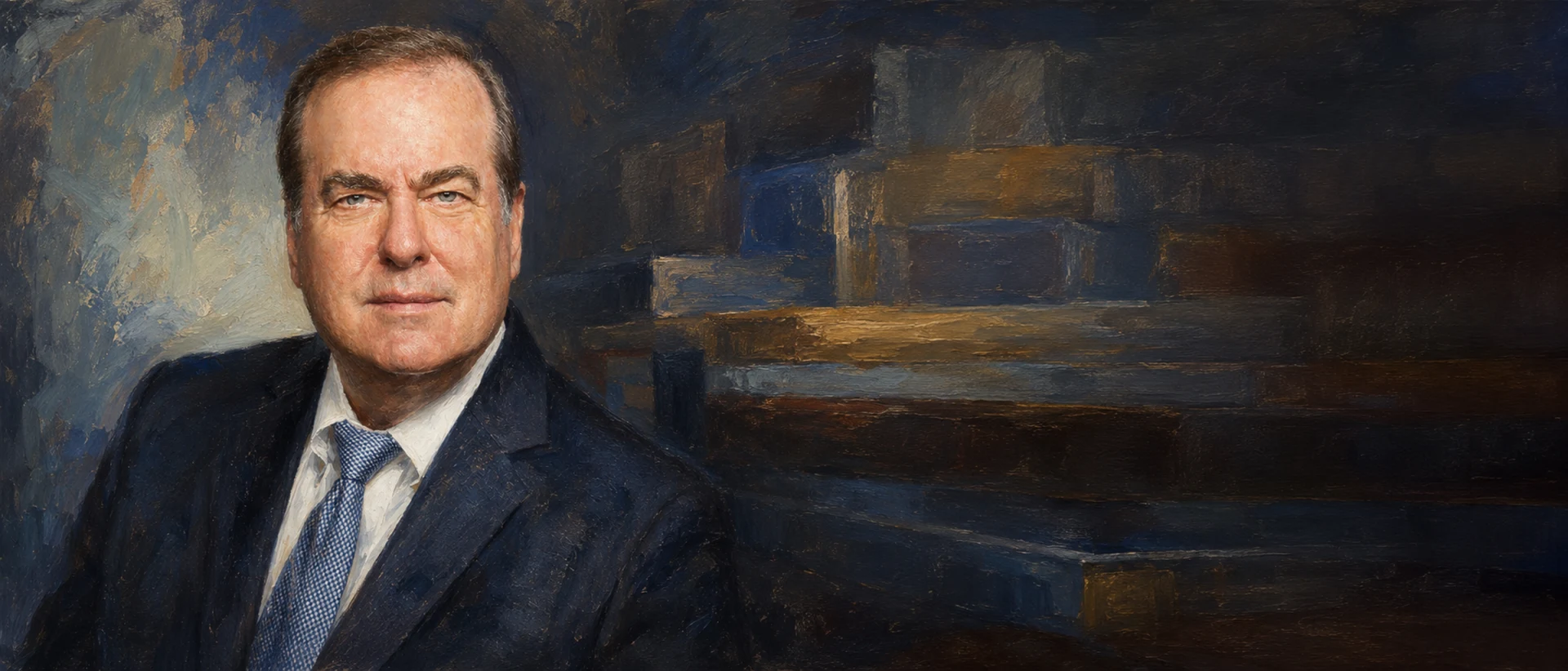
Robert M. Horkovich
Insurance Recovery · Environmental Coverage · Asbestos Coverage
Insurance can be a very important mechanism for social reform and social justice. And I am excited to come into the office every day to try to recover more for people who have lost everything.
Stringfellow, Fuller-Austin, and the Policy in the Archive: Making Old Insurance Promises Pay
The Stringfellow Acid Pits in Riverside County threatened California’s groundwater, the State expected the cleanup to cost more than $300 million, and the insurance that might pay for it had been written across years of policies by dozens of carriers. In February 2005 Attorney General Bill Lockyer announced a settlement of about $93 million with Lloyd’s of London and fifteen other insurers; Robert M. Horkovich was lead trial counsel for the State.
Somewhere in an archive sits the policy that could pay for a cleanup no one budgeted, if anyone can find it. Robert M. Horkovich finds it. Environmental contamination, asbestos disease, and the losses borne by large institutions unfold over decades, across insurance programs assembled from scores of policy years and dozens of carriers, and his work begins where the ordinary claim file gives out: in endorsements, excess layers, old correspondence, and the historical chain by which a present loss became an insured one. His matters have produced more than $8 billion in settlements and judgments for policyholders, a figure built not from one dramatic case but from thousands of small, decisive finds assembled into complete coverage programs.
Trained to the burden of proof
Horkovich took both his degrees from Fordham University, a bachelor’s in 1976 and a law degree in 1979, after two years on the Senate staff of James L. Buckley of New York, and is admitted in New York and Maryland. He then spent four years as a captain in the Air Force Judge Advocate General’s Corps, serving as a Special Assistant United States Attorney and prosecuting more than two hundred cases; the Air Force awarded him the Meritorious Service Medal and the Air Force Commendation Medal. As a Special Assistant District Attorney in Manhattan he argued People v. Peck, a constitutional question of first impression, before the New York Court of Appeals. The prosecutor’s training shows in the insurance work that followed: a habit of building cases witness by witness and document by document, and a conviction that complexity is something to be organized for a factfinder, never an excuse for letting the responsible party escape.
An acid pit and its old promises
The Stringfellow Acid Pits litigation showed what that discipline can recover. California faced one of the nation’s most notorious hazardous-waste cleanups, at a site in Riverside County that threatened groundwater and demanded remediation spanning decades, while the insurance that might pay for it lay scattered across years of policies and dozens of carrier relationships. Horkovich served as lead trial counsel on the policyholder team pursuing coverage for the State. In February 2005 Attorney General Bill Lockyer announced a settlement of about $93 million with Lloyd’s of London and fifteen other insurers toward a cleanup the State then expected to exceed $300 million; a 2005 jury verdict for coverage against underwriters at Lloyd’s, two California Supreme Court decisions in 2009 and 2012, and a 2015 bench-trial judgment followed. The 2012 decision, State of California v. Continental Insurance Co., held that a policyholder facing a continuous loss may recover all sums from any triggered policy year and stack the limits of successive years, a rule courts and policyholders have relied on in long-tail coverage disputes ever since. In all, the litigation produced approximately $172 million in indemnity, $60 million in defense costs, and $14 million in prejudgment interest, returning insurance proceeds to the public purpose for which the coverage had been purchased.
A long-tail loss does not fit naturally inside one policy year. Contamination begins in one period, migrates through another, and produces governmental demands much later, while each carrier raises its own positions on notice, trigger, allocation, and exclusions. The policyholder’s task, as Horkovich has practiced it, is reconstruction: turning an archive of separate annual promises back into what the insured actually bought, a continuous source of protection for one evolving liability.
Fourteen settlements, then a verdict
The Fuller-Austin asbestos coverage litigation displayed the same method under trial pressure. Horkovich’s team resolved claims with fourteen carriers for more than $190 million before trial, then in 2003 won a jury verdict of $188,793,014 against Lloyd’s and the other insurers who remained, one of the ten largest verdicts in the country that year; the remaining claims later settled. Each pretrial settlement clarified the coverage tower and narrowed the dispute; the verdict tested the holdout policies and shifted leverage across the entire program. Asbestos coverage demands translation between underlying disease claims and decades of policy language, and Horkovich’s craft lies in giving jurors enough structure to understand the tower without allowing its complexity to become the reason no carrier pays.
His trial record for policyholders runs to eight jury verdicts, nine bench-trial wins, and seven state supreme court decisions, among them two Washington Supreme Court rulings for Weyerhaeuser in coverage litigation that also produced two jury verdicts for six environmental sites, two Rhode Island Supreme Court decisions for Textron on pollution exclusions, and a $300 million environmental coverage resolution for AT&T over a Pennsylvania site. Each appellate win answered a question of trigger, allocation, or defense obligations that changed what the next negotiation was worth, and favorable precedent became part of the recovery itself: a rule that makes the next carrier reconsider its position.
Making old promises pay
Horkovich is Anderson Kill’s firm managing shareholder in New York, and the firm’s defining commitment runs through everything he does: it represents policyholders, never insurers. That single-mindedness shapes discovery, strategy, and credibility, because counsel can argue for the coverage the insured purchased without balancing a book of carrier clients. His own clients have included the United Nations, for which he has served as insurance counsel, the Port Authority of New York and New Jersey, the State of California, Weyerhaeuser, Textron, AT&T, General Electric, and universities whose layered programs and public accountability add their own dimensions to settlement authority.
Recognition has followed the results, including his election as a Fellow of the American Bar Foundation. His current docket runs to cyber incidents, PFAS liabilities, business interruption, directors-and-officers claims, and civil unrest: new risks, old habits. Locate every potentially responsive policy. Preserve notice. Reconstruct the chronology. Never let complexity become the reason no layer pays.
His record is ultimately about making old promises usable. Policies written years before a loss matures can seem disconnected from the liabilities now demanding payment; Horkovich reconnects them through chronology, contract language, trial proof, and precedent. When the reconstruction succeeds, at Stringfellow, at Fuller-Austin, and in each of the quieter matters inside the $8 billion, an archive of annual policies becomes what the policyholder paid for all along: a present source of defense and indemnity, ready when the loss finally comes due.