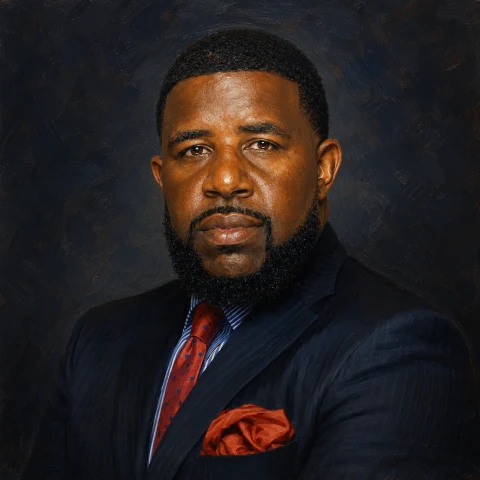
Shannon Price Minter
LGBTQ+ Civil Rights · Transgender Rights · Family Recognition
Transgender people just want to lead their lives, work, go to school, have families, exactly like other people.
Smith v. Knoller, In re Marriage Cases, and Talbott v. United States: The Small Papers That Say Who You Are
In late August 2026 the United States asked the Supreme Court to review Talbott v. United States, the challenge Shannon Price Minter and GLAD Law had filed the day after an executive order barred transgender people from military service, and in which the D.C. Circuit had upheld an injunction for those already serving. The road to that petition began in January 2001, in the hallway of a San Francisco apartment building.
On January 26, 2001, Diane Whipple was attacked and killed by two dogs in the hallway of her San Francisco apartment building. Sharon Smith, her partner of seven years, learned within days that California’s wrongful-death statute had a list of people entitled to sue for such a loss, and that she was not on it. The law reserved the claim for spouses and heirs, and the couple had not been permitted to marry. Shannon Price Minter and the National Center for Lesbian Rights filed suit for her anyway, and in July 2001 a San Francisco Superior Court judge ruled that Smith could pursue the claim, treating a seven-year committed relationship as a legal fact rather than a legal nullity. A birth certificate, a marriage license, an enrollment form, a service record, the line on a driver’s license that states a name and a sex: each is a small paper with a long reach, and Minter’s career has been spent at the counters where those papers are handed across, insisting that the same rules govern everyone who stands there.
East Texas to Market Street
Minter grew up in East Texas, earned his undergraduate degree at the University of Texas at Austin, and took his law degree from Cornell Law School, which later gave him its Exemplary Public Service Award. He joined the National Center for Lesbian Rights, now the National Center for LGBTQ Rights, in the early 1990s and never left, rising to legal director and then Vice President of Legal over more than thirty years while teaching at Stanford, UCLA, Golden Gate University, and Santa Clara University. He transitioned in the mid-1990s, and his life as a transgender man gave his docket an early and unusual range. In Florida he represented Michael Kantaras, a transgender father, in a custody trial watched nationally: a 2003 ruling recognized Kantaras as legally male and awarded him primary custody, an appellate court later invalidated the marriage, and the case ended in a 2005 settlement that preserved his parental rights and shared custody. Long before transgender rights had a place in the national vocabulary, Minter was arguing that transgender parents, workers, and students already belonged to the law’s ordinary categories, parent, employee, student, and were entitled to be treated as members of them.
Eighteen thousand weddings
The case that placed Minter at the center of American constitutional litigation was In re Marriage Cases, where he served as lead counsel before the California Supreme Court. On May 15, 2008, the court held that the state constitution guaranteed same-sex couples the right to marry and that discrimination based on sexual orientation demands strict scrutiny, a doctrinal landmark as consequential as the weddings themselves. Roughly eighteen thousand couples married in the months that followed. When Proposition 8 closed the door that November, Minter returned to the same courtroom in March 2009 to argue against it, opposite former solicitor general Kenneth Starr; the court let the amendment stand but held that every marriage already celebrated remained valid, and the fight he had framed moved into the federal courts and, six years later, to the nation.
He kept carrying it. Minter was counsel for the Tennessee plaintiff couples in Obergefell v. Hodges, the June 2015 decision establishing marriage equality nationwide. Two years later, as NCLR’s lead attorney in Pavan v. Smith, he won a Supreme Court ruling requiring Arkansas to list married same-sex parents equally on their children’s birth certificates, carrying Obergefell from the wedding day into the delivery room, from the general holding into the administrative act by which a state recognizes a family. In Christian Legal Society v. Martinez he helped defend a public law school’s all-comers policy for recognized student groups, and in 2010 the Supreme Court sustained it, confirming that a public university may require the organizations it funds to accept members on equal terms. Each case follows the same logic: equality is not real until it governs the form on the clerk’s counter.
Born Perfect after Chiles
Minter founded NCLR’s Born Perfect campaign in 2014 to end conversion therapy, and it has helped write and defend protections for minors in more than twenty states and the District of Columbia. On March 31, 2026, the Supreme Court decided Chiles v. Salazar, holding by eight votes to one that Colorado’s licensing-based restriction on conversion therapy regulated therapists’ speech and must survive strict scrutiny, and sending the case back for that review. Minter’s answer the same day was the one his career had taught him: the decision, he said, was narrowly about how conversion therapy can be regulated, and “conversion therapy is still medical malpractice and consumer fraud.” In May 2026 Colorado amended its statute to fit the ruling while keeping its protection for young people in force, and NCLR began working with lawmakers in California, Maryland, Illinois, and other states on civil remedies. When a court narrows one route, Minter’s next task is to name the duties that survive and make them concrete enough to enforce.
Talbott at the Supreme Court’s door
In 2015 President Obama appointed Minter to the President’s Commission on White House Fellowships, and in April 2026 TIME named him to its TIME100 list of the most influential people in the world, recognition that arrived not for a single case but for a lifetime of them. His honors include the American Bar Association’s Stonewall Award, the Ford Foundation’s Leadership for a Changing World Award, and the National LGBTQ Bar Association’s Dan Bradley Award. The docket has never settled into commemoration. On January 28, 2025, the day after a new executive order directed the armed forces to exclude transgender people from service, Minter and GLAD Law filed Talbott v. United States in the District of Columbia for six serving members and two people seeking to enlist. Judge Ana Reyes enjoined the ban that March; Minter argued the appeal in the D.C. Circuit on January 22, 2026, calling the policy an unprecedented mass discharge of qualified troops; on June 1, 2026, the court of appeals upheld the injunction for those already serving; on June 30 the district court certified a class so that its rulings would reach every transgender servicemember; and in late August the United States asked the Supreme Court to review the decision, where the case now waits.
The stakes of that petition are the stakes of his whole career: whether people who ask nothing more than to work, serve, study, and raise their families will be governed by the same rules as everyone else. Minter does not ask courts to write a separate set of rules for transgender people. He asks whether the rules governing military fitness, parenthood, schools, professional care, and family recognition can exclude someone because of who they are when they otherwise meet the standards that apply to all. He litigates the general principle and then returns, case after case, to enforce it in the particulars, one form, one line, one name at a time, and the small papers now reach further than they did when Sharon Smith was told she was a stranger.