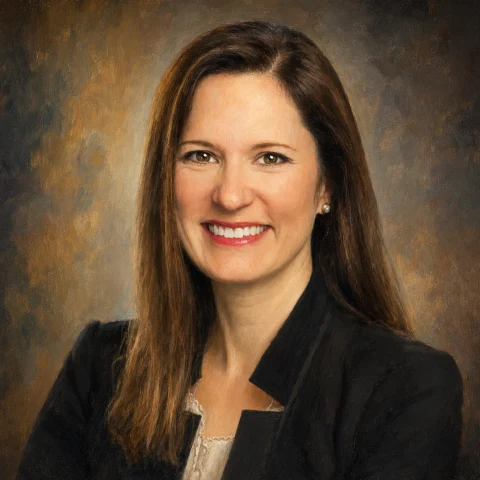
Shelley Hutson
Product Liability · Mass Tort Litigation · Pharmaceutical Litigation
If Boston Scientific told the physicians the truth, we wouldn’t be here today.
Eghnayem v. Boston Scientific: A Consolidated Pinnacle Mesh Verdict in Miami and the Eleventh Circuit’s Ruling on 510(k) Clearance
Shelley Hutson was lead counsel for four women whose claims over Boston Scientific’s Pinnacle pelvic mesh went to one Miami jury in 2014; she gave the closing argument, the jury awarded the women $26.7 million, and in 2017 the Eleventh Circuit affirmed Amal Eghnayem’s judgment. In 2019 a federal judge made her co-lead counsel for the plaintiffs in the 3M Combat Arms earplug litigation.
In closing argument at the end of an eight-day trial in federal court in Miami, Shelley Hutson told the nine jurors that Boston Scientific had hurried dangerous devices onto the market without the testing it needed to learn what risks they carried. She spoke for four women who said the company’s Pinnacle pelvic mesh had injured them. “If Boston Scientific told the physicians the truth, we wouldn’t be here today,” she said. Hildy Sastre, a lawyer for Boston Scientific, denied that the mesh was dangerous and said the company had fully warned doctors about the possible complications. “There is no such thing as a risk-free surgery,” Sastre said. The jurors began deliberating on November 13, 2014.
They had not heard that the Food and Drug Administration cleared the Pinnacle Pelvic Floor Repair Kit for sale in 2007. Boston Scientific wanted the jury to hear it, but before trial opened on November 3, the court excluded all evidence of the FDA’s regulatory scheme and of the Pinnacle’s clearance through the 510(k) process, which lets a device reach the market on a showing that it is substantially equivalent to one already sold. Hutson was lead counsel for the four women, and their case went to the jury on the device itself: what the plastic did after implantation, why the mesh was so hard to remove, and what its warnings left out. After about four hours of deliberation, the jury found for Amal Eghnayem, Margarita Dotres, Mania Nuñez, and Juana Betancourt and awarded the four women $26.7 million.
Boston Scientific appealed, challenging the consolidation of the four cases into one trial, the exclusion of the FDA evidence, the proof behind Eghnayem’s design-defect and failure-to-warn claims, and the timeliness of her suit. On October 19, 2017, the U.S. Court of Appeals for the Eleventh Circuit affirmed Eghnayem’s judgment on every point. Writing for the panel, Judge Stanley Marcus relied on the Supreme Court’s statement in Medtronic, Inc. v. Lohr that “the 510(k) process is focused on equivalence, not safety.” In May 2019, Judge M. Casey Rodgers of the Northern District of Florida named Hutson one of two co-lead counsel for the plaintiffs suing 3M over its Combat Arms earplugs, a docket that grew to nearly 250,000 lawsuits.
Exposed Mesh, Twice
The Pinnacle is a transvaginal mesh device, sold by prescription, that surgeons implant to treat pelvic organ prolapse. Amal Eghnayem had one implanted on February 28, 2008. In the months after the surgery she developed bleeding, pain during intercourse, incontinence, and pelvic pain and pressure. In October 2008 a doctor examined her, told her there was exposed mesh in her vagina, and trimmed it in an in-office procedure. The trimming did not resolve her problems. In May 2012 she went to another doctor with similar symptoms; that doctor found another mesh exposure and in August 2012 performed a second mesh-removal surgery. Her pain largely subsided afterward. She lost vaginal sensitivity.
Eghnayem, Dotres, Nuñez, and Betancourt filed separate suits in MDL No. 2326, In re: Boston Scientific Corporation Pelvic Repair System Products Liability Litigation, which U.S. District Judge Joseph R. Goodwin oversaw in the Southern District of West Virginia. In November 2014 over 70,000 vaginal mesh lawsuits were pending in the federal litigation against Boston Scientific and other manufacturers, among them C.R. Bard, Ethicon, and American Medical Systems. Each of the four women brought the same four claims under Florida law: negligent design defect, strict-liability design defect, negligent failure to warn, and strict-liability failure to warn.
Four Cases, One Jury
On April 23, 2014, Goodwin put the consolidated Florida Pinnacle cases on one pretrial schedule, with Eghnayem’s suit as the lead case. After discovery, Boston Scientific moved to sever the suits. Each plaintiff, the company argued, had different complaints, different medical histories, and different treating doctors, and had been prescribed the Pinnacle at different times for different conditions; trying the four together would confuse the jury and prejudice the defense. The cases turned on “highly individualized facts,” Boston Scientific wrote: “Any limited benefit from consolidation is greatly outweighed by the likelihood [of] jury confusion and prejudice.” Eghnayem’s lawyers called the motion “merely BSC’s latest effort in opposition to any attempt by the court to move this litigation towards resolution.”
The court ruled on August 18, 2014. It was “unpersuaded that the barriers suggested by defendants in a consolidated trial [were] insurmountable or [would] result in [ ] prejudice.” It consolidated the cases and transferred them to the Southern District of Florida, and Judge Goodwin, away from his own court in Charleston, presided over the trial in Miami. A September order set the trial to open on November 3.
Twelve Weeks in Rabbits
Hutson tried the case with two other Houston lawyers, Jim Perdue and Erin Copeland. Perdue opened for the women. Boston Scientific, he told the jury, had put “speed as No. 1,” a priority he said should never exist inside a medical device company: to keep up with competitors it had fast-tracked the Pinnacle without human or animal testing and built it from material the company had been warned was not meant for permanent implantation. Molly Craig, opening for Boston Scientific, said that similar mesh had been used successfully for decades and that the women and their doctors had understood the risks. “Just because a complication occurs does not mean a product is defective,” she told the jurors.
The plaintiffs called 25 witnesses on the Pinnacle’s design, its chemistry, and its dangers. Dr. Mays, qualified as an expert in polymer science, testified that polypropylene reacts with oxygen in the body and that, as it does, the material “stiffen[s]” and “lose[s] [its] mechanical properties.” The stiffening, he said, could end in “a sawing effect” that he believed had caused some of the mesh’s problems. A pathologist brought his microscope into the courtroom to show slides of polypropylene undergoing oxidative degradation and of mesh erosion. Dr. Margolis, an expert in obstetrics and gynecology, testified that implanting a mesh with a “crosshatched” or “window screen[ ]” pattern of holes was “irreversible,” because “[s]car tissue, what are called fibroblasts, scar cells, move into the [holes in the] mesh and they cement the mesh into place.” Dr. Walmsley, a urologist, described “mesh-specific risks” of pelvic pain, erosion, painful activity, and permanent tissue damage, and approximately a “threefold” increase in the risk of later surgery compared with other prolapse repairs.
The jury also learned what testing Boston Scientific had done. In 2002 the company studied polypropylene meshes of different weights and pore sizes, but those studies did not examine the Marlex polypropylene later used in the Pinnacle, and no woman took part in them: the mesh went into the abdomens of rabbits, which were euthanized at two, six, and twelve weeks, so the long-term effects went unmeasured. The jurors saw the Pinnacle’s inventor, Dr. Dennis Miller, a Boston Scientific consultant who had trained other doctors on the device, on videotape. The women also put in evidence suggesting that Boston Scientific employees had raised concerns about the Pinnacle’s safety before its release and had called for more testing. Their lawyers argued that the company ignored those concerns and promoted the device without warning that the mesh could erode through the vagina or cause infections and other severe complications.
The Pinnacle’s written warnings told doctors that use of the mesh “may make future hysterectomies more difficult due to tissue in-growth and scarring,” and they cautioned repeatedly that removal might become necessary. Dr. Margolis testified that the warnings failed to tell doctors that “a patient may need multiple operative procedures to remove the mesh.” Taking the mesh out, he said, could take healthy tissue with it: “when you remove portions of the mesh, part of the normal tissue has to come out with it.” Eghnayem’s implanting physician testified that he would have wanted to know about the risks of mesh contracture, acute and permanent inflammation, and chronic pain, and that had he known, he would have had “concerns about [ ] using [the Pinnacle] in a patient” and would have discussed them with her.
The jury found for each woman on her design-defect and failure-to-warn claims and rejected Boston Scientific’s statute-of-limitations defense. It awarded $6,722,222 to Eghnayem, $6,766,666 to Dotres, $6,533,333 to Nuñez, and $6,722,222 to Betancourt. Eghnayem said afterward that the verdict was fair. Boston Scientific said each woman and her doctor had known the risks and moved for judgment as a matter of law or a new trial; on March 17, 2016, Goodwin denied the motions.
Clearance by Equivalence
Hutson and Clayton Clark of Clark Love & Hutson were among the women’s lawyers in the Eleventh Circuit, where Rebecca Mercier Vargas of West Palm Beach argued the appeal for them. Boston Scientific attacked the joint trial first. The panel—Judges Hull and Marcus, with Judge John M. Rogers of the Sixth Circuit sitting by designation—started from the rule that a district court’s decision whether to consolidate is “purely discretionary” and that a joint trial is appropriate where there is “clearly substantial overlap in the issues, facts, evidence, and witnesses.” The company argued that the four nearly identical awards showed the jury had run the women’s cases together. The trial court had instructed jurors that “[y]ou may not even consider the fact that there’s more than one case being brought,” and the panel held that “[n]early identical or identical damages awards, without more, simply are not sufficient evidence of juror confusion.”
Boston Scientific also argued that the joint trial had let in evidence that separate trials might have kept out, including “admissions from BSC employees tending to show a pattern of insufficient research for other medical devices.” The panel answered that “[a] pattern of insufficient research might be probative evidence as to whether BSC designs products without due care,” and that Boston Scientific had never asked the trial court for an instruction limiting how the jurors could use it.
On the FDA evidence, the panel held that the trial court had acted within its discretion under the Federal Rules of Evidence in keeping the 510(k) clearance out. A device cleared through that process has not been formally reviewed for safety or efficacy, and safety was what the women’s claims put in issue. Admitting the clearance, the Eleventh Circuit agreed, “might have provoked the parties to engage in a time-consuming mini-trial on whether BSC in fact complied with [FDA] regulations,” and “the apparent significance of federal regulatory schemes very well might have misled the jury into thinking that general federal regulatory compliance, not state tort liability, was the core issue.”
Florida’s risk-utility test asks whether a product’s design caused the plaintiff’s injuries and whether the design’s benefits outweigh the dangers built into it. The panel held that the testimony of Mays and Margolis, “taken in concert,” provided “a sufficient foundation for a reasonable jury to conclude that the design of the mesh increased both the potential for degradation and the difficulty of removal,” and it turned aside Boston Scientific’s reliance on the implanting physician’s testimony that polypropylene was safe and effective: “the weighing of conflicting evidence is properly for the jury.” Boston Scientific argued that the Pinnacle’s warnings were clear enough to entitle it to judgment as a matter of law. The panel answered that “the warnings do not even remotely suggest that removal might be impossible. Indeed, the repeated warnings that removal might be necessary suggest just the opposite.” Under Florida’s learned-intermediary rule, Eghnayem had to show that her doctor would not have used the Pinnacle had adequate warnings been provided, and the panel held that his testimony was enough to send that question to the jury.
Eghnayem’s claims were timely if they accrued after April 11, 2009, the cut-off point for Florida’s four-year statute of limitations, and Boston Scientific argued that her symptoms in 2008 had already put her on notice. The panel held that the question was for the jury: “It was not unreasonable for the jury to find that Eghnayem’s claims accrued after April 11, 2009.” Marcus concluded: “The long and short of it is that the district court properly exercised its broad discretion in consolidating these actions and refusing to admit FDA evidence, and the contested fact questions were properly presented to the jury.” Boston Scientific had dropped its appeal against Dotres before oral argument, and in the same opinion the court granted the company’s motion to dismiss its appeals against Nuñez and Betancourt. Eghnayem’s judgment stood.
From the District Attorney’s Office to Medical Cases
Hutson began her career in Houston as an assistant district attorney, trying a wide variety of cases, and then turned to medical-legal cases in civil litigation. She studied English and French at Texas Tech University, graduating in 1988, did graduate work there in French literature, and earned her law degree at South Texas College of Law in 1993. She won the best-speaker award in the American Bar Association’s national moot court competition, and she is admitted to practice in Texas and Pennsylvania.
Two Topamax Juries in Philadelphia
The year before Miami, Hutson was in the Philadelphia Court of Common Pleas for the first two birth-defect trials against Janssen Pharmaceuticals over its drug Topamax. April Czimmer, a Virginia resident, had started taking Topamax for migraines in August 2006, became pregnant that December, and kept taking it until February 2007; her son, Blake, was born on September 24, 2007, with a severe cleft lip and cleft palate. Czimmer said his injuries had required four surgeries. Hutson was co-counsel for the Czimmers in the first Topamax trial, which opened on October 15, 2013. Scott Love of her firm tried the case, and Tommy Fibich of Houston closed for the family: “We did not come down here for sympathy. We came here for justice.” On October 30, after deliberating for less than an hour, the jury awarded $4,002,184.68 to April Czimmer as Blake’s guardian.
In the second Topamax case tried in the country, Hutson was lead counsel for the family of Brayden Gurley. Judge Arnold L. New presided over his trial, which began on October 29, 2013, the day before the Czimmer verdict. Brayden’s mother, Haley Powell, lived in South Carolina. In May 2005 her neurologist, Dr. Bret Warner, diagnosed juvenile myoclonic seizures, and on March 27, 2006, he prescribed Topamax to control her headaches and seizures. She and her husband, Michael Gurley, conceived Brayden in late October 2007, while she was still taking the drug; she had stopped it by December 1. Brayden was born on July 7, 2008, with a cleft lip on the right side and defects of the gum line, and he had surgery to repair the lip on October 1, 2008. He was left with a red scar running from under his nose to his lip and a notch in his gum where a tooth never grew in correctly, and he had trouble with speech and grew frustrated when people could not understand him. His grandmother testified that the surgery had hurt his self-esteem, and his parents expected him to need five corrective surgeries.
The family went to trial on one claim, that Janssen had negligently failed to warn. A lawyer for the family told the jury that the risk had shown up first in animal studies and then in reports about the children of women taking Topamax; Janssen’s lawyers answered that cleft lip and palate occurred among Topamax patients at the same rates as in the general population. In deposition testimony, Dr. Warner said that when he wrote the prescription in March 2006 he did not know Topamax raised the risk of cleft lip or palate. Asked whether knowing would have changed his prescribing, he answered, “It would have had a major impact, I think.” On November 19, 2013, that jury also returned a verdict for the family, rejecting Janssen’s position that it had properly warned doctors and patients.
Janssen appealed both verdicts. Against Brayden’s judgment it argued that federal law preempted the warning claim because the company could not change Topamax’s pregnancy category without the FDA’s approval. In 2005 Janssen had proposed patient-insert language on birth defects that named hypospadias, a malformation of the penis, and said nothing about cleft lip or palate; the FDA’s draft insert of May 2006 said only that “[v]arious abnormalities have been described in the offspring of animals exposed to TOPAMAX during pregnancy.” The FDA placed Topamax in Pregnancy Category D on March 4, 2011. On March 16, 2015, a panel of the Superior Court of Pennsylvania affirmed the judgment for Brayden’s family, rejecting Janssen’s arguments on federal preemption, causation, and damages. Under Wyeth v. Levine, the court held, Janssen had “failed to establish federal preemption,” and the trial court had not erred “in allowing the issue of causation to go to the jury.” On August 20, 2015, the Superior Court affirmed the Czimmer judgment, and that October it denied reargument. Johnson & Johnson, Janssen’s parent company, agreed to settle 76 other Topamax cases pending in Philadelphia, and the court closed the Topamax mass tort on March 17, 2016.
Co-Lead Counsel Against 3M
The earplug plaintiffs—service members, veterans, and commercial users—claimed that the dual-ended Combat Arms earplugs sold by 3M and Aearo, a company 3M acquired in 2008, were defective and caused hearing loss, tinnitus, or both. On May 22, 2019, Rodgers, presiding over In re 3M Combat Arms Earplug Products Liability Litigation, MDL No. 2885, appointed the plaintiffs’ leadership: Bryan F. Aylstock as lead counsel and Hutson and Christopher A. Seeger as co-lead counsel. The court had received over 190 applications. Rodgers wrote that she intended “this three-member group—one lead counsel supported by two co-lead counsels—to collaboratively lead and coordinate the activities of all plaintiffs’ attorneys” and, in consultation with an executive committee, to make “all decisions—strategic, procedural, and/or substantive—on behalf of all plaintiffs.” If the three disagreed, Aylstock’s decision would control.
The same order made Hutson chair of the Common Benefit Fund Committee, with Riley L. Burnett Jr., Chris T. Hellums, and Henry G. Garrard III as members. The common-benefit funds pay lawyers for work done and expenses incurred on behalf of all plaintiffs, and Rodgers’s order of February 17, 2021, set their terms to provide “fair and equitable sharing among Claimants, and their counsel, of the burden of services performed and expenses incurred.” Lawyers who signed the participation agreement on time owed a nine percent assessment on every Combat Arms case in which they held a fee interest, if they received common-benefit work product or otherwise benefited from the participating lawyers’ work; lawyers who did not sign on time owed fifteen percent. The order directed the defendants “to withhold an assessment from any and all amounts paid to Claimants and their counsel and to pay the assessment directly into the Funds.” Special Master Randall Sansom, a CPA, was to send monthly statements on the funds to the court and to Hutson’s committee. “Amounts will be distributed only on order of this Court,” Rodgers wrote.
Appointments ran one year at a time. On May 17, 2020, Rodgers reappointed every lawyer who reapplied, keeping Hutson as co-lead and as chair of the committee. On May 26, 2021, she reappointed the leadership “to continue fairly, effectively, and efficiently representing the interests of all plaintiffs in this litigation,” again with Hutson in both roles and with Roberto Martinez added to her committee. That September, Hutson was one of the lawyers for Brandon Adkins, an Army veteran from Washington state with hearing loss and bilateral tinnitus, in the fourth trial against 3M. His trial began on September 20, and on October 1, 2021, the jury awarded Adkins $8.2 million. Hutson, Aylstock, and Seeger said they were “humbled by the bravery and courage shown by service members like Brandon Adkins.”
On August 29, 2023, 3M agreed to pay $6 billion to resolve the nearly 250,000 lawsuits in the MDL, along with thousands of similar claims in Minnesota state court. Hutson is still the plaintiffs’ co-lead counsel in MDL No. 2885 and practices in Houston as a partner at Clark Chambers, PLLC.