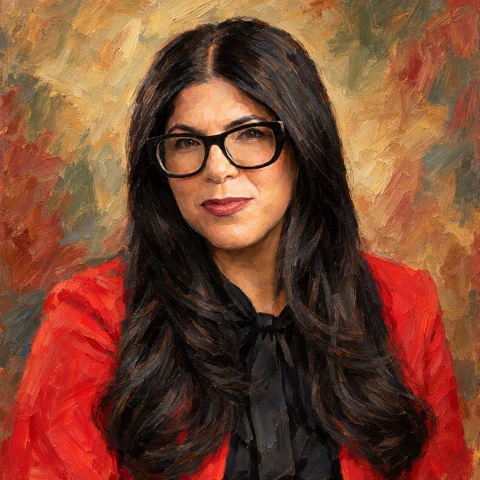
Thomas R. Kline
Medical Malpractice · Catastrophic Injury · Trial Advocacy
My goal has consistently been ‘what can I do to make the world safer or better through the individual who I represent in any particular case.’
Hall v. SEPTA and Harris v. Chestnut Hill Hospital: Thomas Kline’s Itemized Verdicts for Two Philadelphia Children
In 1999 Thomas R. Kline asked a Philadelphia jury to value a boy’s severed foot, the violation of his civil rights and his $65 sneakers, and it returned $51 million against SEPTA. In 2013 another jury, guided by Pennsylvania’s malpractice statute, set out a premature baby’s future care year by year.
In his closing argument in Hall v. SEPTA, Thomas R. Kline asked a Philadelphia jury for an award for pain and suffering, a civil-rights award, and $65 for a little boy’s destroyed sneakers. The boy was Shareif Hall. A subway escalator had severed his right foot in 1996, when he was four. The jury gave Kline all three. Its 1999 verdict against the Southeastern Pennsylvania Transportation Authority came to $51 million, and the Philadelphia Daily News ran a cover story about the boy under the headline “The $50M Kid.”
SEPTA had blamed the boy’s shoes. Its final accident report suggested that Shareif’s untied laces had caught in the machinery, and at trial SEPTA put a mangled white shoelace before the jury. Kline showed the jurors the black laces Shareif had worn that day, still double-knotted.
By then Kline had been trying injury cases in Philadelphia for nearly twenty years, first for James E. Beasley and, from 1995, at Kline & Specter, the firm he founded with Shanin Specter. Before law school he had taught sixth-grade social studies in his hometown, Hazleton. In 2004 he put his view of juries this way: “You can’t underestimate the intelligence of the juror. But at the same time, you have to present the material in a fashion that can be readily absorbed and grasped.” In Hall, part of the material was SEPTA’s own escalator maintenance evidence, which the agency had tampered with.
The Escalator at Cecil B. Moore Station
On November 27, 1996, Shareif, his brother and their mother were leaving a SEPTA subway station in North Philadelphia after a shopping trip for Thanksgiving dinner when a step on the escalator malfunctioned and severed his right foot. The escalator served the exit at the Cecil B. Moore station on the Broad Street line. His mother, Deneen Hall, was holding his hand as they rode up toward Broad Street, and his foot caught in the machinery at the top step. She was a single mother of five who worked at a suburban department store and lived in a two-bedroom apartment in North Philadelphia. In the hospital, Kline later said, Shareif asked the nurses, “Where is my foot? Can I get a new foot?”
After the accident, SEPTA blamed Shareif’s mother for his injury. The family sued in February 1997, and that year SEPTA sued Deneen Hall, claiming she had been the “sole, direct” cause of the accident. In May 1997 Shareif’s lawyers asked SEPTA for its accident records; SEPTA did not hand them over until the trial was half over. Before trial it offered $250,000.
At trial the evidence showed that SEPTA had known for several years that the Cecil B. Moore escalator was in disrepair. Kline tried the case with Robert Ross, then his partner, and Ross’s questioning of a key SEPTA official brought out that the agency had withheld documents, tampered with evidence and obstructed the litigation.
Some of those records surfaced in the courtroom. Twice during the trial, Judge Frederica Massiah-Jackson sent SEPTA employees back to search their offices across from City Hall, and both times they returned with thick files on escalators. One report, dated nineteen days before the accident, said the Cecil B. Moore escalator needed repairs to its step chain or it “will not be safe to operate.” Others showed that SEPTA had known since 1994 that some of its subway escalators were in poor condition. “Every time we have a witness on the stand, we learn there are more documents,” Kline said.
Massiah-Jackson also allowed Kline to add a civil-rights claim. Under her instructions, the jury could find a violation if SEPTA had acted with “deliberate indifference” about a “state-created danger” affecting the boy’s “bodily integrity or freedom from bodily pain or assault.” Both sides agreed that Shareif’s medical costs would come to about $300,000 and his lost lifetime earnings to about $700,000; he would wear a prosthesis. Kline described SEPTA to the jury as “evil, callous, reckless, uncaring.” In the week of the verdict SEPTA dropped its claim against Deneen Hall and presented no defense on it. Ten women and two men deliberated for about five hours, asked for more information about the civil-rights claim, and returned $25 million for pain and suffering, $25 million on the civil-rights claim, $1 million for Deneen Hall and $65 for the high-top sneakers. The jurors had not been told that state law capped awards against SEPTA.
That night, in their apartment, Deneen Hall told Shareif, now seven, that they had won. “Thank God it’s over,” she said. SEPTA’s spokesman, Richard Maloney, said the agency accepted a share of responsibility but could not afford a $51 million verdict, and he called the civil-rights claim “beyond reason.” Kline said SEPTA would not act on its escalators “unless there is a verdict and a public outcry.” “The system needs to be fixed,” he said.
The Shoelace Photograph and the Macy’s Bag
Kline had asked Massiah-Jackson during the trial to hold SEPTA in contempt. After the verdict she held four days of hearings, and thirteen SEPTA employees, the general manager, John K. Leary Jr., first among them, testified and turned over more documents. About a dozen senior officials came to court carrying newly released papers in manila envelopes, in briefcases and in a Macy’s shopping bag. Kline put Leary and SEPTA’s general counsel, G. Roger Bowers, on the stand. Bowers testified that he had first seen the final accident investigation report only the week before, and he called the failure to produce documents “bureaucratic bungling”; other SEPTA witnesses produced papers showing that Bowers had received a copy of the report. Under Kline’s questioning, Leary conceded that the integrity of SEPTA’s top management was in doubt.
SEPTA’s former director of system safety testified that he had signed the final accident report under protest. The investigation, he said, had been marked by “loss of evidence and constant report editing,” and the escalator’s screws had been withheld from the investigators. SEPTA’s preliminary report said the screws had been “sheared off”; the final report, issued six months later, said they were undamaged. “They tried to fix the report,” Kline told the judge. “It’s a fraud and a phony and a fix.”
Within a week of the verdict, Massiah-Jackson held SEPTA in contempt for tampering with maintenance evidence on its escalators and obstructing justice. Her twelve-page ruling found that the paper trail “established without any doubt that SEPTA’s management at the highest levels” knew of the documents, and it described SEPTA’s conduct as “cavalier disregard for the court process” and “extraordinary bad faith.” “The most devastating evidence which remained hidden by SEPTA was a May 1994 memo,” she said. The memo warned that the Cecil B. Moore escalator and others were dangerous, and for two years, she found, SEPTA took “no action” and “engaged in no maintenance” on its 27 subway escalators.
She also found that SEPTA had placed an unmatched white shoelace on Shareif’s mangled black sneaker in a photograph entered as evidence. While the boy’s “blood is still wet on the ground,” she said, “somebody from SEPTA was manipulating with physical evidence.” She rejected the general counsel’s explanation: “The failure to produce voluminous records must be considered willful.” “SEPTA hindered justice and impeded the judicial process,” she ruled. She noted, too, that no expert witness, SEPTA’s own included, would say Deneen Hall had caused the accident.
Kline said that “the evidence of the tampering goes all the way to the highest levels of SEPTA.” “The good that will come from this contempt hearing is beyond measure,” he said. Leary, outside court, said his heart went out to the Hall family and called the case “a wake-up call for SEPTA.”
SEPTA appealed. By early January 2000 it had settled all its disputes with Shareif and his mother for $7.4 million, and the settlement ended the appeal. Pennsylvania law capped a personal-injury claim against a Commonwealth defendant at $250,000, and Kline pointed out that the settlement came to thirty times the cap. After the verdict SEPTA also created a new department to oversee the safety of its escalators and the maintenance of its other facilities. “Our job in this case was not to destroy SEPTA,” Kline said. “Our job was to effectuate change.”
“Most important to me is that SEPTA is committed to fixing the escalators,” Kline said; SEPTA had committed $16 million to escalator repair and maintenance. Deneen Hall had wanted Shareif fully compensated, but not at a cost to SEPTA’s budget that would “affect other children who ride SEPTA,” Kline said, and he added, “We recognized that the public interest had a place at the bargaining table.” She dropped her planned suit against SEPTA for wrongful use of civil proceedings; in court Bowers and Leary had acknowledged that the countersuit against her was “wrong.” SEPTA hired a former deputy city solicitor, James B. Jordan, to remake its legal department and claims handling, and Jordan promised trained investigators for every accident, production of all relevant documents, and lawyers who would stop treating the damages cap as protection. He also promised that “we will not have accident investigation reports rewritten to shade the truth.” “We’ve always known that this case was bigger than Shareif Hall,” Kline said.
Lorna Bernhoft, Fourteen Former Tenants and Eleven Insurers
On October 12, 2010, Lorna Bernhoft, a University of Pennsylvania junior, sat on a piece of flex board on the fourth floor of an off-campus house in Philadelphia. The board covered a raised skylight opening, and it gave way. She fell 20 feet, landed on her tailbone on a staircase below, slid down the stairs and landed on her head. She was left paraplegic.
Kline, with Dom Guerrini and David Williams, sued the owners, Joseph, Irene and Jennifer Palmer, alleging that they had recklessly covered the opening with a thin flex board and failed to repair it. In court papers Bernhoft called that part of the fourth floor a “death trap.” The Palmers answered that the opening had been covered with three-fourths-inch plywood and nailed shut during renovations in the 1980s, and that the tenants had never reported any removal of the plywood, as their leases required. Kline acknowledged the weak point himself: Bernhoft had a blood-alcohol level of 0.26 and marijuana in her system. “There was a significant impediment in the case,” he said.
He described the course the case then took: “We sued the owner of the premises so we could see how the suit would evolve, encouraged joinder of the additional defendants, proceeded along the path of discovery and determined that there was significant insurance coverage.” On July 27, 2012, the Palmers filed a joinder complaint that added fourteen previous tenants of the house as defendants. Russell M. Nigro, a former justice of the Pennsylvania Supreme Court, mediated, and he stayed with the case after the usual two-day session ended. Kline counted at least twenty further discussions among fourteen parties, eleven of them insurance carriers.
The case, assigned to Judge John Milton Younge of the Philadelphia Court of Common Pleas, settled for $11.6 million on November 11, 2013. Eleven insurers, covering both the owners and the tenants, paid it. “The case is important to the community because it recognizes that there are dangerous defects in rental housing,” Kline said, “especially in off-campus housing, and every parent and student should be aware.”
Phinees Fortson’s Lifetime Care, Year by Year
Ebony Harris returned to Chestnut Hill Hospital complaining of pelvic pressure on July 2, 2007. Dr. Doris Chou, who was employed by the Hospital of the University of Pennsylvania and worked in Chestnut Hill’s maternal-fetal medicine department, examined her and found an excessive accumulation of amniotic fluid and a cervix shortened to 1.13 centimeters. Harris was monitored for three and a half hours and sent home on pelvic rest and modified bed rest. At 10 p.m. on July 4 she called her physician to report frequent contractions, and on July 5 her son, Phinees Fortson, was delivered by emergency cesarean section at nearly 25 weeks’ gestation.
Phinees suffered a brain hemorrhage and seizures. He was left blind, with spastic quadriparesis, cerebral palsy, gastroesophageal reflux and a feeding disorder. His parents, Ebony Harris and Roy Fortson, brought the malpractice case on his behalf.
Kline tried it with Regan Safier and Christine Clarke before Judge Mark I. Bernstein of the Philadelphia Court of Common Pleas. The plaintiffs’ case was that the doctors had failed to admit Harris to the hospital in time and failed to give her intravenous steroids, which would have protected the baby’s brain and respiratory development. The defense argued that nothing in Chou’s examination indicated that delivery was imminent, that steroids do not prevent premature labor, and that Phinees’s injuries were the product of his prematurity and low birth weight rather than of negligence. Chou’s lawyer, Daniel F. Ryan III, said after the verdict that he fully supported the care she had given.
The jury deliberated for two days on liability and found Chou negligent. It then awarded $42.9 million, all of it for Phinees’s future medical expenses, stated year by year. Kline singled out that form of the award: “In this case, a jury followed to the letter the most important provision of the MCARE Act—the year-by-year award of future damages totaling $42 million—in a contested liability case. That is a significant aspect of this verdict, as the jury, once it established liability after two days of deliberations, cared most about the lifetime care needs of a child with cerebral palsy.”
A lawyer for another defendant disclosed after the verdict that the parties had a high-low agreement. Kline would not discuss it except to say what he would accept: “While I cannot reveal any terms of any agreement, it is well known that I would not enter into an agreement in any case like this one that did not take care of this child’s lifetime needs.”
Tim Piazza’s Law and the First Sandusky Settlement
Kline has described each injury case as carrying two purposes, compensation for the client and change beyond the client. “What gets lost in the shuffle is the cause,” he said in 2017. “Personal injury cases are by definition about achieving both money to compensate and money to deter—compensatory and punitive damages. But the cause is much larger and the goal is much higher, and I’ve set my sights on those goals.”
He named three cases when he said it. He represented the parents of Tim Piazza, who died after hazing at a Penn State fraternity, and worked with legislators in Pennsylvania and New Jersey on laws, named for their son, that increased criminal penalties for hazing. He represented the man known as Victim No. 5 in the Jerry Sandusky case and became a public voice for Sandusky’s victims. And he represented Philippe Holland, a take-out food deliveryman whom plainclothes Philadelphia police officers shot after mistaking him for a criminal suspect.
Tim Piazza was a nineteen-year-old engineering sophomore from Lebanon, New Jersey. On February 2, 2017, bid-acceptance night at Penn State’s Beta Theta Pi house, he fell headfirst down the basement steps. He had a fractured skull and a shattered spleen. Fraternity members waited twelve hours to seek help, and he died on February 4. In May 2017, when prosecutors filed charges against the fraternity and its members, Kline called the house’s security video “the great equalizer in this particular situation.” “This was depravity at its worst level,” he said. “We need to change the culture. We need to change the atmosphere. We need to change the rules of the game.”
At the preliminary hearing in Bellefonte, the court watched about three hours of that footage. Jim and Evelyn Piazza, who had been sitting in the front row, left the courtroom. Kline said they had decided “it was incompatible with their mental health to sit and watch this video.” They wanted to remember their son, he said, as “the bright, young handsome man who he was,” rather than as someone “left to struggle bare-chested on the floor in the middle of the night.”
Gov. Tom Wolf signed the Timothy J. Piazza Anti-Hazing Law at the Pennsylvania State Capitol on October 19, 2018, with Jim, Evelyn and Mike Piazza, Senate Majority Leader Jake Corman, the bill’s sponsor, and Kline present. The bill had taken about eight months to pass, and it passed unanimously. It made hazing that causes serious bodily injury or death a third-degree felony, with fines up to $15,000; let courts order the confiscation of fraternity houses where hazing took place; required schools to keep anti-hazing policies and to report hazing; and protected students who seek medical or police help for a victim. “Our young people deserve better and we must protect them from this rampant criminal behavior,” Jim Piazza said.
In August 2013 Victim No. 5’s claim became the first of thirty-one lawsuits against Penn State over Sandusky’s abuse to be settled, and Kline declined to disclose the amount. “If Sandusky had been stopped in his tracks in February, then this incident in October involving Victim 5 would not have occurred,” Kline said. The agreement, he said, left “an open road for Penn State to go back after their insurers, the Second Mile foundation and Second Mile insurers.”
Philippe Holland and the Plainclothes Protocol
Philippe Holland had come from Côte d’Ivoire as a toddler, graduated from Upper Darby High School in 2011, and was taking community college courses in communications, hoping to become a sportscaster. He held two jobs, one at an airport Au Bon Pain and one delivering food. On the night of April 22, 2014, when he was twenty, he had just delivered a cheeseburger on Willows Avenue near 51st Street in West Philadelphia. Two plainclothes officers, Kevin Hanvey and Mitchell Farrell, both on the force less than a year, were in the area investigating a report of gunshots. They said a witness had pointed toward Holland; she later said she had pointed toward a Chinese restaurant and never saw him. Holland said the officers never identified themselves. Fearing a robbery, he got into his car through the passenger door. “In case it was something bad,” he said in a deposition, “I didn’t want whoever was in that car to see me.” He saw one man with a light and another with a gun, and he tried to pull away. The officers fired fourteen shots.
The officers said they had shouted “Stop! Police!” and that Holland drove toward them, and they said they feared for their lives. Department rules then allowed an officer to fire at a moving vehicle only when someone inside threatened deadly force apart from the vehicle itself. Internal Affairs found that Hanvey had stood in front of the car and Farrell in the open street without cover, and that Holland posed no threat beyond the moving vehicle; the department’s Use of Force Review Board found that the officers had violated policy. Holland was never implicated in any crime.
Kline described what the shots did: “14 bullets into his car, three hitting him, one squarely into his face.” Holland was left with bullet fragments in his brain and a permanent seizure disorder, and a slug was removed from his jaw in 2015. The seizures kept him from driving, and he gave up on sportscasting. “Horrible. Devastating,” Kline called the injuries.
The City of Philadelphia settled with Holland in 2017 for $4.4 million, and the settlement included new regulations and training protocols. The agreement was announced on January 6, as jury selection was about to begin, and it came to nearly twice what the city had paid in any earlier police shooting. The Police Department agreed to a new training protocol for all current and new plainclothes officers, with changes to how they display their badges and how and when they identify themselves as police. City Solicitor Sozi Pedro Tulante said the city would “strive to ensure that tragedies such as this do not happen again in our city.” Holland “is very gratified to see that there was a recognition not only financially, but in the need to train police officers,” Kline said, and Holland hoped the new policy would be known as the Holland Police Training Protocol.
Train 188 at Frankford Junction
Amtrak Train 188 left 30th Street Station northbound on May 12, 2015, and entered the curve at Frankford Junction, in Port Richmond, at 106 miles an hour, more than twice the posted limit of 50. Eight people died and more than 200 were injured. Amtrak acknowledged liability early.
Kline also chaired the plaintiffs’ management committee in the Amtrak 188 derailment litigation, which consolidated all the cases in federal court in Philadelphia, and helped establish a $265 million settlement program for injured passengers and the families of those who died.
“How do we fairly compensate the most people without plaintiffs lawyers becoming adversaries?” Kline asked. Judge Legrome D. Davis of the federal court in Philadelphia approved the settlement on October 27, 2016. Under it, two court-appointed masters were to set damages at hearings where victims could present evidence of their losses without challenge from Amtrak. Kline called the program “a fair, uniform and efficient method to compensate those that lost loved ones.”
A Dress-Factory Manager’s Son from Hazleton
Kline grew up in Hazleton, a coal-mining town in northeastern Pennsylvania, where his father managed a dress factory and his own first job was filling coal bins around the neighborhood. Decades later he still had a funnel he had made in seventh-grade shop class. “When I brought it home, my dad inspected it and then turned to me and said, ‘It is clear that you are going to have to learn to make your living with your head rather than your hands.’”
He majored in political science at Albright College and went home to teach social studies to sixth graders, which he did for six years; he met his wife, Paula, a fifth-grade teacher, in those years. While teaching he earned a master’s degree in American history at Lehigh University and completed the coursework and examinations toward a doctorate. “I loved being a teacher, but I always wanted to be a lawyer,” he has said. His route into Duquesne University’s law school was a visit: “Without an appointment, unannounced, I asked to see Associate Dean John Sciullo and I told him, ‘This is where I want to go to law school.’” He graduated in 1978 and was admitted to the Pennsylvania bar that November.
He clerked for Justice Thomas Pomeroy of the Pennsylvania Supreme Court, the justice’s last law clerk, and in 1980 moved to Philadelphia to work for Beasley. He has credited Pomeroy with schooling him in the intellectual side of the law and Beasley with the practical side. In 1995 he and Shanin Specter, another Beasley lawyer, left to start their own firm, and when they planned the new offices they installed a pocket door between them so they could easily confer. Kline later described two partnerships in his life, “in neither of which I’ve had a 51 percent vote. The first one is obvious, the other is with an enormously talented partner who has built this firm with me from scratch.”
In 2004, the year he described those partnerships, he was giving particular attention to cancer cases. His mother and father had both fought the disease, and Paula was then being treated for breast cancer. She died that year, after thirty-two years of marriage. “We all have tragedy in our life. Life is that kind of journey,” he said in 2014.
He has tied the work to what he saw growing up: “I knew early on growing up that people were unfairly injured under many circumstances.” And he has described the impulse in plain terms: “When an injustice has been done, it’s an impulse I have that there should be some measure of redress. And maybe that sounds like a platitude, but I really believe it.” In 2014 he said that the civil justice system lets a person seek compensation and, along the way, “also provides a learning experience to those who may have failed another human being.”
Trial Rooms in a Trumbauer Bank and a Center for Judges
A judge who watched Kline in front of a jury wrote an article called “Trial as Theater.” Kline turned the title into a continuing-legal-education program, a one-man show at the Wilma Theater in Philadelphia built on cases he had tried, and later staged a program there on Bob Dylan’s music and lyrics and the law. He has taught Introduction to Trial Advocacy as an adjunct professor at the University of Pennsylvania’s law school and taught classes at Temple’s law school and at Jefferson Medical College.
In 2014 Kline announced a $50 million personal gift to Drexel University’s law school, which now carries his name. The gift included the former Beneficial Savings Fund Society building in Center City, a historic building designed by Horace Trumbauer, which became the Thomas R. Kline Institute of Trial Advocacy, with trial practice rooms and a ceremonial courtroom. He chairs the law school’s advisory board.
The bank at 12th and Chestnut streets had been built in 1916 and had stood empty since 2001. “I fell in love with it, and decided it had to be saved,” Kline said. He said he hoped Pennsylvania’s appellate courts would “occasionally hear cases in our historic facility,” and he asked that attention go to what the money would do: “I hope the focus on the gift is on what it will be able to accomplish.”
At Duquesne, a $7.5 million gift from Kline established the Thomas R. Kline Center for Judicial Education, a partnership with the Judicial Education Department of the Administrative Office of Pennsylvania Courts that Ken Gormley had conceived during his years as the law school’s dean. The Pennsylvania Supreme Court had made continuing education mandatory for judges in 2016, with three credits a year in judicial ethics and nine in other subjects, and the center was set up to help provide that education to more than 600 Pennsylvania judges. In September 2022 Kline gave Duquesne another $50 million, to support student scholarships, faculty grants, bar preparation and new clinics that serve the community, and the university renamed its law school for him.
Kline gave his reason for the judges’ center: “In order to function in a world of changing technology, science and medicine, judges need to consistently educate themselves individually and also as a formal group.” He tied it to his clients: “I know the stake my clients have—and every lawyer’s clients have—in a well-educated and honorable judiciary.”