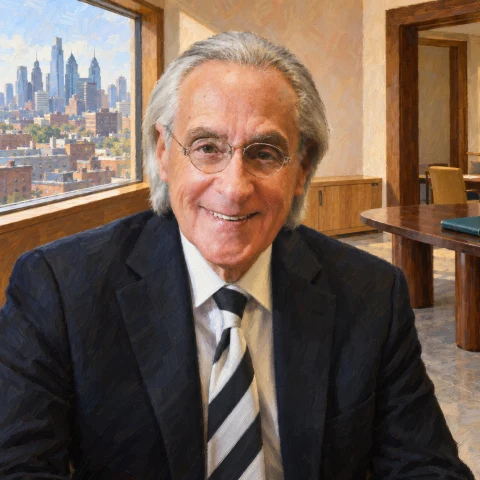
Lisa B. Weinstein
Birth Injury · Medical Negligence · Wrongful Death
When our trial team was able to demonstrate there was no evidence of that bleed until after Omotola was already at University of Chicago’s emergency room, the jurors rejected the defense’s causation theory.
Oyedapo v. University of Chicago Medical Center: A Cook County Jury Rejects the At-Home Abruption Defense
UChicago Medicine’s emergency department did not check an unborn baby’s heart rate until 40 minutes after a paramedic called ahead. In 2024 a trial team from Lisa B. Weinstein’s birth-injury practice, Weinstein among its members, persuaded a Cook County jury to reject the hospital’s theory of a bleed at home and hold it liable for Praise Oyedapo’s death.
The paramedic recognized the emergency before the ambulance reached the hospital. Omotola Oyedapo was 33 weeks pregnant on July 9, 2016; her blood pressure was very low, and she had begun reporting severe abdominal pain. During the seven-minute drive to the University of Chicago Medical Center (UCMC), the paramedic called ahead to report an obstetric emergency. The emergency department took the call. It did not alert an obstetrician, and it did not ready the equipment to check the baby’s heart rate the moment she arrived. Omotola came through the door at 4:49 a.m. An hour later, doctors delivered her son by emergency cesarean section.
Oluwasemilore Praise Oyedapo was profoundly depressed at birth and needed extensive resuscitation. During the surgery, doctors found that the placenta had partially detached from the wall of the uterus. The hospital built its defense on that discovery. Its causation experts placed Praise’s catastrophic brain injury in his mother’s home, before Omotola ever reached the hospital.
Lisa B. Weinstein founded Grant & Eisenhofer’s Chicago-based Birth Injury Litigation practice and still leads it. Her practice’s trial team answered the hospital’s experts with the timeline of that morning and with the absence of any evidence of a bleed before Omotola was inside the emergency room. On March 8, 2024, after a three-week trial before Judge James Varga in the Circuit Court of Cook County, a 12-person jury deliberated for about two and a half hours and unanimously found the medical center liable. It returned a verdict of $14,086,548.76.
Fifty Minutes Before an Obstetrician Was Called
Emergency department doctors and nurses at UCMC did not check the fetal heart rate until 5:22 a.m., 40 minutes after the hospital learned an obstetric emergency was on its way. Praise’s heart rate was in the 70s, against a normal range of 110 to 160 beats per minute, and he needed emergency delivery. About ten more minutes passed before anyone at the hospital tried to reach an obstetrician, some 50 minutes after the paramedic’s call. Omotola was not moved to Labor & Delivery until 5:40 a.m. Praise was delivered at 5:55 a.m. The estate later alleged that no physician assessed her condition and that the hospital had no record of her being seen.
“Two patients showed up that day,” Charles Bletsas, the senior counsel who led the trial team, said after the verdict, “and only one got treated for the first half hour.” He added: “To me, that’s the tragedy.” In Bletsas’s account, a woman 33 weeks pregnant with abdominal pain and low blood pressure needed an obstetrician, and the emergency department had an obligation to call one. “The emergency department was a gatekeeper of care,” Bletsas said. “The only person who can help this baby is an obstetrician.”
Bletsas faulted the hospital’s policy at the time, which called for a thorough evaluation of the mother before obstetric care began. Birth-injury cases usually arise from complications in the delivery room, he noted; this one arose in the emergency department.
Praise’s estate alleged that the delay caused a hypoxic-ischemic brain injury. Praise was born blind, with quadriplegic cerebral palsy. He was unable to communicate, depended entirely on others for daily living, and required around-the-clock care for the rest of his life. He died of those injuries in December 2020, at four and a half. Olusoji Oyedapo brought the case, No. 20 L 13797, as independent administrator of Praise’s estate.
A Bleed at Home or a Delay in the Emergency Room
The abruption gave UCMC its strongest defense. A placenta detaching from the uterine wall can keep oxygen from reaching a fetus and cause brain damage, and Omotola’s symptoms had begun before she reached the hospital. UCMC argued that the damage occurred before she was admitted to its emergency room. If the jurors accepted that timing, nothing the emergency department did or failed to do after 4:49 a.m. could have caused Praise’s injury.
Hall Prangle & Schoonveld, a Chicago defense firm, tried the case for the hospital in Judge Varga’s courtroom, Room 2406 of the Daley Center. As Weinstein described it after the verdict, UCMC’s causation experts based their opinions on the timing of Praise’s injury “almost entirely on there being a significant bleed from a placental abruption at home.”
Associate William Moore sat second chair to Bletsas. Weinstein, partner Ed Aucoin and associate Caitlin Doermer completed the trial team, and a graphic designer built visual aids to carry the jurors through the medicine. “It was a total team effort to clearly explain difficult medical issues to the jury,” Weinstein said after the verdict, adding that the defense had hotly contested both liability and damages.
The estate’s trial team argued that negligence in the emergency department delayed Praise’s delivery by more than half an hour, causing his injuries and ultimately his death, and it attacked the factual premise of the defense opinions. “When our trial team was able to demonstrate there was no evidence of that bleed until after Omotola was already at University of Chicago’s emergency room, the jurors rejected the defense’s causation theory,” Weinstein said.
What the Jury Itemized
The jury itemized its verdict: $3 million for disfigurement, $3 million for loss of normal life experience, $400,000 for pain and suffering, $400,000 for emotional distress, $283,052.26 for medical care, treatment and services, $4.5 million for grief, sorrow and mental suffering, $2.5 million for loss of society, and $3,496.50 for funeral and burial expenses. The largest single amount was for grief, sorrow and mental suffering.
“The Oyedapo family has endured so much anguish and suffering over this horrific tragedy that could have been avoided if not for negligence,” Weinstein said. “We are thankful the jury recognized the truth which the family deserves and Praise deserves.” She closed the statement with one more sentence: “May he now rest in peace.” Praise’s parents declined to be interviewed after the verdict, and UChicago Medicine did not respond to reporters’ requests for comment.
One Assistant and One Paralegal
Weinstein graduated in 2002 from the University of Michigan, where she had started a bowling league, and in 2006 from DePaul University College of Law, cum laude. She began her legal career in the public sector, working for a Federal Defender Program, the U.S. Attorney’s Office, the Cook County Public Defender’s Office and the Legal Assistance Foundation of Chicago, before moving into personal-injury work. She then founded The Weinstein Law Group, where she represented children harmed by medical malpractice and birth injuries.
She joined Grant & Eisenhofer as senior counsel in 2015. She was the youngest person at the firm to start and lead a practice group, and the birth-injury team began with one assistant and one paralegal. Less than two years later she was promoted to principal.
The practice now has more than 20 people: three principals—Weinstein, Ed Aucoin and Gerald D. Jowers Jr.—six associates, an in-house nurse consultant, a nurse litigation paralegal, and a staff of paralegals and support workers. In 2023 its entire support team was female; Weinstein considered it important in birth-injury cases to have women in those positions, because they are often better able to relate to and understand the needs and experiences of each client. The group stays in contact with clients after their cases settle.
Weinstein is admitted to practice in Illinois, Georgia, Kentucky, Michigan, Missouri and North Carolina, and the practice takes birth-injury cases nationwide. Her own results include a $12.5 million settlement for a child left brain-damaged by oxygen deprivation during labor and delivery. Across the practice’s settlements, from Georgia and Kentucky to Nevada and North Dakota, the same facts recur: a fetal heart tracing that showed distress, and a delivery that came late.
In California, Weinstein’s practice took the case of an 8-year-old boy, permanently injured at birth by a delayed delivery, through a trial of about five and a half weeks; the jury deliberated for about 24 hours, and the case then resolved in a confidential eight-figure settlement for his lifelong medical and care needs. Another of her cases settled on the first day of a trial set to run all of June, and she spent the following July with her family. By early 2023, with many of her cases delayed by the pandemic, she was eager to try cases again. Oyedapo went to verdict the next year.
Weinstein co-chairs the American Association for Justice’s Birth Trauma Litigation Group, sits on the board of the Illinois Trial Lawyers Association and serves as an arbitrator for the Circuit Court of Cook County. She has written for Trial magazine on newborn strokes and has presented to other lawyers on the intake and investigation of birth-injury cases and on Pitocin complications in induced labor.
The Resident’s Record and the In-Utero Defense
Two years after Oyedapo, Weinstein and Jowers led a five-week trial in Wake County Superior Court in Raleigh, North Carolina. Naqah Lake had been born to Laurel Browne at WakeMed’s Raleigh campus on September 17, 2019. During his delivery the resident noted a shoulder dystocia, in which the baby’s head is out and a shoulder is lodged behind the mother’s pubic bone. The resident then turned Naqah’s head while his shoulder stayed impacted, a fetal vertex rotation. His lawyers contended that the maneuver should never be used to relieve a shoulder dystocia and that its rotational force transmitted traction to the nerves of his left brachial plexus.
Naqah needed resuscitation at birth and spent nine days in the neonatal intensive care unit. At about six months old he underwent surgery to try to repair the damaged nerves. The injury left his left arm, shoulder and hand without useful function for life. “His left hand and arm is completely shorter and smaller than his right,” Weinstein said after the trial. His lawyers said he would struggle to open food containers and, as he grew older, to drive and lift weights.
WakeMed, like UCMC, placed the injury before its staff could have caused it: it argued that Naqah was hurt in utero, before the delivery. The damaged shoulder was the posterior one, and WakeMed argued that the pattern did not fit the anterior-shoulder injury usually seen in a shoulder dystocia, which made causation harder to prove. Against that defense Weinstein and Jowers had the resident’s own contemporaneous record that she had performed the fetal vertex rotation. Weinstein’s firm later said the medical records and the severity of Naqah’s injury weighed most with the jury.
The twelve jurors were unanimous. Their July 2026 verdict came to $18.2 million, $2.2 million of it economic damages and $16 million noneconomic, with $17.7 million awarded to Naqah and $500,000 to his mother. North Carolina caps noneconomic damages in most medical-malpractice cases, with exceptions, and as of mid-July Judge Winston C. Gilchrist was to decide after a later hearing whether an exception applies.
“We are grateful for the jury for holding WakeMed accountable for the lifelong disability it caused,” Weinstein said. Of Naqah’s mother she said: “Laurel’s been fighting for him since the day he was born.” That July she and Jowers presented a Trial School webinar for other lawyers on how they had proved negligence through difficult questions of medical causation.
Calls From Risk Management
Since 2024 Weinstein has also represented women whom Atrium Health Wake Forest Baptist Medical Center in Winston-Salem told they had been misdiagnosed with HER2-positive breast cancer. Her clients learned of the error by phone call or email from the hospital’s risk-management team or its health-information management officer, some of them years after the diagnosis.
One of the firm’s clients, in her twenties when she was diagnosed, had gone through a hysterectomy, chemotherapy, chemo-immunotherapy, post-surgical KADCYLA infusions and a double mastectomy, and the side effects left her unable to conceive. Another, a mother and grandmother, was 59 when she was diagnosed in 2020. She went through 13 cycles of chemotherapy and was told on May 29, 2024, that her diagnosis had been wrong.
That May the hospital said it had “noted an exception during an internal review of a specific test for a subset of patients with breast cancer” and was using an outside reference lab for the test while it finished its fact-finding. Weinstein’s firm filed complaints with the North Carolina Department of Health and Human Services for both women, the second weeks after the first, and set out to learn how many HER2 misdiagnoses Atrium had made since 2019.
Weinstein said her clients “remain in a state of shock and bewilderment, and are anxious to find out what went so tragically wrong.” The practice has since settled several North Carolina HER2 misdiagnosis claims, the largest for $2 million.