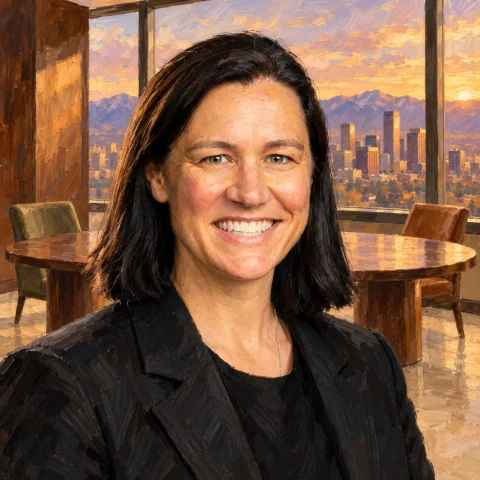
Lexi J. Hazam
Mass Torts · Product Liability · Whistleblower Litigation
Teachers and school administrators have been on the front lines of this crisis, and their resources are being drained by having to address the mental health impacts that these platforms are causing.
Lexi J. Hazam Co-Leads MDL 3047, Where School Districts’ Claims Against Meta, TikTok, Snap and YouTube Survived Summary Judgment
In Oakland, Hazam co-leads the federal litigation over how Meta, TikTok, Snap and YouTube built their platforms for young users. The school districts’ claims she pressed from 2023 carried a Kentucky district to a trial date in 2026, and all four companies settled before a jury was chosen.
Phillip Watts, the superintendent of the Breathitt County School District in Appalachian Kentucky, testified that starting in 2017 about 20 percent of his working time had gone to what he called “social media related concerns.” “As a school system, we’re just seeing more and more. It’s every day,” he said. The district bought pouches to hold students’ phones during class, and Watts said it “probably would not have bought those cell phone caddies … if it was not for social media.” Jeremy Hall, the principal of Sebastian Elementary School, said “nearly every fifth and sixth grader student who walks into our schools is dealing with an issue related to social media.” At Breathitt High School, the principal, Daphne Noble, described students ripping out soap dispensers to be part of a TikTok trend. “They wanted to get their likes up,” she said. Kera Howard, a guidance counselor at the high school, estimated that about 75 percent of her day went to students in crisis over social-media conflicts.
Their words went into the record of Breathitt County School District v. Meta Platforms. Breathitt was one of roughly 1,200 school districts suing the companies, and its case was the first of theirs set for trial in the federal litigation before U.S. District Judge Yvonne Gonzalez Rogers in Oakland. On November 7, 2025, the district answered the companies’ motion for summary judgment with a brief whose signature pages listed Lexi J. Hazam of Lieff Cabraser as co-lead counsel. It began with the place: Breathitt “is a district of five schools serving one of the poorest communities in rural, Appalachian Kentucky.” Then it named the causes. “Breathitt’s harsh realities include generational poverty, flooding, and COVID-19,” the brief said. “They also include Defendants’ conduct.”
Hazam had been making the schools’ case since 2023. “Schools are on the front lines of this crisis,” she said that June. Districts, she said, “are often having to divert resources and time and effort from their educational mission” to address the mental-health crisis among their students.
Twenty-Four Lawyers, Three Seats
Gonzalez Rogers had chosen her three years earlier. In November 2022, after a four-hour hearing in which she interviewed twenty-four lawyers for the plaintiffs’ leadership of the multidistrict litigation consolidating suits against Meta, TikTok, Snap, and Google’s YouTube over the platforms’ effect on adolescent users, she appointed three co-lead counsel: Hazam, a partner at Lieff Cabraser in San Francisco; Previn Warren of Motley Rice; and Christopher Seeger of Seeger Weiss, who later became the plaintiffs’ lead settlement counsel.
In seeking the role, Hazam had laid out the defenses she expected the companies to raise: immunity under Section 230 of the Communications Decency Act, and the question whether a social media site counts as a product at all. She urged that the companies’ Communications Decency Act defense be briefed on its own schedule, apart from the product-liability claims, because the Supreme Court’s pending decision in Gonzalez v. Google would bear on how far Section 230 reached; the product-liability questions, which turned on state law, could follow in a later phase. She took the seat, she said, on behalf of every plaintiffs’ firm in the litigation and every injured plaintiff it represented.
Benicar, Abilify, and the FDA Expert
Hazam came to the platforms from two decades of cases that turned on proof of what a product did to the people who used it. In the national Benicar litigation, which charged that Daiichi Sankyo’s blood-pressure drugs Benicar, Benicar HCT, Azor, and Tribenzor caused sprue-like enteropathy and other severe gastrointestinal symptoms, she sat on the plaintiffs’ steering committee and co-chaired its science and experts committee. The FDA had approved a label change in 2013 warning that the drugs could cause intestinal problems. In August 2017 Daiichi Sankyo agreed to pay $300 million to settle nearly 2,300 suits.
In the Abilify litigation, more than 2,000 federal suits charging that Bristol-Myers Squibb and Otsuka failed to warn that their antipsychotic could produce uncontrollable urges to gamble, she served on the executive committee and the science and expert subcommittee. The cases were centralized before Judge M. Casey Rodgers in Pensacola in October 2016, and at the first case-management conference that November Hazam introduced herself as counsel “representing several plaintiffs transferred to this district.” The companies agreed to a confidential global settlement in 2019. In the national opioid litigation she co-led the team that handled the key FDA expert.
Fires, a Pipeline, and a Pricing Promise
After the 2017 Thomas Fire and the 2018 Woolsey Fire, she was court-appointed co-lead counsel for the individual plaintiffs suing Southern California Edison, litigation in which those plaintiffs have recovered more than $1 billion combined. The two fires destroyed thousands of homes, and the mudslides that followed the Thomas Fire in Montecito destroyed more and killed 23 people. The Woolsey Fire broke out on November 8, 2018; the plaintiffs alleged that Edison equipment near the utility’s Chatsworth substation started it. It burned more than 96,000 acres in Los Angeles and Ventura Counties, destroyed at least 1,600 structures, and killed at least three people. Judge William F. Highberger of the Los Angeles Superior Court named Hazam a lead counsel for the individual Woolsey plaintiffs on June 21, 2019. In the Thomas Fire cases the plaintiffs defeated Edison’s demurrer to their inverse-condemnation claim, and after extensive discovery, shortly before a bellwether trial, the litigation moved into a settlement protocol that the Woolsey cases later adopted.
“The litigation has resulted in significant compensation to help victims rebuild their properties and their lives, and remain in their communities,” Hazam said of that case. “It has also helped galvanize legislative, regulatory and industry efforts to prevent such fires from recurring and ensure there are adequate funds available for both mitigation and compensation.” In 2025, after the Eaton Fire burned through Altadena, she was among the lawyers who sued Edison for Gladys Rodriguez and Greg Lopez, whose home there was destroyed. Their complaint charged that Edison, while it cut power to low-voltage lines in Eaton Canyon, left towers carrying high-voltage transmission lines energized, and that flames appeared at the base of those towers. “We are filing this lawsuit to get justice for Gladys and Greg and their children,” Hazam said.
In October 2021 about 25,000 gallons of oil leaked from a pipeline off Huntington Beach. The class members charged that container ships, among them the MSC Danit and the M/V Beijing, had repeatedly crossed over the pipeline owned by Amplify Energy and struck it with their anchors in heavy weather on January 25, 2021, displacing it and damaging its concrete casing so that it failed nine months later. Hazam, with Wylie A. Aitken and Stephen G. Larson, led the classes of fishers, property owners, and waterfront tourism businesses. Amplify agreed to pay $50 million, with $34 million to the fishers, $9 million to the property owners, and $7 million to the tourism businesses, and to install a new leak-detection system, use remotely operated vehicles to detect pipeline movement and report it quickly to federal and state authorities, add staff on its offshore platform and in its control room, and set up a one-call system for reporting threatened releases. Judge David O. Carter of the Central District of California approved the settlement on April 24, 2023. The shipping companies, which denied the allegations, agreed to pay $45 million more.
She had also represented public agencies billed for more than they were promised. Office Depot had signed the U.S. Communities purchasing contract promising California cities, counties, and school districts its best government pricing nationwide. A former Office Depot account manager sued under the California False Claims Act, alleging that the company routinely charged many of those entities more than it charged government customers elsewhere. Hazam and her partner Robert Nelson represented the whistleblower and the intervening governments—the City of Los Angeles, the County of Santa Clara, Stockton Unified School District, and sixteen more California cities, counties, and school districts. The case settled for $77.5 million, approved on February 11, 2015.
Twenty-Five Years at Lieff Cabraser
Hazam earned a bachelor’s degree at Stanford in 1995 and a master’s there in 1996, then a law degree at UC Berkeley in 2001, where she was an articles editor for the California Law Review and the La Raza Law Journal. She has practiced at Lieff Cabraser since and now chairs the firm’s mass torts practice group. She also represented people with hemophilia around the world who had contracted HIV or hepatitis C from contaminated blood-factor products, litigation that ended in 2009 in a confidential settlement covering more than a thousand clients in fifteen countries. In 2016 she wrote on technology-assisted review of documents from the side of the party requesting them.
The Filters, the Streaks, the Withheld Likes
The amended master complaint that Hazam and the rest of the plaintiffs’ leadership filed on April 14, 2023, described how the platforms’ features worked rather than simply naming them. Instagram’s and TikTok’s algorithms, it alleged, run on “intermittent variable rewards”: TikTok delays a video before a user is expected to log off, and Instagram withholds “likes” on a post and then releases them in bursts. Push notifications are timed to prompt a return visit. Snapchat’s Streaks feature counts consecutive days of contact between two users and breaks, visibly, if either one misses a day. Built-in filters let a user erase a blemish, narrow a face or body, or lighten skin tone before posting—filters the complaint says reinforce conventional and often racially biased standards of beauty.
Against those features the complaint set the numbers: a 57 percent rise in youth suicide rates, a 117 percent rise in emergency-room visits for anxiety disorders, and survey findings that by 2021 one in three teenage girls had seriously considered suicide and more than half used image filters every day. It asked for damages and for orders requiring each company to change certain design features and to warn its users.
Hazam explained the theory that June. The complaint, she said, made no claim that all social media was inherently evil. Its target was a set of design features that, in her words, “deliberately set out to addict” young users. “The problem is that these companies have used reams of data that they pull from young users,” she said; the data, she went on, fed sophisticated algorithms built to keep children on the platforms for as long as possible.
A Filter Treated as a Product
On May 18, 2023, the Supreme Court sent Gonzalez v. Google back to the lower courts, the same day it rejected the claims in a companion case against Twitter. Six months later, on November 14, 2023, Gonzalez Rogers ruled that an Instagram filter could be treated the way courts treat a car seat or a lawnmower: as a product, built by a company that owes a duty to design it reasonably and to warn users of dangers it already knows about. Section 230 of the Communications Decency Act shields platforms from liability for content other people post; Gonzalez Rogers held that the companies, sued as the makers of a product rather than the publishers of anyone’s post, owed their users ordinary care. She drew the line feature by feature. Claims aimed at endless feeds, disappearing content, and the timing and clustering of other users’ posts stayed out. Claims about parental controls, screen-time limits, and the companies’ own notifications went forward into discovery.
Her order took up the filters directly. “Plaintiffs plausibly allege that the filters are harmful regardless of whether children eventually post,” she wrote. “There is a defect and a harm separate and apart from publication of any third-party content.” On the First Amendment, the court took the companies’ own account of the tools: “Based on defendants’ own description, the filters are neutral, non-expressive tools provided by defendants.” Section 230 did not bar the claims about weak age verification, obstacles to deleting an account, or obstacles to reporting predators’ accounts either. Hazam, Seeger, and Warren answered the same day. “Today’s decision is a significant victory for the families that have been harmed by the dangers of social media,” they said in a statement.
Funds Meant for Educational Purposes
In May 2023, Prince George’s County Public Schools in Maryland, a district of more than 131,000 students, joined the litigation, with Lieff Cabraser serving as co-lead counsel for the school-district plaintiffs alongside the district’s own outside counsel. The district’s complaint said rising social-media use had become “a significant burden on the school system to provide adequate and essential mental health resources,” and that “funds that should be directed towards vital educational resources have been redirected to combat the harmful effects of social media.”
Hazam made the same point in her own words in 2024. “Teachers and school administrators have been on the front lines of this crisis, and their resources are being drained by having to address the mental health impacts that these platforms are causing,” she said. “Funds meant for educational purposes have been reallocated to address the misconduct of the corporations behind Instagram, TikTok, Snapchat, YouTube, and Facebook. Social media companies should be held to account and provide support to schools for the harms their products cause.” That September, as Michigan’s Lansing School District sued the same four companies, she said: “This is about holding social media companies accountable for putting profit over the well-being of children.” And: “They’ve created platforms that are not just addictive but actively harmful, and schools are suffering the consequences.”
The companies moved to dismiss the districts’ claims as too remote: the districts’ injuries, they argued, derived from the students’ own and fell outside any duty the companies owed to schools. On October 24, 2024, Gonzalez Rogers answered, “In most ways, the Court disagrees.” The districts had alleged that they hired additional counselors and staff and spent staff time confiscating phones, and she held that “[t]he alleged injuries here are distinct and borne exclusively by the school districts.” Section 230 and the First Amendment cut some theories away, and the order concluded: “The motion to dismiss is generally denied.” In a joint statement Hazam and Warren said, “Because of the addictive design of Instagram, Snapchat, TikTok, and YouTube, students are struggling,” and called the ruling a win for “schools, teachers, and administrators who are on the front lines of the nation’s youth mental health crisis.”
On November 15, 2024, Gonzalez Rogers ruled that public-nuisance claims brought by school districts and local governments could proceed against Meta and the other platforms under the laws of fifteen states. The claims did not require an individually injured student. They rested on the platforms’ design choices—the same filters, algorithms, and notification systems the April 2023 complaint had catalogued—and on the districts’ resulting costs.
Caddies, Pouches, and a Jury Question
Breathitt had sued in 2023, and its case was set to go first. On September 30, 2025, the companies moved for summary judgment. They argued that Breathitt had suffered two devastating floods, the COVID-19 pandemic, and pervasive poverty, all of which had harmed its students’ mental health; that “Breathitt’s guidance counselors cannot diagnose the cause of students’ mental health issues”; and that the district’s evidence “largely relates to its students’ use of smartphones or ‘social media’ generally,” rather than to any one company’s platform or to the features the court had let proceed. Lost staff time, they said, could not be recovered under Kentucky law.
The district answered with figures and witnesses. It put the staff time lost to social-media problems at $2.2 million to $3 million, and its outlays at $62,330 for cellphone caddies, monitoring software, and educational programs, plus about $2,100 in damage tied to a TikTok challenge. William Noble, the technology director, swore that his IT colleagues spent up to 15 percent of their time on social-media issues. Howard put the number of students with mental-health problems linked to social media at 200 to 220. In a 2021 state survey, 35.6 percent of Breathitt eighth graders reported checking social media every couple of minutes, and in a separate survey 86 percent of Breathitt High parents identified social media as interfering with learning. The district’s expert, Dr. Sharon Hoover, wrote that the platforms, “by design, encourage compulsive checking, emotional dysregulation, and disrupted sleep patterns.”
Gonzalez Rogers heard the companies’ motions at a marathon hearing in Oakland on January 26, 2026, and said the school districts had given a “reasonable articulation” of how features such as Snapchat’s streaks and Instagram’s beautification filter caused specific harm to students and schools. Her order of February 9 weighed Breathitt’s evidence as a whole: a witness who said “Snapchat is the one that we see the most,” a teacher whose “biggest challenge” was “keeping kids off YouTube,” Watts’s account of his time, and the sworn statements of Hall and Noble. Assessing it collectively, she found that it showed Breathitt students using each company’s platform. “A jury could reasonably infer from this evidence that it is defendants’ platforms that cause Breathitt’s purported harms,” she wrote. Whether the companies’ conduct was a substantial factor in that harm was a genuine dispute for trial. She declined to hold that lost staff time was unrecoverable, found genuine disputes of fact on the claim that the companies had failed to warn the district, and rejected the limitations defense because the companies had not carried their burden to prove it.
The order denied the platforms’ motion for summary judgment on Breathitt County School District’s negligence and public-nuisance claims against Meta, Google, ByteDance, and Snap, clearing for trial the district’s case, which Hazam, Jason Lichtman, and Kelly McNabb of Lieff Cabraser brought for it alongside the district’s Kentucky lawyers, Ronald E. Johnson Jr. and Sarah N. Emery of Hendy Johnson Vaughn, and lawyers from Motley Rice, Kessler Topaz, and other firms. Eight days later Gonzalez Rogers denied the defendants’ motion to exclude the school districts’ experts.
Twenty-Seven Million Dollars
Jury selection was set for June 12, 2026, and opening statements for June 15. Breathitt, a district of about 1,600 students, sought more than $60 million to cover the costs of counteracting the impact of social media and to fund a fifteen-year mental-health program, along with an order requiring the companies to change their platforms to reduce addictive features. The companies settled with the district one by one, YouTube, Snap, and TikTok first and Meta last, on May 21, 2026, weeks before the June trial date. The parties disclosed no terms; the amounts, reported afterward, came to $27 million: $9 million from Meta, $8 million each from Snap and TikTok, and just over $2 million from YouTube. Johnson, the district’s lawyer, said the district would set out how the money would be used in its annual budget process and that the uses would include student mental health.
A Verdict in Los Angeles, Terms in Oakland
The first jury to hear the evidence sat in Los Angeles, in the coordinated California cases. The plaintiff, identified as K.G.M., was twenty. She had started on YouTube at six and Instagram at nine, and she testified that anxiety and depression began when she was ten: “I stopped engaging with family because I was spending all my time on social media.” After opening statements on February 9 and more than forty hours of deliberation, the jury found on March 25, 2026, that Meta and Google had been negligent in designing or operating their platforms and had failed to warn adequately, and that each company’s negligence was a substantial factor in harming her. It awarded $3 million in compensatory damages and $3 million in punitive damages, apportioning 70 percent of the responsibility to Meta and 30 percent to Google. Hazam, speaking as co-lead of the federal litigation, said the jury had “held Meta and Google accountable for designing products that addict and harm children.”
Meta and TikTok had asked the Ninth Circuit to hear their Section 230 defense to the failure-to-warn claims before any trial, and Meta asked it to delay the states’ trial. On August 10, 2026, the court refused both. The appeal was premature, it held, because Section 230 is a defense to liability that the companies could raise on appeal after the litigation ended. “A trial is how the public finds out what Meta knew about its products’ impact on children,” Hazam and Warren said, “when it knew it, and what it chose to do with that knowledge.” They added: “Meta has fought to keep that evidence from the public.”
In August 2026 the federal litigation reached trial for the first time, on the state attorneys general’s claims against Meta, led by California, Colorado, Kentucky, and New Jersey. Opening statements came on August 18. The whistleblower Arturo Béjar testified that internal studies showed higher rates of harmful experiences among young users than Meta acknowledged in public, and Instagram’s head, Adam Mosseri, testified about the “Take a Break” feature, which the states said few teenagers used. On August 26, in the middle of trial, Meta settled with the states in an agreement reported at $17.1 billion that includes a two-hour daily cap on young users’ time. For users under eighteen, the two-hour default limit and a block on use between midnight and 6 a.m. can be lifted only by a parent. Meta also agreed to stop showing like counts on minors’ posts, to bar cosmetic-surgery filters for minors, to offer a feed not driven by its algorithm, and to accept an independent auditor, with payments spread over ten years. Gonzalez Rogers approved the settlement within hours of its filing. Likes and filters were features the April 2023 master complaint had described.
Hazam, Warren, and Seeger congratulated the states and answered for the clients whose cases remain: thousands of young people and school districts still have claims pending against Meta, TikTok, Snap, and YouTube, and they “stand ready to continue that fight.” “We will not rest until every one of these plaintiffs sees justice for the harms caused by all of the defendants’ platforms,” they said. By September the federal docket held 3,208 cases. Two more school districts’ cases, Tucson Unified’s and Charleston County’s, are set for trial in 2027, Tucson’s tentatively in January.