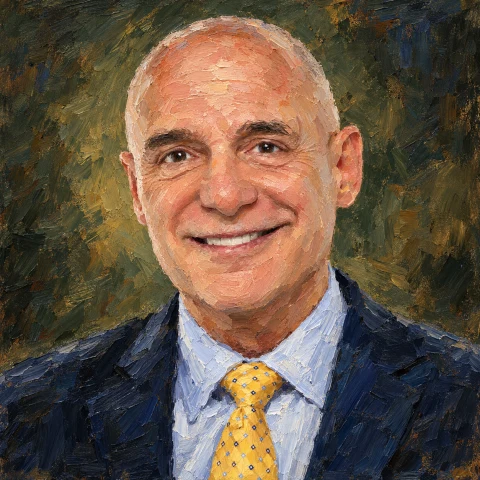
Michelle A. Parfitt
Mass Torts · Pharmaceutical & Product Liability · Medical Devices
This resolution could not have been achieved without the courage and determination of these women and their families who demanded accountability for the conduct of J&J.
Johnson & Johnson’s Talc MDL 2738: A Causation Record Tested Twice Under Daubert
Michelle Parfitt has served since 2016 as plaintiffs’ co-lead counsel in the federal multidistrict litigation over Johnson & Johnson’s talcum powder products. The ovarian-cancer causation science she carried through it cleared Judge Freda Wolfson’s Rule 702 review in 2020, drew Wolfson’s recommendation as special master in January 2026 that juries hear it again, and preceded an uncapped settlement of at least $5.5 billion in July 2026.
On Friday, October 18, 2019, Johnson & Johnson recalled 33,000 bottles of Johnson’s Baby Powder, all from a single lot, 22318RB, sold in the United States. The Food and Drug Administration had tested a bottle from that lot, bought from an online seller, and found chrysotile asbestos at a level no greater than 0.00002 percent. The company told customers to stop using the powder and repeated its position: “Thousands of tests over the past 40 years repeatedly confirm that our consumer talc products do not contain asbestos.” Four days later its lawyers wrote to Chief Judge Freda Wolfson in Trenton about the recall. Wolfson had heard eight days of testimony that July on whether the scientists behind thousands of ovarian-cancer lawsuits against the company could testify at all, and she had not yet ruled.
Michelle Parfitt and Leigh O’Dell, co-lead counsel for the women suing in the federal litigation, answered on October 23 in a letter both of them signed. The FDA had tested two samples, they wrote: one from lot 22318RB, which was positive for asbestos, and one from lot 00918RA, which was negative. “The negative results undercut J&J’s baseless assertion of cross-contamination.” The company had described the amount as a trace; Parfitt and O’Dell converted the percentage into fibers: “A bottle containing 0.00002% chrysotile, like the one tested by the FDA, would contain millions of fibers of chrysotile.” The company had also told Wolfson that asbestos had no bearing on the general-causation question in front of her. They answered that the finding went to biological plausibility, one of the Bradford Hill factors the plaintiffs’ experts had weighed, and that the company’s motion to exclude the plaintiffs’ asbestos-testing expert, Dr. William Longo, had rested on a “factual charade.” “The fact is the FDA confirmed the presence of asbestos in J&J’s finished talcum powder products.”
The letter traced the powder to a government-owned mine in China’s Guangxi province, the company’s talc source since 2003, where chrysotile had been identified before, and reminded Wolfson that the FDA’s own 2009–2010 survey of cosmetic talc had been run by an outside laboratory on samples from only four of nine suppliers. Parfitt and O’Dell were pressing the company and the FDA for the underlying documents and data, and they asked leave to add them to the record when they arrived. They also told the court that the plaintiffs’ steering committee “does not wish to reopen Daubert briefing or further delay the Court’s consideration of the issues therein.” Six months later Wolfson ruled.
The Judicial Panel on Multidistrict Litigation consolidated the federal cases over Johnson & Johnson’s Baby Powder and Shower to Shower products in 2016 before the U.S. District Court for the District of New Jersey as MDL 2738. The litigation grew to more than ninety thousand lawsuits in federal and state courts, more than 67,500 of them pending in the New Jersey federal court by January 2026. Parfitt, a senior partner at Ashcraft & Gerel who heads the firm’s mass tort practice, serves as the plaintiffs’ co-lead counsel—the role a court assigns to a small group of attorneys to run discovery, retain and defend the experts, and set trial strategy on behalf of everyone in the consolidated docket, rather than leaving each of tens of thousands of plaintiffs to build that record alone. Her years in the role have run through the evidence itself: the epidemiology, the company’s internal testing records, and the general-causation experts whose testimony had to clear the court’s own gatekeeping review twice, six years apart, before any jury heard it.
Two Questions About a Mineral
Talc is a soft mineral, mined from deposits that often run through the same rock formations as asbestos. Ground into powder and dusted on skin for more than a century, it raises two separate scientific questions once it is applied, repeatedly, to the genital area: whether contamination with asbestos fibers turned individual containers of the product into a carcinogen exposure, and whether the talc particles themselves, even asbestos-free, can migrate through the reproductive tract, lodge in ovarian tissue, and produce the kind of chronic inflammation researchers have linked to cancer. Those are the questions the plaintiffs ask a jury to answer in every one of the lawsuits.
Public-health agencies have since taken up both. Health Canada proposed in December 2018 that using talc products on the female genital area was a possible cause of ovarian cancer, and its final screening assessment told consumers that such products “may cause ovarian cancer.” In June 2024, the International Agency for Research on Cancer classified talc as probably carcinogenic to humans. Its working group of twenty-nine experts, announcing the classification that July, cited “numerous studies that consistently showed an increase in the incidence of ovarian cancer” among people who reported using body powder in the perineal region, and noted that contamination with asbestos “could not be excluded in most of the studies of exposed humans.”
Seventy Lawsuits and a Science Day
The panel’s order of October 4, 2016, gathered eleven actions from ten federal districts, with forty-three related actions pending in twenty-three districts. The plaintiff who asked for centralization wanted the Southern District of Illinois; Johnson & Johnson and its co-defendants proposed New Jersey, where the company has its headquarters. The panel chose New Jersey and Judge Freda Wolfson, who was already handling the most advanced of the cases; she presided over the MDL from its creation. It defined what the cases shared: “All the actions involve factual questions relating to the risk of cancer posed by talc and talc-based body powders, whether the defendants knew or should have known of this alleged risk, and whether defendants provided adequate instructions and warnings with respect to the products.”
By December 2016, Parfitt and O’Dell, of the Beasley Allen firm, were co-lead counsel for the plaintiffs, and the docket held more than seventy lawsuits. O’Dell remarked on the pairing: “We recognize that having two women lead an MDL is unusual but, thankfully, less rare with each passing year.”
On January 23, 2017, Parfitt, O’Dell, and Richard Golomb appeared for the plaintiffs at a science day before Wolfson and Magistrate Judge Lois Goodman. The two sides presented evidence from 9:30 in the morning to 3:30 in the afternoon. For the next two and a half years, Wolfson declined to set any of the consolidated cases for trial while she weighed that science.
What Wolfson Let a Jury Hear
Wolfson took the evidence in July 2019, in an eight-day hearing in Trenton with one witness a day: five experts for the plaintiffs and three for Johnson & Johnson. About twelve thousand federal cases were pending. The plaintiffs had twenty-two expert witnesses in all, and the company asked Wolfson to exclude every one of them. Parfitt called the hearing “a critical phase in a longer process.”
Dr. Daniel Clarke-Pearson, a gynecologic oncologist at the University of North Carolina at Chapel Hill with more than two hundred peer-reviewed papers, testified first. O’Dell took him through his review of the literature and his Bradford Hill analysis, and he concluded that applying talcum powder products to the perineum was a causative factor in epithelial ovarian cancer, raising a woman’s overall risk by twenty to sixty percent. Longo, whose materials-testing laboratory had examined historical samples of the company’s talc, testified that he had used the same asbestos-testing methods Johnson & Johnson’s scientists had used since 1974. Allison Brown, for the company, answered that the government agencies investigating asbestos in talc did not use his method. Each side then had forty-five days from the transcripts to file a written statement of up to eighty pages, and the October recall came while Wolfson was still deciding.
On April 27, 2020, Wolfson issued a 141-page opinion. Ruling on Johnson & Johnson’s motion to exclude the plaintiffs’ general-causation experts under Federal Rule of Evidence 702, she declined to bar their testimony. General causation is a threshold a mass tort plaintiff has to clear before any individual case can go forward—without admissible expert testimony that the product is capable of causing the disease at all, there is nothing left for a jury to weigh in a single woman’s case.
The epidemiologist Anne McTiernan of the University of Washington and the Fred Hutchinson Cancer Research Center, Arch Carson of the University of Texas School of Public Health, and Clarke-Pearson had weighed the nine Bradford Hill factors across case-control studies, cohort studies, meta-analyses and pooled analyses. Twenty-four of the twenty-eight case-control studies showed relative risks above 1.1, and sixteen of those were statistically significant. Johnson & Johnson attacked the experts’ reliance on case-control studies. Wolfson held that the weight owed to each kind of study, and whether the relative risks were strong or weak, were for the jury to decide. She admitted the opinions that talc applied to the genital area can migrate to the ovaries and cause chronic inflammation there. Longo, who had tested seventy-two historical samples of the company’s talc and reported asbestos in fifty, could testify about the results of his transmission electron microscopy, a method she found reliable. In her words, “the question of whose experts are correct is a question for the jury.”
About sixteen thousand cases were pending in the MDL that spring. “We are obviously pleased with the court’s ruling and are eager to move forward,” Parfitt said, and she added that epidemiologists and gynecologic oncologists “will be allowed to testify that talcum powder causes ovarian cancer.” Wolfson’s ruling meant the general-causation threshold had been cleared, and it let cases in the consolidated docket begin moving toward trial for the first time since the panel had centralized them four years earlier.
Drug and Device Cases From Washington
Parfitt came to the talc litigation from a Washington practice built on pharmaceutical and medical-device cases. She holds a bachelor’s degree from Northeastern University, a master’s degree from Michigan State University, and a law degree from Hofstra University School of Law, and she is licensed in the District of Columbia and Virginia. At Ashcraft & Gerel she heads the mass tort section and has represented thousands of people suing drug and device manufacturers in state and federal courts, serving on plaintiffs’ steering committees in national litigation; in February 2021 the federal court in Atlanta appointed her to the steering committee in the multidistrict litigation over the Paragard intrauterine device. She is a past president of the Trial Lawyers Association of Metropolitan Washington, D.C., and has served as one of its officers and governors since 1998.
What an Ovarian Cancer Costs
Before any federal case reached a jury, Johnson & Johnson took the talc claims into bankruptcy court. In October 2021 it placed its talc liabilities in a new subsidiary, LTL Management, which filed for bankruptcy; the stay that followed halted about thirty-eight thousand cases. When the Third Circuit ordered that case dismissed on January 30, 2023, finding that LTL had not filed in good faith, Parfitt said: “We are grateful that J&J’s efforts to misuse and abuse the bankruptcy process have been rejected.” She called the strategy “nothing more than a maneuver to obtain a litigation advantage and impose needless delay and unfair settlement values on victims.”
In April 2023 LTL filed again, proposing about $8.9 billion to settle all current and future talc claims. Chief Bankruptcy Judge Michael Kaplan dismissed that case in July, finding that the record did not establish “sufficient ‘imminent’ or ‘immediate’ financial distress.” Parfitt measured the offer against what the disease costs a woman: “Average costs for medical care, lost wages, lost jobs and pain and suffering can average more than $500,000 and up to more than a million dollars per victim.” The plan, she said, “would have paid a tiny fraction of the amount needed to fairly compensate victims of ovarian cancer and mesothelioma.” A third filing, by another subsidiary, Red River Talc, in Texas, ended on March 31, 2025, when Judge Christopher Lopez rejected its plan and the bankruptcy court dismissed the case. The cases came back to Trenton.
Carter Judkins’s Thirty Years
Carter Judkins was diagnosed with ovarian cancer in December 2016, after more than thirty years of using Johnson’s Baby Powder every day. Her case became the litigation’s first federal bellwether, the trial both sides and the court would use to see how a jury weighed causation evidence that by then stood behind tens of thousands of other claims. Judge Michael Shipp, who took over the MDL after Wolfson retired from the bench in February 2023, set a final pretrial conference in the Judkins case for November 5, 2025. On October 1, Judkins named the four lawyers who would try her case, with O’Dell as lead trial counsel; Parfitt and Christopher Tisi were among them.
The Same Judge, in a Different Chair
Before Judkins reached trial, Johnson & Johnson asked Shipp for another chance at the question it had already lost in 2020. On March 27, 2024, Shipp granted the company leave to file new Rule 702 motions, with a filing deadline that July. The company argued that scientific developments in the years since Wolfson’s ruling, and a December 2023 amendment to Rule 702, had undercut its basis; Erik Haas, its vice president of litigation, said Johnson & Johnson meant to “shine a light on some of the made-for-court junk science” used in recent trials. Parfitt and O’Dell answered that the scientific evidence was “stronger than ever.” On April 30, Shipp narrowed the second round: a prior ruling would be reconsidered only where it fell short of the amended rule or where new science directly contradicted its findings.
The parties filed the motions on July 23, 2024, and they waited out the Red River bankruptcy stay. On June 26, 2025, the court sent them to Wolfson herself, retired from the district court but sitting on the case as special master. She had seventeen motions in front of her, nine from the plaintiffs and eight from the company, covering at least thirty-nine experts on questions that included general causation, contamination and testing, and corporate knowledge. She heard argument in person on November 25, 2025, and on January 20, 2026, she issued a 658-page report recommending that the company’s challenge to the plaintiffs’ general-causation experts be denied a second time. “I find, by a preponderance of the evidence, that the Plaintiffs’ experts have applied reliable methodologies,” she wrote, and the epidemiologic studies from before and after 2020, “taken as a whole, demonstrate a positive, statistically significant association between genital talc powder use and ovarian cancer.”
The Daubert fight was not the only track running. In July 2025, Magistrate Judge Rukhsanah Singh had already ordered Johnson & Johnson and the plaintiffs’ leadership into mediation before a court-appointed mediator, and by September the parties were meeting under his supervision while the company’s renewed challenge to the causation experts still sat before Wolfson, unresolved. The plaintiffs had moved for the appointment of the mediator, Fouad Kurdi; the company did not formally oppose it but called mediation premature and unlikely to succeed. Singh’s order of July 2 required both sides to take part “in good faith,” and the first session, on September 4, required in person the mediator, the lead negotiating counsel for each side, and a company representative with authority to bind Johnson & Johnson to a resolution. Johnson & Johnson was negotiating a resolution for claims it was simultaneously asking a court to find had no valid scientific basis at all.
A Grid Built From the Record
Three bankruptcy filings by the company’s subsidiaries LTL Management and Red River Talc had ended in dismissal. On July 27, 2026, Johnson & Johnson and the plaintiffs’ leadership announced an uncapped settlement instead, the company’s fourth attempt to resolve the talc litigation at scale: a minimum of $5.5 billion, covering roughly seventy thousand claims across the federal MDL and coordinated state-court proceedings, paid through a tiered grid keyed to exposure and injury criteria rather than a flat, per-claim figure. The agreement takes effect only if at least ninety-five percent of the remaining claimants enroll, with the first payments, of up to $3 billion, scheduled for 2027.
The agreement also requires the lead plaintiffs’ firms in every federal and state ovarian talc proceeding to take part, and no payment beyond the first falls due before 2028. It came after more than ten years of litigation and of negotiations before the court-appointed mediator. Ashcraft & Gerel began notifying its clients, and claimants represented by other firms were told to contact their own lawyers.
Parfitt, plaintiffs’ co-lead counsel, said the resolution “could not have been achieved without the courage and determination of these women and their families who demanded accountability for the conduct of J&J.”