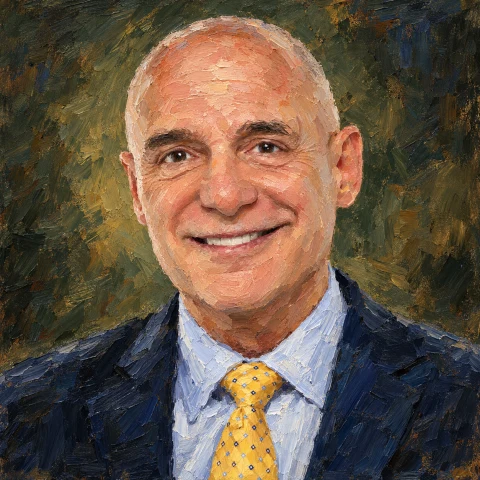
Mike Papantonio
Mass Torts · Toxic Exposure · Pharmaceutical Litigation
I told him to hand the MSDS sheet to the doctor, identify it for the record, read out the number to the jury, say it, at least, four times.
Bartlett v. DuPont: The First C-8 Bellwether Trial in Columbus and the Sixth Circuit’s Preclusion Ruling
Mike Papantonio tried Carla Bartlett’s kidney-cancer case, the first of about 3,500 C-8 cases against DuPont to go to trial and one DuPont had chosen, and the jury returned a $1.6 million verdict. That verdict and the two that followed later barred DuPont from relitigating duty, breach, and foreseeability, a ruling the Sixth Circuit affirmed in 2022.
The first of about 3,500 C-8 cases against DuPont to reach a jury was one DuPont had picked. The cases had been consolidated before Chief Judge Edmund A. Sargus Jr. in the Southern District of Ohio, and to choose bellwether trials each side proposed four plaintiffs and struck one of the other side’s selections, leaving six cases, three chosen by the plaintiffs’ steering committee and three by DuPont. The first to be tried, beginning September 14, 2015, was one of DuPont’s: Carla Bartlett’s claim that C-8 in her drinking water had caused her kidney cancer. Bartlett had lived much of her life in Coolville, Ohio, a few miles across the Ohio River from DuPont’s Washington Works plant near Parkersburg, West Virginia.
Mike Papantonio, a Pensacola, Florida, trial lawyer, led Bartlett’s trial team and argued her case. After nearly a month of trial, the jury found that exposure to C-8 had caused her cancer and returned a $1.6 million verdict against DuPont, and Sargus refused to set it aside or reduce it. In 2022 the Sixth Circuit affirmed a ruling that the Bartlett verdict, together with the two C-8 verdicts that followed it, barred DuPont from relitigating duty, breach, and foreseeability in a later cancer case.
The Probable Link Finding at Trial
“Well, God didn’t make C8. DuPont made C8, and the only place you get C8 is from a manufacturing process,” Papantonio has said. DuPont used the chemical at Washington Works to make Teflon. In the 1950s, the Sixth Circuit later recounted, the company began discharging “vast quantities” of C-8 into the Ohio River, into landfills and into the air; it learned in the 1960s that the chemical was toxic to animals and by the 1980s that it might cause cancer, and between 1984 and 2000 it increased its discharges.
The C-8 cases grew out of Leach v. E. I. du Pont de Nemours & Co., a West Virginia state-court class action brought for about 80,000 residents over DuPont’s discharges of C-8, the chemical also called perfluorooctanoic acid or PFOA, from the Washington Works plant into the Ohio River and the air. The Leach settlement, worth up to $343 million, required DuPont to fund a Science Panel to study the health of the class, and DuPont agreed that for any disease the panel linked to C-8 it would not contest general causation—“that it is probable that exposure to C-8 is capable of causing a particular Human Disease.” The panel reported probable links to six diseases: kidney cancer, testicular cancer, thyroid disease, ulcerative colitis, diagnosed high cholesterol, and pregnancy-induced hypertension and preeclampsia. Class members with those diseases brought about 3,500 cases, and a Levin Papantonio lawyer sat on the plaintiffs’ steering committee, which chose the plaintiffs’ three bellwether cases.
Carla Bartlett was one of those class members. She was fifty-nine when her case was tried and lived in Guysville, in Athens County, Ohio. She and her husband, Jon, sued DuPont in February 2013, alleging that she had lived in the Tuppers Plains-Chester water district since about 1980; his claim for loss of consortium was joined to hers. William F. Cash III of Levin Papantonio and Michael A. London of Douglas & London signed the complaint.
Sargus applied the Leach terms to Bartlett’s case. The Probable Link Finding, he ruled, applied to her and established that a link between C-8 exposure and her kidney cancer was more likely than not, and she was “not required to prove that her dose of and/or exposure to C-8 is capable of causing her kidney cancer.” Under the class settlement, the jurors had to accept that drinking water with 0.05 parts per billion of C-8 or more for at least a year can cause cancer. Bartlett still had to prove specific causation—that C-8 had in fact caused her cancer—and on that question DuPont pointed to her obesity. “Just because C-8 is capable of causing cancer does not mean that it did cause Mrs. Bartlett’s kidney cancer,” said Damond Mace, DuPont’s trial lawyer. In his opening statement he had told the jurors, “Kidney cancer occurs every day all across this great country of ours.”
DuPont’s expert Dr. Samuel Cohen had concluded that Bartlett’s obesity, rather than C-8, caused her kidney cancer. Her lawyers moved to exclude his testimony, and on September 14, 2015, the day the trial began, Sargus barred Cohen’s ultimate causation opinions. Because DuPont had conceded general causation, the court reasoned, a reliable differential diagnosis had to rule C-8 in as a possible cause, and Cohen had “failed to rule in C-8 as a possible cause of Mrs. Bartlett’s kidney cancer.” Cohen could still tell the jury that obesity is an established risk factor for kidney cancer.
Bartlett, a mother of two, had been diagnosed with a kidney tumor in 1997, and the surgery to remove it took part of one of her ribs. On the stand she described the iced tea she drank every day, unknowingly made with contaminated water; the pain of her ordeal; and her fear that the cancer would return. She cried and traced a huge line across her body where the surgical scar runs. “It’s very big, and it’s very ugly,” she said.
What 3M Said to Do With the Waste
Bartlett’s lawyers produced a 1985 memo and an information sheet from 3M, which sold C-8 to DuPont until 2000; both said the chemical should be incinerated or placed in a landfill designed for hazardous waste. Other documents showed that DuPont burned C-8 waste at its facilities in Japan, China, and the Netherlands. At Parkersburg, the evidence showed, DuPont pumped C-8 through its smokestacks, buried it in unlined landfills, and dumped up to 50,000 pounds a year directly into the Ohio River. The plaintiffs’ evidence put the cost of switching to incineration at less than 0.2 percent of the plant’s annual operating costs.
The jurors also saw DuPont’s own records. Routine testing had found C-8 in the blood of DuPont workers by 1980, and by 1984 the company’s tests showed that the chemical had reached local drinking water. In the summary of a 1984 meeting, a DuPont employee concluded that “we are already liable for the past 32 years of operation.” Papantonio showed the jury a DuPont PowerPoint presentation that described a strategy of keeping sensitive information from government agencies, community organizations and “disgruntled employees,” and another memo shown at trial asked whether there was a strategy to minimize the information being disseminated.
The jury heard that DuPont knew in 1989 that C-8 caused testicular tumors in rats and had classified it as a possible carcinogen. “They hid this information from the public for at least 16 years,” Papantonio told the jury. On incineration, he said, “The only reason they didn’t do it was because they wanted to save money,” and later, “We wouldn’t be here today if it were incinerated.” He and his co-counsel Gary Douglas argued that DuPont had shown “conscious disregard” for residents of Ohio and West Virginia by downplaying or hiding the chemical’s effects on the public.
Two of DuPont’s own witnesses acknowledged high levels of the chemical in their own blood. Anthony Playtis, who had been the plant’s occupational health coordinator, said that a 1994 test measured C-8 in his blood at 400 parts per billion, roughly 100 times the national average. “Everything is toxic,” Playtis said. In 1988 a sample from his own home had measured 2.2 parts per billion, more than double the company’s internal safe level, and neither he nor anyone else at DuPont reported such readings to the public or to regulators until 1999. Under cross-examination he acknowledged that a company doctor had proposed epidemiological studies of kidney cancer among Washington Works employees exposed to C-8, and that DuPont never conducted them.
Paul Bossert, plant manager from 2000 to 2005, said he drank the plant’s water and acknowledged that his own blood had measured 85 parts per billion. In 2003, while he ran the plant, Bossert had said that reports of C-8 levels in residents’ blood were “unrealistic, misleading and could raise unnecessary concern among community residents.” On cross-examination he acknowledged high cholesterol and a spot on his kidney that might be cancer, two of the six conditions the Science Panel had linked to C-8. Papantonio noted that DuPont had tested the blood of the people who worked with the chemical.
Show Me a Document
“I’ve got my closing done,” Papantonio later said of the night before closing arguments, “having been up probably 36 hours pulling everything together and making it succinct.” In the account he has given since, his co-counsel Rob Bilott, of Taft Stettinius & Hollister, came to him over drinks that night, having been looking through the material safety data sheets, and handed him a sheet for C-8 with a statement Papantonio had not seen, one that, he has said, cited DuPont’s own studies for the proposition that the chemical could cause cancer. He went back to his hotel room and rewrote his closing.
“That’s in the MSDS sheet. Well, I’m holding it back,” he has recalled. “We’ve got one more witness, and then we go into closing.” The last witness was a doctor, and Tim O’Brien of Levin Papantonio was handling the witness. Papantonio told O’Brien not to make use of the sheet himself, because, he said, “I’m about to have some fun with it.” His instruction to O’Brien, he has said, was to get the sheet into the record without revealing its importance: hand it to the doctor, identify it for the record, and read its number to the jury at least four times.
Closing arguments came on Tuesday, October 6. “You are the first people to hear this story and the whole world’s watching,” Papantonio told the seven jurors. He argued that DuPont had ignored the dangers of C-8 to keep earning large profits from Teflon and had hidden what it learned from the community and from regulators. The plaintiff’s rebuttal would be the last argument the jury heard, and DuPont’s lawyers would have no chance to answer it.
In DuPont’s closing argument Mace called Bartlett’s case a “house of cards.” “This case is about Carla Bartlett, nobody else,” he said, reminding the jurors that the burden of proof was hers. He told them that the company’s workers and plant officials drank the same water as the residents, and that of its eight employees with cancer in 1989, only one had worked at length with C-8. As Papantonio recounts it, Mace also said that Papantonio had been suggesting DuPont had some document about cancer, asked the jurors whether they had seen it, and told them he had not. “I’m sitting there. My jacket is on fire. I’ve got the MSDS sheet folded in my breast pocket,” Papantonio said later.
Papantonio stood for rebuttal. By his account he began, “Ladies and gentlemen, I think I heard a challenge when Mr. Mace was up here talking. I think he said, ‘Show me a document.’ I believe that’s what he said. As a matter of fact, I’m positive that’s what he said.” In his telling, he then turned to Mace—“Mr. Mace, I want to show you a document”—took the folded sheet from his coat pocket, and asked Mace to read it with him: “Why don’t you read this with me?” Papantonio has summed up what followed: “We read that line, ‘Cancer, our tests, your tests show it.’ Buddy, it was over.”
The jurors deliberated for less than a full day. On Wednesday, October 7, 2015, they found DuPont liable for negligence and found that Bartlett’s kidney cancer resulted from her exposure to C-8. They awarded her $1.1 million in damages and $500,000 for emotional distress.
“This is brilliant,” Papantonio said of the verdict. He pointed out that DuPont had picked Bartlett’s case to go first. “They picked this case with the idea that it was the most winnable. Strategically they never dreamed we’d win this case,” he said. The plaintiffs, he said, would keep trying cases “until DuPont admits what they created here was a catastrophe.” He compared the C-8 docket to the asbestos litigation, which had cost industry more than $50 billion: “If I was in charge of this company, I’d be worried.” Bartlett said the verdict left her feeling vindicated. Of Bartlett, Papantonio said, “She understands that she did good for the communities all up and down the Ohio River.”
Perry Nichols and Leo Thomas
Papantonio was born in New York and came to Florida at about six weeks old. Different families raised him around Arcadia, Bradenton, Sarasota, Fort Myers, Tampa, and St. Petersburg. At the University of Florida he majored in news editing, intending to become a foreign correspondent. Friends in Arcadia suggested he think about law and introduced him to Perry Nichols, a trial lawyer whom Papantonio credits with engineering the use of demonstrative evidence: laying out the parts of a case and showing how they come together. “I went and I met him and it had a huge influence on me,” Papantonio has said. He concluded that he could earn a law degree and still write.
He graduated from Cumberland School of Law at Samford University in 1981 and was admitted to The Florida Bar that December. He moved to Pensacola partly for the windsurfing, with a thought of tending bar for a while. Needing money to live on, he went to work in the state attorney’s office, where Ron Johnson hired him, and in about a year there he found himself in trial again and again against the criminal defense lawyer Leo Thomas. After Papantonio “got a few good breaks,” he has recalled, Thomas asked him, “Well, why don’t you come on over and get a job?” The firm, as he remembers it, was then called Levin Warfield. He has practiced there ever since and now leads it as Levin Papantonio’s senior partner.
He kept writing. His books run from In Search of Atticus Finch (1996) to the legal thrillers he has published since 2016, among them The Middleman (2025), in which a lawyer investigates a pharmacy benefit manager over insulin pricing; he founded the syndicated radio program Ring of Fire and has hosted America’s Lawyer on YouTube. The Florida Bar has certified him in civil trial law since 1991, and in 2011 the Florida Justice Association gave him its Perry Nichols Award.
DuPont’s Appeal and David Freeman’s Jury
DuPont renewed its motion for judgment as a matter of law and asked, in the alternative, for a new trial and a reduced award. Sargus denied the motion in a 125-page opinion on February 17, 2016. DuPont appealed to the Sixth Circuit, arguing that Sargus’s reading of the Leach agreement—that it barred any challenge to general causation—was a “threshold contract interpretation error [that] eliminated the heart of a critical defense for DuPont in each of the 3,500 cases.” The Chamber of Commerce of the United States, the American Tort Reform Association and the American Chemistry Council filed a brief supporting DuPont. If Sargus’s reading stood, they warned, “no reasonable tort defendant will agree to refer causation issues to the judgment of an independent panel again.”
The next two C-8 verdicts also went to the plaintiffs. The second bellwether trial, David Freeman’s, opened in Columbus at the end of May 2016. Freeman, fifty-six, had lived since 1993 near the plant, in the Little Hocking Water Association’s service area in Washington County, Ohio, and he had testicular cancer. Papantonio and Gary Douglas represented him. During the trial, which ran more than a month, Papantonio said that DuPont had known C-8 caused cancer and had tried to protect the Teflon brand instead of keeping the people around the plant safe. Freeman claimed that DuPont had known since at least 1961 that the chemical was toxic and had not disclosed an in-house study finding birth defects among its workers’ children; in 2005 the EPA had fined DuPont $16.5 million for failing to report that and other data. Dawn Jackson, a former DuPont spokeswoman, testified that she had never known of concerns about the dumping when she told residents their water was safe to drink, and she said she had never seen many of the internal memos Freeman’s lawyers put in front of her.
On Wednesday, July 6, after deliberating less than a day, the jury of four women and three men found DuPont negligent, found that it had acted with actual malice, and awarded Freeman $5.1 million in compensatory damages. Freeman hugged Papantonio after the verdict. On Friday, July 8, the same jury added $500,000 in punitive damages, the first time a C-8 jury had found that DuPont’s conduct warranted them. “The jury saw that DuPont acted with pure conscious disregard and now DuPont knows they have to face this,” Papantonio said. “Now, DuPont has to decide how many of these hits can they take.”
Sargus had ordered DuPont to prepare for forty trials a year beginning in April 2017. In Kenneth Vigneron’s testicular-cancer case, the first trial after the bellwethers, a jury awarded $2 million in compensatory damages in December 2016 and $10.5 million in punitive damages in January 2017.
Larry Moody’s Trial and the $670.7 Million Settlement
On the morning of Monday, February 13, 2017, lawyers in the fourth C-8 trial, Larry Moody’s, told Sargus that a settlement had been reached. The Sixth Circuit had heard argument in Bartlett but had not ruled. DuPont and Chemours, the company DuPont had spun off, agreed to pay $670.7 million, $335.35 million each, to settle the C-8 claims of about 3,550 plaintiffs, among them the three tried cases and the fourth then in trial. For five years after the settlement took effect, Chemours would also pay the first $25 million a year of any future PFOA costs the settlement did not cover, and DuPont up to $25 million a year more. Joe Kiger, an early plaintiff in the C-8 litigation, said his phone had been “ringing off the hook.”
Each plaintiff’s share turned on the severity of his or her disease. Packets went out asking the plaintiffs about their illnesses, to be returned by April 24. “The individuals will receive a settlement based on the severity of their disease,” said Harry Deitzler, one of the plaintiffs’ lawyers. The parties signed the definitive agreements in March 2017, and Chemours and DuPont each paid half of the $670.7 million in cash. DuPont withdrew its Bartlett appeal, and on May 30, 2017, on the parties’ stipulation, the Sixth Circuit dismissed it.
Bartlett’s Verdict in Travis Abbott’s Case
After the settlement, other Leach class members filed new cases, among them Travis Abbott, who had been diagnosed with testicular cancer. Abbott grew up in and around Pomeroy, Ohio, and for more than twenty years from the age of six, at home and at school, he drank water from the Tuppers Plains-Chester district, the same water district as Carla Bartlett. He was sixteen in 1994 when surgeons removed a cancerous testicle. He became a teacher and then a principal near his hometown, and he married Julie Abbott. On November 16, 2015, about six weeks after the Bartlett verdict, pathology confirmed a second testicular cancer, and a metastasis in the lymph nodes of his abdomen required another surgery.
Applying offensive nonmutual collateral estoppel, which allows a plaintiff to hold a defendant to issues it lost in an earlier case brought by someone else, the district court ruled that the verdicts in Bartlett, Freeman, and Vigneron precluded DuPont from relitigating the duty, breach, and foreseeability elements of Abbott’s negligence claims, and it granted partial summary judgment on those elements. It also held DuPont to the reading of the Leach agreement applied in those three trials. Jon Conlin of Cory Watson, in Birmingham, Alabama, represented the Abbotts at trial. After a month-long trial that began in January 2020, the jury returned its verdict on March 2, 2020, and awarded Travis Abbott $40 million. “The verdict was a product of district court rulings that severely and improperly limited our defenses in this case,” said Dan Turner, a DuPont spokesman. In March 2021 Sargus refused DuPont’s request to reduce Travis Abbott’s award; the injuries he weighed included a surgery requiring an incision from chest to groin and, as he wrote, “lifelong testosterone replacement therapy via weekly injections.”
DuPont appealed, and Matthew W. H. Wessler of Gupta Wessler argued the case for the Abbotts. DuPont contended that the bellwether trials had been presented as informational and nonbinding, that the earlier plaintiffs’ exposures and circumstances differed from Abbott’s, and that general verdicts could not show what those juries had actually decided. In each earlier trial the jurors had been asked whether a “reasonably prudent corporation would have anticipated” injury and whether DuPont had used “the care that a reasonably careful corporation would use under the same or similar circumstances.” On December 5, 2022, the Sixth Circuit affirmed. Writing for the court, Judge Jane Branstetter Stranch reasoned that the jury instructions in the earlier trials “must and do reference each specific plaintiff, but their focus, and the focus of the jury’s inquiry in each of the cases, was on DuPont’s conduct.” The court read the district court’s assurance that the bellwethers would not be “binding bellwethers” to mean only that their results would not be automatically extrapolated to other plaintiffs; the district court had never promised that issue preclusion would be unavailable.
DuPont had not challenged on appeal the part of the order that held it to Sargus’s reading of the Leach agreement, so that reading, the court said, “remains binding”; the court also found no abuse of discretion in the rejection of DuPont’s challenges to the dose-response evidence. DuPont’s settlement of Bartlett while its appeal was pending “does not change the preclusive effect of the district court’s decisions in that case,” Judge Stranch wrote, and “DuPont has received a full and fair opportunity for resolution of its issues—it had its day in court.” Judge Batchelder dissented in part. In her view the earlier trials had turned on plaintiff-specific facts, and the court should have asked whether the bellwethers were representative before giving their verdicts preclusive effect.
DuPont asked the Supreme Court to review the decision. Justice Kavanaugh would have granted the petition, and Justice Thomas, dissenting from the denial, noted that the MDL court had described the bellwether trials as informational for the other pending cases and questioned whether preclusion that ran only against DuPont was consistent with due process. On November 20, 2023, the Court denied the petition, leaving the Sixth Circuit’s decision in place.