Sarah S. Doles
Mass Torts · Products Liability · Multidistrict Litigation
These clients just really want to tell their story and tell their story while they can, because they’re losing the ability to do so.
In re Paraquat Products Liability Litigation: The MDL Sarah Doles Helped Lead to a Settlement
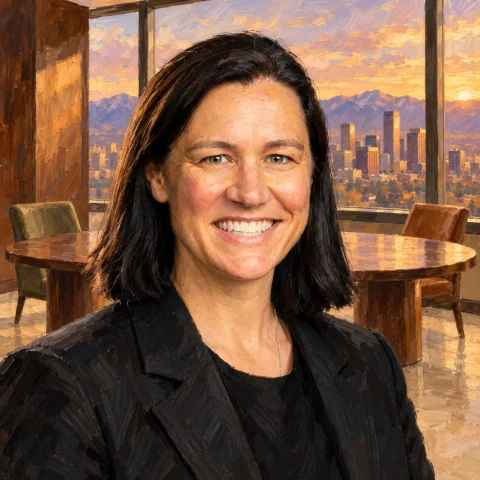
Sarah Doles has served since July 2021 as one of three court-appointed co-lead counsel and as liaison counsel in the federal Paraquat multidistrict litigation, the primary contact between the Southern District of Illinois and the lawyers for thousands of plaintiffs alleging the herbicide caused their Parkinson’s disease. The litigation reached a Master Settlement Agreement in September 2025, and the claims it covers are now being sorted, tier by tier, under a court-appointed special master.
In 2004, John Platt and his wife bought twenty-six acres of untouched woodland in Florida’s panhandle and set about turning it into a horse ranch, toppling trees and stripping the undergrowth with paraquat. Through 2012 he sprayed the herbicide by hand for multiple days in a row each year. He weighed about 190 pounds when he bought the land. By the fall of 2024, with Parkinson’s disease, he weighed under 150, with tremors, trouble recalling words, and severe fatigue, symptoms he described as incessant. “We wouldn’t have continued to use it if we had known what impact it was going to have,” he said.
Platt was one of roughly six thousand people suing Syngenta, the company that made paraquat and sold it under the trade name Gramoxone. His lawyer was Sarah Doles, one of three court-appointed co-lead counsel for the plaintiffs in the federal litigation over the herbicide. Her clients, she said that year, were elderly people in ill health, and many plaintiffs had died without seeing their cases resolved; a trial first scheduled for November 2022 had been pushed back repeatedly. “These clients just really want to tell their story and tell their story while they can,” she said, “because they’re losing the ability to do so.”
The Court’s Primary Contact
The federal docket she helped run had been assembled in the spring of 2021. The first paraquat cases had been filed in Illinois state court in 2017. On June 7, 2021, the Judicial Panel on Multidistrict Litigation centralized fourteen federal actions from six districts—five from the Northern District of California, five from the Southern District of Illinois, and one each from the Eastern District of Missouri, the Western District of Wisconsin, and the Northern and Southern Districts of West Virginia—together with seventy-seven potentially related cases, and the new Paraquat Products Liability Litigation, MDL No. 3004, went to Chief Judge Nancy J. Rosenstengel in the Southern District of Illinois. When Rosenstengel held her first conference, by video, on June 23, 157 paraquat cases were pending in state and federal courts. She set a jury trial for November 15, 2022, in the federal courthouse in East St. Louis.
Eighty applications came in for leadership positions, and Rosenstengel interviewed forty-one of the applicants by Zoom. On July 6, 2021, she appointed three co-lead counsel for the plaintiffs: Khaldoun A. Baghdadi of Walkup, Melodia, Kelly & Schoenberger in San Francisco; Peter Flowers of Meyers & Flowers in Chicago; and Doles, then at Carey Danis & Lowe in St. Louis. She appointed twelve more lawyers to a plaintiffs’ executive committee. Of the three co-leads, only Doles was also named the plaintiffs’ liaison counsel, the primary contact between the court and the plaintiffs’ lawyers. The order assigned her the service list of plaintiffs; the receipt and distribution to plaintiffs’ counsel of the court’s orders and of the defendants’ discovery and correspondence; the plaintiffs’ document archive; coordination with the liaisons in the parallel Illinois and California state-court proceedings, posts now held by David Cates and Amy Eskin of the executive committee; and the records of money the executive committee advanced. As one of the co-leads she also shared the duty to “Coordinate settlement discussions or other dispute resolution efforts on behalf of Plaintiffs” under the court’s supervision.
The plaintiffs she was appointed to represent were farmers and farmworkers, herbicide applicators and mixers, gardeners and groundskeepers, and families living near farms. They alleged that exposure to paraquat—sold under the brand name Gramoxone—had caused their Parkinson’s disease, and that Syngenta, which manufactured it, and Chevron, which distributed it in the United States from 1964 to 1986, had failed to warn of that risk while ignoring evidence of the link. Their complaints alleged design defect, failure to warn, negligence, public nuisance, consumer fraud, and breach of warranty. Syngenta’s public position was that “science does not support a connection between paraquat exposure and Parkinson’s disease.” On July 14, 2021, Rosenstengel appointed Randi S. Ellis as special master to assist the court.
Twenty-Four Hours to Produce
Much of the plaintiffs’ early discovery came from a case that never reached a jury. Hoffmann v. Syngenta Crop Protection, filed in 2017 in the circuit court of St. Clair County, Illinois, was one of Steve Tillery’s cases. Tillery was set to begin trying an Illinois case against Syngenta in June 2021, and Syngenta settled it for $187.5 million, without admitting liability. The defendants had already produced a large volume of internal documents in that litigation. Rosenstengel ordered the Hoffmann discovery turned over to the plaintiffs in the federal cases, and on September 3, 2021, she overruled the defendants’ objections and required production of every non-expert deposition transcript and exhibit from Hoffmann that held no attorney work product. Under the order that appointed her, the defendants’ discovery came to Doles, as liaison counsel, for distribution to plaintiffs’ counsel.
The Hoffmann plaintiff’s lawyer then obtained a protective order from the state judge, Kevin Hoerner, barring disclosure of expert transcripts and trial-strategy material, and the defendants argued that Hoerner had meant to cover their own corporate witnesses as well. The MDL plaintiffs asked for the transcripts of three of those witnesses—Philip Botham and Montague Dixon of Syngenta and Timothy Patterson of Chevron—to prepare for the corporate depositions about to begin and to check whether the companies’ representatives would testify consistently with what they had said before. On February 8, 2022, Rosenstengel agreed that Hoerner had probably made a wording mistake, but held that “the Order says what it says.” Invoking the All Writs Act and the exceptions to the Anti-Injunction Act, she enjoined the state-court restriction as to the three transcripts, found that the plaintiffs in all 677 cases then in the MDL would be irreparably harmed without them, held that any work-product protection had been waived, and gave the defendants twenty-four hours to produce them. The clerk was directed to email Hoerner a copy.
The depositions were contested question by question. On April 27, 2022, the plaintiffs questioned Chevron’s corporate designee, Sara McMillen, for twelve hours. Chevron said she had prepared by reviewing 1,139 documents, 20,546 pages, over 350 to 400 hours; the plaintiffs said she had been prepared in a “narrow, selective” way and gave generic or nonresponsive answers. Chevron ended the session at twelve hours after rejecting Ellis’s suggestion that the questioning continue. Ellis recommended forty-five more minutes on four topics, among them studies of paraquat’s redox cycling, and on December 15, 2022, Rosenstengel adopted the recommendation, observing that “Chevron objected more than 300 times, which inevitably led to some delay.”
The companies’ records were also reaching the public. A report Greenpeace published in March 2021 as the Paraquat Papers had already indicated that the manufacturers likely knew of research into a Parkinson’s link as early as 2001. On October 20, 2022, The Guardian and The New Lede made public some of the internal records Syngenta and Chevron had provided to plaintiffs’ lawyers under court-ordered disclosure in the paraquat litigation, files not yet made public through the court system. One internal Syngenta presentation warned that “the detection of any PQ in the brain (no matter how small) will not be perceived externally in a positive light.” In December 1975 a scientist at ICI, the company whose business later became Syngenta, answered a Chevron toxicologist’s concern about paraquat’s possible chronic effects: “This is a quite terrible problem and, frankly, I do not believe a satisfactory investigation can be made.” In June 2005, as Syngenta assembled criticism of the researcher Deborah Cory-Slechta to keep her off the EPA’s FIFRA Scientific Advisory Panel, a Syngenta senior research scientist, Charles Breckenridge, wrote: “We do not want to have Cory-Slechta on the SAP core panel.” She was not appointed. Syngenta has denied acting improperly.
Louise Marks, a Syngenta scientist, had found a statistically significant loss of brain cells when she repeated animal studies using an automated technique. Botham testified that company officials did not tell the EPA of her findings until 2019, roughly fifteen years later. In 2010 Botham, then Syngenta’s head of product safety, had written that alerting former workers in Widnes, England, to a study could create “the potential for future legal activity.”
Decades-Old Exposures and the Statutes of Repose
Syngenta and Chevron also argued that time had run out on many of the claims. Chevron had stopped distributing paraquat in 1986, and the companies moved to dismiss claims under the statutes of repose of seven states. Illinois bars a strict-liability claim brought more than twelve years after a product’s first sale by a seller or ten years after its delivery to its first user, and the defendants argued that where a plaintiff’s alleged exposure ended more than ten years before suit, the claim had to be dismissed. On February 14, 2022, Rosenstengel held that the fraudulent-concealment exception applied to the Illinois statute and that the Illinois plaintiffs had sufficiently pleaded fraudulent concealment—that the defendants had a duty to disclose paraquat’s hazards, made false representations about its safety, and intended to deceive—so their claims “will not be dismissed as time barred.” She let the Georgia plaintiffs proceed under that state’s reckless-disregard exception, on complaints alleging that the companies “deliberately crafted their label, marketing, and promotion to mislead farmers and consumers,” and she declined to bar the claims of plaintiffs in Iowa, Connecticut, North Carolina, and Indiana.
Fifteen Years in Federal Chambers
Before she represented anyone, Doles worked for judges. She graduated cum laude from Saint Louis University School of Law in 1996, after earning degrees in communication and psychology at the University of Missouri in 1993, and spent fifteen years inside the federal judiciary before she entered private practice. She began as a term law clerk to Judge Theodore McMillian of the United States Court of Appeals for the Eighth Circuit, whom President Jimmy Carter appointed in 1978 as the first African American judge on that court. She then spent nearly fourteen years as the career law clerk to Judge G. Patrick Murphy of the United States District Court for the Southern District of Illinois, the district’s chief judge from 2000 to 2007 and the same court that would later hold the paraquat docket.
What drew her out of the courts and academia and into private practice, in 2011, was her own experience as the mother and advocate of premature twins; from 2009 to 2012 she served on the Parent Advisory Committee of St. John’s Mercy Child Development Center. She has taught legal research and writing as an adjunct professor at Webster University in St. Louis and has supervised and mentored law students and young lawyers throughout her practice. She has also served as a director at large of the American Quarter Horse Association and chaired its Hall of Fame committee from 2018 to 2022.
Doles left Carey Danis & Lowe in 2022 and joined Levin Papantonio in Pensacola, Florida, where she is a shareholder. The move did not interrupt her role in the MDL. When Rosenstengel reappointed the litigation’s leadership on August 16, 2022, the order already listed her at the Pensacola firm, and when the court reappointed the leadership again on December 10, 2024, she was still one of three co-lead counsel and still carried the title the court had given her in 2021, “Co-Lead and MDL Plaintiffs’ Liaison,” three years and one firm later.
What the Docket Required Before Trial
By early 2024 Special Master Randi Ellis, whom Rosenstengel had appointed in July 2021, had advised the court that many plaintiffs in the MDL had produced no document supporting their claim that they had used or been exposed to paraquat, despite the opportunity to do so in the plaintiff questionnaire and despite the defendants’ letters requesting such records. On February 26, 2024, Rosenstengel entered Case Management Order 21, directing every plaintiff in the MDL to serve third-party subpoenas under Federal Rule of Civil Procedure 45 for documentary proof of use of or exposure to paraquat, with a twenty-one-day return date and ten days to upload whatever came back to the litigation’s questionnaire portal. The order went to a threshold question—whether a plaintiff had handled or been near the herbicide at all—and the court allowed two explanations for the missing proof: that it did not exist, or that it sat in a third party’s files.
By then the court was choosing the cases a jury would hear first. On January 23, 2025, Rosenstengel ordered six into full case-specific discovery in two phases: those of Donald Tucker, Paul Scibilia, and Marshall Bork, with the first trial to begin on October 14, 2025, and those of Michael Peek, Russel Okerlund, and Douglas Malish, with the first trial of that phase to begin on April 6, 2026. By March 3, 2025, the MDL held 5,859 pending cases.
The Master Settlement Agreement
On April 14, 2025, lead counsel for the plaintiffs and for the defendants signed a letter agreement intended to resolve the litigation. Finishing the terms took longer than signing the letter had; Rosenstengel extended the discovery stay through the spring and summer of 2025 while the lawyers worked them out. On September 3, 2025, four years after the appointment order charged the co-leads with coordinating settlement discussions, co-lead plaintiffs’ counsel—Doles among them—and the defendants executed a Master Settlement Agreement for Certain Individual Claims and Actions Involving Paraquat Products. Twenty-six days later, Rosenstengel vacated the October trial date and extended the stay to January 5, 2026, “to allow the settlement process to unfold.”
The Settlement Matrix
Once signed, the settlement still had to be applied to every claim on the docket. The agreement gave much of that job to Ellis, charging the special master with settlement administration and with determining which plaintiffs qualified, while each eligible plaintiff was assigned a tier of the settlement matrix and a settlement offer. On April 8, 2026, Rosenstengel ordered the plaintiffs’ settlement administrators to give Ellis, by April 20, the name of every plaintiff found ineligible and the reason; the assigned tier and offer of every eligible plaintiff who had opted out or signaled an intent to; the same for every eligible plaintiff who had done neither; and the total dollars allocated to the eligible cases that had opted in, opted out, or not yet decided. On June 12, 2026, with roughly 6,700 lawsuits still on the MDL’s docket, Rosenstengel ordered every plaintiff who had declined the settlement, remained undecided, or would file in the future to contact Ellis within thirty days and arrange a personal meeting to discuss the settlement’s terms and their concerns.
That order, Case Management Order 25, set out what declining would mean. A plaintiff who turned down an offer had to sign, in wet ink, a certification to Ellis, to co-lead counsel for the plaintiffs, and to the defendants, confirming the date of the meeting and that the decision not to participate was fully informed. Anyone outside the settlement, or filing later, would have to produce a fact sheet signed under penalty of perjury; a medical record showing a Parkinson’s diagnosis by a movement-disorder specialist, or by a neurologist where no specialist was reasonably available, made at least ten years after the first alleged exposure; detailed affidavits from witnesses to the paraquat use, covering acreage, crops, equipment, and protective gear; and a case-specific expert report on causation, with the proof of use required depending on whether the alleged use reached into recent years, ran between 1995 and 2014, or ended before 1995.
That summer Doles, Baghdadi, and Flowers issued a joint statement. “Our focus remains on securing fair compensation for all those afflicted by Parkinson’s disease due to their exposure to paraquat,” they said, and they added that they appreciated Rosenstengel’s efforts “to ensure all plaintiffs are fully informed of the benefits they may be eligible for under the settlement program.” On August 27, 2026, the three co-leads were on the court’s video conference with defense counsel when Rosenstengel took up another plaintiffs’ lawyer’s cases with regard to the settlement and directed him to confer with Ellis.
One of the Luckier Ones
In the fall of 2024 John Platt still owned and lived on the ranch he had sprayed, though his ability to keep it up had deteriorated and his wife did more of the upkeep. The Platts had hoped to sell the property and move to a smaller, more accessible home; the plans fell through. Platt had retired early from his job as a professor at the University of West Florida because of the disease. “I understand that I am one of the luckier ones, because I have the benefit of an education, and I could do a job that wasn’t impacted by the paraquat,” he said. He also spoke of anger. “There’s a lot of anger, in the way I feel,” he said. “I think that it’s sad that we have a country that has so much, and takes so much away.” He wanted programs to better support farmworkers and therapy for people with Parkinson’s disease, and he wanted paraquat taken off the market.
The Herbicide Itself
The pressure on paraquat did not stay inside the courthouse. By 2024 the herbicide was banned in more than sixty countries, including the United Kingdom, the European Union, China, and Brazil, and Canada had removed it from its market in late 2022. In the United States, lawmakers introduced bills to ban or restrict it in Pennsylvania, Illinois, Missouri, New Jersey, Vermont, Virginia, Washington, West Virginia, and Utah, and in January 2026 the Environmental Protection Agency opened its own new safety review, telling manufacturers they would need to prove the herbicide’s current uses were safe in real-world conditions or face tighter limits. On March 3, 2026, Syngenta announced it would end paraquat production worldwide by that June, a decision the company attributed to focusing its resources elsewhere rather than to any change in its position that the herbicide is safe.
For the plaintiffs still moving through the matrix of the settlement Doles and her fellow co-leads had signed—the tier assignments, the settlement offers, the meetings with Ellis—the manufacturer they had sued had set a date to stop making the herbicide named in their complaints.