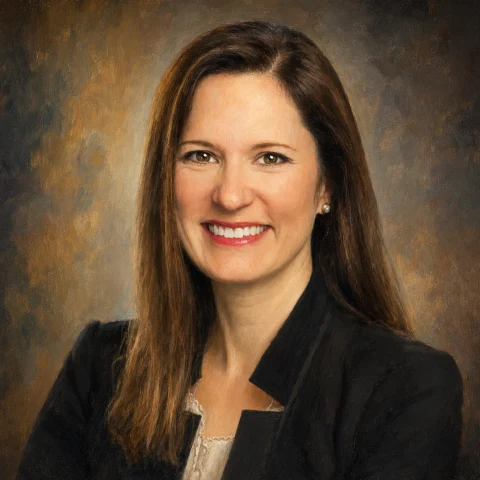
Trent B. Miracle
Pharmaceutical Litigation · Mass Torts · Asbestos
Low testosterone treatments like AndroGel have been heavily marketed to consumers without regard for the possible risks they could cause.
In the Testosterone MDL, Judge Kennelly Rejects AbbVie’s Demand for Statistically Significant Proof That AndroGel Causes Harm
Trent B. Miracle was one of three lawyers Judge Matthew F. Kennelly appointed in 2014 to lead the plaintiffs in the federal testosterone litigation, which grew past 7,800 cases. Kennelly ruled that a jury could find AbbVie’s ‘Low T’ marketing of AndroGel misleading, twice refused the company’s rule that causation experts needed statistically significant epidemiology, and stayed the cases for settlement weeks after the second ruling.
“Remember when you had more energy for 18 holes with your buddies? More passion for the one you love?” The questions came from a 2009 television commercial for men who felt they had less energy. It named no drug. It sent viewers to a website, IsItLowT.com, and told them their trouble “could be a treatable condition called low testosterone or Low T.” Judge Matthew F. Kennelly of the Northern District of Illinois later described the commercial as part of AbbVie’s marketing of AndroGel, a testosterone gel; in his opinions the name AbbVie covers AbbVie Inc., Abbott Laboratories, and Unimed Pharmaceuticals.
The Food and Drug Administration had approved AndroGel 1% on February 28, 2000, for primary and hypogonadotropic hypogonadism, forms of low testosterone with specific medical causes. On April 12, 2000, the agency objected to AbbVie’s claims that the gel was an appropriate treatment for age-related hypogonadism and asked that the language be removed, because “[c]laims and representations that suggest AndroGel is indicated for men with ‘age-associated’ hypogonadism or ‘andropause’ are misleading.” In 2006 AbbVie asked the FDA to approve AndroGel for a third type of hypogonadism. The agency refused: “No specific claims for the treatment of age-related hypogonadism (‘andropause’) will be allowed in the labeling.”
The FDA later counted the patients receiving testosterone prescriptions: about 1.3 million in 2009 and about 2.3 million in 2013. About 70 percent of the men filling them at retail pharmacies were between 40 and 64 years old. On January 31, 2014, the agency announced that it was investigating the risk of stroke, heart attack, and death in men taking testosterone products. Two studies had prompted the alert. One, published in JAMA in 2013 with Dr. Rebecca Vigen of the University of Texas Southwestern Medical Center as first author, followed male veterans after coronary angiography; three years on, 25.7 percent of the men taking testosterone had died or suffered a heart attack or stroke, against 19.9 percent of those who were not. The other, published two days before the announcement, examined the health records of 55,593 men who had been prescribed testosterone.
Within a week, lawyers at Simmons Hanly Conroy led by Trent B. Miracle filed suit in federal court in Chicago against Abbott Laboratories and AbbVie for five men, aged 50 to 63. Each had suffered a heart attack, a stroke, or a mini-stroke after he started using AndroGel.
In all, more than 7,800 cases were filed in the federal testosterone litigation, and Kennelly appointed Miracle in July 2014 as one of the three lawyers leading the plaintiffs. On May 8, 2017, Kennelly ruled that a jury could find AbbVie’s marketing of AndroGel for aging men false or misleading, and he refused AbbVie’s rule that the plaintiffs’ causation experts needed statistically significant studies; he refused it again in August 2018. Eighteen days after the second ruling he stayed the product-liability cases on the parties’ reports that they had finalized or were finalizing master settlement agreements, and by January 2019 the plaintiffs had reached a global settlement with the AbbVie defendants.
Federal judges have since made him co-lead counsel twice more in drug litigation: in 2023, for patients alleging that Horizon Therapeutics’ thyroid-eye-disease drug Tepezza caused permanent hearing loss, and in 2024, as one of four co-leads for plaintiffs who attribute dental erosion and decay to Suboxone film. He is managing partner of the mass-torts practice at Flint Cooper in Edwardsville, Illinois.
Forty-Five Lawsuits in Four Districts
Simmons Hanly Conroy kept filing for injured men after the FDA’s warning. “Low testosterone treatments like AndroGel have been heavily marketed to consumers without regard for the possible risks they could cause,” Miracle said that June. “These men looked to testosterone treatments to help them maintain their quality of life and instead were seriously injured.”
On June 6, 2014, the Judicial Panel on Multidistrict Litigation sent the 45 federal cases then pending in four districts—the District of Colorado, the Northern District of Illinois, the Eastern District of Louisiana, and the Eastern District of Pennsylvania—to Kennelly in Chicago. Plaintiffs in fifteen of the Illinois cases and in one Louisiana case had asked for the consolidation. The defendants included AbbVie and Abbott Laboratories, Eli Lilly, Endo Pharmaceuticals, Actavis, Auxilium Pharmaceuticals, and Pfizer. The panel found that the cases shared “factual questions regarding general causation” and common regulatory issues arising from the FDA’s actions, and it chose Kennelly as “an experienced MDL jurist” who had already begun organizing the litigation.
Kennelly named the plaintiffs’ leadership on July 31, 2014, in Corrected Case Management Order No. 4, with Ronald E. Johnson Jr., Trent B. Miracle, and Christopher A. Seeger as co-lead counsel. Below them he placed an executive committee, which included Timothy J. Becker, later Miracle’s fellow co-lead in the Suboxone litigation; a steering committee whose members included W. Mark Lanier, Arnold Levin, Christopher Tisi, and Dianne Nast; and two co-liaison counsel. “This is a significantly larger group than in the ‘typical’ product liability multi-district litigation proceeding,” Kennelly wrote. The claims ran against six different defendants over different product forms. He made the appointments for one year and directed the co-leads to draft an order spelling out the responsibilities of each group.
The three co-leads ran the case and oversaw 29 other lawyers representing men who had been seriously injured. The litigation, Miracle said that August, “could impact thousands of men throughout the country.”
On October 20, 2014, Miracle signed the plaintiffs’ proposed plan for running the litigation, together with his fellow co-leads, co-liaison counsel Brian J. Perkins and Myron Cherry, and executive committee member Seth A. Katz. It asked Kennelly to have AbbVie begin answering interrogatories and producing documents by October 31, with new productions every fourteen days, and to produce its first corporate witnesses for deposition by December 15. Discovery on liability, on general causation, and on the bellwether cases would run at the same time. The plan called for six bellwether trials against the AbbVie defendants alone: three on blood clots in the veins, the first set for June 15, 2016, and three on heart attacks and strokes, the last set for January 31, 2017. The defendants wanted general-causation discovery and challenges to the experts to come before everything else, and the plaintiffs’ committee told Kennelly that the defendants’ sequence would put off the first trials until December 2017.
Sell Market Expansion First and AndroGel Second
In March 2015 the FDA required the makers of every approved prescription testosterone product to change their labels. The new labels had to say that the drugs were approved only for men whose low testosterone was caused by certain medical conditions, and they had to add information about a “possible increased risk of heart attacks and strokes in patients taking testosterone.” The “benefit and safety” of testosterone, the agency said, had “not been established for the treatment of low testosterone levels due to aging.” It also ordered the manufacturers to run a clinical trial to determine whether testosterone increases the risk of heart attack or stroke.
By the spring of 2017 the proceeding held more than 7,000 cases, and seven cases against AbbVie had been selected for bellwether trials. Four of the men had suffered heart attacks or strokes: Edward Cribbs; Cecile Frost, who had a stroke at 59; Jeffrey Konrad, who had a heart attack at 49; and Jesse Mitchell. Three had blood clots: Arthur Myers and Robert Nolte, pulmonary embolisms, and Robert Rowley, a deep vein thrombosis.
On May 8, 2017, Kennelly decided AbbVie’s motions in those cases in three opinions. The one on marketing set out what the plaintiffs had gathered. AbbVie’s planning documents named the goals: “[p]ursue age-related hypogonadism market expansion” and “[e]ducate and motivate physicians to treat low T.” For primary-care doctors the strategy was to “sell market expansion first and AndroGel second.” AbbVie directed its sales representatives to talk “in terms of low testosterone and not hypogonadism,” Kennelly wrote, because it found that primary care physicians “did not respond well to the term ‘hypogonadism.’” A 2005 print advertisement showed a coffee cup and an energy bar with the words “For nearly 8 million men, no amount of coffee can replace the energy they’ve lost.”
Robert Nolte testified that advertising of that kind prompted him to ask his doctor to prescribe AndroGel, because he believed it would “cure” him and make him “whole again.” Each of the prescribing physicians testified about “low T” marketing by AbbVie’s sales representatives. The plaintiffs’ experts on the marketing and its regulation included Dr. David Kessler, a former commissioner of the FDA, and Dr. Steven Woloshin, a professor at Dartmouth’s Geisel School of Medicine, and Kennelly ruled that both could testify.
AbbVie argued that the marketing claims were failure-to-warn claims under another name and that they were an attempt to enforce federal drug law, which private plaintiffs cannot do. Kennelly rejected both arguments. The claims rested on the ordinary state law of fraud and negligence, and he held: “A reasonable jury could find that AbbVie made false or misleading representations when it marketed AndroGel with statements to the effect that it is a safe and effective treatment for age-related ‘low T.’” Whether the doctors had relied on that marketing was a question for the jury. So was punishment: the men could seek punitive damages on evidence that AbbVie knew AndroGel “was not a safe and effective treatment for age-related low testosterone and yet marketed it as if it was.”
In a second opinion the same day, Kennelly took up the warnings. AbbVie argued that federal law preempted the failure-to-warn claims, and it pointed to the FDA’s approval history, the agency’s review of AbbVie’s safety analyses, and its rejection of a 2014 citizen petition as proof that the FDA would have turned down any stronger warning. Kennelly found that “AbbVie has failed to present clear evidence that the FDA would have rejected efforts to add warnings” about the cardiovascular and clotting risks. The plaintiffs also argued that AbbVie had promoted AndroGel “as a cure-all for numerous afflictions for which it was never tested or approved,” and that the promotion skewed how doctors weighed the drug’s risks. Kennelly left that question for the jury as well: whether AbbVie’s conduct “amounted to overpromotion and caused the prescribing physicians to disregard” the warnings.
Estradiol, Thromboxane, Hematocrit
The third opinion took up general causation, the question whether AndroGel can cause heart attacks, strokes, and blood clots in anyone. AbbVie’s defense on that question turned on a statistical threshold. To show that the testosterone gel could cause those injuries at all, AbbVie told Kennelly, the plaintiffs’ experts had to point to literature establishing a statistically significant association between testosterone therapy and those injuries—as Kennelly summarized the argument, studies “with odds ratios above one and with p-values below 0.05 (or 95% confidence intervals that do not include 1.0 within their range).” Without that kind of study, AbbVie argued, the experts’ causation opinions were unreliable, and each bellwether case had to end on summary judgment.
The plaintiffs claimed two kinds of injury: arterial cardiovascular events such as heart attacks, and blood clots in the veins, known as venous thromboembolisms. For general causation they offered cardiologists Hossein Ardehali and Phillip Cuculich and epidemiologist Burt Gerstman on the cardiovascular injuries, and Dr. Henry Rinder on the venous clots.
The experts described testosterone therapy as pro-thrombotic, raising the risk of blood clots through its tendency to increase three things in the body. The first is estradiol, “a metabolite of testosterone and a form of estrogen, which has been connected to increased risk of clot formation.” The second is thromboxane A2 receptors, “which can promote abnormal platelet function and increased risk of clotting.” The third is hematocrit, the ratio of the volume of red blood cells to the total volume of blood, which “can increase blood viscosity, leading to a higher incidence of clotting.” The experts also relied on published studies, including the Basaria, Vigen, and Finkle studies and the Xu meta-analysis.
AbbVie moved to exclude the causation testimony and for summary judgment, pressing its statistical-significance rule. Kennelly did not adopt it. “The Court agrees with plaintiffs that there is nothing inherently unreliable about a method that relies on the totality of the evidence, provided that the expert considers the evidence carefully and explains how the weight of the various pieces of evidence led him to his conclusion,” he wrote in Case Management Order No. 46 on May 8, 2017. The experts also did not need a study whose own author concluded that testosterone caused the injuries, as long as they adequately explained why their view of the evidence supported a finding of causation. Nor would Kennelly decide between conflicting studies on a motion to exclude: “At this stage, it is not the Court’s role to choose between competing studies.” The plaintiffs’ general-causation experts could testify.
Nine Studies on Stroke
AbbVie came back the next year with newer literature. It argued that, in light of studies issued after February 2017, no expert could reliably find general causation, and it cited nine studies published between 2014 and 2017 that reported no statistically significant increase in the risk of stroke. In AbbVie’s reading, the studies showed that “there is no causal association between TRT use and CV risk.” It moved against the general-causation opinions offered for the next group of bellwether plaintiffs, including those of cardiologist Douglas Zipes, Dr. Morton Rinder, and neurologist Ronald Ziman, whose opinions concerned two plaintiffs who had suffered strokes, Edwin Harris and Edward Natale, and against supplemental testimony from Drs. Kessler, Pence, and Wells.
On August 23, 2018, in Case Management Order No. 133, Kennelly refused to exclude any of the plaintiffs’ general-causation testimony. He held that “general causation experts in this case need not rely on statistically significant results to support their opinions.” Repeating his 2017 statement that “it is not the Court’s role to choose between competing studies,” he ruled that the plaintiffs’ experts could continue to offer opinions based on the totality of the evidence and that the newer studies’ merits and weaknesses could be explored at trial. The ruling cleared the testimony for bellwether trials scheduled for October and November 2018.
As of September 10, 2018, eighteen days after that ruling, Kennelly had stayed all proceedings in the product-liability cases, except as the court ordered otherwise, because the parties reported that they had finalized or were finalizing master settlement agreements. By January 18, 2019, the plaintiffs had reached a global settlement with the AbbVie defendants, and a settlement master was reviewing claim information to decide which claimants were eligible to take part. A separate master settlement agreement covered the cases against Actavis.
Each claimant sent the settlement master a completed profile form along with other claim information. She decided who was eligible, and a claimant she found ineligible could appeal. She allocated the AbbVie settlement among the claimants by a method that turned on the total number of settlement claims.
Airline and Helicopter Disasters
Miracle came to drug litigation from aviation cases. He studied English literature at DePauw University, earned his law degree at St. Mary’s University School of Law in Texas, and was admitted to the Texas bar in 1995. He began practicing in 1996 as a personal-injury lawyer in aviation law, concentrating on airline and helicopter disasters. He was admitted in Illinois in 2003, Missouri in 2005, Pennsylvania in 2012, and New York in 2019.
His pharmaceutical work included cases over Bextra, ephedra, the Ortho Evra contraceptive patch, and Vioxx, and his clients’ settlements came from companies including Johnson & Johnson, AbbVie, Bayer, and Merck. Federal judges appointed him to the plaintiffs’ steering committees in the multidistrict litigation over Bayer’s Yaz birth-control pills, DePuy’s hip implants, and Propecia. Within the American Association for Justice he co-chaired the Testosterone Therapy Litigation Group and became the founding chair of the Asbestos Litigation Group.
As a shareholder at Simmons Hanly Conroy he also worked on the firm’s mesothelioma cases and on drug litigation over phenylpropanolamine and OxyContin. In September 2009 he was representing people harmed by Reglan, which the FDA had approved for gastrointestinal conditions only for short-term treatment after other methods failed. “Treatment with Reglan should not exceed three months,” he said, yet “evidence shows that one-third of patients are prescribed the drug for longer periods.” “Our success comes through our thorough understanding of our clients’ particular medical histories,” he said, weighed against what manufacturers were legally bound to do in testing, warning, and labeling. In 2021, asked whether hernia patients had to keep a failed mesh implant to sue, he answered: “Preserving the defective mesh is always helpful, but it is not a prerequisite for a hernia mesh lawsuit.” His practice now also takes in class actions and clergy-abuse claims.
Tepezza and the Pre-Approval Design Claim
The FDA approved Tepezza in January 2020 as the first drug to treat thyroid eye disease, a condition in which the eye muscles, eyelids, tear glands, and fatty tissues behind the eye become inflamed. Horizon Therapeutics made the drug, a biologic given by infusion. Patients who later sued alleged that Tepezza caused permanent hearing loss or tinnitus and that its label had not warned of that risk. By early July 2023 Miracle had been appointed plaintiffs’ co-lead counsel in the consolidated federal litigation, In re Tepezza Marketing, Sales Practices, and Products Liability Litigation, MDL No. 3079, before Judge Thomas M. Durkin in Chicago. That month the FDA required Tepezza to carry warnings about hearing damage, and Horizon began giving doctors instructions to monitor patients’ hearing before and during treatment.
At a case management conference on July 31, 2023, the court decided to use the briefing on Horizon’s motion to dismiss the complaint of one plaintiff, Cynthia Williams, “to evaluate the sole issue of whether the design defect claims are preempted.” Williams had been diagnosed with thyroid eye disease and received Tepezza infusions from her physician from November 2020 through June 2021. She alleged that the infusions had left her with permanent hearing loss, tinnitus, or both.
Horizon’s strongest argument came from the Supreme Court’s generic-drug decisions, PLIVA, Inc. v. Mensing and Mutual Pharmaceutical Co. v. Bartlett. After the FDA approves a drug, whether generic or brand-name, a manufacturer is not permitted to change its formulation on its own, so a state-law duty to sell a different drug is one the company cannot lawfully perform. Horizon added that Tepezza, as a biologic, was “scientifically incapable of being redesigned.”
Durkin observed that neither the Supreme Court nor the Seventh Circuit had addressed “whether federal law preempts a claim that a brand-name manufacturer should have designed and sought FDA approval for a different, safer drug.” Williams’s theory looked to the period before approval: “the claim is that Horizon should have submitted to the FDA a formulation that did not cause permanent hearing loss and tinnitus.” The pre-approval theory, Durkin wrote, quoting an earlier decision, “does not argue that a manufacturer should have stopped acting, just that it should have acted differently,” which set it apart from the stop-selling rationale the Supreme Court rejected in Bartlett. “Numerous district courts presented with this precise question have reached the same conclusion,” he added, citing decisions from courts in seven states.
On November 3, 2023, Durkin held that Williams’s pre-approval design-defect claims were not preempted. Horizon’s argument that a biologic could not be redesigned would have to wait: unlike the Bartlett court, Durkin did not yet have the benefit of discovery to examine whether the evidence supported Horizon’s position that no safer alternative design existed, and Horizon could raise the point again “at the appropriate juncture.” By October 2025 the litigation held more than 270 lawsuits against Horizon.
Edwardsville and the Texas Two-Step
In October 2023 Miracle moved from Simmons Hanly Conroy, where he had co-chaired the Complex Litigation Department, to Flint Cooper in Edwardsville, Illinois, as managing member of its mass-torts practice. The firm, which also handles asbestos and mesothelioma cases, now practices as well under the name Flint Cooper Cohn Thompson & Miracle.
In July 2025 he wrote for the firm about the bankruptcy maneuver known as the “Texas Two-Step,” in which a company divides itself into two entities, one holding the assets and the other the liabilities, and the liability-burdened entity files for Chapter 11. He described Johnson & Johnson’s use of it: its subsidiary LTL Management filed for Chapter 11, and in 2023 the Third Circuit ruled against the company, holding that the bankruptcy did not serve a legitimate bankruptcy purpose because LTL lacked financial hardship. Critics of the maneuver, he wrote, argue that it lets companies sidestep accountability by placing their liabilities out of reach.
A Very High Acidic Content
Suboxone film, a buprenorphine and naloxone product used to treat opiate addiction, dissolves in the mouth. The plaintiffs in the federal litigation allege that its acidic formulation caused dental erosion and decay. Indivior, the company behind the film, had already answered to federal prosecutors over how it sold the product. In July 2020 Indivior Solutions pleaded guilty to a felony charge of making false statements relating to health care matters: in October 2012 it had sent Massachusetts Medicaid false data indicating that Suboxone Film had the lowest rate of accidental pediatric exposure of any buprenorphine drug in the state, to win wider coverage. Indivior entities agreed to pay $600 million to resolve criminal and civil liability; the company’s former parent, Reckitt Benckiser Group, had agreed to a $1.4 billion resolution the year before.
When a motion to gather the federal film cases before one judge reached the Judicial Panel on Multidistrict Litigation in November 2023, Miracle entered his appearance on November 29 on behalf of a plaintiff, Kelsie Johnson. About two weeks later he laid out the claims in an interview with Drugwatch. The case, he said, was “very specific to the delivery system.” A patient holds the film in the mouth for about ten minutes, typically three times a day, and he said it had “a very high acidic content.” He tied it to broken, lost, and decayed teeth, chronic cavities, and worn enamel, and to costly replacement work that came on top of addiction treatment.
He said that “until 2022 there was no warning associated with decay and dental issues,” so doctors had no warning to weigh with their patients, because the manufacturer had “kept that risk to themselves.” The patients already carried the stigma of addiction, he said, and the damage to their teeth made their situation “exponentially worse than it already was.” In his words: “Someone’s self-confidence and self-worth are obviously affected.”
The Judicial Panel on Multidistrict Litigation sent the federal cases to Judge J. Philip Calabrese of the Northern District of Ohio in February 2024, and on March 8, 2024, in Case Management Order No. 2, Calabrese appointed four plaintiffs’ co-lead counsel: Ashlie Case Sletvold, Erin K. Copeland, Timothy J. Becker, and Miracle, listed at Flint Cooper in Edwardsville.
The appointments ran for one year, subject to annual renewal beginning July 1, 2025. On July 2, 2025, in Amended Case Management Order No. 19, Calabrese reappointed all four co-leads, and on July 2, 2026, he reappointed them for another year.